As an Amazon Associate, we earn from qualifying purchases made through links on this page.
Here is the mistake: you buy an edger that is great on a garden bed, then drag it along a sidewalk and wonder why the line wanders, the blade chatters, and the edge looks chewed. Sidewalks and curbs are a different job, and they punish the wrong tool.
A curb edge needs a blade that runs true against concrete, a guide that keeps it straight, and enough depth to cut the overhang in one or two passes. This comparison settles which edger does that job best, and which ones are better saved for beds.
What a sidewalk and curb edge actually demands
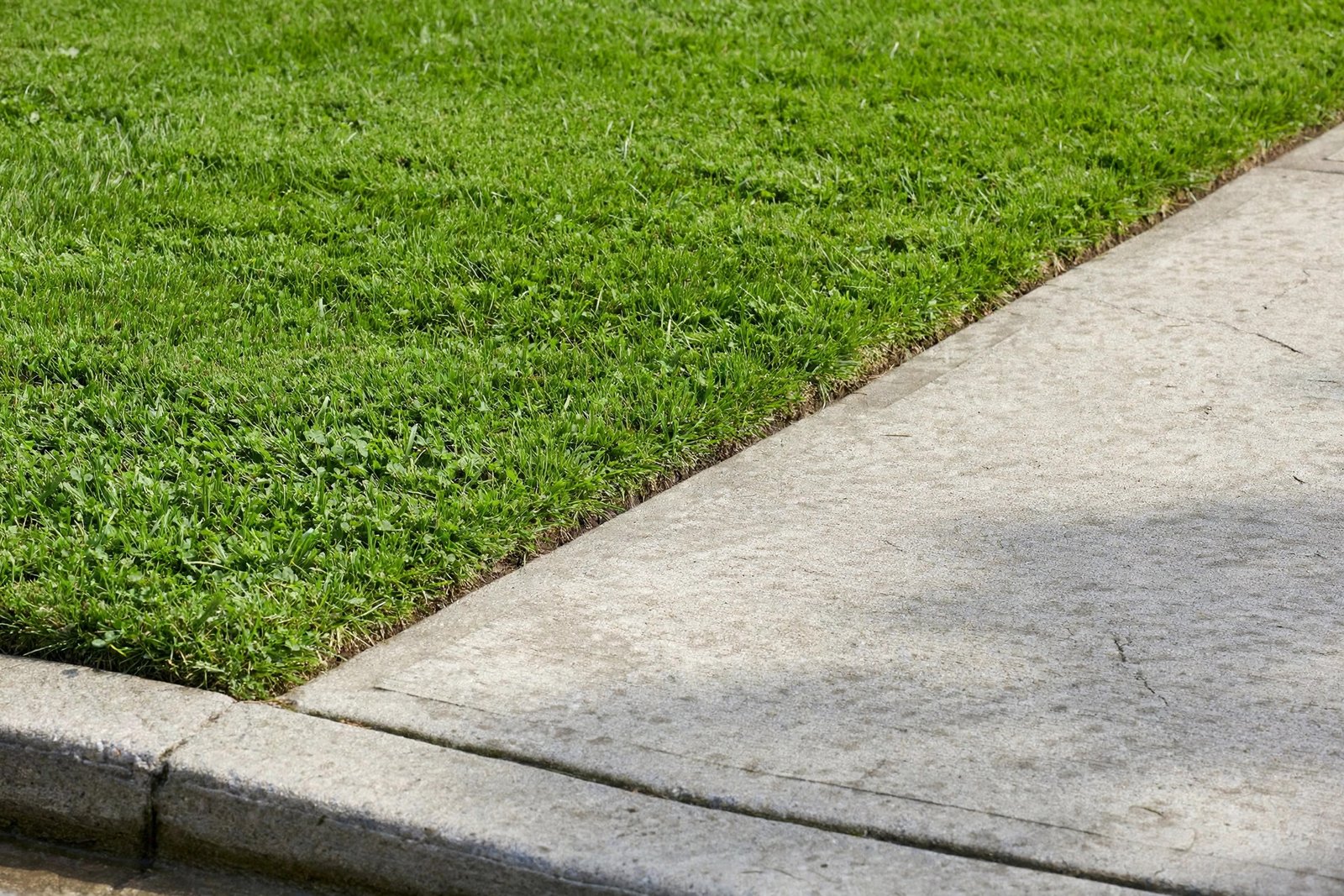
Along a bed, a wandering line is forgiving. Along concrete, it is the whole show. The blade has to stay vertical, ride a consistent depth, and follow the hard edge without climbing onto the sidewalk or diving into the lawn. That is why wheeled, walk-behind edgers beat handheld tools here: the wheels carry the weight, the guide wheel tracks the concrete, and your arms just steer.
Depth matters more than power. A shallow pass that only trims the grass tips leaves the overhang, and the edge closes up again in a week. A blade that reaches 1 to 1.5 inches into the soil cuts the roots clean, so the line holds. Curbs add one more demand: the tool has to stay stable when the ground drops away on the street side, which is where a curb wheel earns its keep.
If you are still choosing between power sources in general, our gas versus cordless edger comparison covers the trade-offs. For concrete edges specifically, here is how the real contenders stack up.
Best overall: WORX WG896 corded edger
The WORX WG896 is a walk-behind, wheeled edger built for exactly this job. Its 12-amp motor spins a 7.5-inch serrated steel blade at 4,700 revolutions per minute, and it weighs 14 pounds, light enough to push along a long sidewalk without fighting it. Three depth settings, 1 inch, 1-1/4 inches, and 1-1/2 inches, let you start shallow on a first pass over an overgrown edge and finish at full depth.
The detail that matters most for sidewalks is the blade itself. It is serrated, with a wear indicator that shows when it needs replacing, so you are not guessing whether a ragged edge is your technique or a dull blade. The corded design means no battery to run down halfway down the block, though it does mean an extension cord and an outlet within reach.
The trade-off is the cord, plain and simple. If your sidewalk run is far from an outlet, or your curb work means crossing a driveway, cord management gets tedious. For a typical front walk and curb, it is the best balance of price, control, and clean cut.
WORX WG896 12-Amp Corded Lawn Edger & Trencher
Wheeled walk-behind control, 7.5-inch serrated blade, and three depths for a straight line along sidewalks and curbs.
Runner-up: Greenworks 40V cordless edger
The Greenworks 40V edger is the cordless answer to the same job. It runs an 8-inch steel blade on a brushless motor, and it ships as a kit with a 4.0Ah battery and charger, so there is nothing else to buy. That matters on a long curb run, where a corded tool’s extension cord becomes the project.
Its edge along concrete is clean, and the tool-less depth adjustment means you can change depth with gloves on, mid-job. The trade-off is runtime, and the price of a second battery if your borders run long. If you already own Greenworks 40V tools, the battery math gets much friendlier.
Greenworks 40V Cordless Edger (ED40L410)
8-inch blade, brushless motor, and a battery and charger in the box for cord-free curb work.
Best if you are already on EGO: EGO Power+ ME0820
The EGO ME0820 is an 8-inch carbon-fiber edger attachment with a guide wheel and a depth knob that adjusts to a 3-inch maximum cutting depth, the deepest cut in this comparison. That depth is overkill for routine sidewalk maintenance and exactly right for resetting a neglected curb edge that has grown over by inches.
The catch is in the box: battery and charger are not included. If you already run EGO’s Multi-Head system, this is a strong buy, because the power head also drives a dozen other attachments. If you do not, price the battery in before comparing it with the two picks above, because the bare-tool price is not the whole price.
EGO Power+ ME0820 Multi-Head Edger Kit
8-inch blade with up to 3 inches of depth, for resetting overgrown curb edges on the EGO system.
Not recommended for sidewalks: a string trimmer flipped on its side
Flipping a string trimmer vertical is free, and for a quick touch-up it works. As a sidewalk edger it is a poor substitute. String cuts grass, it does not cut a trench, so the overhang grows back fast, the line wanders with every bump, and you burn through string along concrete. It also scalps the lawn edge if the head dips, leaving a brown line where a clean edge should be.
Use the trimmer for beds and tight spots. For sidewalks and curbs, buy the blade.
Comparison at a glance
| Edger | Blade | Depth | Weight | Best for |
|---|---|---|---|---|
| WORX WG896 (corded) | 7.5-inch serrated steel | 1 to 1-1/2 inches, 3 settings | 14 lb | Straight sidewalk and curb runs near an outlet |
| Greenworks 40V (cordless) | 8-inch steel | Adjustable, tool-less | About 12 lb | Long runs and curb work without a cord |
| EGO ME0820 (cordless) | 8-inch | Up to 3 inches | Power head plus attachment | Resetting overgrown edges on the EGO system |
How to cut a clean curb edge
Start shallow on an overgrown edge. If grass has grown inches over the sidewalk, do not try to cut it all in one pass. Take a shallow first pass to clear the overhang, then a second pass at full depth. Two easy passes beat one stalled, bucking pass.
Keep the guide wheel on the concrete. Let the wheel, not your arms, set the line. If the tool drifts, slow down rather than muscling it back. A slow, straight pass leaves a line that holds for weeks.
Edge when the soil is moist, not wet. A day after rain is ideal. Bone-dry soil makes the blade chatter and throw dust, and soggy soil tears instead of cutting. If the edge crumbles as you cut, wait a day.
Keep the blade sharp, too. Our guide to sharpening and replacing an edger blade covers the wear signs, and if you run gas, our gas edger troubleshooting guide is the companion piece when the engine will not cooperate. For a straight edge, though, the tool choice comes first, and on sidewalks and curbs the wheeled blade wins.