This post contains affiliate links. If you buy through them, Landscape & Leisure may earn a commission at no extra cost to you.
13 nutrients plus pH. That is what the best soil test kit here reports, and it is the difference between guessing at fertilizer and knowing whether your lawn needs nitrogen, lime, both, or neither.
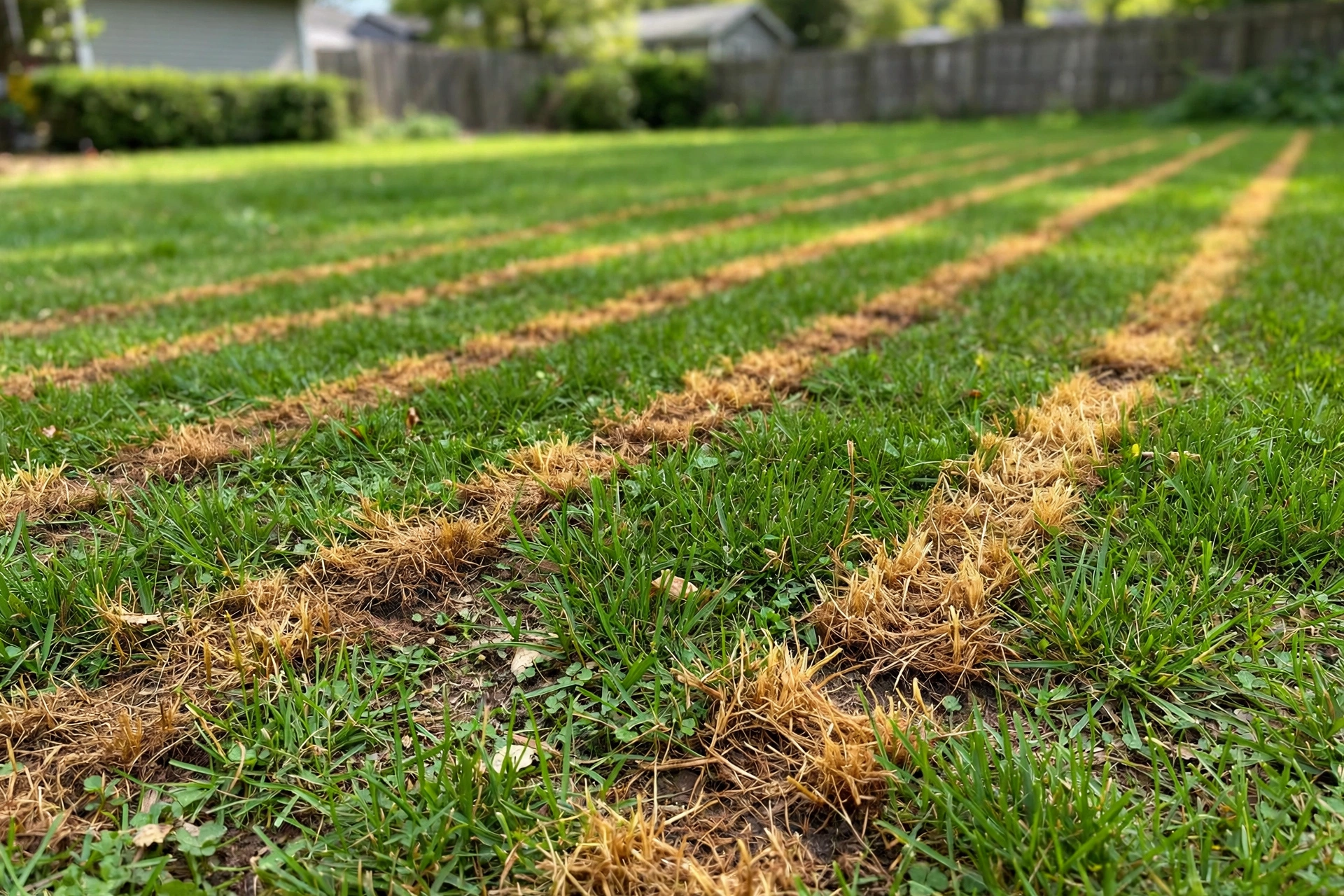
A lawn that will not green up, or a garden bed where the same crop fails twice, is a symptom with several possible causes. Low pH locks up nutrients that are already in the soil, so adding more fertilizer to an acidic lawn wastes money without fixing the plant.
This roundup settles which kit gives a diagnosis you can act on, and which cheap shortcut to skip. Pair the result with the soil pH amendment calculator to turn a pH number into an application amount.
Best overall: MySoil test kit
MySoil reports 13 nutrients plus pH from a mail-in sample, with results in 6 to 8 days and recommendations matched to your lawn or garden. The method gives a fuller nutrient picture than color-chart kits, including micronutrients those kits never measure.
The trade-off is time. A mail-in result takes about a week, so test in early spring or fall rather than the weekend you planned to fertilize.
MySoil Soil Test Kit
13 nutrients plus pH by mail, with recommendations for your soil.
Runner-up: SoilKit
SoilKit uses a university-style lab analysis that includes buffer pH, organic matter, and CEC alongside the standard nutrients. That buffer pH figure is the one a lime recommendation actually needs, which makes this the stronger pick when pH is the known problem.
SoilKit Soil Test Kit
Lab analysis with buffer pH, organic matter, and CEC included.
Best instant at-home kit: Luster Leaf Rapitest 1601
The Rapitest runs 40 tests, 10 each for pH, nitrogen, phosphorus, and potassium, with color comparators you read the same day. It is less precise than a lab test, and it is the right tool for a quick check between lab tests or across several beds in one afternoon.
Luster Leaf 1601 Rapitest Soil Test Kit
40 same-day tests for pH and the three primary nutrients.
Not recommended: a 3-in-1 probe as your only test
A push-in probe gives a rough pH hint and a moisture reading, and that is all. Its nutrient readings are not reliable enough to set a fertilizer or lime rate, and treating them as a soil test leads to applications the soil never needed.
How to sample so the result means something
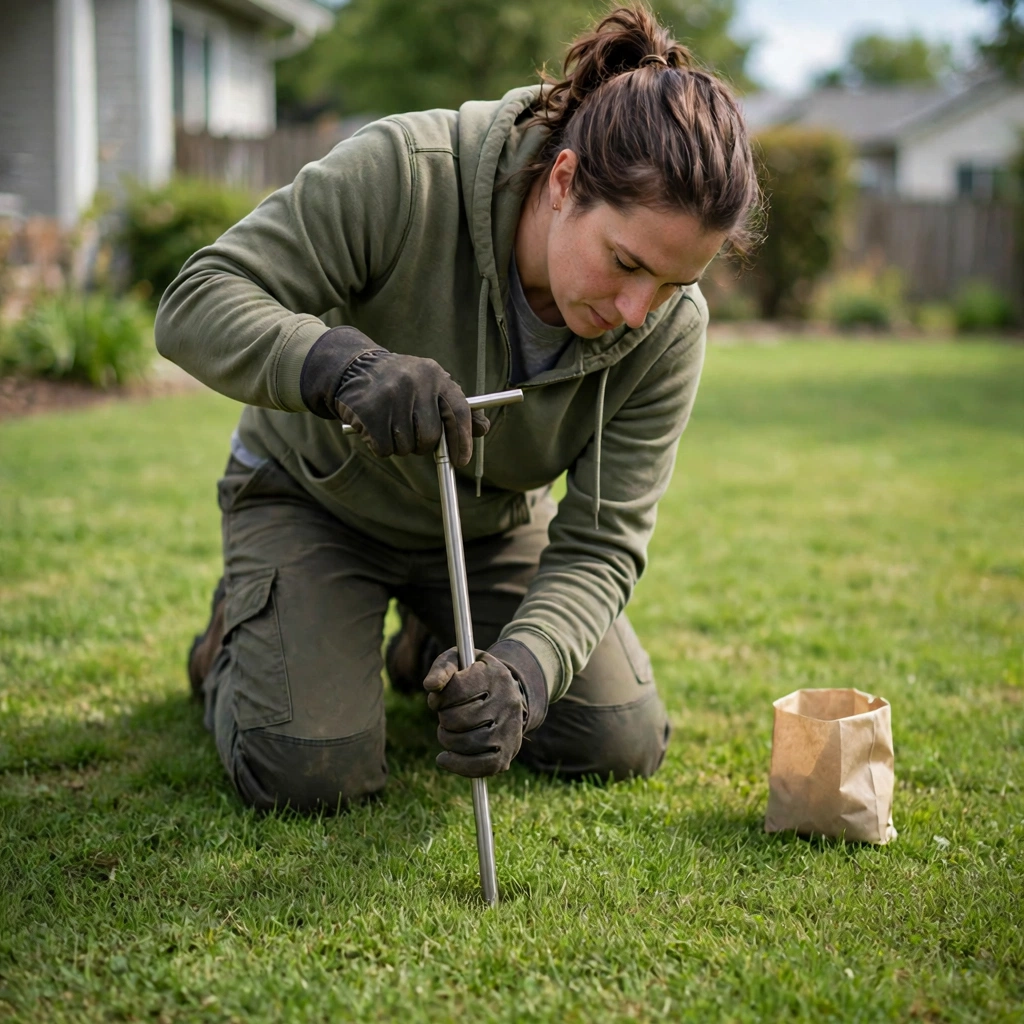
Pull 10 to 15 small cores at a consistent 6-inch depth across the area, mix them, and send the combined sample. One scoop from one spot describes that spot, not the lawn.
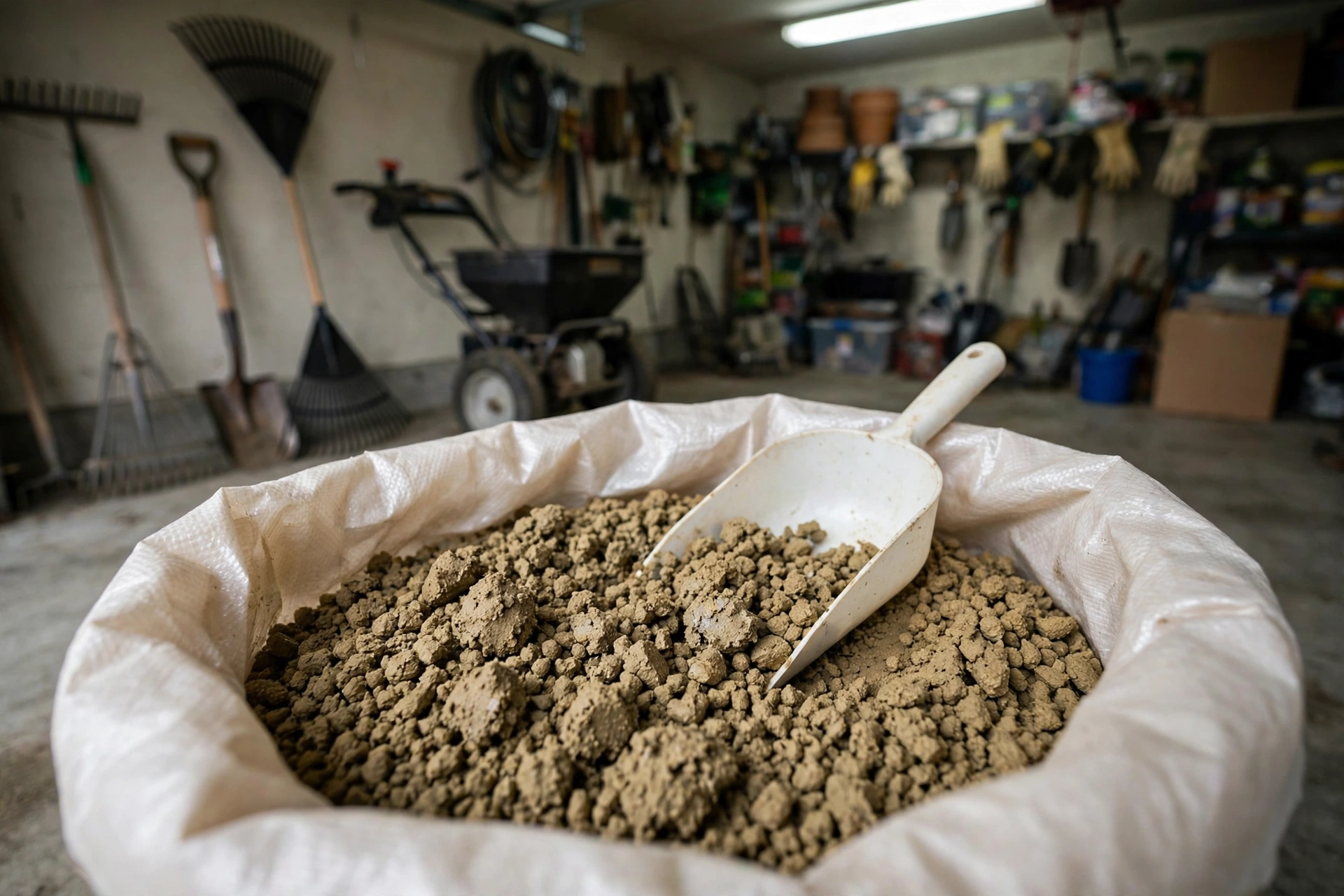
The soil crumbles dry and pale in the sample bag in fall, which is exactly when testing pays best. Results arrive while there is still time to apply lime before spring growth.
Bottom line
Order the MySoil kit for the full diagnosis. If pH is already the suspect, order SoilKit for the buffer pH number your lime math depends on.