Landscape & Leisure is reader-supported. When you buy through links on our site, we may earn a commission at no extra cost to you. Prices change, so click through to confirm current pricing.
Here is the mistake most homeowners make with the last feeding of the year: they grab the same high-nitrogen bag they used in June and put it down in November. The lawn does not need a growth spurt before winter. It needs roots, stored energy, and a slow, steady finish. Feed it like it is still July and you get soft top growth heading into freezing weather, which is exactly the growth snow mold loves.
A winterizer is not a different species of fertilizer. It is a fall fertilizer with the ratios flipped toward potassium, moderate nitrogen, and little or no phosphorus, applied while the soil is still warm enough for roots to work. Get the timing and the ratio right, and the payoff shows up in April, not October.
When to Put a Winterizer Down
Cool-season grasses keep growing roots well after top growth slows. The window most extension guidance points to is mid-fall, while soil temperatures are still above 50°F and the grass is still actively growing, and before the ground freezes. Applied after the ground freezes, the nutrients sit there until spring runoff carries them off. Applied too early, in the heat of late summer, the nitrogen pushes growth the lawn then has to support through stress.
For most cool-season lawns that means one application in October or early November, depending on your first frost date. If you overseeded this fall, wait until the new seedlings have been mowed at least once before feeding, and check the label: some combination products will undo a seeding entirely, which is covered under the not-recommended pick below.
The Picks at a Glance
| Product | Analysis | Coverage | Best for |
|---|---|---|---|
| Scotts Turf Builder WinterGuard Fall Lawn Food | 32-0-10 | 12,000 sq ft (32.3-lb bag) | Most cool-season lawns, one-bag fall feeding |
| Jonathan Green Winter Survival | 10-0-20 | 5,000 sq ft (15-lb bag) or 15,000 sq ft (45-lb bag) | Highest potassium, gentle feeding, late-fall timing |
| Milorganite | 6-4-0 | Varies by bag size; slow-release, iron for color | Steady color without surge growth |
Best Overall: Scotts Turf Builder WinterGuard Fall Lawn Food
WinterGuard is the default winterizer for a reason: it is built for this exact job, it is sold everywhere, and the bag tells you precisely how to put it down. The 32.3-pound bag covers 12,000 square feet, and Scotts lists a broadcast spreader setting of 2 3/4 and a drop spreader setting of 6, so there is no guessing at the rate. Apply it to a wet or dry lawn, and water it in lightly if you want faster results.
Pros: purpose-built fall ratio; wide availability; clear spreader settings on the bag; works on any grass type.
Cons: high nitrogen for a late application, so timing matters more than with a gentler product; a big bag is more than a small lawn needs in one season.
Scotts Turf Builder WinterGuard Fall Lawn Food
Purpose-built fall feeding for any grass type, with spreader settings printed on the bag and 12,000 sq ft of coverage.
Runner-Up: Jonathan Green Winter Survival 10-0-20
Jonathan Green takes the opposite approach to the same problem: less nitrogen, far more potassium. The 10-0-20 analysis, with 3 percent iron and a quarter of its nitrogen in slow-release form per the manufacturer’s own specification sheet, is the gentlest serious winterizer in this roundup. The manufacturer recommends applying it any time from early September through mid-November, which makes it the forgiving pick if your fall schedule slips.
That potassium load is the point. Potassium helps grass handle cold stress and winter disease, and this is the highest-potassium ratio of the three picks. It feeds for up to three months and suits a fall seeding as well as an established lawn. The trade-off is coverage math: the 15-pound bag covers 5,000 square feet, so a larger lawn needs the 45-pound bag, and the per-application cost runs higher than the Scotts bag.
Pros: highest potassium ratio here; gentle feeding with slow-release nitrogen; iron for late-season color; long application window.
Cons: pricier per square foot than the best overall; no verified Amazon listing was available at the time of writing, so buy through a garden retailer or the manufacturer’s site.
Best Gentle Feed: Milorganite
Milorganite is not marketed as a winterizer, and that is fine, because it does the other half of the fall job: steady, slow feeding with iron for color and almost no risk of surge growth. Its 6-4-0 analysis is slow-release by nature, made from treated biosolids, and it has been the low-drama option for decades. If your lawn is already in decent shape and you want color and steady root support without pushing growth, it is the safest bag in this roundup.
It is not a potassium play, though. Pair it with a soil test result that shows potassium is adequate, or use it as the early-fall application and follow with a higher-potassium winterizer for the final feeding. Our guide to applying Milorganite with crabgrass preventer covers the combination rules if you are tempted to stack products in one pass.
Pros: very low burn risk; iron-driven color without surge growth; forgiving of imperfect timing.
Cons: low potassium, so it is not a complete winterizer on its own; distinctive smell for a day or two after application.
Milorganite Lawn Fertilizer
Slow-release 6-4-0 feeding with iron for steady fall color and almost no surge growth.
Not Recommended for Most Fall Lawns: WinterGuard Fall Weed & Feed
Scotts also sells a WinterGuard Fall Weed & Feed that combines fall fertilizer with herbicide for more than 50 listed weeds, including clover and dandelion. It is a real product that does what it says, and it is the wrong buy for most homeowners this time of year. The herbicide only works when weeds are actively growing and temperatures sit between 60°F and 90°F, a window that is closing fast in cool-season country, and you must not water for 24 hours after applying it.
The bigger problem is seeding. If you overseeded this fall, a weed-and-feed application works directly against the seed you just paid for. Buy the plain WinterGuard Fall Lawn Food for the feeding, handle weeds separately and earlier, and keep the combination product for a lawn with an active weed problem, no new seed, and temperatures still inside the label window.
How Much to Apply, and How to Put It Down
Most fall applications target roughly 0.5 to 1 pound of nitrogen per 1,000 square feet. With a 32-0-10 analysis, that is about 1.5 to 3 pounds of product per 1,000 square feet. With a 10-0-20 analysis, it is 5 to 10 pounds of product for the same nitrogen, which is why the Jonathan Green bag covers fewer square feet per pound. Run your own numbers through our fertilizer calculator before you load the spreader, and if you are choosing between two analyses for the same lawn, our 28-0-3 vs 10-10-10 comparison shows the arithmetic side by side.
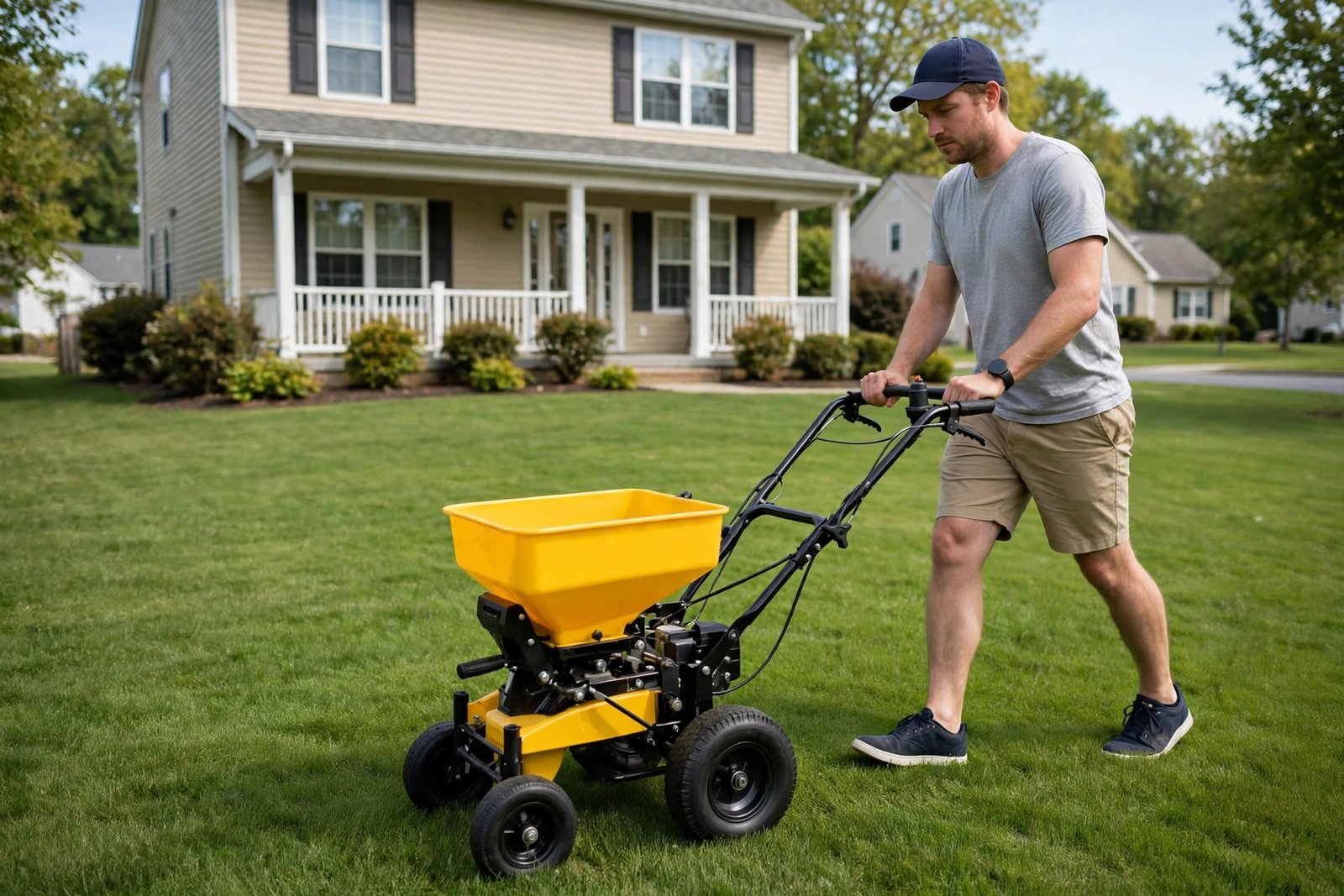
Spread in slightly overlapping passes, sweep granules off driveways and sidewalks back onto the lawn, and water in with about a quarter to a half inch of irrigation if rain is not coming. If you aerated this fall, the feeding pairs naturally with the recovery work in our fertilizer after aerating guide.
Bottom Line
For most cool-season lawns, Scotts WinterGuard Fall Lawn Food is the winterizer to buy: the right ratio, the clearest instructions, the best coverage per bag. Jonathan Green Winter Survival is the better pick when you want the highest potassium and the gentlest feeding, or when your fall timing is already tight. Milorganite is the steady third option for color without growth. Whichever bag you choose, the rule that matters is the same: feed the roots in October, not the blades in November, and let the lawn spend the winter on what you stored for it.