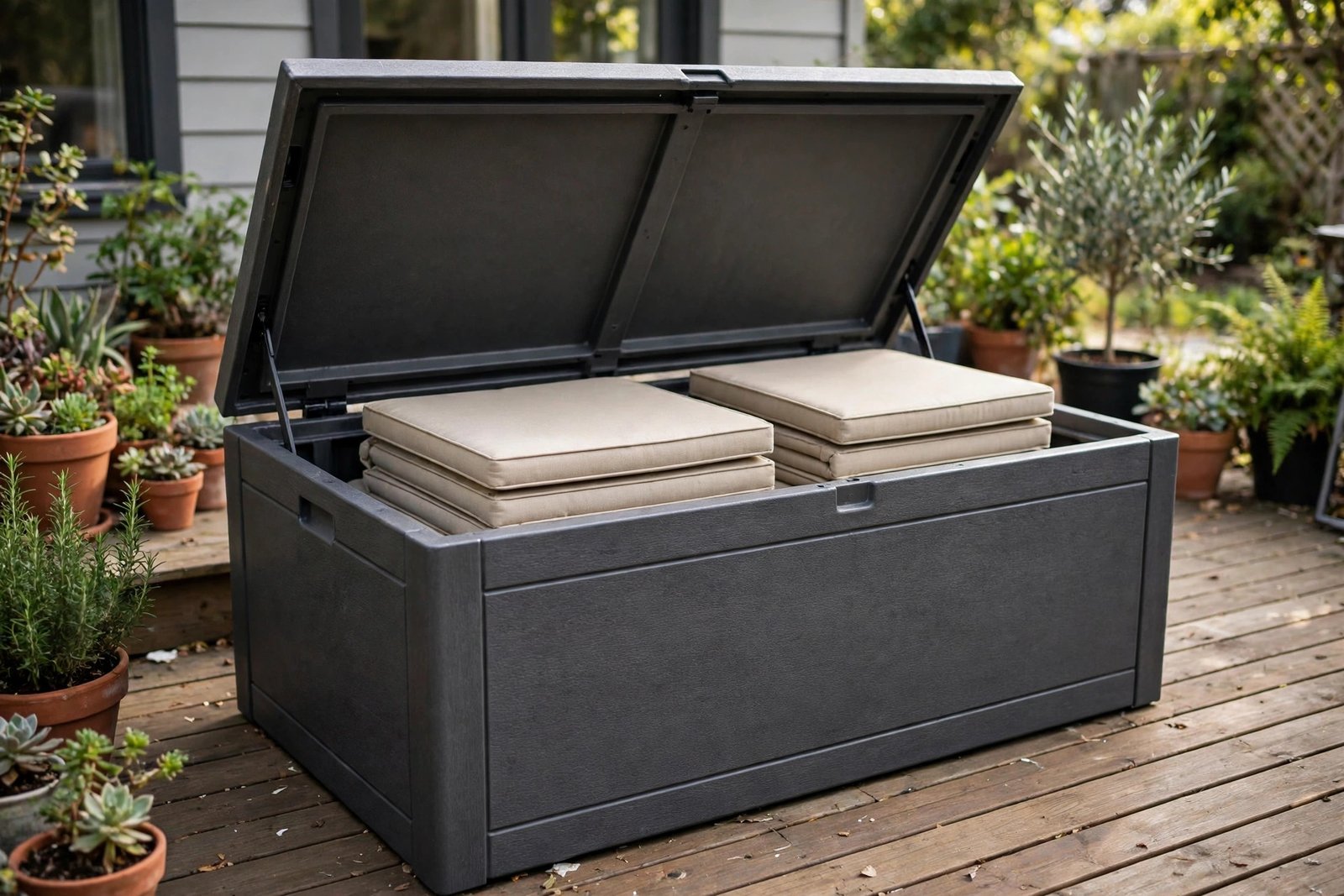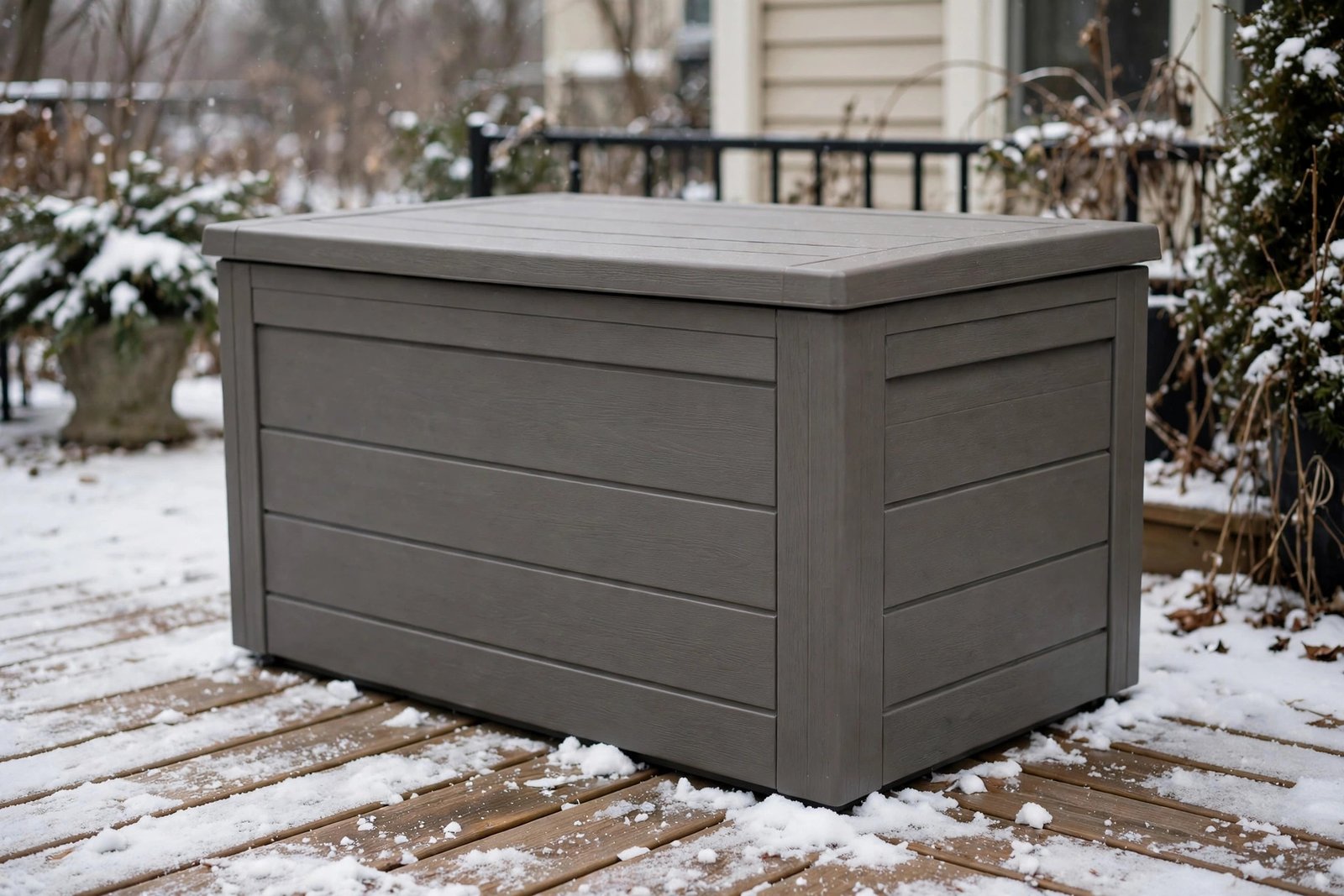
November arrives, the cushions come off the chairs, and the question lands: does the deck box itself have to come in too? For most boxes, the answer is no. A well-made resin or metal box is built to live outside, and winter is part of that job.
The catch is that winter tests a box differently than summer does. Snow loads the lid, freeze-thaw works on seams, and anything damp inside stays damp for months. A quick check now decides whether your box sails through or comes back with a warped lid and musty contents.
Why winter is a different test
Cold alone rarely hurts a deck box. Resin and metal both handle freezing temperatures, and a box that survived summer sun can usually survive a cold snap. The damage comes from water that freezes, thaws, and freezes again.
Water expands as it freezes. A little water trapped in a hinge, a seam, or a crack pushes outward each time it turns to ice, and over a season of freeze-thaw cycles that pressure widens the gap. By spring, a lid that sealed tightly in October may sit unevenly.
Snow adds weight. A light dusting means nothing, but wet snow piled deep on a flat lid presses down for weeks. Lids with a slight slope shed snow better than flat ones, and a lid already weakened by a poor seal sags sooner under the load.
Moisture inside the box is the quietest problem. A closed box in winter gets almost no airflow, so damp cushions or tools stay damp from November to March. That is how a box that looks fine outside opens to a musty smell inside.
Before winter: the four checks
Do these in fall, before the first hard freeze. Each one takes a few minutes, and together they cover the ways winter actually causes trouble.
Check the lid seal. Close the lid and look along the seam in daylight. Gaps, cracks, or a lid that rocks when you press a corner all let in rain and melting snow. If the seal is failing, the box is not winter-ready as it stands.
Check the base and drainage. Lift the box or tip it slightly and look underneath. Drainage holes should be clear, and the box should sit level, not in a puddle or a low spot where meltwater collects. A box sitting in standing water spends winter with its feet wet.
Check what is inside. Only leave inside what can handle months of cold. Hard tools, garden supplies, and empty pots are fine. Cushions need to be fully dry before they go in, and anything that holds water or cracks in the cold should come inside.
Check the spot. A box against a wall where snow drifts pile up gets a heavier load than one in the open. If your box sits where roof snow slides off, move it before winter. A falling sheet of roof snow can crack a lid outright.
What to take out, and what can stay
Take cushions inside if you have the room, even when they are dry. Indoor storage is always kinder to foam and fabric, and it frees the box from its biggest moisture risk. If cushions must stay in the box, they need to be bone dry and the box needs to stay sealed and off wet ground. The companion guide on keeping patio cushions dry in a deck box covers the moisture causes in detail.
Garden tools, watering cans, and sturdy outdoor supplies can stay. Wipe metal tools dry before they go in, since a damp tool in a closed box rusts over winter. Empty ceramic pots can crack if water freezes inside them, so tip them out and store them upside down or bring them in.
Anything with a battery, a liquid that freezes, or fabric that mildews easily belongs indoors. That includes pool chemicals, paint, and anything you would not leave in an unheated garage.
How to winterize the box itself
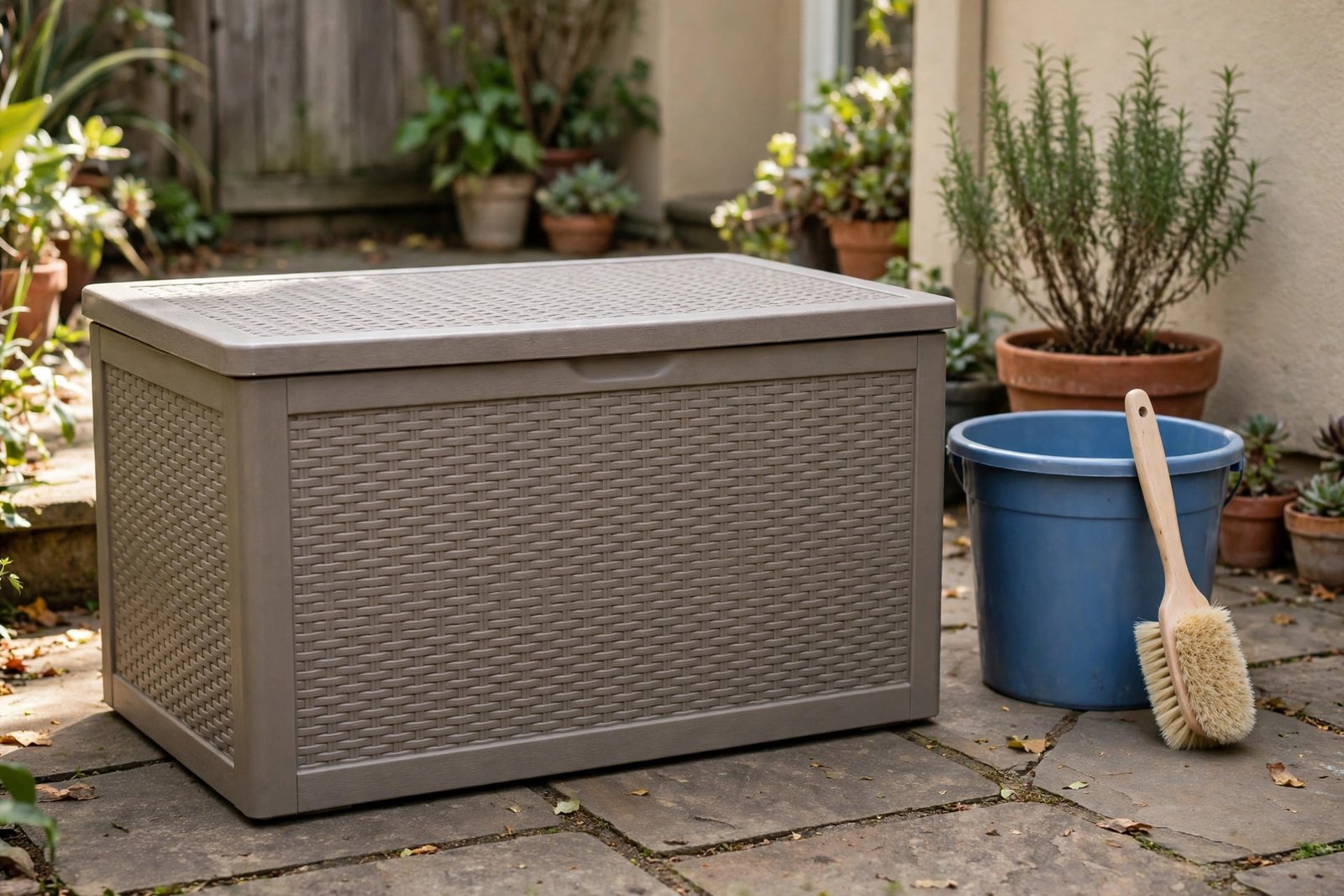
Start with a clean, dry box. Brush out leaves and dirt, and wash the outside if mold or grime built up over the season. The cleaning steps in how to clean mold off a resin deck box work just as well as a fall tidy as they do in spring.
Set the box on a level spot where water drains away, not toward it. A few pavers or a gravel pad under the box keep the base out of standing meltwater. If the box has adjustable feet, level it now rather than discovering a tilt under snow.
Close the lid firmly and leave it closed. Opening the box on a mild winter day lets in damp air that then condenses inside when the temperature drops again. If you need something midwinter, take it out quickly and close the lid right away.
After a heavy snow, brush snow off the lid rather than letting it sit and melt into the seams. A soft broom does the job without scratching the surface. Do not chip ice off the lid with a hard tool, which can crack cold resin.
When to bring a box inside instead
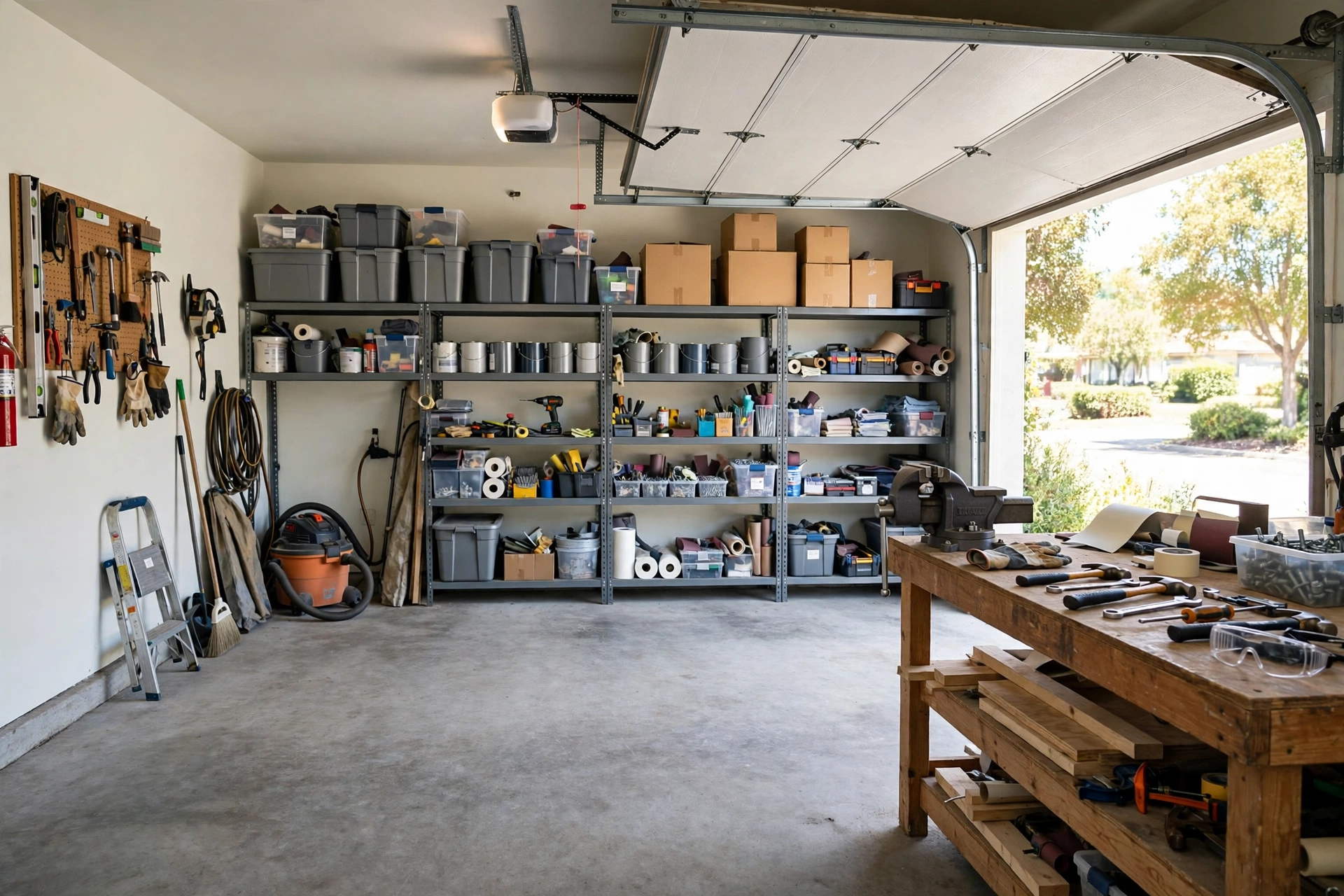
Some boxes should not winter outside, and it is better to know that in November than to find out in April. Bring the box in, or at least under a roof, if any of these apply.
The lid is cracked, warped, or no longer seals. A broken seal turns the box into a snow collector, and the contents will pay for it.
The box is wood, or has wooden parts, that are already soft or peeling. Wood handles winter badly once its finish fails, and a season of freeze-thaw can finish what summer started.
The box sits where it cannot drain, such as a sunken patio corner that floods in spring thaw. No box stays dry when it sits in a puddle for weeks.
If you are unsure about your box’s material or condition, compare it with the options in the deck-box roundup. Boxes built for year-round outdoor use say so plainly, and the sizing guide at what size deck box do you need helps if a replacement is on your mind.
Spring: what to look for
When the weather turns, open the box on a dry day and check before you use anything inside. Look for a lid that sits unevenly, hinges that feel stiff or loose, and any musty smell that signals moisture got in.
Wipe the inside down and let it air out with the lid open for a few hours. Cushions that smell musty should air in the sun before they go back on furniture, and anything that stayed damp all winter should be washed before use.
One warped season does not always mean a dead box. A lid that seals again once the snow load is gone may serve for years yet. A lid that stays bowed, or a base that cracked over winter, means the box has given its best and a replacement is the honest call.
What to watch next
The single mistake that undoes a winterized box is closing it up damp. Dry contents, a sealing lid, and a base that drains cover nearly every winter failure. Check those three things in fall, brush snow off the lid after storms, and your box should come through spring ready for another season.