Landscape & Leisure is reader-supported. When you buy through links on our site, including Botanical Interests seed links, we may earn a commission at no extra cost to you. Prices change, so click through to confirm current pricing.
Here is the mistake that kills more Zone 4 strawberries than any cold snap: mulching too early. A gardener sees a cold night coming in October, throws straw over plants that are still growing, and the plants try to keep growing under the straw. They come out of winter weakened, if they come out at all — and the gardener blames the winter, when the timing was the problem.
So the question is not just straw or cold frame. It is when, how much, and which plants actually need the extra structure. For strawberries in the ground in Zone 4, straw wins, and it is not close. For strawberries in pots, or plants you are babying through a marginal winter, a cold frame earns its keep. Here is how to tell which bed you have.
| Method | Best for | Cost and effort | Main risk | Verdict |
|---|---|---|---|---|
| Straw mulch | In-ground beds, Zone 4 | Low: a bale or two, one afternoon | Mulching before dormancy; leaving it on too long in spring | Best overall for in-ground beds |
| Cold frame | Pots, fall-planted or marginal plants | Higher: build or buy, vent daily in sun | Overheating on sunny winter days breaks dormancy | Best for containers and tender plants |
| Nothing | Reliable deep snow cover only | None | Bare cold in the teens injures buds | Not recommended in Zone 4 |
Why Strawberries Need Help in the First Place
Minnesota winters are too cold for strawberries to thrive year after year without protection. Left uncovered, temperatures in the teens can injure the dormant flower buds that become next summer’s fruit, and the crown itself can be killed around 15°F. The other enemy is freeze and thaw: soil that heaves up and down through late fall and early spring tears at roots and lifts crowns out of the ground.
Mulch does three jobs at once. It insulates the crowns from deep cold, it holds soil temperature steady so freeze-thaw heaving eases off, and it keeps plants from drying out in winter wind. Snow does the same job beautifully — where snow cover is reliable, snow alone can be enough. The trouble is that Zone 4 snow is not always reliable, and a bare, windy January is exactly when an unmulched bed gets hurt.
The Straw Method: Wait for Dormancy, Then Cover
Do not mulch until the plants are dormant. That is the whole rule, and it is the one most people break. In Minnesota, dormancy usually arrives sometime in November. University of Minnesota Extension gives three ways to tell: wait until soil temperature has stayed at or below 40°F at 4 inches deep for at least 3 consecutive days, wait until daytime temperatures have stayed below freezing for at least 3 days, or use the plywood test — lay plywood over a few plants, wait a couple of days, and if the leaves under it are still green, the plants are dormant and ready to cover. If they turned yellow, they were still growing, and you wait.
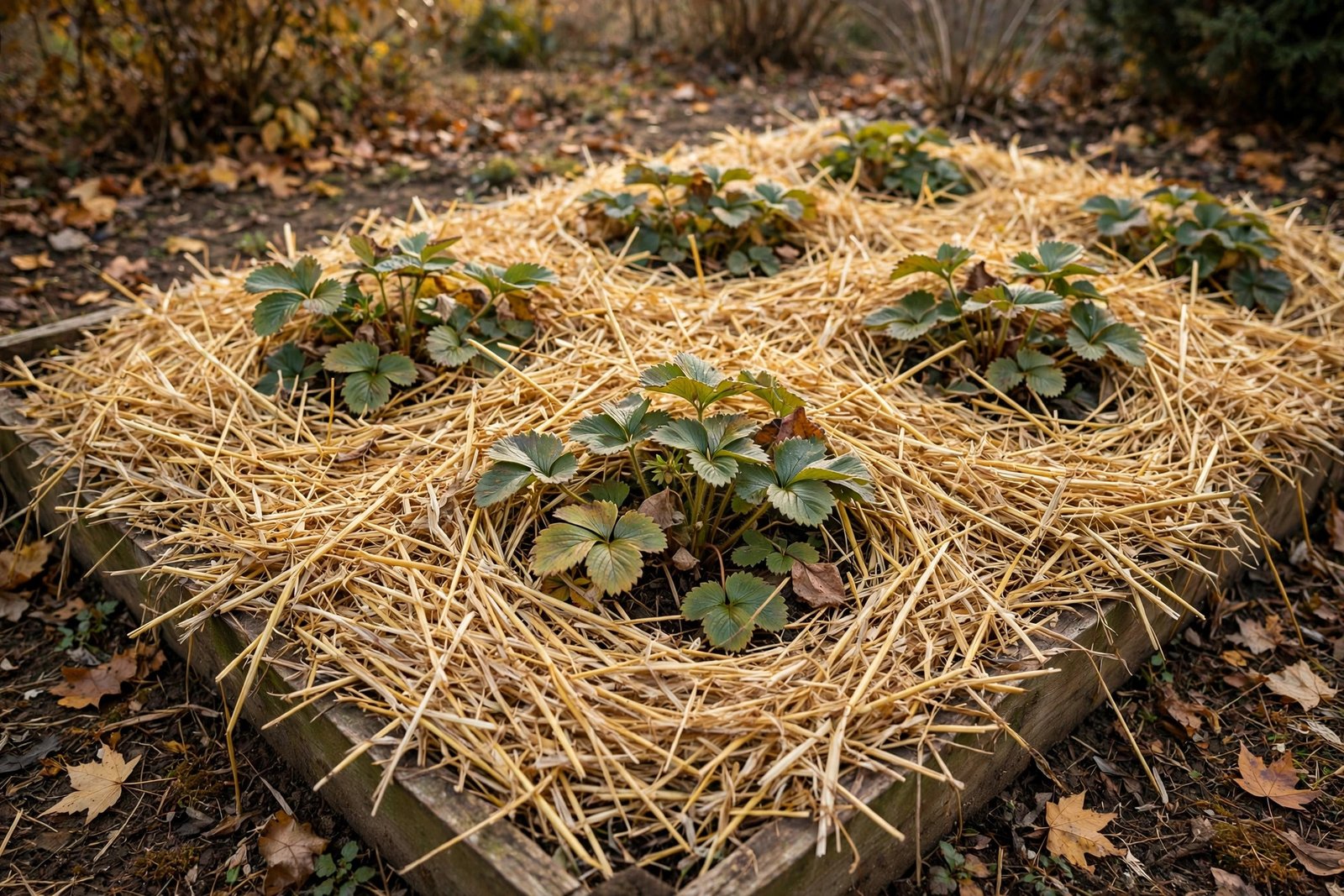
Apply 2 to 3 inches of straw. Straw is the standard choice, and a rectangular bale covers roughly a 10-foot row at that depth. Chopped leaves work too, mulched with a lawnmower first. Do not fertilize late in the season — late feeding pushes soft growth that is more prone to winter injury, which is the opposite of what you want going into November.
Take it off in spring when growth begins. Leaving mulch on too long delays harvest and can cut yield, so pull it back as plants start growing and leave it between the rows, where it becomes the summer mulch that keeps berries clean. If a frost threatens after flowering has begun, recover the plants with straw or a row cover for the night.
That is the complete straw method, and for an in-ground bed it is hard to beat: cheap, simple, and proven in exactly this climate. Its only real weakness is that it does nothing for a pot, whose roots are exposed to air on all sides.
The Cold Frame Method: Structure with a Catch

A cold frame is a low, glazed box set over plants, and it changes the winter equation in two ways. It blocks wind and holds a pocket of slightly warmer air, and it keeps freeze-thaw cycles gentler than open ground. For container strawberries, that matters enormously: a pot left above ground in Zone 4 freezes through, roots and all, while a cold frame, a buried pot, or a move to a space that stays between 20° and 40°F all winter gives those roots a chance.
The catch is heat. On a sunny winter day, a closed cold frame warms up fast, and plants inside can break dormancy weeks early. Then the next hard freeze hits soft new growth, and the damage is worse than if the plants had stayed cold and asleep. A cold frame is not a set-it-and-forget-it cover. It needs venting whenever the sun is strong, and it needs a gardener who checks it.
So the cold frame earns its place in three situations: pots that cannot be buried, fall-planted strawberries that have not fully established, and marginal varieties or tender plants you are nursing through a winter they might not otherwise survive. For a healthy in-ground bed of hardy June-bearers, it is extra work for no extra fruit.
Verdict: Straw for the Bed, Cold Frame for the Pots
Most Zone 4 gardeners should reach for straw. Wait for dormancy, lay on 2 to 3 inches, pull it back in spring, and let reliable snow do the rest where it falls. It is the cheapest method, the simplest method, and the one Extension guidance in this climate is built around.
Reach for the cold frame when the plants are not in the ground — pots, planters, and anything you planted late or are trying to keep alive past its comfort zone. Vent it on sunny days, close it before a hard freeze, and never let it talk your plants into waking up in February. A cold frame that is not vented is worse than straw. A cold frame that is vented is the best winter home a potted strawberry can get.
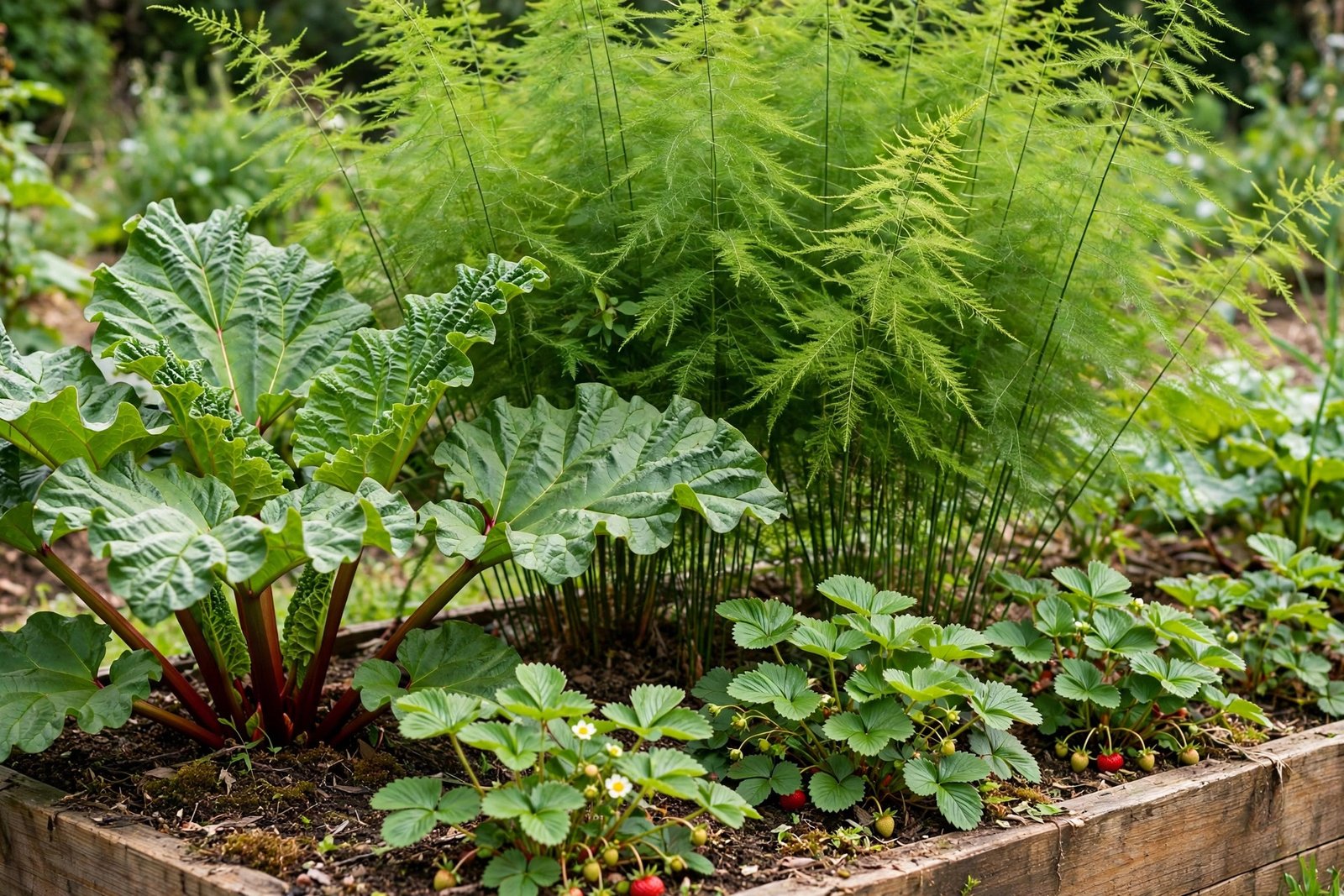
And if your strawberry bed shares ground with the perennial vegetables — asparagus ferns left standing, sorrel still green after frost, an artichoke you grew as an annual — those plants want the same November attention, each in their own way. Asparagus crowns are hardy, sorrel shrugs off frost, and artichoke will not return after a Zone 4 winter no matter how well you tuck it in. Know which perennial you planted before you decide how hard to protect it.
The Perennial Bed You Are Tucking In
Winter protection is a bed-wide job, not a strawberry-only job. These three seed-grown perennials share the bed, and each one winters differently. Plant them in spring with that in mind, and November gets simpler.
Spartacus Asparagus Seeds
Hardy to Zone 3 and productive for up to 12 years — leave the ferns standing into winter to feed next year’s spears.
Common Sorrel Seeds
Stays green even after frost and returns in zones 3–7 — the perennial green that asks least of you in winter.
Green Globe Improved Artichoke Seeds
Superb buds in year one, but perennial only in zones 7–10 — in Zone 4, enjoy it as an annual and do not count on its return.
For the full perennial roundup, see Best Perennial Edibles for Northern Gardens, and for getting asparagus, artichoke, and sorrel started from seed in the first place, see Growing Asparagus, Artichoke, and Sorrel from Seed. For frost dates and season extension more broadly, see Frost Dates and Extending the Season.
Bottom Line
Straw for the in-ground bed, cold frame for the pots and the tender plants, and never mulch before dormancy. Get that timing right and your strawberries will come back in spring ready to fruit — which is the whole point of planting a perennial in the first place.