Landscape & Leisure is reader-supported. When you buy through links on our site, including Botanical Interests seed links, we may earn a commission at no extra cost to you. Prices change, so click through to confirm current pricing.
Every fall gardener has had the same sinking thought, usually while staring at a seed packet in September: is this too late? The honest answer is that it depends on exactly one thing — how many days stand between today and your first frost — and once you know how to count that, fall sowing stops feeling like a gamble and starts feeling like a plan.
Here is the whole method in one sentence: start with your average first frost date, count backward by each crop’s days to maturity, and add about two weeks because plants grow slower as the days shorten. That is it. The rest of this guide is the detail that makes that sentence work — where to find your frost date, how to handle hot soil, and what to sow when. For varieties to plant, see our roundup of the best vegetables to plant in late summer for fall harvest, and for frost protection once the cold arrives, see our frost dates and season-extension FAQ.
Why Fall Sowing Works Differently Than Spring
In spring you sow into warming soil and lengthening days, and everything accelerates. In fall the pattern runs in reverse: the soil is warm at sowing time, which gets seeds up fast, but the days are shrinking and the air is cooling, which slows growth week by week. A crop that takes fifty days in spring can take closer to sixty-five in fall.
That is why extension services tell fall gardeners to add a cushion — Virginia Tech’s fall vegetable guide calls it the “fall factor,” about two weeks on top of the packet’s days to maturity. It is not pessimism. It is the price of shorter daylight, and building it into your count is what separates a fall garden that feeds you from one that freezes half-grown.
The good news is that fall has real advantages spring never offers. Warm soil means quick germination. Pest pressure drops as the season cools. And cool-weather crops — spinach, kale, carrots, beets, radishes, lettuce, peas — actually taste better grown in fall than in spring, because cold concentrates their sugars instead of heat turning them bitter.
Step 1: Find Your First Frost Date
Your average first frost date is the date your area typically sees its first 32°F night in fall. It is an average, not a promise — some years it comes early, some years late — but it is the anchor for every fall calculation. Find it from your local Cooperative Extension office, a nearby weather station’s climate normals, or a frost-date lookup for your town or county.
Write the date down, then work backward from it. If your first frost is October 10 and you want spinach that takes fifty days, plus a two-week fall cushion, you count back sixty-four days — which lands around August 7. That is your sow-by date for spinach, not a suggestion. Sow later and you are betting on a late frost, which sometimes pays and sometimes does not.
Step 2: Sow the Slow Crops First, the Fast Ones Last
Fall planting is not one planting day. It is a sequence, spread across weeks, and the order matters more than the effort. Slow crops go in first, while summer is still warm. Fast crops fill the gaps later, right up to a few weeks before frost.
| When to sow | What to sow | Why this timing |
|---|---|---|
| 12–13 weeks before first frost | Carrots | 75 days to maturity plus the fall cushion |
| 10–11 weeks before first frost | Kale, beets, peas | 60–62 days to maturity plus the fall cushion |
| 9–10 weeks before first frost | Spinach, lettuce | 50–55 days to maturity plus the fall cushion |
| 4–6 weeks before first frost | Radishes, salad greens | Fast crops that mature in 3–4 weeks |
| 2–4 weeks before first frost | More radishes, baby greens under cover | Last sowings, protected by row cover or a cold frame |
The practical version: in a zone with an early-October first frost, carrots and kale go in during July, peas and spinach in August, and radishes keep going into September. Miss the carrot window and you do not get carrots this fall — but you still get radishes, and radishes in three weeks are nothing to apologize for.
Step 3: Handle the Heat at Sowing Time
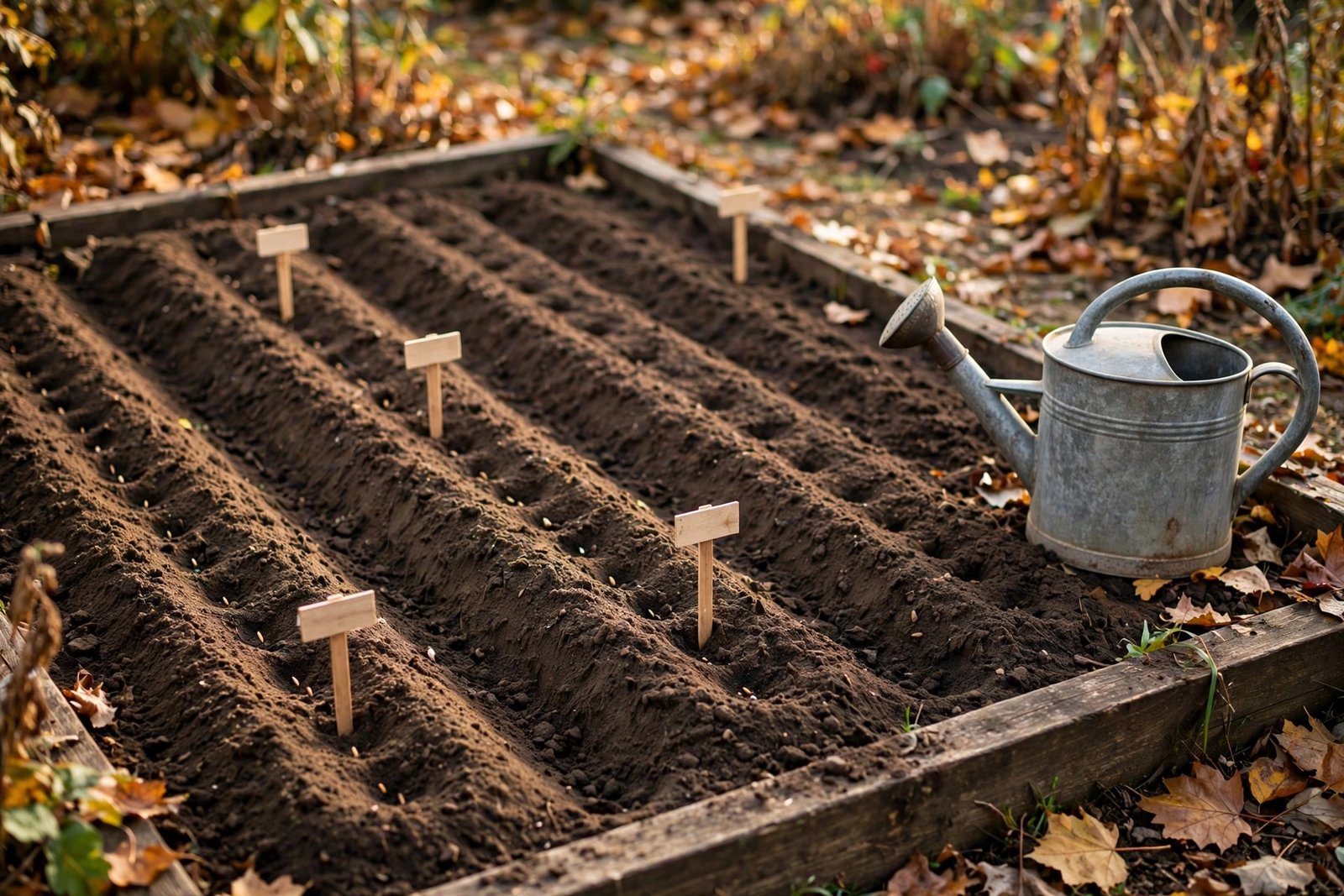
Fall’s trickiest week is the first one. The soil is warm, which most seeds love, but a late-summer heat wave can push soil temperatures past what lettuce and spinach seed will tolerate — lettuce germinates poorly above about 80°F soil, and spinach sulks in heat too. The fix is simple: sow in the afternoon shade of taller plants, water the row well before sowing, and cover the row with a board or damp burlap for a few days to hold moisture and keep the soil cool. Lift the cover the moment seedlings emerge.
Water is the other early-fall job. Seeds need steady moisture to germinate, and late-summer soil dries fast. A light watering once or twice a day until seedlings are up beats a weekly soak — and a thin mulch over the row, pulled back once plants are established, holds that moisture where it belongs.
Step 4: Sow in Successions, Not All at Once
The fall garden rewards the gardener who sows a little at a time. A short row of radishes every week or two gives you fresh roots all fall instead of one overwhelming flush. A second sowing of spinach two weeks after the first covers you if the first round bolts in a hot spell. And staggering lettuce sowings means you are picking tender leaves for months, not racing one planting to maturity.
Succession sowing also spreads your frost risk. If an early frost nips one planting, the next one — younger, smaller, often hardier — may sail right through it. Fall gardening is not about one perfect planting. It is about a steady stream of small ones.
What to Sow: Three Reliable Starters
If you are new to fall sowing, start with these three. They cover the range — one fast, one steady, one slow — and between them they teach you the whole rhythm of the season.
Bloomsdale Spinach is the steady one. Fifty days to maturity, frost-tolerant, and it just keeps producing if you pick the outer leaves. Sow it 8–10 weeks before your first frost and you will be eating spinach while the rest of the garden winds down.
Bloomsdale Spinach Seeds
Fifty days to crinkled, tender leaves that keep producing through light frosts.
Cherry Belle Radish is the fast one. Twenty-two days, and it forgives a late start better than anything else in the garden. If you missed every other window, sow radishes — and sow them again next week, too.
Cherry Belle Radish Seeds
Crisp radishes in about three weeks — the crop that rescues a late start.
Danvers 126 Carrot is the slow one, and the one worth planning for. Seventy-five days means it goes in first, while summer is still warm, and it pays you back with sweet roots you can leave in mulched ground and pull as needed into late fall.
Danvers 126 Carrot Seeds
Sow first, harvest last — sweet roots that store in the ground under mulch.
Common Fall Sowing Mistakes
Sowing everything on the same day. Fall is a sequence. Sow slow crops first, fast crops last, and succession-sow the quick ones.
Forgetting the fall cushion. Counting back exactly the packet’s days to maturity leaves no room for slower fall growth. Add two weeks.
Letting the seedbed dry out. Late-summer soil dries fast, and a dried-out row means spotty germination. Water lightly and often until seedlings are up.
Planting tender crops for fall. Beans, corn, cucumbers, and squash need warm weather and die at the first frost. Fall belongs to the cool-weather crowd — save the tender crops for spring.
Takeaways
Find your first frost date. Count back days to maturity plus two weeks. Sow slow crops first and fast crops last, keep the seedbed moist, and succession-sow the quick ones. Do that and fall stops being the end of the gardening year — it becomes the second harvest, often the better-tasting one. For what to plant, see our late-summer planting roundup, and for stretching the season past frost, our frost and season-extension FAQ.