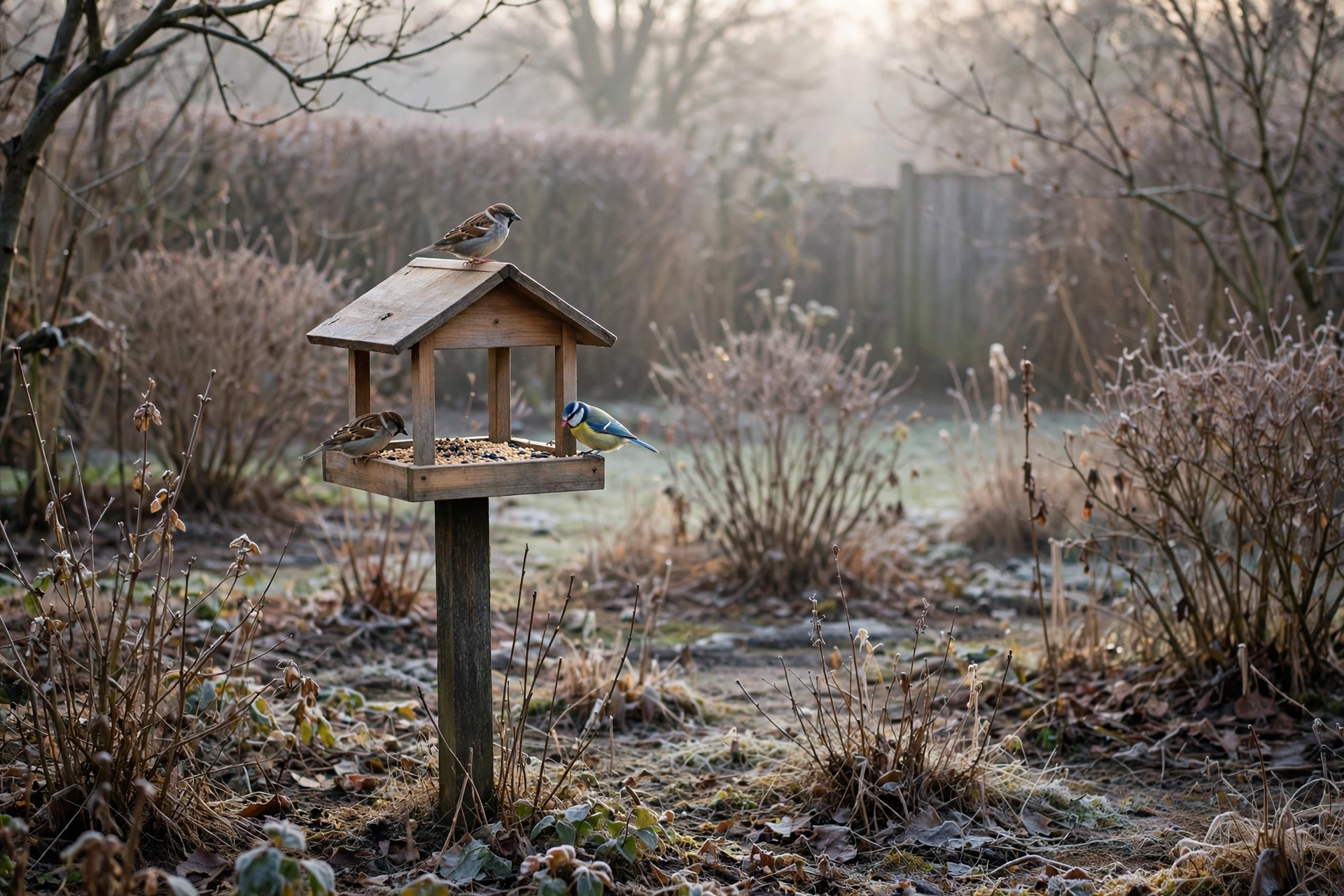
If your garden has gone quiet and a little bare, you are not the only one noticing — the birds who visited your flowers all summer are still out there, and winter asks more of them than any other season. The good news? Feeding them well is simple, inexpensive, and honestly one of the happiest parts of a sleeping garden.
What to Put on the Menu
University extension services agree on one crowd-pleaser above all the rest: black-oil sunflower seed. Its thin shell is easy for small beaks to crack, and it draws the widest guest list — chickadees, cardinals, finches, and nuthatches all show up for it.
Add a suet cake when the cold settles in, because suet is pure energy, and a bird burning calories just to stay warm overnight needs exactly that. A handful of peanuts in a mesh feeder will bring the woodpeckers, and a little white millet scattered on the ground suits the juncos and sparrows who prefer to dine downstairs.
Setting Up in Three Easy Steps
Step 1: Place the feeder where birds feel safe. Set feeders about 10 feet from a shrub or brush pile, close enough that birds can dart to cover when a hawk cruises by, far enough that a hiding cat cannot launch a surprise. A window within 3 feet or beyond 30 feet also lowers the risk of window strikes.
Step 2: Fill it, then keep it filled. Once you start in a cold snap, stay consistent — fill the feeder in the morning so birds can top up before the long, cold night. Check after storms, when seed gets wet and clumps.
Step 3: Offer water, too. Birds need drinking water even when everything is frozen. A shallow dish refreshed daily does the job, and breaking a thin skin of ice on a frosty morning takes ten seconds.
If you want the whole yard working for them, not just one feeder, our guide to building a winter wildlife garden shows how seed heads, berries, and cover fit together.
Keeping It Clean (This Part Matters!)
A busy feeder is a gathering place, and gathering places need housekeeping. Pro Tip: empty and scrub your feeders every two weeks with a solution of one part bleach to nine parts water, rinse well, and let them dry completely before refilling. Sweep up old, wet seed hulls under the feeder while you are at it.
If birds are tossing seed everywhere, do not take it personally — they are picky shoppers looking for the good stuff. Our explainer on why birds toss seeds out of the feeder will make you feel much better about the mess, and switching to a single-seed feeder usually ends the confetti.
Pro Tips for a Busy Winter Feeder
- Start small: one tube feeder and one suet cage is plenty — you can always add a second station later.
- Store seed dry: keep seed in a lidded bin indoors or in the garage so it stays fresh and out of reach of mice.
- Watch who visits: keep a little notebook by the window; by January you will know your regulars by sight.
- Think bigger picture: feeders plus shrubs, seed heads, and water turn a yard into habitat — the ideas in our bird’s paradise guide pull it all together.
Wrap-Up Tips
Feeding the birds asks for about ten minutes a week, and it pays you back every single morning — a flash of red at the feeder, chickadees bickering cheerfully over breakfast, the garden still full of life while the beds rest. Keep the feeder full through the cold snaps, and your winter garden will never feel empty. Happy gardening!