Every January, my pothos used to look at me like I had personally betrayed it. Droopy leaves, a yellow one here and there, and that sad, leggy stretch toward the window — I was doing everything the same as I did in July, and my plants were quietly falling apart. Sound familiar? The good news is the fix is simple, and once I learned it, my houseplants started sailing through winter like it was no big deal at all!
Why Winter Is So Hard on Houseplants
Think about what changes in your house once the heat kicks on. The days get shorter, so your plants get far less light. The air gets dry — heated homes often drop to just 10 to 20 percent humidity, while most houseplants prefer 40 to 60 percent (University of Kentucky Extension). And your plants slow way down, which means they drink less and need almost no food. Keep watering and feeding them like it’s summer, and you’re loving them to death. Let’s dig into the routine that actually works!
My Winter Routine, Step by Step
Step 1: Move them back from the glass. A window that felt cozy in September turns cold in January, and leaves touching cold glass can chill-damage overnight. I pull every plant back 3 to 4 inches from the windowpane and keep them away from exterior doors and heating vents, too. The University of Minnesota Extension says most houseplants are happiest with daytime temperatures of 65 to 75°F and nights of 60 to 65°F — right where most of us keep our homes anyway!
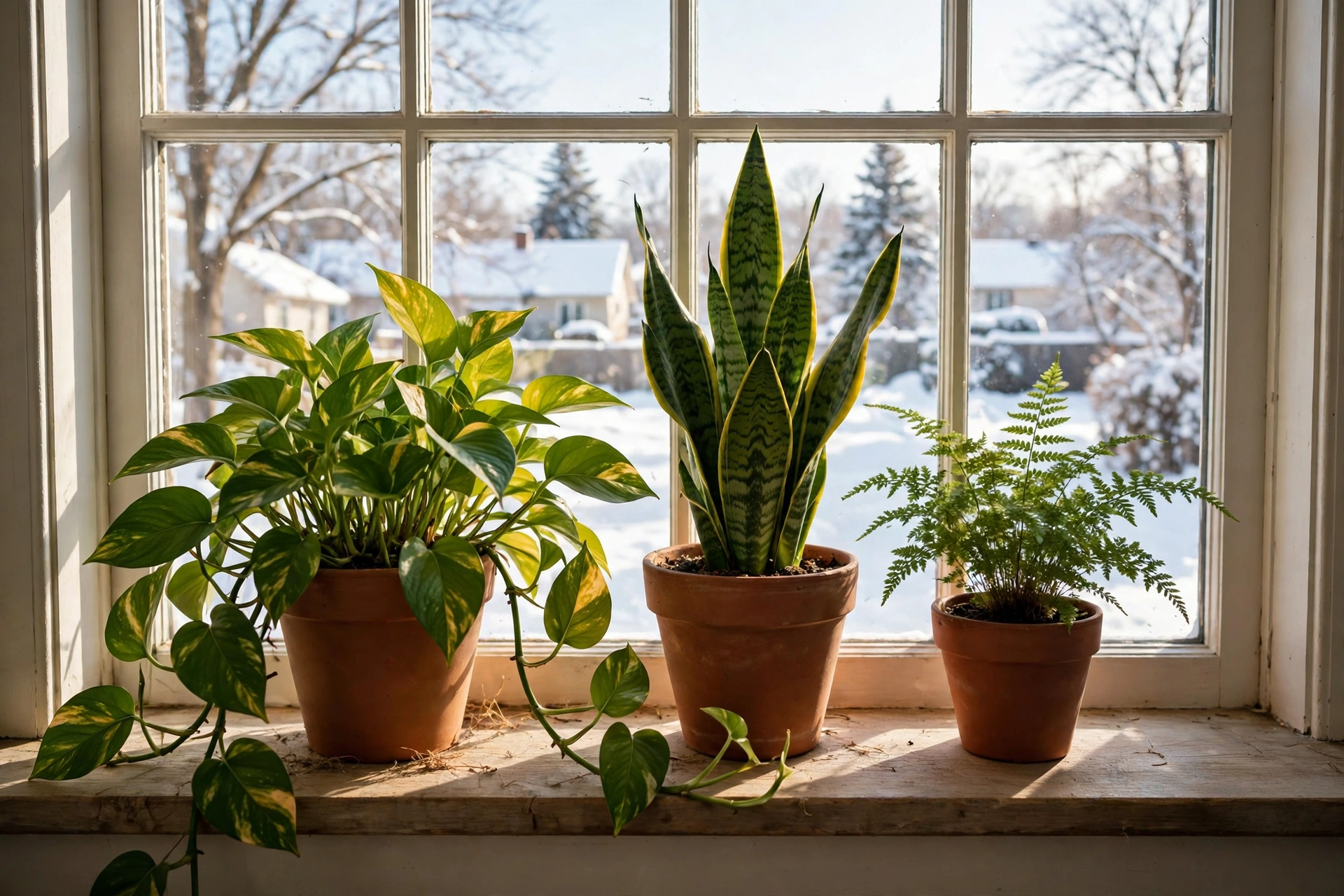
Step 2: Chase the light. Winter sun is weaker and sits lower in the sky, so a spot that was bright in summer can be dim now. I move my light-lovers to the brightest window I have — usually south or west — and rotate each pot a quarter turn every week so they grow evenly instead of leaning. My tall houseplants get the sunniest corner of the room, and the low-light crew is perfectly happy a few feet back. If you have an east-facing window, that’s a sweet spot for most plants in winter: gentle morning sun without the cold draft of a north window.
Step 3: Water by the soil, not the calendar. This is the big one, friend. Most houseplants need water far less often in winter because they’re barely growing, so the weekly routine that worked in July can leave the soil soggy in January. I poke a finger an inch or two into the soil first — if it feels damp, I wait a few days and check again. When I do water, I water thoroughly, let the excess drain away completely, and empty the saucer within the hour. No plant should ever sit in standing water.
Step 4: Put the fertilizer away. Here’s a secret that saves more plants than any gadget: skip the fertilizer until you see new growth in spring. The University of Minnesota Extension notes that feeding generally isn’t necessary in winter because most plants are growing very little or resting. Feeding a resting plant is like serving a big dinner to someone who’s already asleep — it just sits there and causes trouble.
Step 5: Give them a little humidity. Dry air shows up as brown, crispy leaf tips. I group my plants together (they share moisture!), set a few on pebble trays filled with water, and run a small humidifier in the plant room on the driest days. Misting looks helpful, but it’s a quick fix that evaporates in minutes — the pebble tray and the grouping do the real work.
Pro Tips for a Happy Winter
- Check for hitchhikers: Give every plant a quick look under the leaves once a week. Spider mites and mealybugs love dry winter air, and catching them early is everything.
- Don’t repot now: Winter is not the time for a big repot — wait until spring when the plant is growing again. If roots are truly crowded, just wait it out.
- Trim with confidence: Snip off yellow or dead leaves as they appear. Your plant isn’t dying — it’s just shedding what it can’t support in low light, and a tidy plant is a happy plant.
- Keep a notebook handy: I jot down which plants sulked and which thrived, so next winter I know exactly who needs the sunny window. My wandering jew always wants more light than I think — noted!
Wrap-Up
Winter plant care really comes down to three small shifts: more light, less water, and no fertilizer until spring. Work smarter, not harder — your plants aren’t asking for a lot, just a little attention in the right places. Try the routine for a few weeks and watch what happens. Your plants will thank you for it, and come spring you’ll have a whole jungle to show for a winter of small, easy habits. Happy gardening!