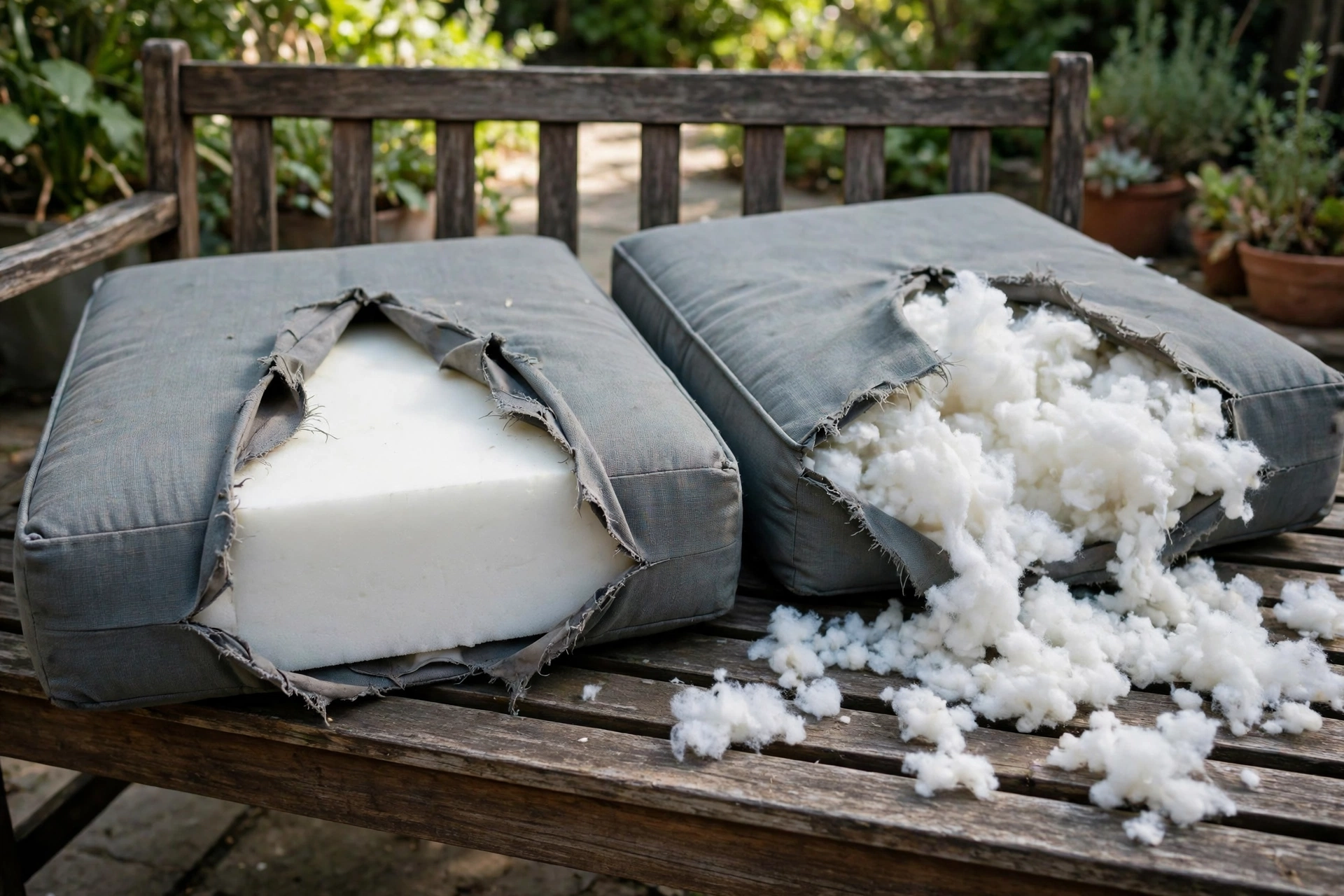
You sit down on a patio cushion that felt plump last spring, and it goes flat under you in seconds.
That flat feeling is a filling problem, and it decides whether a furniture set still feels good in its third summer or only in its first. The choice at the center of it is foam versus polyfill — two fillings that look similar through the fabric and age in very different ways.
This guide settles which filling lasts longer, where each one belongs, and what to watch for with rain. The short answer shapes the details below: foam lasts longer for seats, while polyfill remains acceptable for back pillows.
Foam vs polyfill, at a glance
| Feature | Foam | Polyfill |
|---|---|---|
| Feel | Firm and supportive | Soft and loose |
| Shape retention | Holds its shape through repeated sitting | Flattens and clumps over time |
| Water behavior | Can trap water unless it is quick-dry foam | Absorbs water and dries slowly in a packed cushion |
| Best use | Seat cushions | Back pillows |
| Cost | Costs more up front | Cheaper up front |
What foam does in a seat cushion
Foam is a solid slab or a shaped block, so it pushes back when you sit down. That support is why a foam seat still has an edge and a height after seasons of daily use, while a loose filling has nowhere to return to.
Firmness is the trade-off readers notice first. A foam seat feels firmer than a polyfill seat on day one, and people who want a deep, sink-in lounge chair sometimes find it too disciplined for the first few weeks.
Water is the trade-off that matters outdoors. Standard foam can trap water inside the cushion, where it dries slowly and adds weight, so look for quick-dry foam — an open-cell type that lets water pass through — whenever the set will sit uncovered.
What polyfill does in a cushion
Polyfill is a loose cluster of polyester fibers, closer to the filling inside a bed pillow than to a slab. It feels soft and forgiving the moment you lean back, which is exactly why it suits back pillows so well.
The same looseness explains how it ages. Fibers shift away from pressure, clump together, and leave thin spots, so a polyfill seat cushion flattens in the middle while the corners still look full.
Fluffing buys time, not a cure. Shaking and redistributing the fibers restores the look for a while, although each cycle recovers a little less loft than the one before.
Which filling lasts longer?
Foam lasts longer, and the gap is widest in seat cushions. A seat takes your full weight in the same spot every day, and a solid foam block spreads that load and springs back, while loose fibers migrate and pack down under the same routine.
Back pillows live an easier life. They support a lean instead of a full sit, so polyfill holds up acceptably there, and its softness is a genuine advantage against your back and shoulders.
Picture a long dinner outside, chairs pulled close and nobody in a hurry to move. The foam seats still feel even at dessert, while a flattened polyfill seat has you shifting around by the main course — that difference in hour two is what the lifespan gap feels like in practice.
How each filling handles rain
Neither filling enjoys being soaked, so the cover fabric and storage habits still matter. The difference is in how each one dries once water gets in, which it eventually does through seams and zippers.
Quick-dry foam drains and breathes, so a cushion stood on its edge after rain can dry in the sun. Standard foam without that open structure holds the water longer, and a heavy, soggy seat is the tell.
Polyfill absorbs water into the fiber mass and dries slowly because the clumped fibers block airflow. Standing a polyfill cushion upright and giving it full sun helps, although repeated soaking speeds up the clumping that flattens it.
What to choose for each cushion
Choose foam for every seat cushion you expect to sit on daily. Pay the higher price there, because that is the cushion whose failure you will feel every single evening.
Choose polyfill for back pillows without worrying about the shorter lifespan. A back pillow is easy to fluff, easy to replace, and more comfortable in polyfill for most people who lean back with a book.
When you shop a full set, read the filling for the seats and the backs separately. Our hub of the best outdoor furniture sets under $2,000 is the place to compare complete sets once you know which filling you want under you.
How to make either filling last longer
Store cushions under a cover or in a deck box when a stretch of rain is coming. Keeping the soak out in the first place does more for lifespan than any drying routine after the fact.
Stand wet cushions on edge in the sun instead of leaving them flat on the frame. Water drains toward the seam, air reaches both faces, and the cushion dries before mildew gets a chance to start.
Fluff polyfill back pillows weekly during heavy use. A minute of shaking keeps the fibers distributed, and catching a thin spot early is easier than reviving a pillow that has fully clumped.
Bottom line
Buy foam for the seats and accept polyfill for the back pillows. Foam holds its shape and support through seasons of daily sitting, and that is the cushion you will judge the whole set by — so spend on foam where you sit, and let the softer, cheaper polyfill do the lighter work behind your back.