This site contains product affiliate links. We may receive a commission if you make a purchase after clicking on one of these links.
You pull the cord in April and the mower starts, sputters, and dies. Or it never starts at all. Before you blame the spark plug, look at the gas — the fuel that sat in the tank all winter is the first suspect, and the fix starts with a decision you should have made back in October: stabilize it, or drain it.
Both choices work. They just work for different winters. The wrong one does not ruin your mower, but it does cost you a Saturday in spring — cleaning a carburetor, or hunting down why the engine will not catch. Here is how to tell which one your mower actually needs.
The symptom: what stale fuel looks like
Stale fuel has a few tells, and they show up in a particular order. First the mower is hard to start — it takes three or four pulls where one used to do it. Then it runs rough, surging and sputtering under load, or it starts and dies the moment you let go of the bail. In the worst case it will not start at all, and the gas in the tank smells sharp and varnishy instead of like fresh gasoline.
Those symptoms have three likely causes, and they overlap. The most common is simple age: gasoline breaks down over months, leaving gummy deposits that clog the tiny passages in a carburetor. The second is moisture — the ethanol in most pump gas attracts water while it sits, and that water settles at the bottom of the tank and the carburetor bowl. The third is a varnished carburetor jet, where the deposits have hardened enough that no amount of fresh gas will clear them without a cleaning. The distinguishing check is the smell and the age: if the gas is more than a few months old and smells off, stale fuel is almost certainly your problem. If the mower ran fine on fresh gas last season and now will not start on old gas, you have your answer without opening anything up.
Option one: stabilize the fuel
Fuel stabilizer is a chemical that slows down the breakdown of gasoline, keeping it usable through months of storage. You add it to fresh gas, run the engine for a few minutes so the treated fuel reaches the carburetor, and then you park the mower. That last step is the one people skip — stabilizer sitting in the tank does nothing for the untreated fuel already sitting in the carburetor bowl.
Stabilizer is the right call for a normal winter: three to five months of storage, with fuel that is still fresh when you treat it. It is fast — one bottle treats a whole season of fuel — and it means the mower is ready to start in spring without a trip to dispose of old gas. Its limit is honest: it preserves fuel that is still good. It does not rescue fuel that has already gone stale, and it does not help if the mower is going to sit for a year or more.
For winter storage, the straightforward pick is STA-BIL Storage. One ounce treats 2.5 gallons, so a 32 oz bottle treats 80 gallons — far more than a season of mower fuel — and it keeps fuel fresh for up to 24 months. That long window is the reason it wins for winter: a normal cold season is well inside what it is rated to handle.
STA-BIL Storage Fuel Stabilizer, 32 oz
Keeps fuel fresh for up to 24 months — the longest storage window here, and the right pick for a normal winter.
One trade-off to know: STA-BIL Storage is built for storage, not for cleaning. It keeps good fuel good, but it does not contain the fuel-system cleaners that scrub deposits out of a carburetor. If your mower already runs rough on fresh gas, stabilizer alone will not fix it.
The runner-up: a stabilizer that also cleans
STA-BIL 360 Marine is the second bottle worth knowing about. It is dosed differently — 1 oz treats 10 gallons, so a 32 oz bottle treats 320 gallons — and it carries PEA fuel-system cleaners, which help keep the fuel system clean while the mower runs. The honest trade-off is its storage window: it keeps fuel fresh for up to 12 months, half the window of STA-BIL Storage. It is built for in-season ethanol protection, and it does that job well. For a winter layup, though, the shorter window makes Storage the better pick.
STA-BIL 360 Marine Fuel Stabilizer, 32 oz
Fuel-system cleaners plus ethanol protection — a strong in-season choice, with a shorter 12-month storage window.
The 360 Marine earns its place as a runner-up, not a loser. If you run your mower hard through the season and want a stabilizer that also helps keep the fuel system clean while you mow, it is a good bottle. It is simply not the best bottle for the specific job of sitting untouched for five months.
Option two: drain the tank
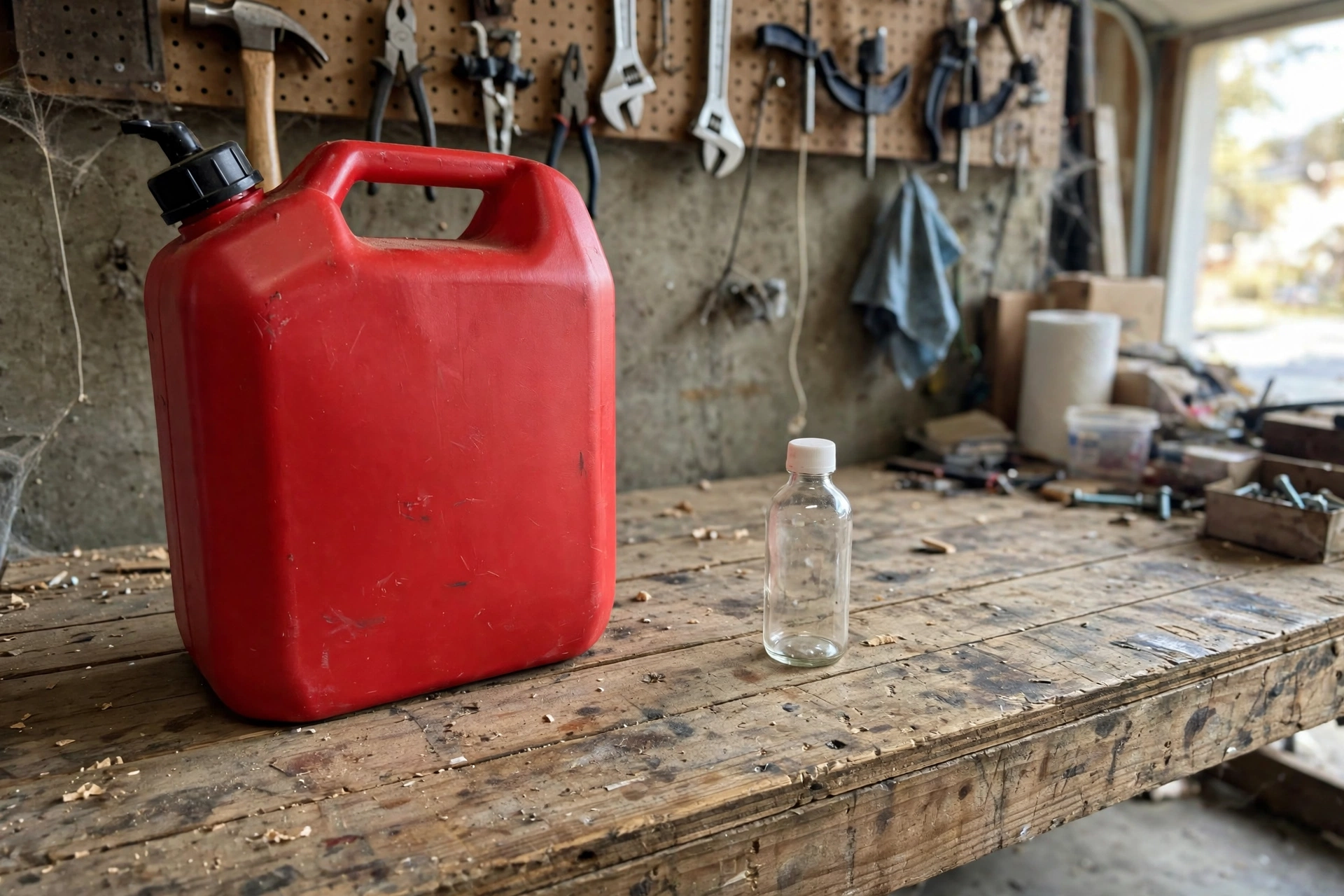
Draining means getting all the fuel out — run the engine until it stops, then drain whatever is left in the tank into an approved container and take it to a household hazardous waste drop-off. A drained system has nothing to go stale, nothing to gum up, and nothing to attract moisture. It is the most thorough option, and it is the right one in two situations: the fuel in the tank is already old, or the mower will sit for a year rather than a season.
Draining has real downsides, which is why it is not the default. It takes more time than adding stabilizer, it leaves you with a container of old gas to dispose of properly, and a completely dry carburetor can let its rubber seals dry out over a long layup. It also leaves the mower unusable on a warm January day — a stabilized mower can be started and used, a drained one cannot. For a normal winter, that is a lot of hassle for no benefit.
Stabilizer vs. draining, side by side
Here is the short version. Stabilizing is faster, cheaper in time, and keeps the mower ready to run. It needs fresh fuel to start with, and it needs you to run the engine for a few minutes after adding it so the treated fuel reaches the carburetor. Draining is more thorough and the right call for old fuel or very long storage, but it costs you an afternoon and a disposal trip, and it can dry out carburetor seals over a long layup.
The deciding question is simple: how old is the fuel, and how long will the mower sit? If the gas is fresh and the mower will be back out in three to five months, stabilize it. If the gas is already months old, or the mower will sit for a year, drain it. If you are not sure how old the gas is, smell it — fresh gas smells like gasoline, stale gas smells sharp and varnishy. When in doubt, drain it and start spring with fresh fuel.
What success looks like in spring
A mower that was stabilized properly starts on the first or second pull in spring, runs smooth under load, and smells like fresh gas, not varnish. A mower that was drained properly starts the same way once you add fresh fuel — it just takes a few extra pulls the first time while the carburetor fills again. Either way, the test is the same: it starts, it holds a steady idle, and it does not surge when you push it into tall grass.
If it does not start, work the diagnosis in order. Check the fuel first — is it fresh, and did treated fuel reach the carburetor? Then the spark plug, then the air filter. A mower that will not start on fresh gas with a clean plug and filter has a carburetor problem, and that is a cleaning job, not a fuel-choice problem. Fuel stabilizer prevents the problem; it does not repair a carburetor that is already gummed up.
The verdict
For a normal winter, stabilizer wins. Add STA-BIL Storage to fresh gas, run the engine for a few minutes, and park the mower — that is the whole job, and it is the job most mowers need. Drain the tank only when the fuel is already old or the mower will sit for a year. Either way, make the decision in October, not in April when you are standing over a mower that will not start. And once the fuel is sorted, finish the rest of the winterizing job with our guide to how to winterize a lawn mower — battery, deck, and tires — and put covers on your outdoor faucets before the first hard freeze.