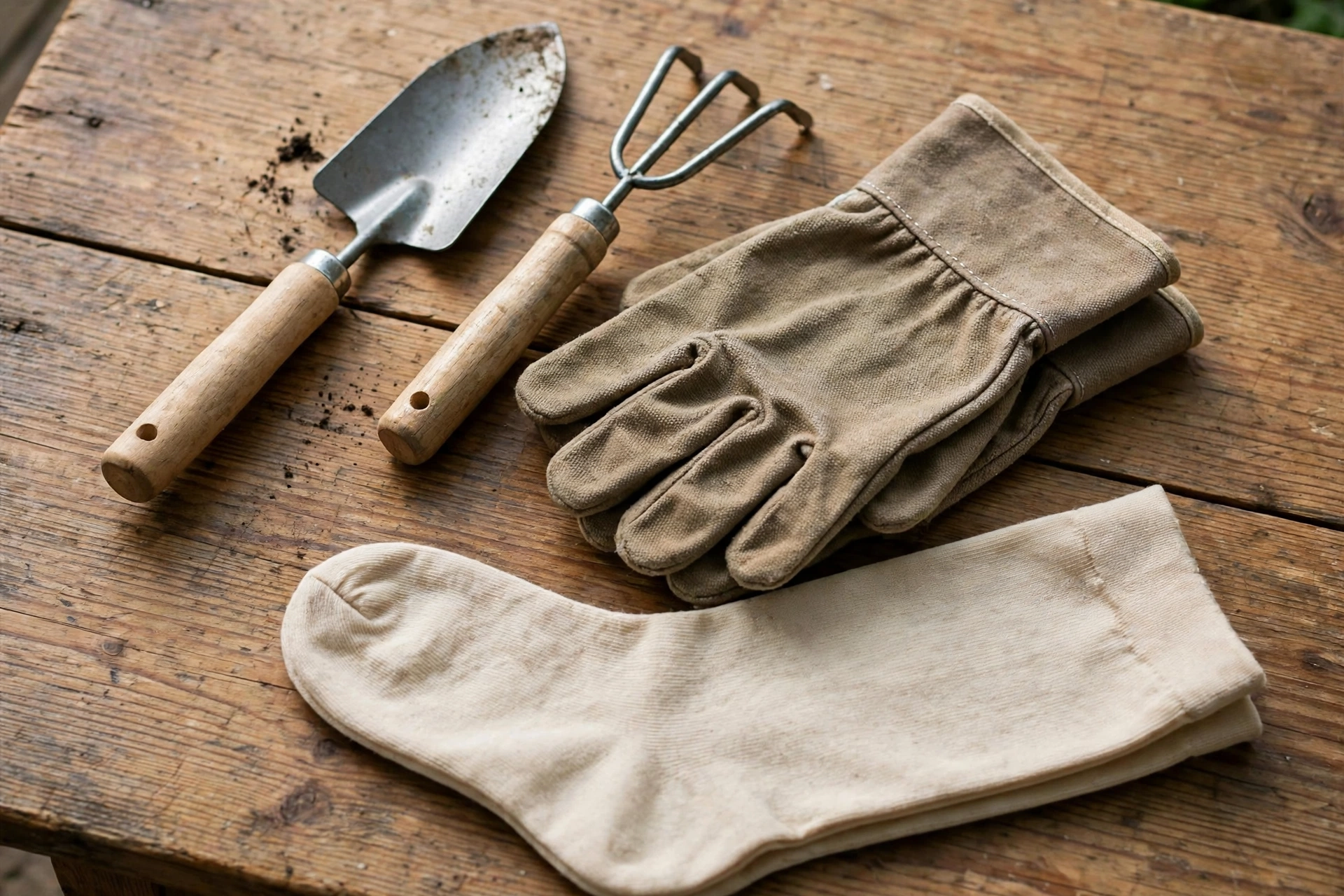
November works your blower harder than any other month, then parks it for four months without a word. What you do in that gap decides whether spring starts with a pull of the cord or a trip to the repair shop.
The care is not complicated, and it is different for gas and cordless. Gas blowers need their fuel dealt with before storage. Cordless blowers need their batteries dealt with. Both need a cleaning. An hour now is the whole job.
Why November is the month to do this
Leaf season peaks as temperatures fall, and then the blower sits. Fuel left in a gas tank turns stale over winter and gums up the carburetor — the most common reason a gas blower refuses to start in spring. A lithium battery left dead, or left baking on a charger all winter, comes back weaker. Neither failure announces itself until the first warm weekend, when every shop is busy.
Gas blower care: fuel first, everything else second
Deal with the fuel. Either run the tank dry on your last blow of the season, or fill it with stabilized fuel and run the engine a few minutes so the treated fuel reaches the carburetor. Old unstabilized fuel is the one mistake that undoes everything else in this list.
Mix fresh, at 50:1. Two-cycle gas blowers like the Husqvarna 125B run on a 50:1 gas-to-oil mix — one gallon of gas to 2.5 ounces of two-cycle oil. Mix only what you will use within a month or two, and label the can so nobody pours it into the mower.
Check the air filter and spark plug. Tap the filter clean, or replace it if it is torn or oil-soaked. A clogged filter makes the engine run rich and hard to start. Pull the spark plug, check it for heavy carbon, and replace it if the electrode looks worn. A fresh plug costs little and removes one more spring question.
A note on fuel stabilizer and ethanol
Most pump gas contains ethanol, and ethanol attracts moisture from the air. That is why untreated fuel goes stale in a small engine over winter while the same can sits fine for a month in summer. A fuel stabilizer slows that process, but it cannot rescue fuel that has already turned. Add stabilizer to fresh fuel, not to the old can from August.
Pre-mixed canned fuel is the other option: it arrives already blended at the right ratio, with no ethanol and a long shelf life, and it costs more per gallon than mixing your own. For a homeowner who burns one tank a year, the extra cost buys a spring without a fuel-system repair. Whichever route you take, do not carry mixed fuel into next season — if it smells sour or varnished, it belongs in a proper disposal container, not in the blower.
Clean the cooling fins and tube. Brush debris off the engine housing so air can reach the cooling fins, and check the blower tube for cracks. A cracked tube leaks air and quietly costs you power.
Cordless blower care: the battery is the engine
Store the battery partly charged. A lithium battery stores best at roughly half charge, in a cool, dry place indoors. Do not store it dead, and do not leave it on the charger all winter.
Keep it out of the cold and the damp. A garage that freezes is a poor home for a battery. Bring the battery inside for the winter; the blower itself can stay in the garage. A frozen battery should warm to room temperature before you charge it.
Clean the vents and contacts. Wipe the battery contacts and clear the blower’s air vents of leaf dust. Blocked vents make the motor work harder and run hotter, which shortens its life a little every time.
Both types: clean it before you put it away
Wipe the tube and housing down, clear the nozzle of packed leaves, and check the tube connection for wobble. Hang the blower on a hook or stand it upright, off a damp floor. A blower that lives on a wet garage floor rusts from the bottom up, quietly, all winter.
The spring first-start checklist
Give the blower a short test before the first real job. For gas, fresh fuel, a clean filter, and a few pulls with the choke set right. For cordless, a full charge and a check that the contacts are clean. Finding a problem on a quiet Saturday beats finding it under a full tree.
If you are still deciding between gas and cordless, our gas-versus-cordless comparison lays out the trade-offs with two real blowers. And if you are buying for the first time, our sizing guide matches CFM and MPH to your lot.
What to watch for next season
The signs the care worked are simple: the gas engine starts within a few pulls, holds a steady idle, and reaches full power without surging. The cordless blower runs its usual time on a charge. If the gas engine surges or dies at idle, the fuel system is the first place to look — and that is a repair best left to a shop before leaf season, not during it.
Bottom line
An hour of care now is the cheapest repair you will ever do. Do the fuel and the battery this weekend, while leaf season is still fresh in your mind, and spring starts with a pull of the cord — not a trip to the shop.