4.00 tons. That is what a 12-by-20-foot driveway takes at 4 inches deep — a real order number, worked out before you call the yard, instead of a shrug at the counter.
How many tons of gravel your path or driveway top-up actually takes — not a guess at the landscape yard. Enter the size of the area and the depth you want, and this calculator gives you the tons, plus the cubic yards and cubic feet behind that figure, because some yards sell by the yard instead.
Gravel Coverage Calculator
Depth is the finished depth you want after the stone is spread. Measure a bare patch or the edge of the existing layer if you are topping up, and use that figure rather than the deepest rut.
Leave this blank and the calculator uses 1.35 tons per cubic yard for standard crushed stone and dry gravel. If your yard quotes its own figure, type it here and the result will use that number instead.
The calculator needs JavaScript to run. The worked examples and coverage table below cover the same math by hand.
What do I type?
For a rectangle, measure the length and the width in feet, rounding up to the nearest half foot when an edge wanders. A circle needs only the diameter, which is the full distance straight across through the center.
Depth goes in as inches, because that is how gravel layers are usually described. The depth you enter is your call — this calculator turns the depth you give it into tons and does not pick one for you.
The supplier field is optional. Yards that publish their own tons-per-yard figure have already allowed for the stone they actually sell, so their number is worth using when you have it.
What does this number mean?
The headline result is tons, because that is what the scale at the yard measures and what a delivered load is charged by. The cubic yards and cubic feet underneath it are the same pile described by volume, useful when a yard prices by the yard or when you are comparing a bulk load with what fits in a trailer.
One thing changes the tons without changing the pile at all: the stone itself. Dense material with fines — the fine particles that pack between larger stones — runs heavier than clean, open gravel, and the supplier’s own figure governs the actual order when it differs from the standard one used here.
Once the driveway is covered again, the same surface still needs winter care that does not throw the stone into the lawn. The guides to the best snow blowers for gravel driveways and the best snow shovel for gravel driveways cover clearing snow while leaving the gravel where it belongs.
How the math works
The calculator first works out the area in square feet — length times width for a rectangle, or the circle formula using half the diameter for a round pad.
It then multiplies that area by your depth and divides by 12, which turns inches of depth into cubic feet of stone.
Dividing the cubic feet by 27 gives cubic yards, and multiplying the cubic yards by 1.35 gives tons. That 1.35 is the standard weight for a cubic yard of crushed stone or dry gravel, and it is the only weight figure the calculator uses unless you enter your supplier’s own number.
A gravel base works the same way under a structure, which is why the same area-and-depth math shows up when you build a base for a resin storage shed — measure the pad, choose the depth, and let the volume follow.
Worked examples
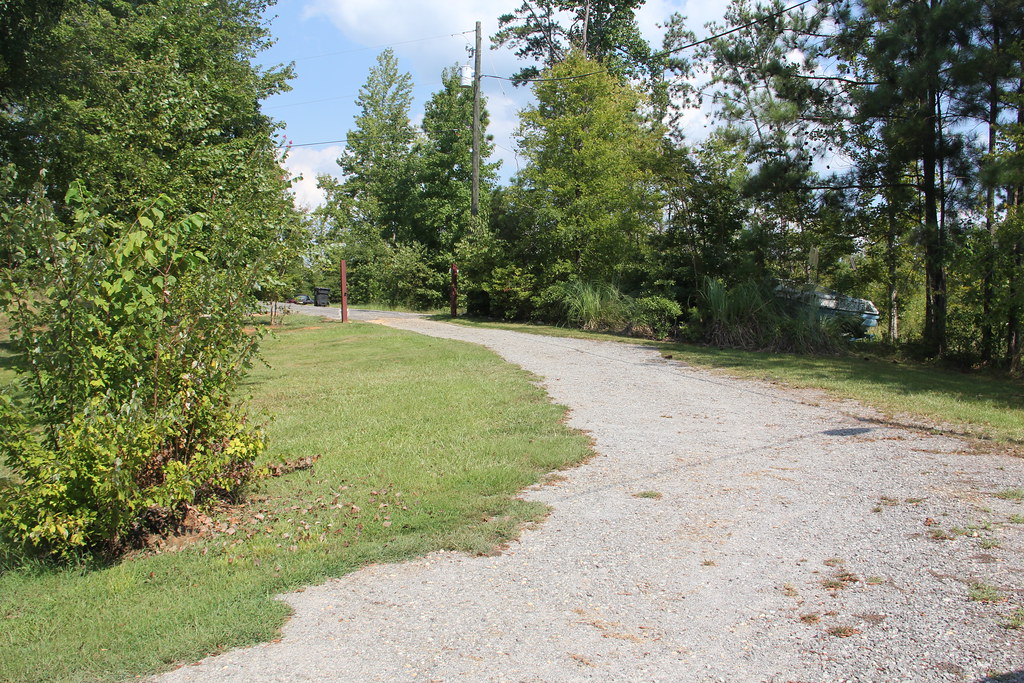
A driveway top-up, 12 by 20 feet at 4 inches. The area is 12 × 20 = 240 square feet.
240 × 4 ÷ 12 = 80 cubic feet, and 80 ÷ 27 = 2.96 cubic yards. At 1.35 tons per cubic yard, that is 4.00 tons.
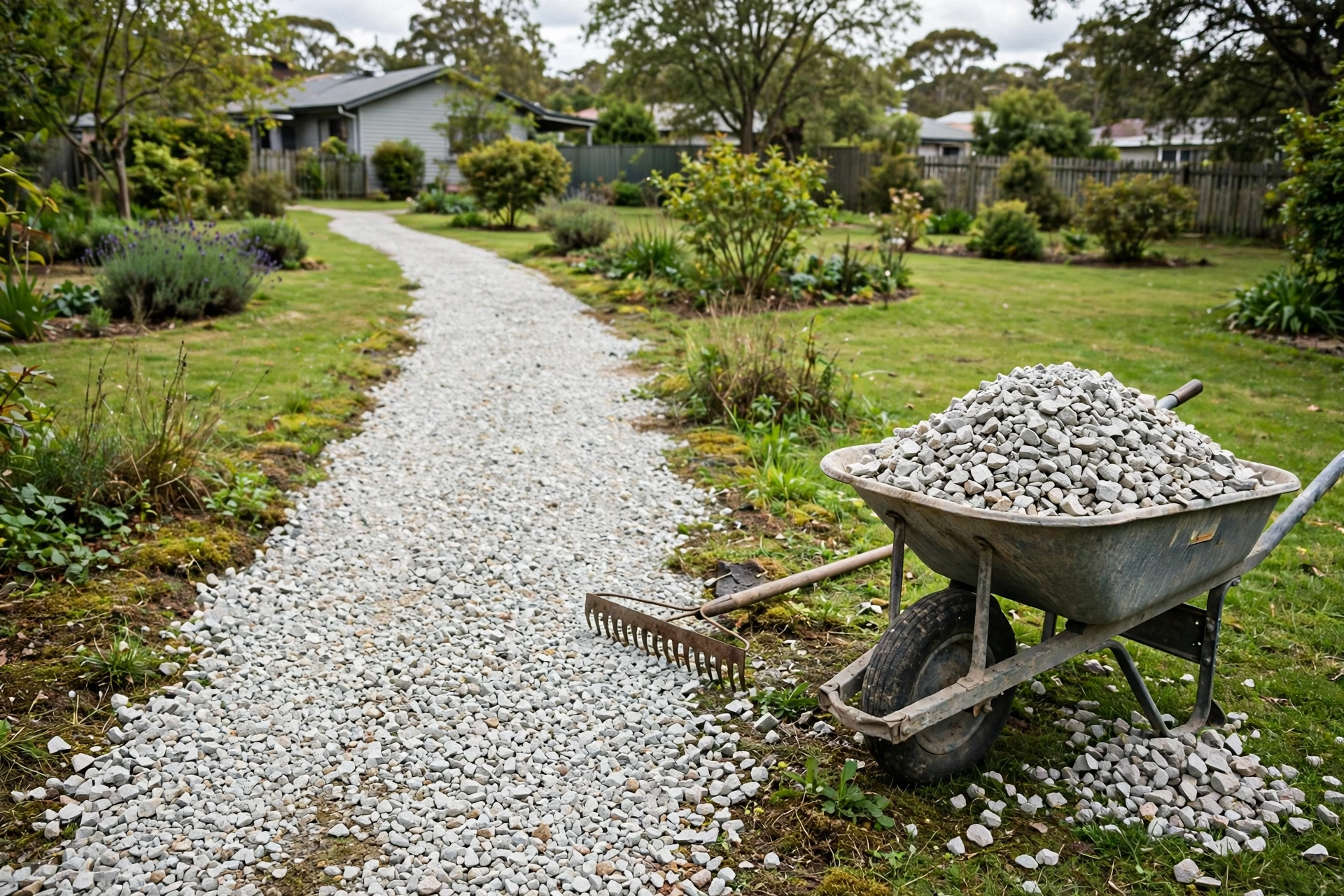
A garden path, 3 by 20 feet at 3 inches. The area is 3 × 20 = 60 square feet.
60 × 3 ÷ 12 = 15 cubic feet, and 15 ÷ 27 = 0.56 cubic yards. At 1.35 tons per cubic yard, that is 0.75 tons.
Coverage per ton
| Depth | Square feet covered per ton |
|---|---|
| 1 inch | 240 sq ft |
| 2 inches | 120 sq ft |
| 3 inches | 80 sq ft |
| 4 inches | 60 sq ft |
| 6 inches | 40 sq ft |
The table reads in the other direction from the calculator: at 2 inches deep, one ton covers 120 square feet, so a 240-square-foot area at that depth takes two tons. Deeper stone covers less ground per ton, in exact proportion.
What this calculator does not do
This calculator works on dry, loose stone as delivered: wet gravel weighs more than the same pile dry, loose stone settles and compacts after it is placed and driven on, and the calculator does not recommend a depth for any project — the depth stays your decision, and a top-up meant to finish at a compacted depth is worth a quick word with the yard when you order.
Sources
- U.S. Environmental Protection Agency, “Standard Volume-to-Weight Conversion Factors” (2016) — crushed stone and dry gravel at 100 pounds per cubic foot, 1.35 short tons per cubic yard (fetched November 28, 2026)
- Missouri Department of Transportation, “Highway Maintenance Tables and Conversion Factors” — loose weights by rock type (fetched November 28, 2026)
- Federal Highway Administration, HRT-15-034, aggregate characterization study — measured loose weights for AASHTO No. 57 stone (fetched November 28, 2026)