Drop a leaf in your yard in October and by spring it’s mostly gone. Drop a pine needle and it may still be recognizable two years later. That stubbornness is why needles smother lawns, why they work so well as mulch, and why composters argue about them. Here’s the real timeline for pine needle decomposition, what slows it down, and how to speed it up when you actually want them gone.
The Short Answer
On the ground in a typical yard, pine needles take roughly 2 to 4 years to fully decompose — in dry climates, sometimes longer. In an actively managed compost pile with the right mix of materials, chopped needles can break down in 6 to 12 months. In a garden bed as mulch, expect a layer to last a full season looking tidy and about two years before it’s mostly soil.
Why Pine Needles Decompose So Slowly
- A waxy, resinous coating. Needles are built to survive on the tree through winter, and that water-shedding coat keeps microbes out long after the needle falls.
- High lignin content. The tough structural material in needles is among the slowest things in your yard for fungi and bacteria to break down.
- Low surface moisture. Needle mats shed water rather than soaking it up, so the layer stays drier than a leaf pile — and dry material barely decomposes at all.
- Carbon-heavy chemistry. Needles are almost all carbon with very little nitrogen, so microbes working through them are running on an empty stomach.
That slow timeline cuts both ways. It’s the reason a thick needle layer on grass is a genuine problem — see are pine needles bad for your lawn? — and the reason needles make such durable mulch in beds, covered in our pine needle mulch guide.
How to Speed Up Pine Needle Decomposition
1. Chop them first
Running over needles with a mulching mower before composting or spreading them is the single biggest accelerator. Cutting through the waxy coat multiplies the surface area microbes can attack. A couple of passes reduces a fluffy pile to a fraction of its volume — and if you’re collecting them from the lawn, a lawn sweeper gathers them for the mower or the pile in a fraction of the raking time.
2. Fix the carbon problem
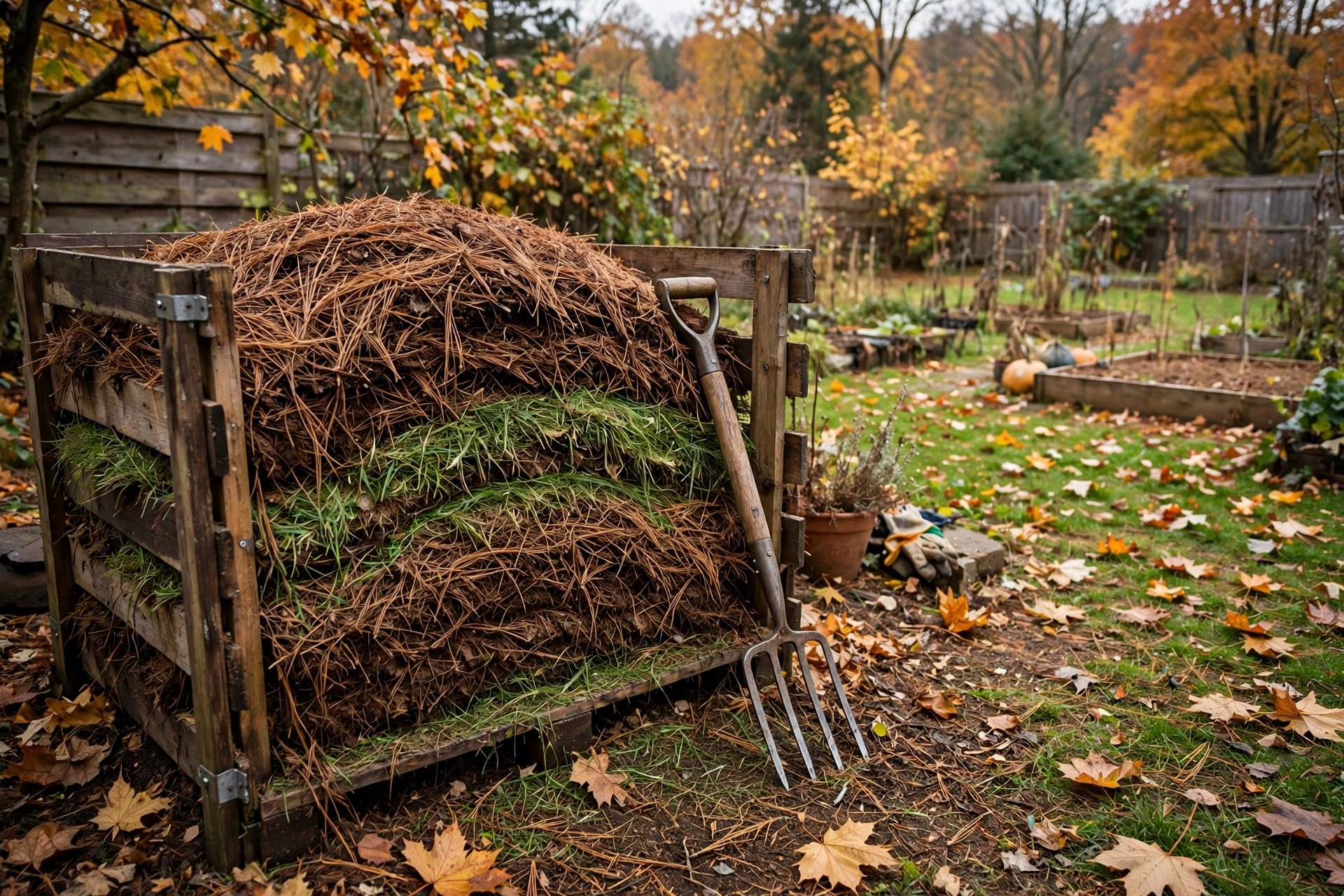
Mix needles with nitrogen-rich “greens” — fresh grass clippings are the classic partner, since yards with pines usually have both. Aim for roughly 3 parts needles to 1 part greens by volume. Without added nitrogen, a pure needle pile mostly just sits there.
3. Keep the pile moist and turned
Because needles shed water, a needle-heavy pile needs deliberate watering — damp throughout, like a wrung-out sponge — and turning every few weeks to work dry material from the outside in.
4. Use them where slow is fine
Not every needle needs to compost fast. Paths, the floor of a pine grove, and bed mulch all benefit from needles’ durability. Save your composting effort for the surplus, and put the rest to work as described in our pine needle cleanup guide‘s disposal and reuse section.
Do Decomposing Pine Needles Acidify the Soil?
Barely, and temporarily. Green needles are mildly acidic, but as they brown and break down, that acidity fades — finished pine needle compost tests close to neutral. The long-running belief that pine trees permanently sour the soil beneath them mostly confuses cause and effect: soil under old pines is often acidic because it started that way and nothing has limed it for decades, not because the needles forced it there. If soil pH matters for what you’re planting, test the soil rather than guessing — and remember the plants happiest under pines tend to like it slightly acidic anyway, as our list of plants that grow well under pine trees shows.
Pine Needles vs Leaves: Decomposition at a Glance
| Material | On the Ground | In an Active Compost Pile |
|---|---|---|
| Grass clippings | Weeks | 1–2 months |
| Fall leaves (whole) | 6–12 months | 3–6 months (faster shredded) |
| Pine needles | 2–4 years | 6–12 months (chopped, with greens) |
| Wood chips | 2–4+ years | 1–2 years |
Bottom Line
Pine needles are the marathon runners of yard debris: 2 to 4 years on the ground, and only compost-pile management — chopping, nitrogen, moisture, turning — cuts that down to months. Plan around it instead of fighting it: sweep them off the lawn before they mat down, use them as the long-lived mulch they want to be, and compost the rest in a hot, balanced pile. If they’re currently winning the fight across your whole yard, our five easy removal methods will get you back to even.