If you have pine trees, you have a mulch factory that never stops producing. Every fall, homeowners rake up mountains of pine needles, bag them, and haul them away — then drive to the store and buy mulch for their garden beds. Pine needle mulch, usually sold as “pine straw,” is one of the most underused free resources in a yard. Here’s how to use it well, where it works best, and the truth about the acidity warning you’ve probably heard.
What Is Pine Straw Mulch?
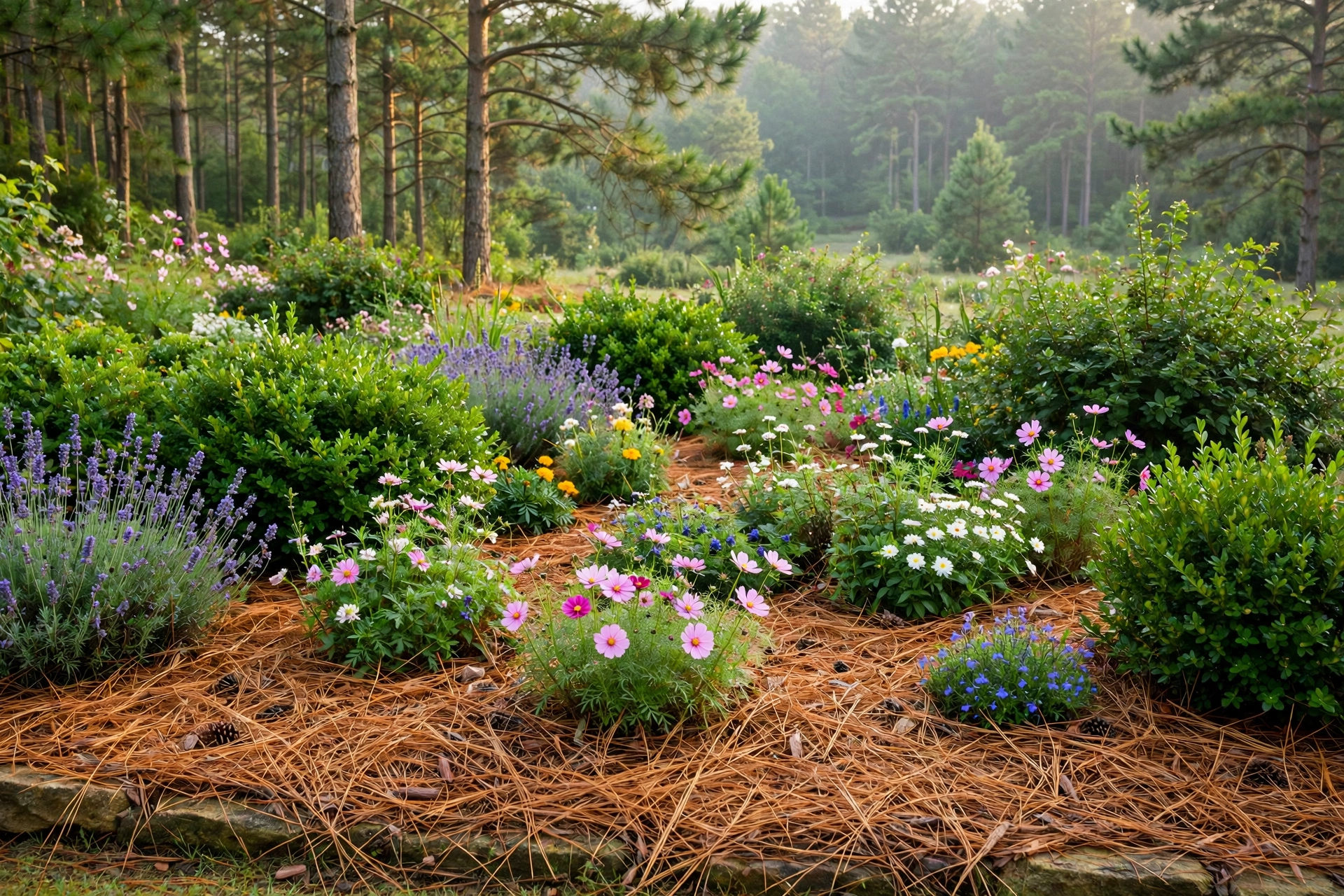
Pine straw is simply fallen pine needles, gathered and used as a loose mulch. In the Southeast it’s sold in bales at every garden center; everywhere else, it’s whatever your own trees drop. Needles knit together into a mat that stays put on slopes where bark mulch washes away, lets water through instead of shedding it, and breaks down slowly — a single application can look good for a full season.
If your trees drop more than your beds can use, our complete pine needle cleanup guide covers the fastest ways to gather them, and these five removal methods handle the lawn side of the job.
The Acidity Question, Answered Honestly
The most common objection to pine needle mulch is that it will acidify your soil and harm your plants. It sounds logical — fresh green pine needles are mildly acidic — but it doesn’t hold up in practice:
- By the time needles turn brown and fall, most of that acidity is already gone.
- As needles decompose, soil microbes neutralize what little acid remains. University extension research consistently finds that pine straw mulch has a negligible effect on soil pH in garden beds.
- The plants most associated with pine straw — azaleas, rhododendrons, camellias, blueberries, and hydrangeas — like slightly acidic soil anyway.
The bigger myth-busting picture for your lawn is in our guide to whether pine needles are bad for your lawn. Short version: a thick needle layer smothers grass by blocking light and water, not by acidifying the soil — and exactly the same smothering effect is what makes pine straw a good weed-suppressing mulch in beds, where you want it.
Where Pine Needle Mulch Works Best
- Slopes and banks — needles interlock and stay where bark floats away in the first hard rain.
- Under pine trees themselves — fighting to grow grass under pines is a losing battle; a pine straw bed looks intentional and keeps the peace. For planting ideas, see our list of plants that grow well under pine trees.
- Acid-loving shrubs and berry beds — azaleas, blueberries, and hydrangeas are the classic pine straw pairing.
- Paths and informal areas — a needle path is soft, quiet, and free.
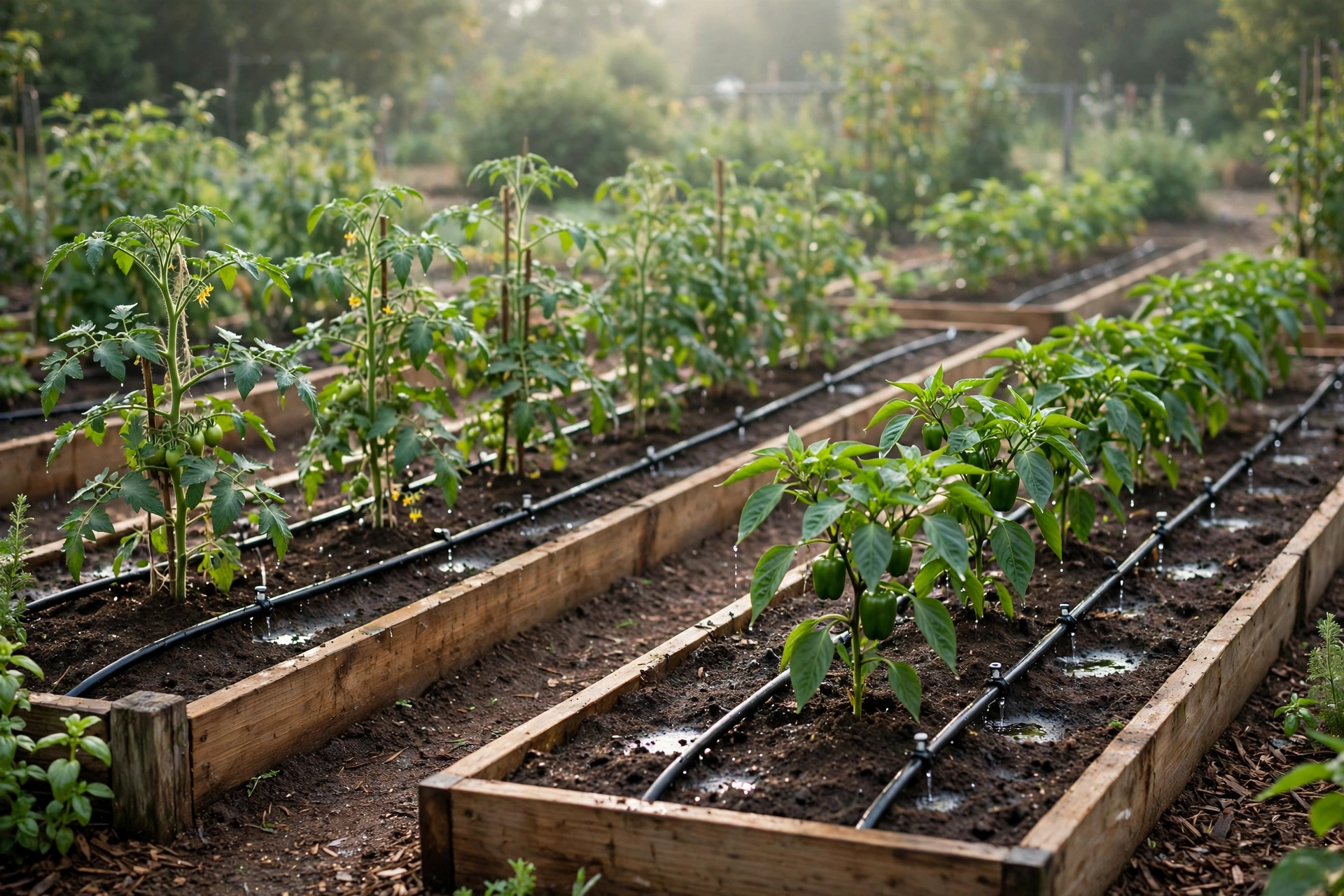
- Vegetable gardens — needles are easy to pull back for planting and don’t rob nitrogen the way fresh wood chips can while decomposing.
How to Apply Pine Needle Mulch
- Clean the bed first. Weed it, edge it, and rake out last year’s debris.
- Gather and screen your needles. Rake them up (a lawn sweeper makes fast work of large areas) and shake out cones, sticks, and leaves.
- Lay it 3–4 inches deep, loose. Fluff, don’t pack. Pine straw should look like a loose blanket, not a compressed mat — the loft is what lets water through and suppresses weeds.
- Keep it off stems and trunks. Pull mulch a few inches back from plant crowns and tree bark, the same rule as any mulch — volcano mulching damages trees no matter the material.
- Tuck the edges. Rolling the outer few inches under itself gives beds a finished edge that holds.
- Refresh once a year. Top up with fresh needles in fall as the layer settles and fades — conveniently, right when your trees deliver a new supply.
Pine Straw vs Bark Mulch: A Quick Comparison
| Factor | Pine Needle Mulch | Bark / Wood Mulch |
|---|---|---|
| Cost | Free if you have pines; inexpensive in bales | Per-bag or bulk purchase, every year |
| Stays on slopes | Excellent — needles knit together | Poor to fair — washes in heavy rain |
| Water penetration | Excellent — rain passes through the mat | Good, unless it mats and crusts |
| Longevity | One season looking fresh; slow to fully break down | One to two seasons |
| Soil pH effect | Negligible in practice | Negligible in practice |
| Look | Soft, natural, reddish-brown | Chunky, formal, many dyed colors |
The Downsides, Fairly Stated
Pine straw is flammable when bone dry, so it’s a poor choice against a house in wildfire-prone areas, and local codes sometimes restrict it near structures. It’s also light — in very windy sites it can migrate until the mat knits together. And if you don’t have your own pines, bale prices vary a lot by region. Finally, needles take their time decomposing, which is a feature in beds but worth understanding if you compost the surplus — that’s covered in our guide to how long pine needles take to decompose.
Bottom Line
If pine trees are raining needles on your yard, the cheapest quality mulch you’ll ever own is already on the ground. Use it 3–4 inches deep in beds, on slopes, and under the pines themselves, and stop paying to haul away a resource other gardeners buy by the bale. For help deciding between mulch types across the whole yard, our mulch selection guide walks through every common option.