This post may contain affiliate links. If you buy through them, we may earn a commission at no extra cost to you.
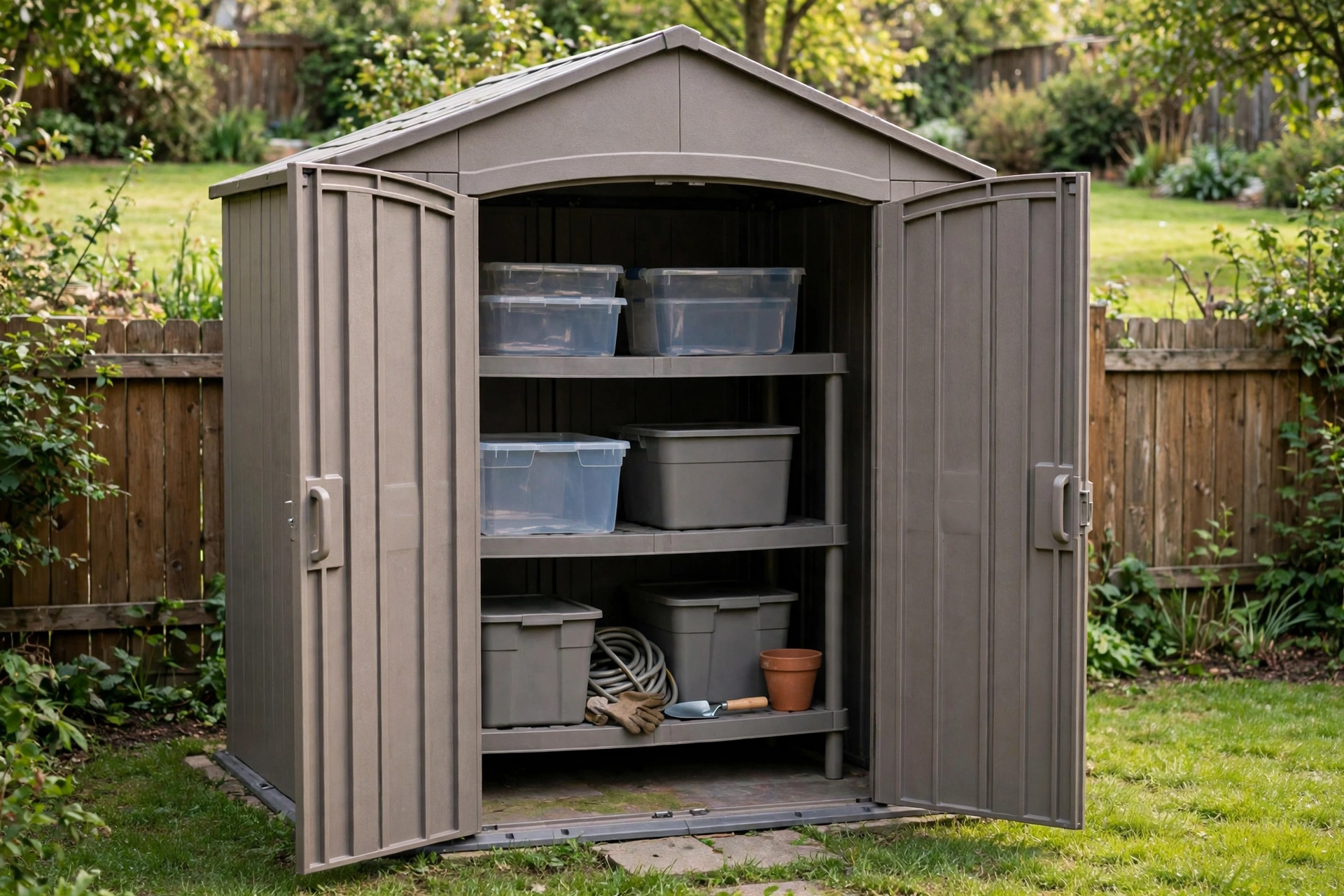
An empty resin shed in an open yard has very little weight holding it down, and a strong gust does not need to be a storm headline to move one.
Anchor the shed to the ground before you load it — that is the verdict, and it holds for every base type. An unanchored shed that shifts even a few inches racks its panels, binds its doors, and can lift clear of its floor in the next gust.
Why resin sheds lift
A mid-size resin shed weighs a few hundred pounds at most, and an empty one weighs far less than the same shed full of equipment. Wind gets under the floor edge or through a door gap, pressure builds inside and underneath, and the roof — a large, light surface — acts as the lifting face.
That is why anchoring matters most on open, exposed sites and least in a sheltered corner between a fence and a house, and why an empty shed is at more risk than a loaded one. Weight inside helps, but stored gear is not an anchoring system, because the shed can still shift as a unit.
Match the anchor to the base
| Base | Anchor type | How it holds | Watch out for |
|---|---|---|---|
| Gravel or soil | Earth auger anchors with cable | Auger screws into soil; cable ties shed to auger | Loose or sandy soil reduces hold |
| Pavers | Earth augers beside the pad, or anchors through paver gaps | Cable runs from shed frame to auger in soil | Do not rely on a single paver’s weight |
| Concrete slab | Concrete anchors / masonry bolts | Bolts fix the floor or brackets directly to the slab | Drill with a masonry bit; seal the holes |
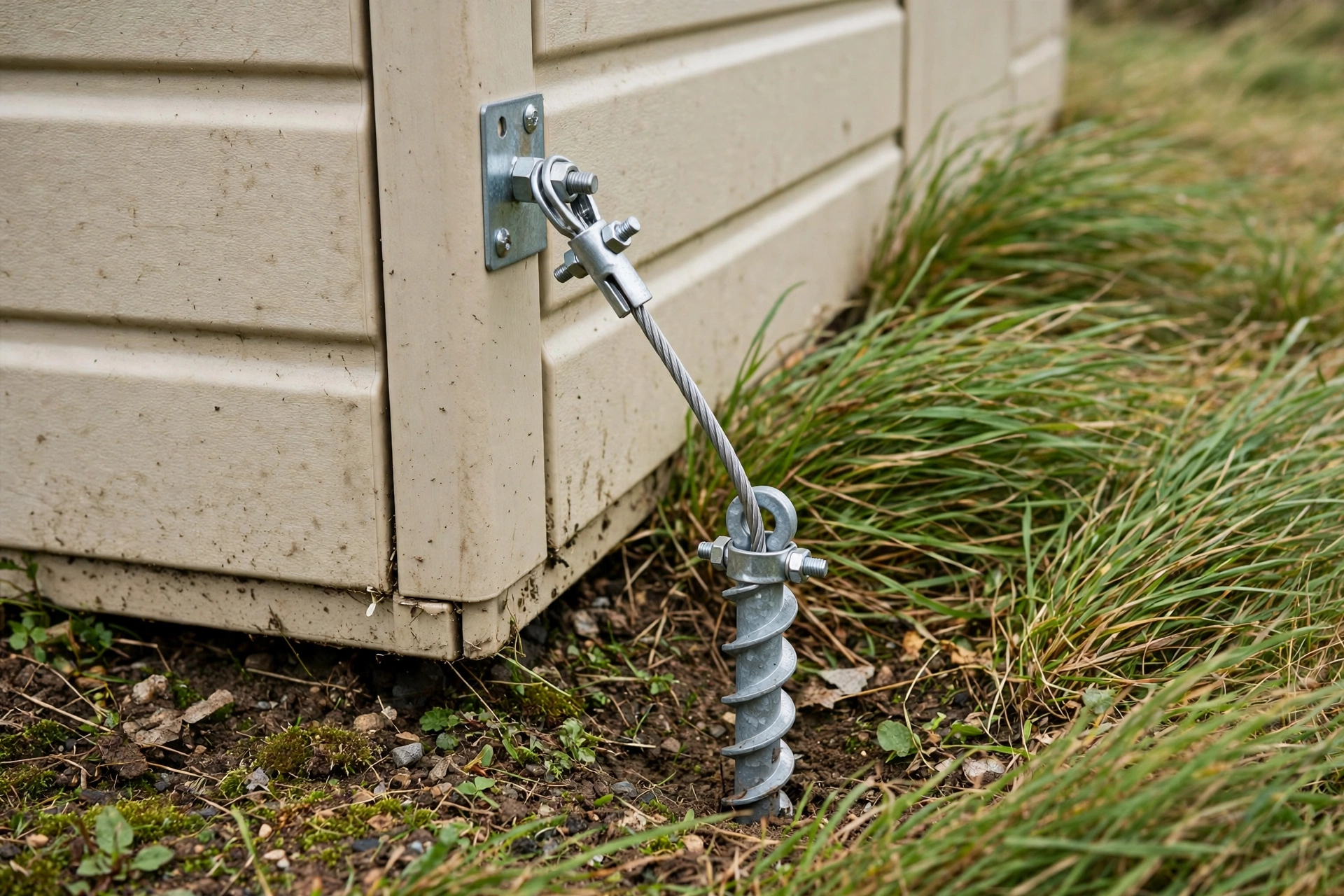
Anchoring to soil or gravel with earth augers
Place one auger at each corner, just outside the shed footprint, and screw it fully into undisturbed soil — an auger that stops in loose backfill beside the pad has a fraction of the hold of one set in firm ground. Kits built for this job use augers around 30 inches long, which puts the holding depth below the loose surface layer.
Run the cable or strap from the auger up over or to the shed’s floor frame or lower wall structure, following the shed maker’s anchoring points where the manual names them. Tension each cable evenly with its turnbuckle or clamp so one corner is not carrying the whole load.
Check the connection points twice a year. Cables loosen as soil settles, and a strap that was tight in spring can have visible slack by fall, which is exactly when storm season tests it.
ShelterLogic ShelterAuger 30-inch Earth Auger Anchor Kit, 4-Piece
Four 30-inch steel augers with clamp-on wire tie-downs for anchoring sheds on soil or gravel.
Anchoring to a concrete slab
Mark through the floor’s anchor points or through metal brackets at the base of the walls, then drill into the slab with a masonry bit to the depth the anchor maker specifies. Vacuum the dust out of each hole, because a dusty hole weakens the grip of expansion anchors.
Set the anchors and tighten them evenly, working around the shed rather than fully tightening one corner first. Seal around each penetration so water does not sit in the hole and work on the anchor through freeze and thaw cycles.
Concrete anchoring is the strongest option on this page and the least reversible, so confirm the shed’s final position on the slab before the first hole is drilled. Moving a bolted shed means patching the old holes and drilling new ones.
The mistakes that undo anchoring
Anchoring only two corners. Wind lifts the unanchored side first, and two anchors become a hinge instead of a hold.
Strapping over the roof. A strap across roof panels can deform light resin panels under tension and still leaves the floor free to shift, so anchor at the floor and lower structure instead.
Skipping the recheck after the first storm. The first strong wind is the test of the install: walk the shed afterward, look for shifted panels, slack cables, and doors that no longer close the way they did, and fix slack the same week you find it.
Get the order right
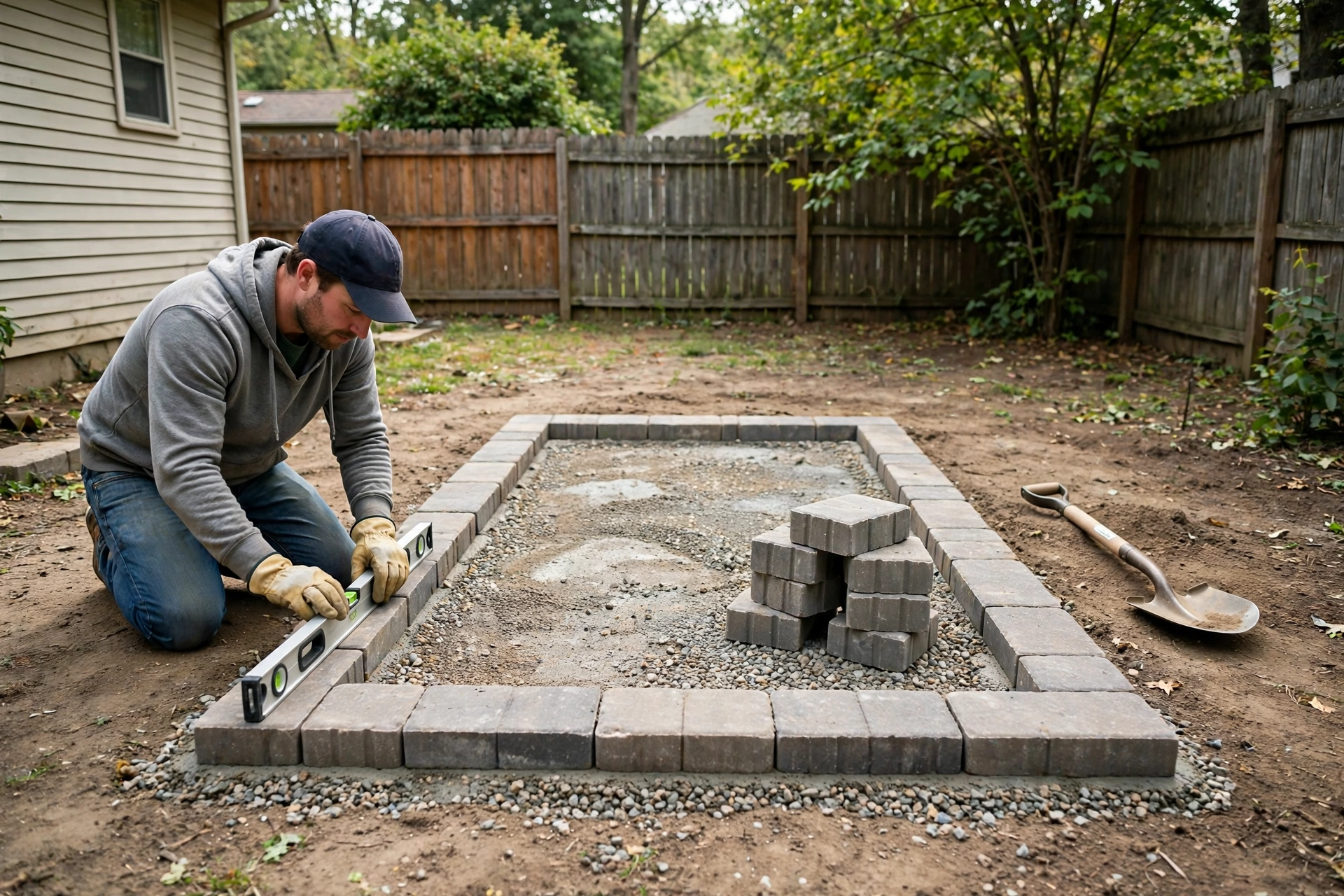
Anchoring assumes the shed already sits on a level base, so build that first with how to build a base for a resin storage shed. With the shed level and anchored, finish the interior using best resin shed accessories and organizers — gear stored on shelves and hooks adds useful weight low in the shed, where it helps rather than strains the walls.
Bottom line
Anchor all four corners, with earth augers on soil or gravel and masonry anchors on concrete, and recheck the tension twice a year. Do that, and the shed stays where you built it — an unanchored resin shed on an open site is a repair waiting for the first strong gust.