Here is the mistake: buying the hammock first, then discovering the trees are 18 feet apart, the patio is 8 feet wide, or the stand will not fit through the gate. Measure the hang before you buy anything. A hammock is a measurement problem with fabric attached.
Step 1: measure the hang
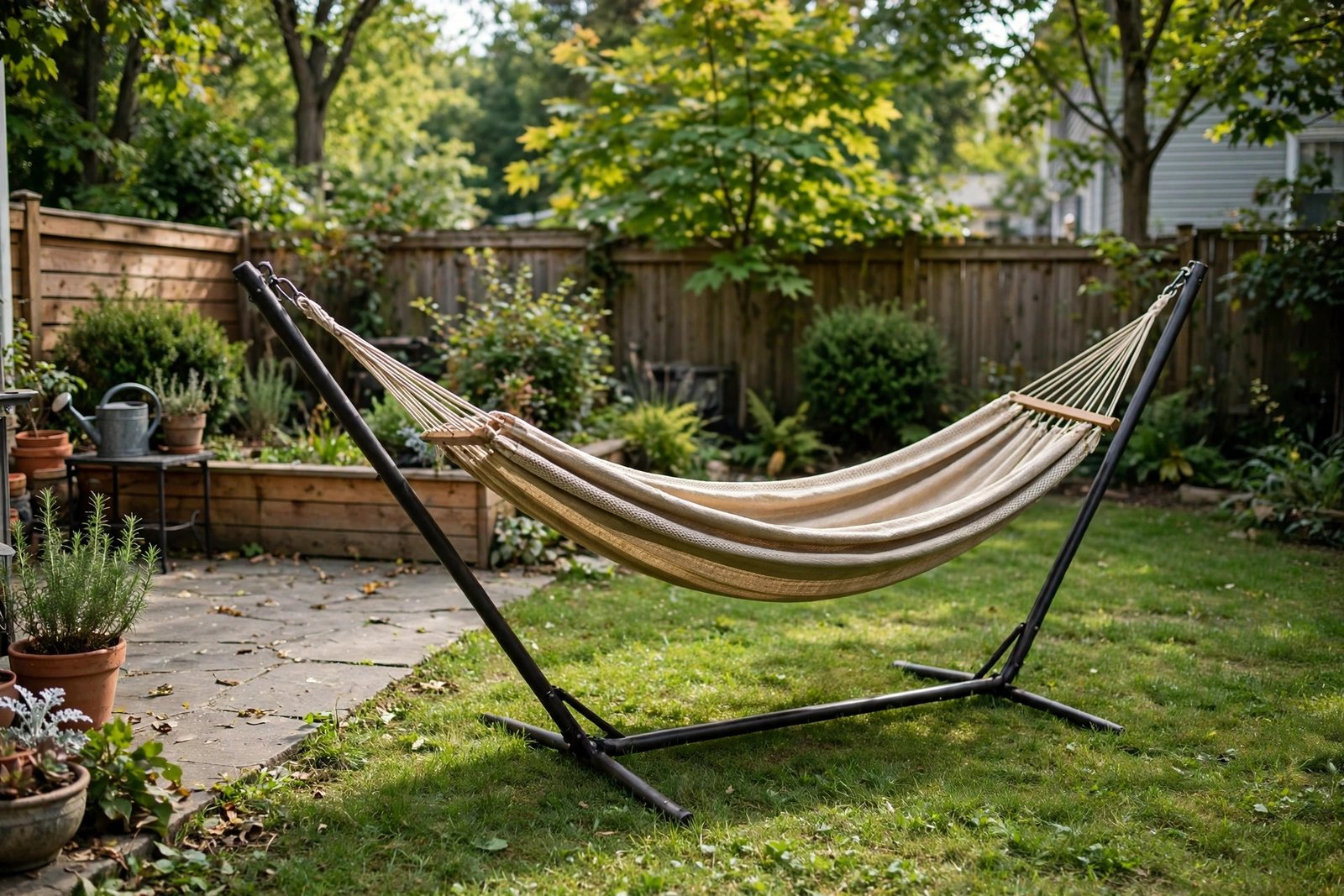
Measure anchor to anchor. For a tree hang, measure between the two trunks at strap height — most double hammocks want 12 to 15 feet. For a stand, measure the level ground you can spare: a 9-foot stand like the Vivere needs about 10 feet of clear length once you allow for sway. If neither measurement works, a hanging chair is the honest answer, not a bigger hammock.
Step 2: pick the size honestly
Buy a double even for one person. A double bed — the Vivere’s is 63 by 94 inches — lets you lie diagonally and flat. A single forces the banana curve that makes hammocks feel unstable. Check the total weight capacity, hammock plus hardware, against everyone who will use it together: 450 pounds covers two average adults, 500 pounds gives real margin. Do not exceed the rating to save money; the failure point is usually a strap or anchor, not the fabric.
Step 3: pick the fabric for your weather
Cotton is comfortable and needy. Tightly woven cotton, like the Vivere bed, feels best against skin and breathes well, but it holds water and should come inside in sustained rain. Parachute nylon is tough and stretchy. It packs tiny, dries fast, and suits camping and wet climates, but it cocoons more and feels less like furniture. Quilted polyester with spreader bars stays open and reads like a patio seat, at the cost of tippiness getting in and out. Match the fabric to how much weather and storage effort you will actually give it.
Step 4: stand or trees?
Trees win on cost, stands win on certainty. Tree straps are cheap and the hammock packs away, but you need two healthy trees and a few minutes of setup each time. A stand costs more and claims floor space, but the hammock is ready every evening. Renters and patio owners should default to a stand; tree-rich yards can default to straps. The full trade-off is in Hammock vs Hammock Chair vs Hammock Stand.
What to avoid
- Rope instead of wide straps on trees — rope damages bark and slips.
- Hanging from a dead limb, a fence post, or a young tree — anchors fail suddenly, not gradually.
- Ignoring hang height — a loaded hammock should sit about 18 inches off the ground; higher means a harder fall getting out.
Final check
Measure, size up to a double, match fabric to weather, and settle the anchor question before ordering. The picks themselves are in our hammock roundup, and the fire-pit seating they pair with is in our fire pit table guide.