
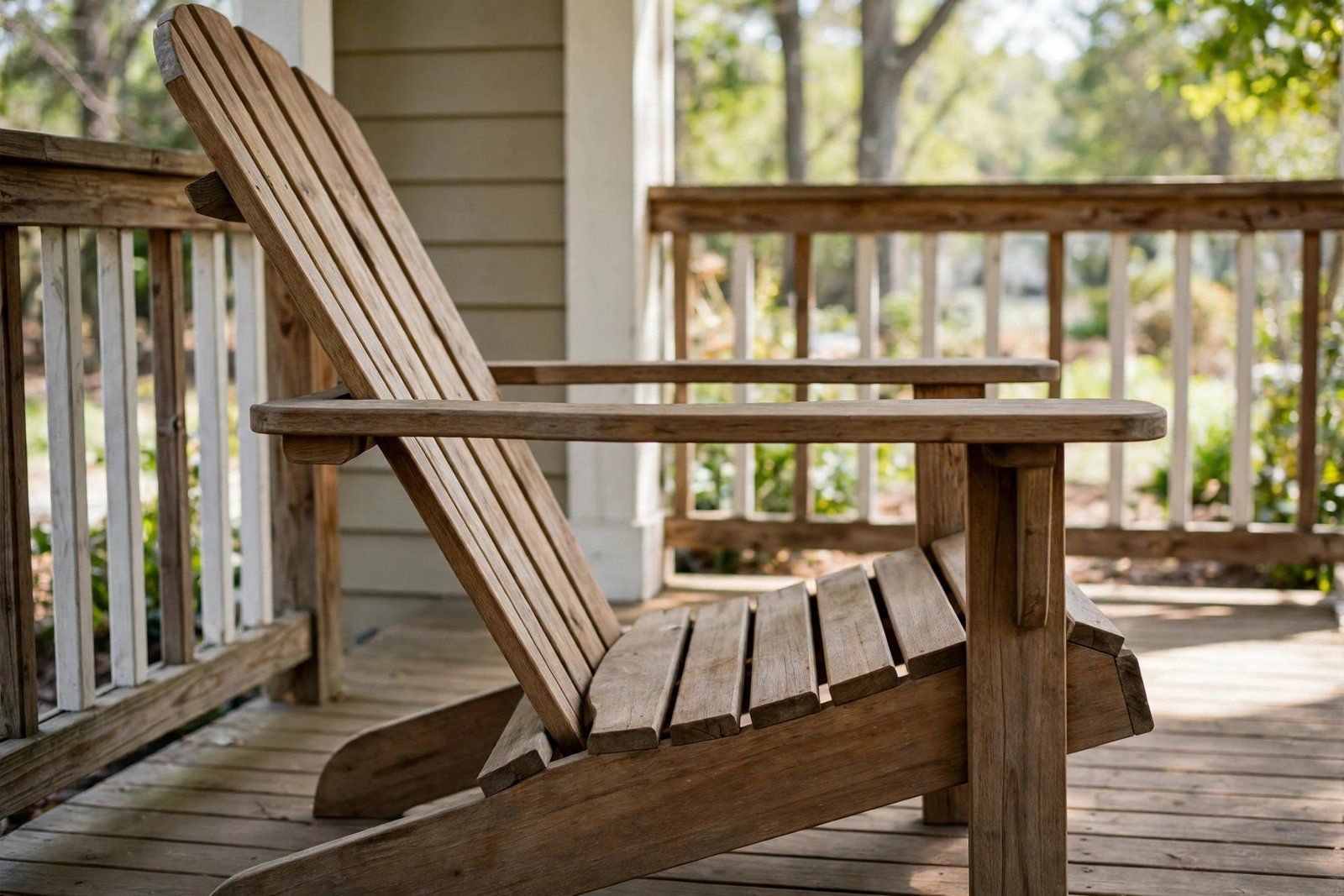
Adirondack chairs look simple, which makes bad fits easy to miss until you sit down. The signature recline that feels like a hug to one person feels like a trap to another, and the difference is usually three inches of seat height or a seat depth that ignores leg length. Get four measurements right and the chair disappears under you, which is the whole point.
If you have not picked a chair yet, start with the best Adirondack chairs. For the material decision behind the pick, see Polywood vs. wood.
Seat height: the number that decides everything
Most Adirondack chairs sit 13 to 14 inches off the ground — the POLYWOOD Classic Folding measures 14 inches, the Modern 13.68 inches. That low seat is what creates the reclined posture, but it also makes standing up a small project for anyone with knee trouble. A useful test: sit in a chair and check that your feet rest flat with knees roughly level with your hips. If your knees sit above your hips, the seat is too low for you; look for a higher-seat model or add a firm cushion, which typically raises the seat by 2 inches.
Seat depth and width
Seat depth runs about 20 to 21 inches on full-size chairs. Longer legs need the deeper end of that range; shorter legs will find a deep seat cuts behind the knees. Width matters for a different reason: standard chairs run 28 to 30 inches wide overall, and the wide flat arms — the feature everyone loves — are what eat the space. Measure your porch or patio and allow 30 inches per chair plus 6 inches of elbow room between chairs, or the arms will touch and the circle will feel cramped.
Weight capacity and build
Look for a stated capacity of 300 pounds or more. The POLYWOOD Classic Folding is rated to 325 pounds; the Modern to 300. Chairs with no stated capacity, or a 250-pound rating, are telling you the material is thin. Also check the hardware: stainless steel bolts resist rust streaks on light-colored lumber, and chairs that ship with the back and seat pre-assembled — as the Shine Company cedar chair does — cut assembly time roughly in half.
Measuring your space
- Around a fire pit: allow a circle at least 10 feet across for four chairs with legroom; keep chair fronts 3 feet from the fire.
- On a porch: leave 36 inches of walkway behind the chairs so nobody has to sidestep to pass.
- By a fire pit table: match chair count to table sides — two chairs per long side of a 44-inch table is comfortable; three is a squeeze. See propane fire pit tables for table sizes.
Comfort extras worth paying for
A headrest pillow fixes the one ergonomic gap in the classic design — the high back ends below most adults’ heads. An ottoman turns the chair into a lounger, but it doubles the footprint, so measure first. Cup-holder attachments that clamp to the arm are cheap and genuinely useful; built-in cup holders molded into the arm are harder to clean and a common crack point on cheap chairs. Skip them on the budget end.
Quick checklist
Seat height 13 to 14 inches, seat depth matched to leg length, capacity 300 pounds or more, stainless hardware, and a footprint measured before ordering — not after. Get those right and the material choice becomes a matter of taste, not regret.