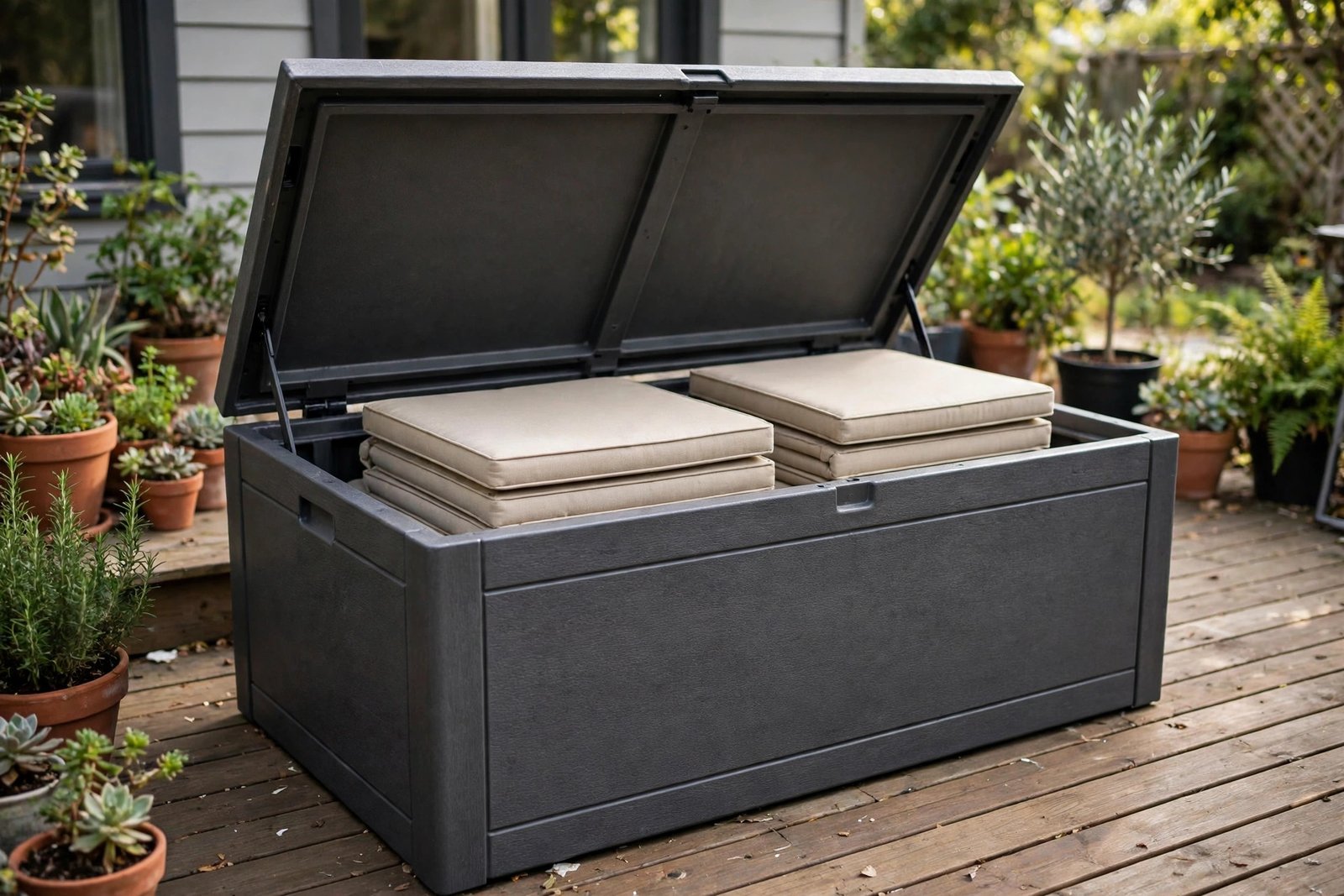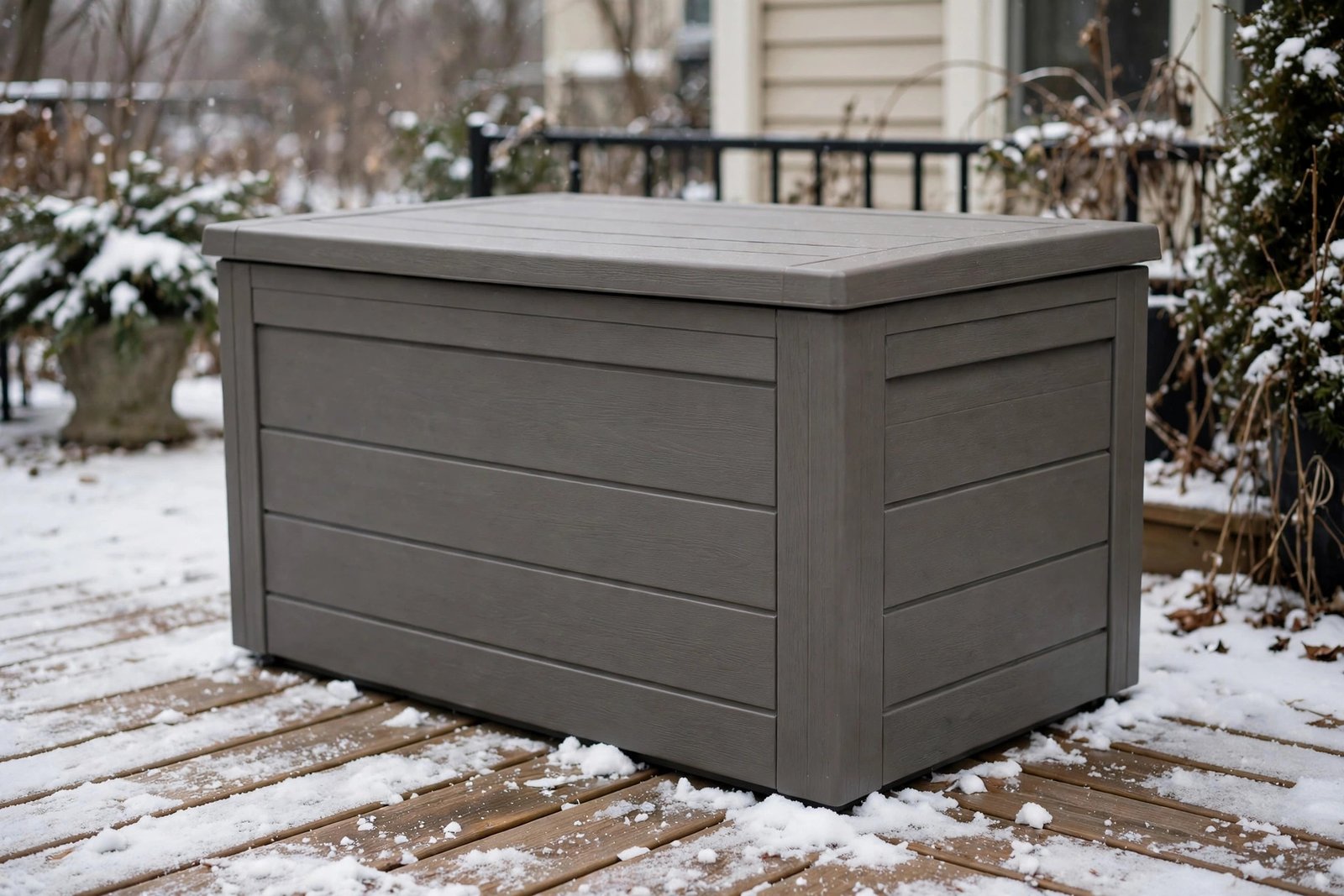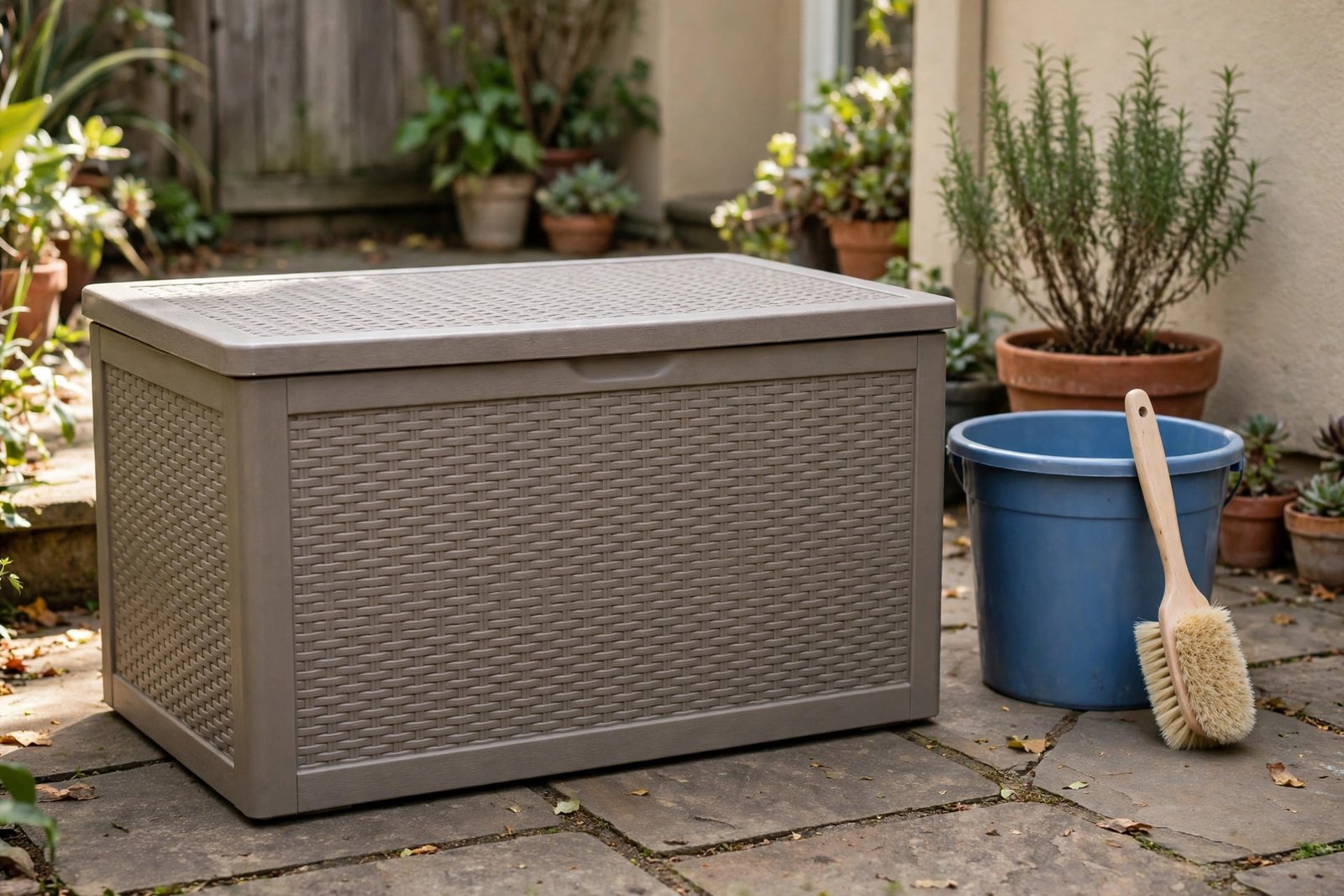
A greenish film spreads across the lid of your deck box, and suddenly the box you bought to tidy the patio looks like the messiest thing on it. The good news is that resin is one of the most forgiving surfaces to clean. With a soft brush, a gentle oxygen-bleach wash, and a good drying, most mold comes off in under an hour.
This guide walks through that wash, the spots that need a second pass, and the small habits that keep the mold from returning next season.
Why mold shows up on resin
Resin itself does not feed mold. The film on top of it does. Pollen, leaf dust, and soil splash settle into the texture of the lid and seams, and that thin layer holds moisture long after a rain has passed.
Shade makes it worse. A box tucked under a tree or against a north-facing wall stays damp longer than one in open sun, so mold gets more time to take hold. Boxes that sit directly on soil or in a low spot where water pools have the same problem from below.
That is also why mold often returns to the same corner. If the surface stays damp and dirty, cleaning alone only resets the clock. The prevention steps at the end of this guide matter as much as the wash.
What you need
Gather everything before you start so a wet box does not sit half-cleaned while you hunt for supplies. You will need a soft-bristle brush or an old broom, a bucket, a garden hose, clean rags, and rubber gloves.
For the cleaning solution, use an oxygen bleach cleaner, the kind sold as a powder you dissolve in water. It lifts organic stains without the harshness of chlorine bleach, which can fade resin and damage nearby plants. Follow the package directions for the mix strength.
Skip the pressure washer for this job, or at least keep it on its lowest setting and well back from the surface. High pressure can drive water into seams and roughen the resin, which gives mold more texture to grip next time.
Empty and brush first
Take everything out of the box and set it aside on a dry surface. Check cushions and stored items for dampness or spots of their own. Cleaning a box and then putting damp cushions straight back in undoes the work in a week.
Brush the whole box, inside and out, with a dry soft brush. This removes loose dirt and breaks up the surface of the mold so the wash can reach it. Pay attention to the lid seams, hinges, and any grooves in the texture, where dirt collects.
If the box has a drain plug or drainage holes, check that they are clear. A blocked drain turns the bottom of the box into a shallow tray, and standing water is an open invitation for mold.
Wash with the oxygen-bleach solution
Mix the oxygen bleach cleaner in a bucket according to the package directions and let it dissolve fully. Work on a day when the box can dry in the air afterward, ideally with a few hours of sun ahead.
Wet the box down with the hose first. Then brush the solution over one section at a time, starting at the top and working down, so dirty runoff does not streak over clean sections.
Let the solution sit for ten to fifteen minutes. Do not let it dry on the surface. If a section starts to dry, brush on a little more solution or mist it with the hose.
Scrub gently but firmly, following the texture rather than fighting it. On the lid, work in small circles. Inside the box, give the corners and the bottom extra attention, since those are the spots that stay damp longest.
Rinse thoroughly with the hose, inside and out. Oxygen bleach residue left behind can attract dirt, so rinse until the water runs clear and the surface no longer feels slick.
Dry it completely
Drying is half the job. Leave the lid open and let the box air-dry in the sun for several hours, or overnight if the day is humid. Wipe the inside with a clean rag first to remove standing water from corners and seams.
Do not close the lid and put things back while the inside still feels damp to the touch. Trapped moisture in a closed box is exactly the damp, still air that mold prefers. If rain is coming, move the box under cover to finish drying rather than closing it wet.
Stubborn spots and stains
Some stains linger after the first wash, especially in deep texture or on a box that has sat dirty through a wet season. That does not mean the wash failed. It means the stain has settled into the surface.
Repeat the oxygen-bleach wash on just the stained area, and give it a longer soak, up to thirty minutes, keeping the surface wet. A second pass removes most stains that survive the first.
For a spot that still shows after two passes, try a paste of baking soda and a little water, rubbed gently with a soft cloth. Rinse well afterward. Avoid abrasive pads and scouring powders, which scratch resin and leave a rougher surface that stains faster next time.
If a faint shadow remains after all that, it is usually a stain rather than live mold. A clean, dry box with a faint mark is a better result than a scratched box scrubbed raw chasing a perfect finish.
What not to do
Do not reach for chlorine bleach first. It can lighten and weaken resin, and runoff harms grass and plants around the patio. Oxygen bleach handles the same job without that trade-off.
Do not mix cleaners. Combining bleach products with other cleaners can create harmful fumes, and mixing rarely cleans better than one product used properly.
Do not paint over mold to hide it. Paint traps moisture underneath and peels, and the mold keeps growing where you cannot see it. Clean first, and only then consider whether the box needs any cosmetic help.
Keep it from coming back
Once the box is clean, a few small habits keep it that way. Brush the lid off every few weeks during the season, especially after pollen season and after leaves fall. A thirty-second brush removes the food mold grows on.
Keep the box where air can move around it. A few inches of clearance from a wall or fence lets the sides dry after rain instead of staying pressed against a damp surface.
Store only dry items inside. Cushions that go in damp come out smelling musty, and they pass that moisture to the box. If cushions got rained on, let them dry fully in the sun before they go back in. For more on that side of the problem, see how to keep patio cushions dry in a deck box.
Check the lid seal once a season. If the seal is cracked or the lid no longer sits flat, water finds its way in during heavy rain. A box that keeps leaking is worth repairing or replacing, since no amount of cleaning fixes a seal that lets water in.
Before winter, give the box one last wash and dry, and empty it or make sure what stays inside can handle the cold. The winter question matters here too: can you leave a deck box outside in winter covers what cold, snow, and freeze-thaw do to the box itself.
Takeaways
- Brush the box dry first, then wash with an oxygen-bleach solution and rinse until the water runs clear.
- Let the box dry fully, lid open, before anything goes back inside.
- Skip chlorine bleach, abrasive pads, and high-pressure washing on resin.
- Brush the lid off every few weeks and store only dry items to keep mold from returning.
If you are still deciding on a box, or wondering whether yours is the right size for what you store, the deck-box roundup and the deck-box sizing guide are good next reads. A clean box starts with a box that fits its job.