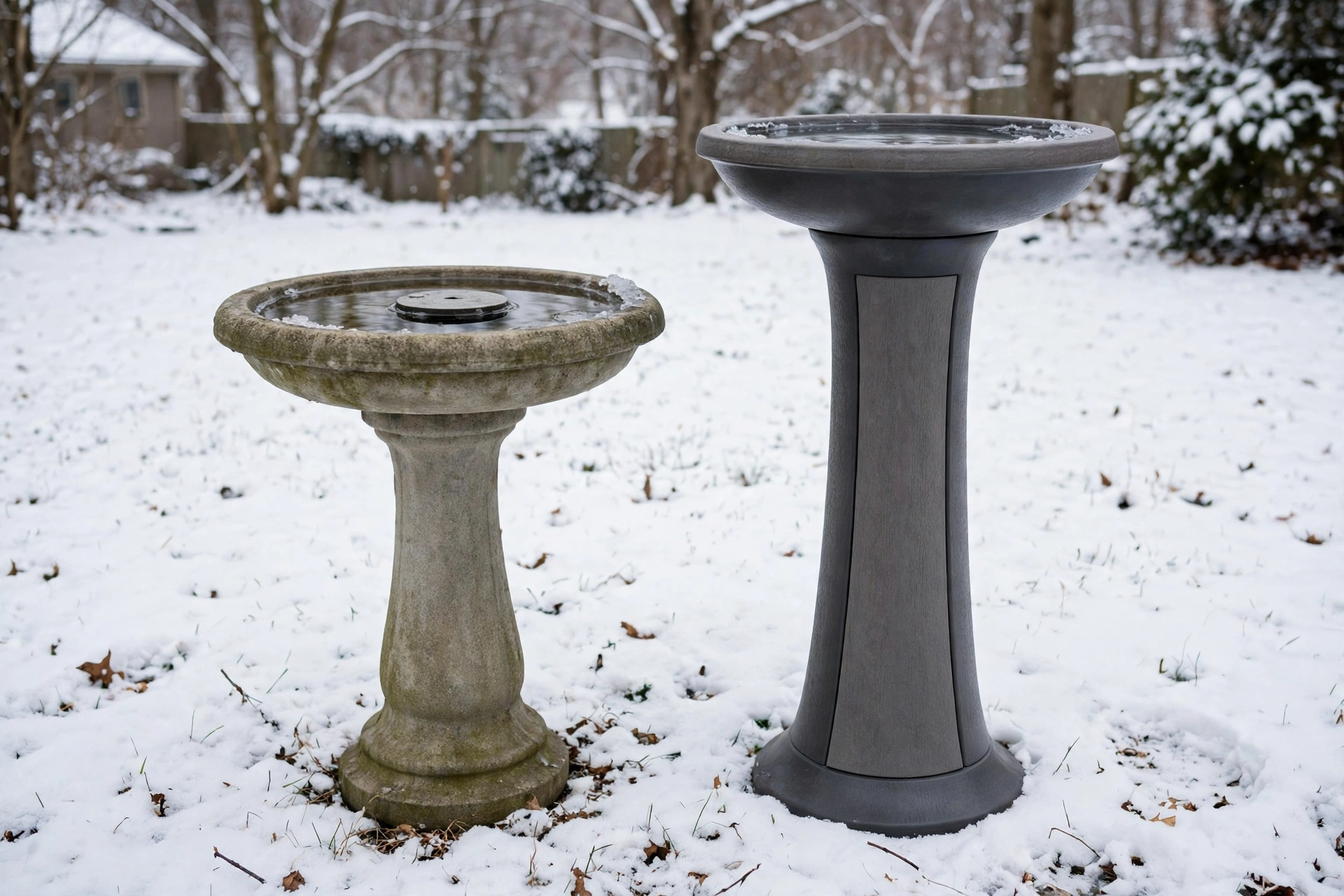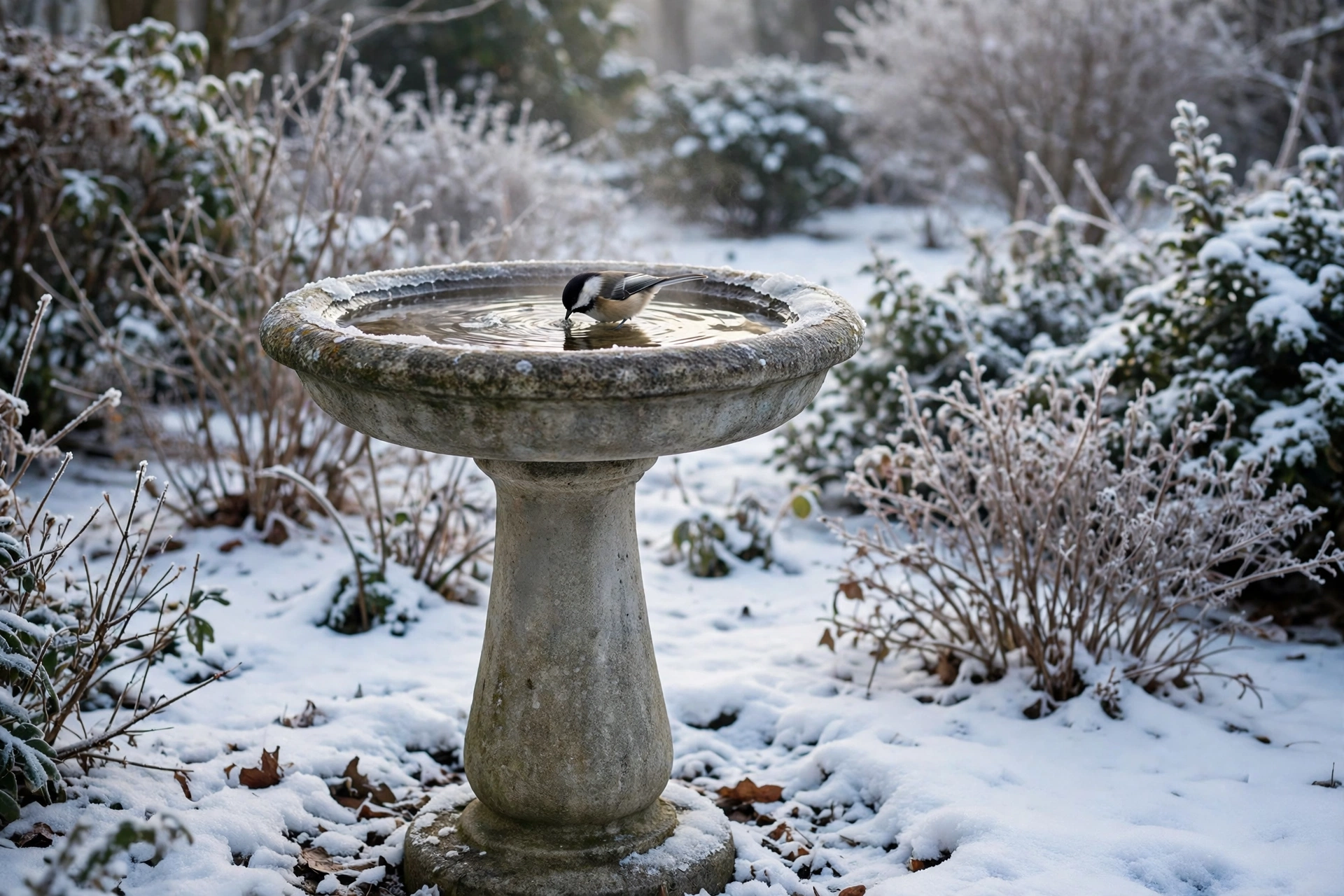
Can you keep a bird bath from freezing without electricity? Partly — and the honest answer starts with what “partly” covers. Sun, color, and moving water can hold off a light frost and delay a freeze by hours, but no passive trick keeps water open through a week of nights in the teens, and knowing exactly where each method stops working is what makes the ones that do work worth doing.
What you are actually fighting
A bird bath freezes from the surface down, because the shallow water in a typical basin — often less than 2 inches deep — has very little stored heat to lose before the first skin of ice forms. A still, shaded basin on a 28°F night can skin over before morning. The same basin in full sun, holding water warmed through the afternoon, may not freeze until the small hours, and on a marginal night may not freeze at all.
That gap between a marginal night and a hard one is the whole territory of the no-electricity methods. They shift the timing and shave a few degrees. They do not change the physics.
The methods, ranked by what they actually buy you
| Method | What it buys | Where it fails |
|---|---|---|
| Full-sun placement | Water starts the night several degrees warmer; ice forms hours later | Cloudy stretches and short December days with weak sun |
| Dark basin | Absorbs more of whatever sun the day offers than pale stone or white plastic | Buys nothing after dark; it only banks daytime heat |
| Moving water (dripper or wiggler) | Surface motion delays ice formation and draws birds in | Sustained cold; the moving patch shrinks as temperatures fall |
| Floating ball or object | A small open spot around the object on a lightly frozen morning, easy to lift out | Hard freezes — the ball freezes in place like everything else |
| Morning warm-water refill | Open water at the hour birds need it most, every single day | Only lasts until it cools and refreezes; depends on you showing up |
Start with placement, because it costs nothing
Move the bath into the sun. A bath that sits in shade from a house or fence all winter starts every night colder than it has to. The best winter spot takes direct sun from mid-morning through afternoon, which is also, not coincidentally, a spot sheltered enough that the water is not losing its banked heat to wind all evening.
Use the darkest basin you have. A dark metal or dark-stained concrete basin absorbs noticeably more solar heat than a pale one on the same day. If the bath is a light color and cannot be replaced, even setting a dark, flat stone in the shallow end gives the sun something to work on and gives birds a perch at two depths.
Moving water: real help, with a ceiling
Water in motion resists freezing longer than still water, and a slow drip accomplishes something else as well — birds find moving water by sound, so a dripper or a battery wiggler (a small unit that agitates the surface) pulls in visitors that would pass a still bath by. On a night in the upper 20s, that motion can keep a patch of surface open until dawn.
The ceiling arrives fast, though. As the air drops through the low 20s, the open patch around the agitation shrinks hour by hour, and below that the surface closes regardless of how steadily it was moving at dusk. Treat moving water as a way to win marginal nights, not as freeze protection.
The floating ball trick, stated honestly
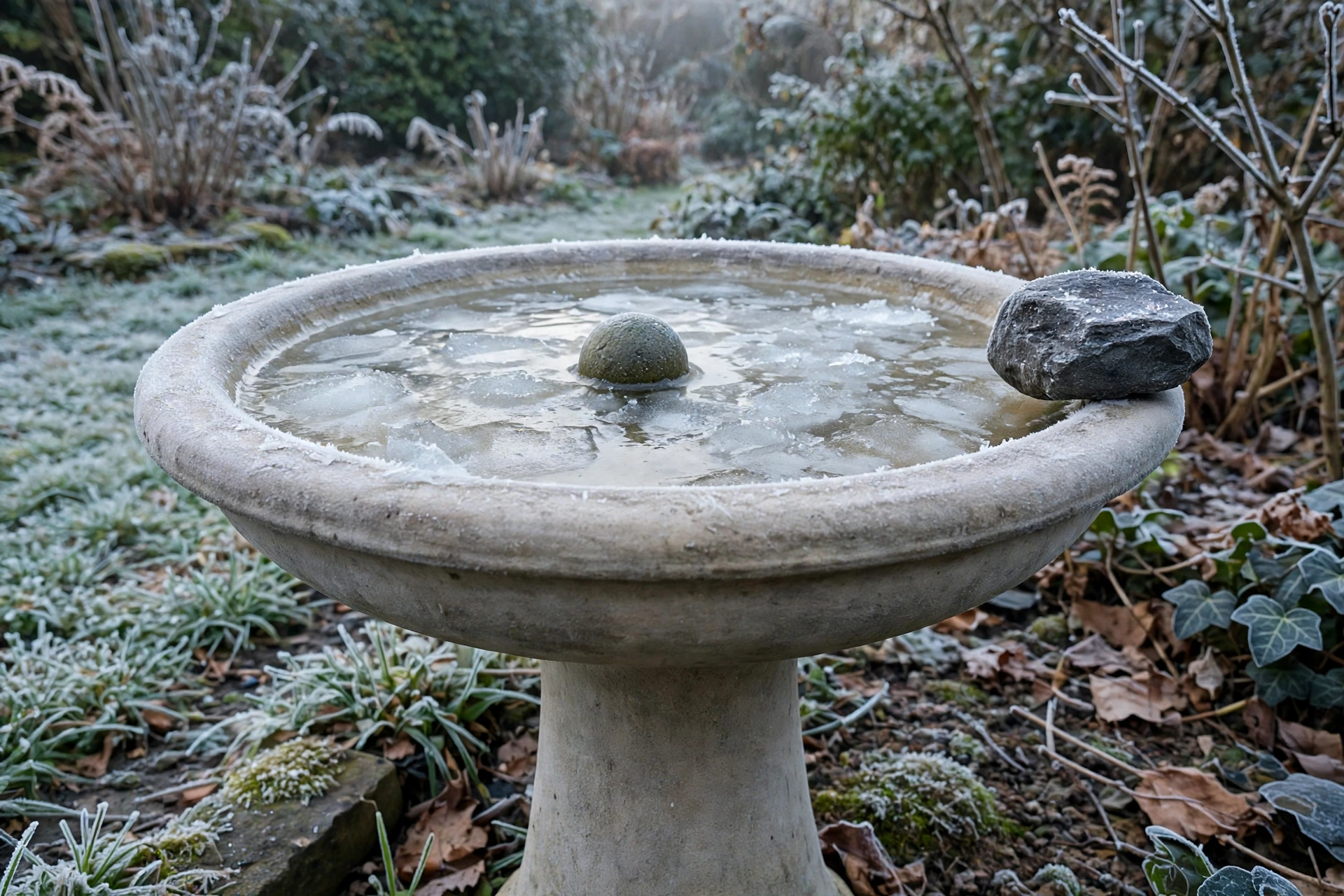
A tennis ball or similar floating object left in the bath does one useful thing: on a morning with a thin skin of ice, the ball keeps a small area from sealing completely, and lifting it out opens a drinking hole without chiseling. That is the whole claim, and it is a modest one.
It does not stop the bath from freezing, and in a hard freeze the ball simply freezes into the slab, where prying it loose risks cracking a ceramic or concrete basin. If the forecast says the night will drop into the teens, take the ball out and rely on the morning routine instead.
The routine that carries the whole method
Dump and refill each morning. Knock out the night’s ice — a flexible plastic basin releases it cleanly when the sides are squeezed, while rigid basins do better with warm water poured over the ice until it floats free — then refill with fresh water. Never use salt, antifreeze, or glycerin in water birds drink; every one of those shortcuts is a poisoning risk, and none of them is necessary.
Refill with warm water on the coldest mornings. Warm, not hot: water you can hold your hand in comfortably. A basin filled with warm water at first light gives birds a drinking window of an hour or more even on a bitter morning, and first light is when the yard’s birds are most actively looking.
There is a particular quiet to that trip — kettle in one hand, the path still blue with early light, chickadees already scolding from the lilac because they have learned the schedule. The routine takes four minutes. On the mornings it matters most, it is the difference between a yard with water and a yard with a sculpture of ice.
When to stop expecting these methods to work
The dividing line is sustained cold below about 20°F. Above that line, with sun and a dark basin and a morning refill, most nights end with drinkable water. Below it — and certainly through a multi-day stretch in the teens or single digits — passive methods lose every night, and the birds lose with them.
At that point the choice is between a heated bath and accepting a frozen one until the thaw. The best heated bird baths for winter compares the plug-in options by wattage and thermostat, and heated bird bath vs. bird bath de-icer sorts out whether a new bath or a drop-in heater fits a yard that already has a bath in it. Until the deep cold arrives, though, sun, a dark basin, and a kettle at first light will carry a bird bath further than most people expect.