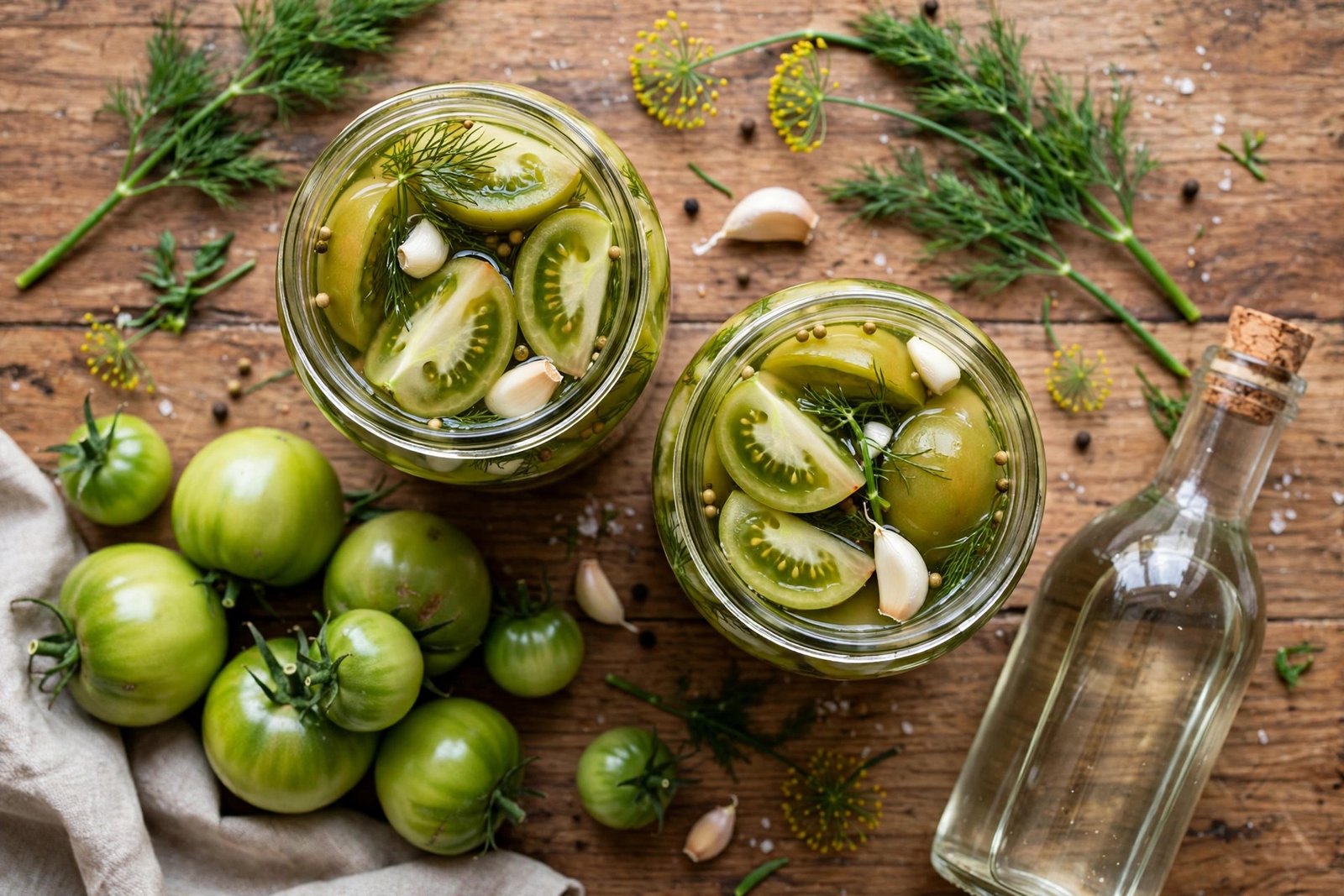
The first frost warning always leaves the same question hanging over the tomato plants: what do you do with all the green ones that will never ripen? This is the best answer in the kitchen. A hot vinegar brine turns firm green tomatoes tart, crisp, and ready to eat in a day, with no canner and no weeks of waiting.
Why this one works
Green tomatoes are the right vegetable for a quick pickle because they stay firm. Ripe tomatoes go soft in brine; unripe green ones hold their slice and their crunch. The trick is using tomatoes that are firm and freshly picked, not ones that have already been softened by frost — frost-damaged tomatoes turn mushy no matter what you do with them. Pick before the frost, not after it.
This is a refrigerator pickle, not a shelf-stable canned pickle. The jars live in the fridge, the brine stays tart, and the tomatoes stay crisp for weeks. If you want jars for the pantry shelf instead, use a tested canning recipe — the National Center for Home Food Preservation’s Pickled Sweet Green Tomatoes, for example, processes pints for 10 minutes at up to 1,000 feet elevation — rather than water-bathing this brine, which was not written or tested for the pantry.
Makes 2 pint jars — about 16 small servings as a condiment.

How to Make Quick Pickled Green Tomatoes
Ingredients
Method
- Wash and slice. Wash the tomatoes, trim the stem ends, and slice them 1/4 inch thick. Halve any very small tomatoes instead of slicing them.
- Pack the jars. Divide the tomato slices between 2 clean pint jars, tucking the garlic, mustard seed, peppercorns, dill seed, and pepper flakes, if using, in among the slices as you go. Pack snugly but do not crush the slices.
- Make the brine. Combine the vinegar, water, sugar, and salt in a small saucepan. Bring to a boil over medium-high heat, stirring, until the sugar and salt dissolve completely, about 5 minutes.
- Pour it hot. Pour the hot brine over the tomatoes, dividing it evenly between the jars, until the slices are fully covered. Leave about 1/2 inch of headspace at the top of each jar.
- Seal and cool. Tap each jar gently to release trapped air bubbles, wipe the rims, and screw the lids on. Let the jars cool to room temperature, about 1 hour, then refrigerate.
- Wait a day. Refrigerate for at least 24 hours before eating so the brine seasons the tomatoes all the way through. The flavor keeps improving over the first week.
- Serve and store. Lift tomatoes out with a clean fork and serve as a condiment. Keep refrigerated and use within 3 to 4 weeks.
Variations that work
The spice mix is the place to play. Add a sliced onion to each jar for a mellower, sweeter pickle, swap the dill seed for a bay leaf and a few allspice berries for a warmer flavor, or leave the pepper flakes out entirely if you want a plain dill pickle. What does not change is the brine ratio: keep the vinegar at a full cup and do not dilute it with extra water, since the tartness is what keeps a refrigerator pickle safe and crisp.
For a slightly sweeter jar, you can raise the sugar to 3 tablespoons without changing anything else. The pickle will taste rounder and still slice cleanly. Do not cut the salt — it seasons the tomatoes all the way through, and an under-salted pickle tastes flat even after a week in the fridge.
Serving and storage
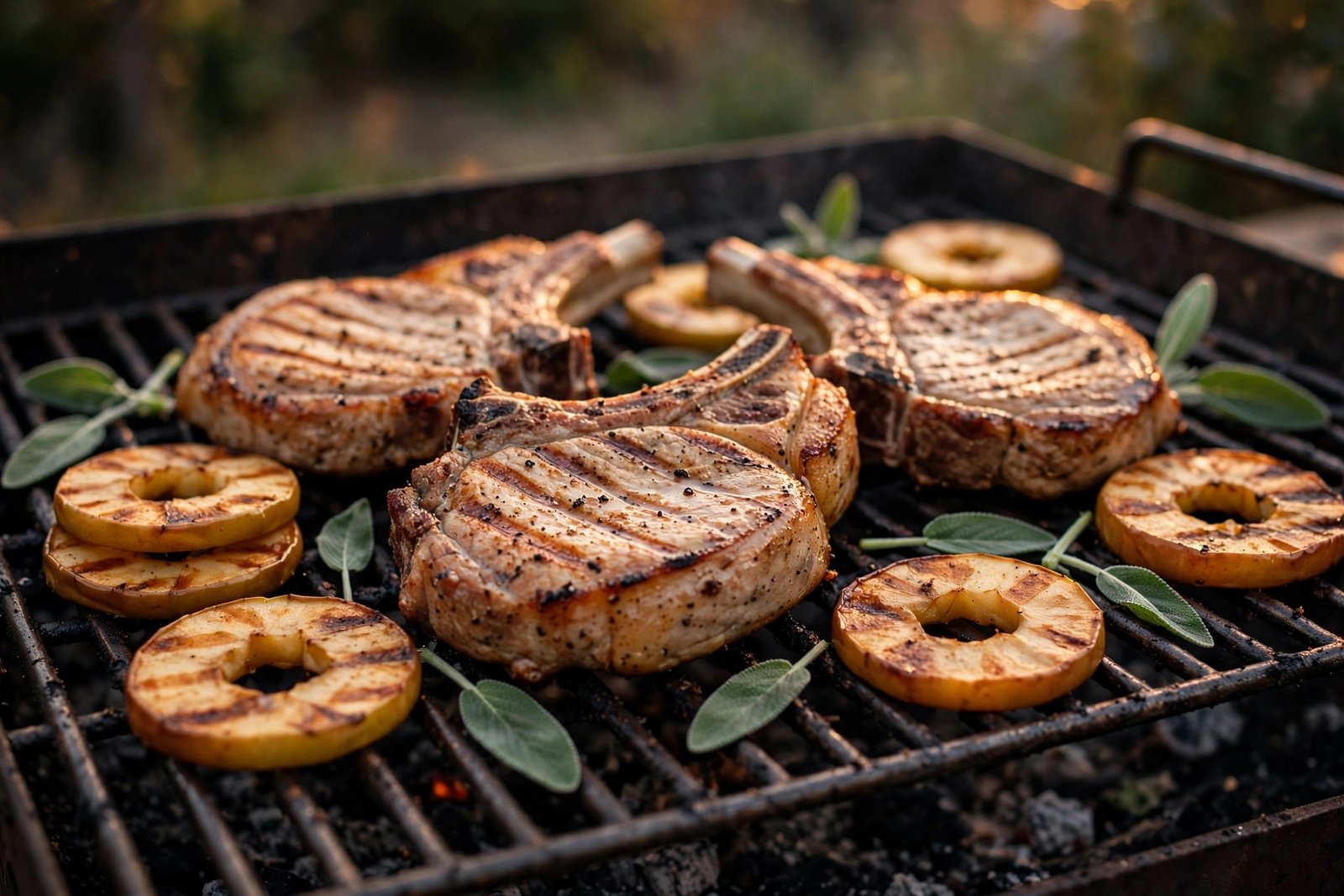
These are at their best after a full day in the brine, and they keep improving for the first week. Serve them alongside sandwiches, grilled cheese, bean dishes, or anything rich that wants a tart, crunchy counterpoint. They are also the right condiment for a fall grill night — try them next to our grilled pork chops with apples and sage.
Keep the jars refrigerated and use them within 3 to 4 weeks. The tomatoes stay crispest if you use a clean fork to lift them out rather than fishing with fingers, and if a jar ever smells off or the brine turns cloudy in a way it was not when you made it, throw it out. A refrigerator pickle is easy food, not forever food, and that is part of its charm — it asks for a week of patience, not a season of it.