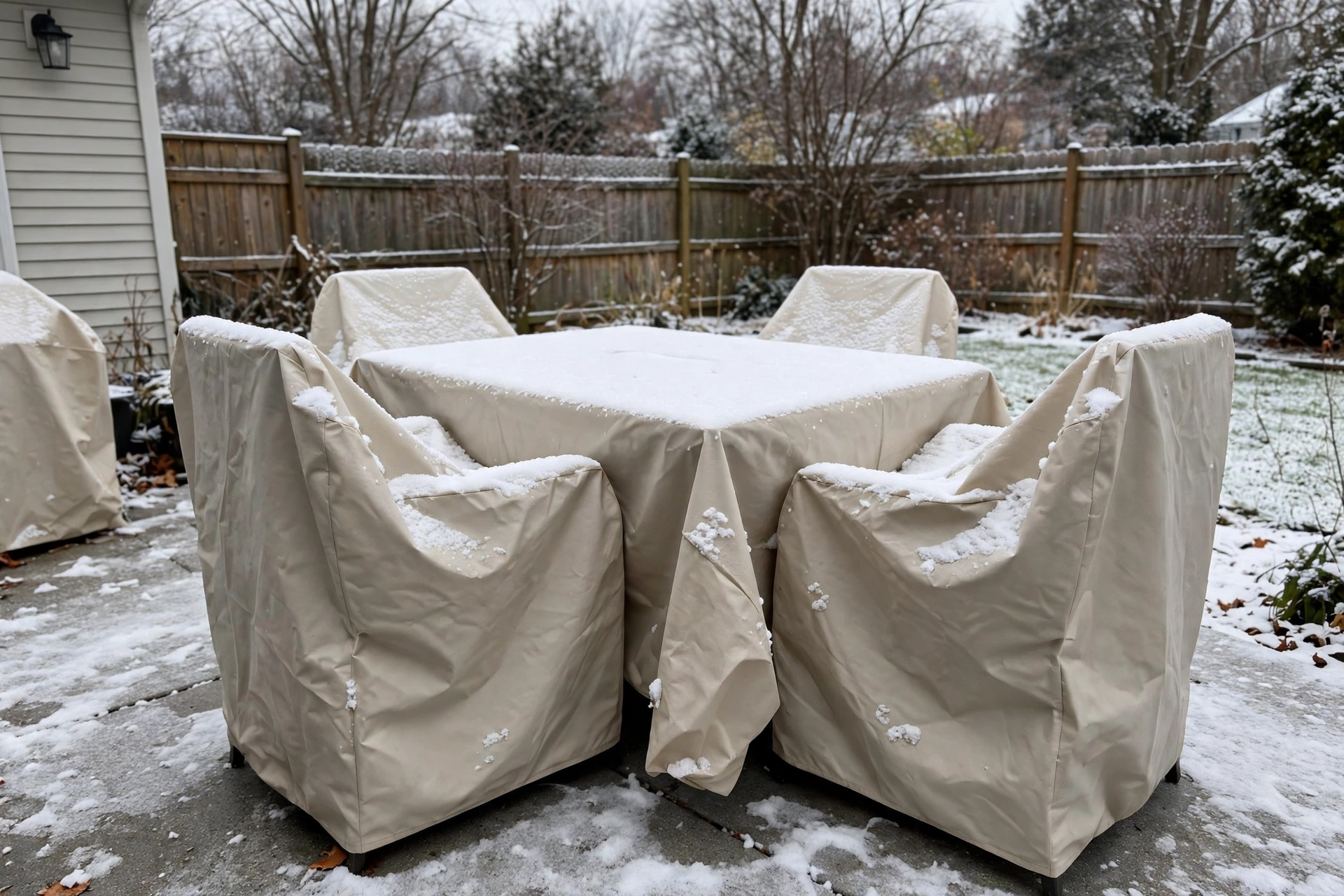
The common mistake is measuring the table. A tape across the tabletop gives you a neat number, and then the cover arrives two feet short of the chairs that were always going to sit under it, and the chair backs spend the winter in the rain.
A cover fits a set, not a table. So the measuring starts with the set arranged the way it will actually sleep for the winter.
Step One: Push the Set Together
Push the chairs in, tight to the table, the way you will leave them in November. A set stored scattered takes a cover the size of a small car; the same set nested together often fits the next size down, which is cheaper and flaps less in wind.
Step Two: Three Numbers, at the Widest Points
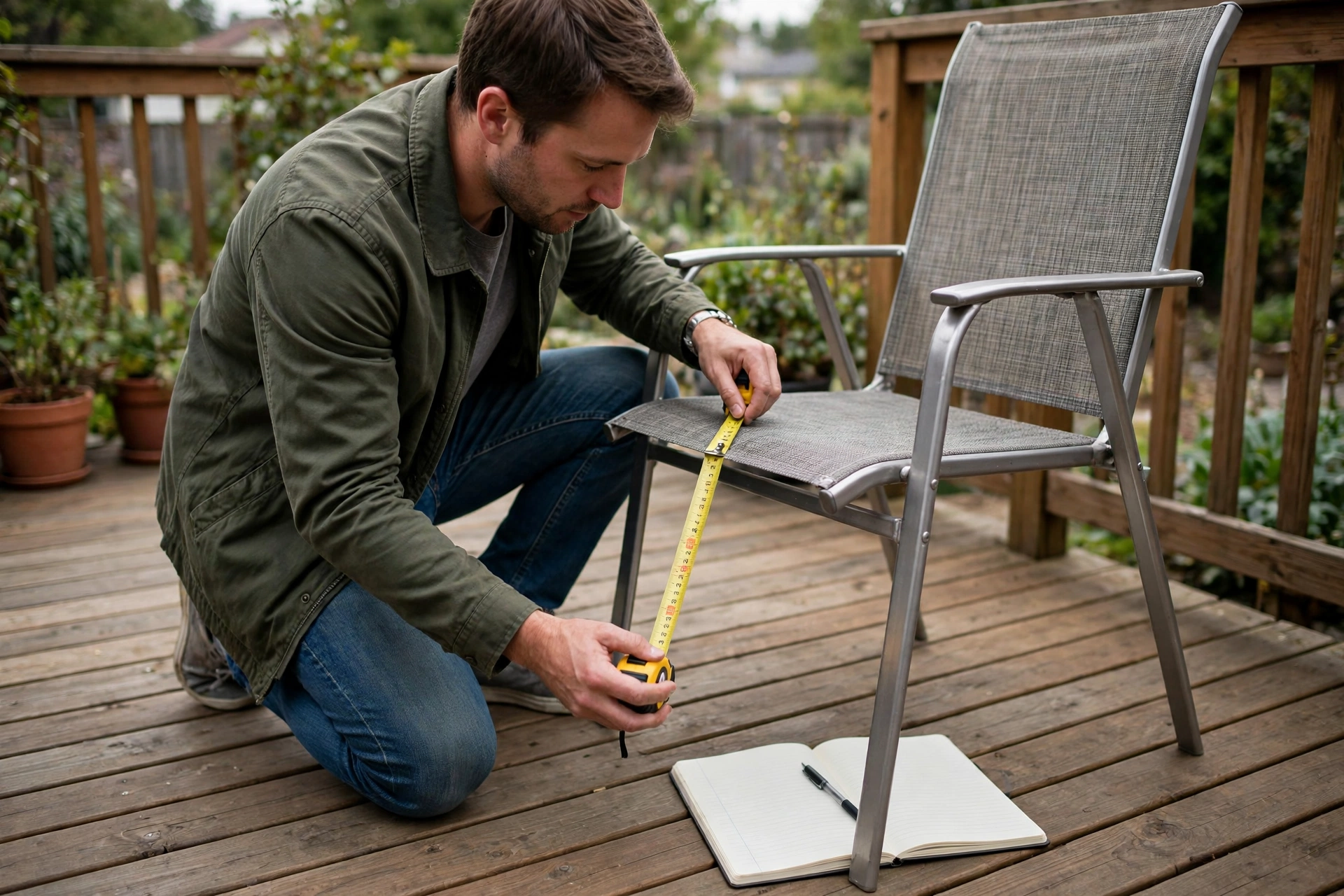
Measure length across the longest span, width across the widest span, and height from the ground to the tallest chair back. Take each number at the widest point, not the average point, because a cover has to clear the widest point every time it goes on.
Write the numbers on the tape itself with a fingertip smudge of chalk, or just on your phone. The satisfying click of a tape snapping back is exactly when measurements evaporate from memory.
Step Three: Add a Little, Not a Lot
Choose a cover one to two inches larger than your numbers in length and width. That clearance lets the cover drop on without a wrestling match on a cold morning. More than that and the extra fabric pools water, catches wind, and wears at the folds.
Height runs the other way: a cover a touch short, with the hem off the ground, drains and dries better than one puddled on the patio. Our best outdoor furniture covers roundup lists sizes beside each pick so you can match your numbers directly.
Bottom Line
Measure the set together, at its widest, and buy one to two inches over. Five minutes with a tape in October saves a wet set in April, and it settles whether a cover beats the garage in our covers vs storing inside comparison.