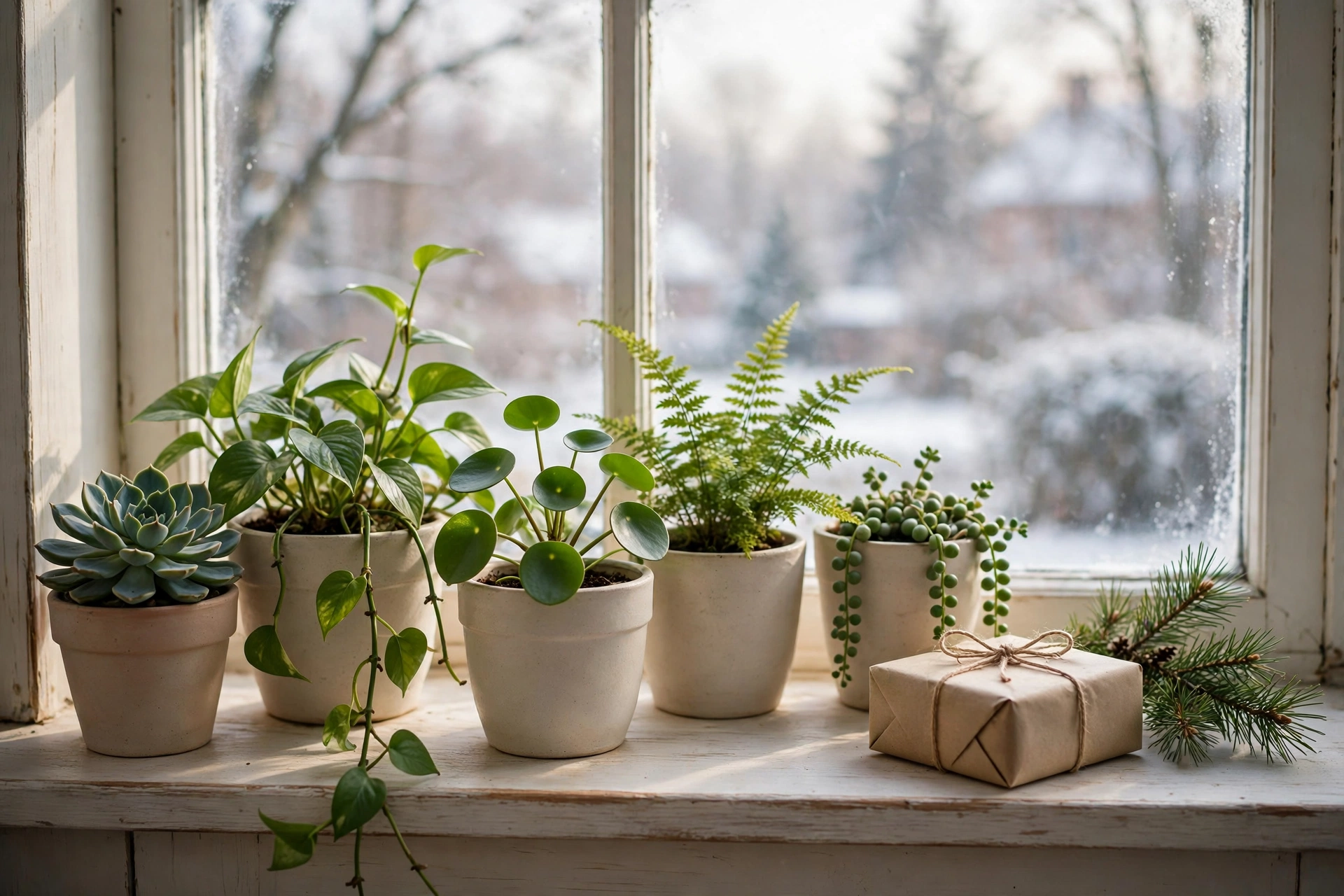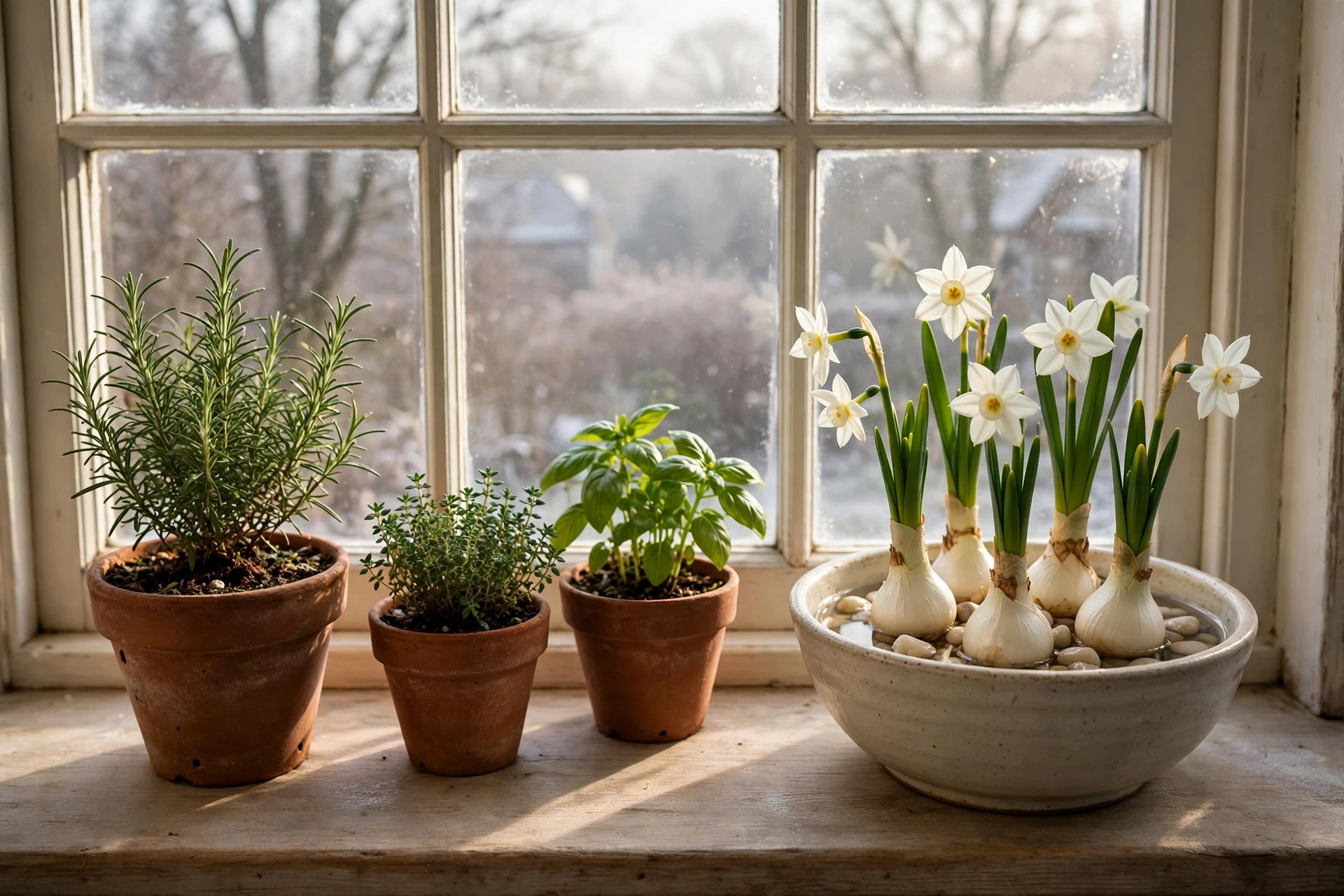
When the outdoor beds go quiet and the days shrink down to a few bright hours, my garden does not end — it moves to the kitchen windowsill. A row of herbs, a jar of paperwhites coming up pale and hopeful, and suddenly winter has something green in it again. If the short days have you missing your garden already, this little setup is the kindest fix I know.
Start With the Light You Actually Have
Let’s dig into the one thing that decides everything else: light. A south-facing sill is the prize, with east or west close behind, because herbs indoors want at least 6 hours of bright light a day to stay compact instead of stretching thin and pale toward the glass.
No sunny sill? You are not out of luck. Gardeners start seeds and grow greens indoors all winter using the same tricks in our guide to starting seeds indoors with natural light — rotate the pots a quarter turn every couple of days, keep the glass clean, and let a simple white card behind the pots bounce light back onto the leaves.
Pro Tip: Leggy, leaning herbs are not failing — they are telling you the light is short. Move them closer to the glass or trim them back and use the trimmings. The plant recovers faster than your feelings about it do.
The Herbs That Forgive Winter
Choose herbs that tolerate indoor life gracefully, and your windowsill garden will feel easy instead of fussy.
Chives and parsley handle cooler sill temperatures and modest light better than most, and both can be snipped a little at a time for months. Thyme and rosemary prefer it on the dry side, so they suit a bright sill where you water sparingly. Basil is the diva of the group — it wants warmth above 50°F, steady moisture, and the brightest spot you have, so give it the center seat or save it for spring.
Water when the top inch of soil feels dry, not on a schedule, and always empty the saucer after 30 minutes so roots never sit in water. A small pot on a cold sill can chill roots overnight, so slip a cork trivet or folded cloth under pots on the coldest nights.
If you want something even faster while the herbs settle in, a shallow tray of greens is ready in days — our notes on growing microgreens indoors walk through sowing a tray that can be snipped over soup and sandwiches in about a week.
Paperwhites: The Patience Part
Paperwhites ask for almost nothing and give you flowers in the middle of winter, which feels a little like magic and mostly is just good timing.
Step 1: Set the bulbs. Nestle bulbs, pointed end up, in a shallow bowl of pebbles or a pot of potting mix, with the top third of each bulb above the surface.
Step 2: Water to the base. Keep water just touching the bottom of the bulbs in a pebble bowl, or keep potting mix lightly moist — never soggy.
Step 3: Give them a cool, bright start. A spot around 60–65°F keeps stems sturdier. Tall, floppy stems are common; a loose loop of twine around the bunch, tied to a small stake, keeps them graceful instead of sprawling.
Blooms usually arrive in 4–6 weeks, so a bowl started now flowers right when January feels longest. Once they finish, compost the bulbs — forced paperwhites rarely bloom well a second year, and letting them go keeps this project honest and simple.
Wrap-Up Tips
Keep the whole garden small enough to enjoy: three or four herb pots and one bowl of paperwhites is a garden, not a chore list. Snip herbs often and lightly, water by touch instead of by calendar, and turn every pot a little each time you pass the sink.
Your windowsill will thank you — and so will your winter cooking. Happy gardening!