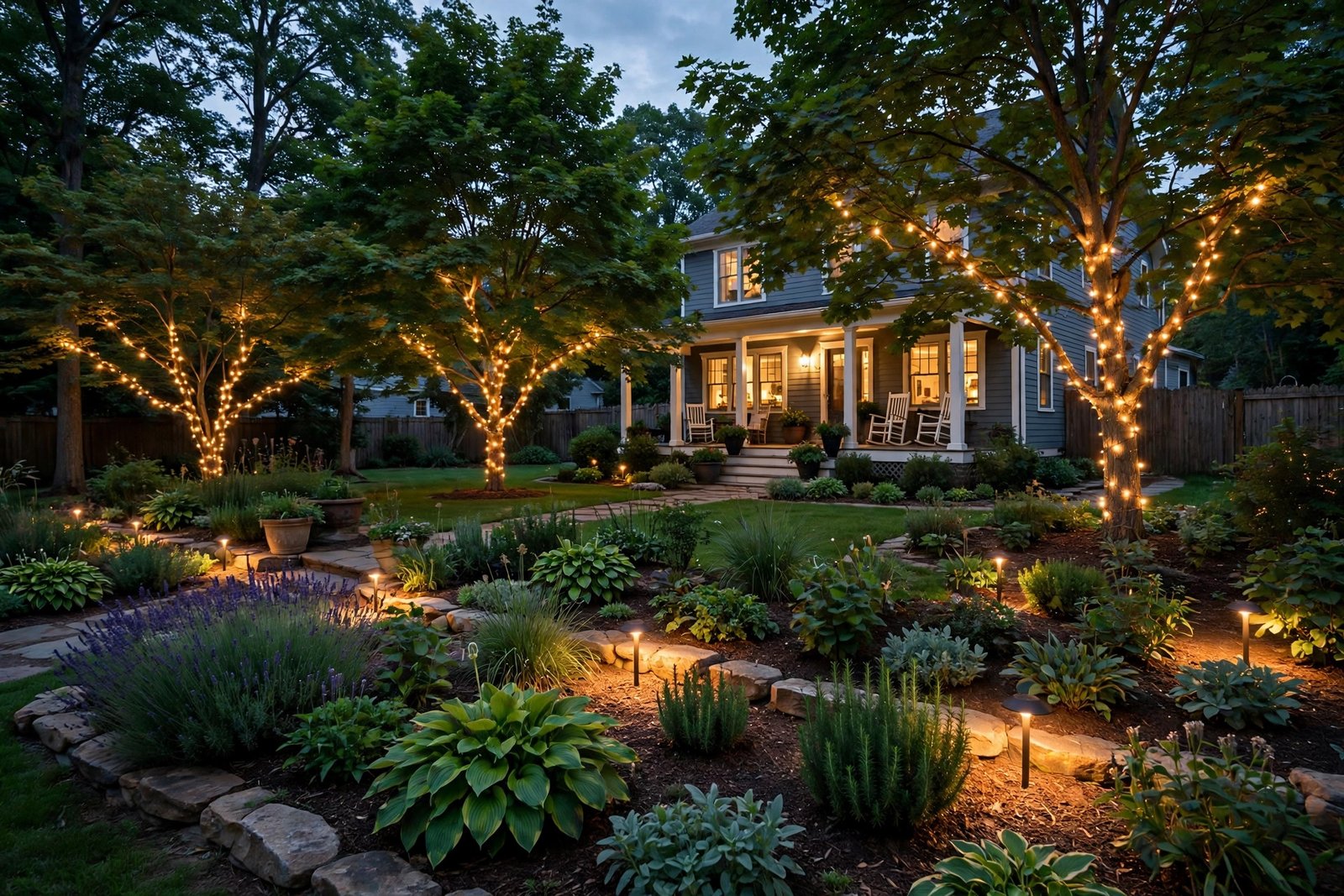
A yard lit with only one kind of fixture looks flat, no matter how many lights you buy. Path lights on a tree do nothing for the tree. Spotlights on a walkway blind everyone walking it. The fix is not more lights. It is the right light in the right place.
Three fixtures cover almost every yard: path lights, spotlights, and well lights. Here is where each one belongs, and where it does not.
Path lights: guide feet, not eyes
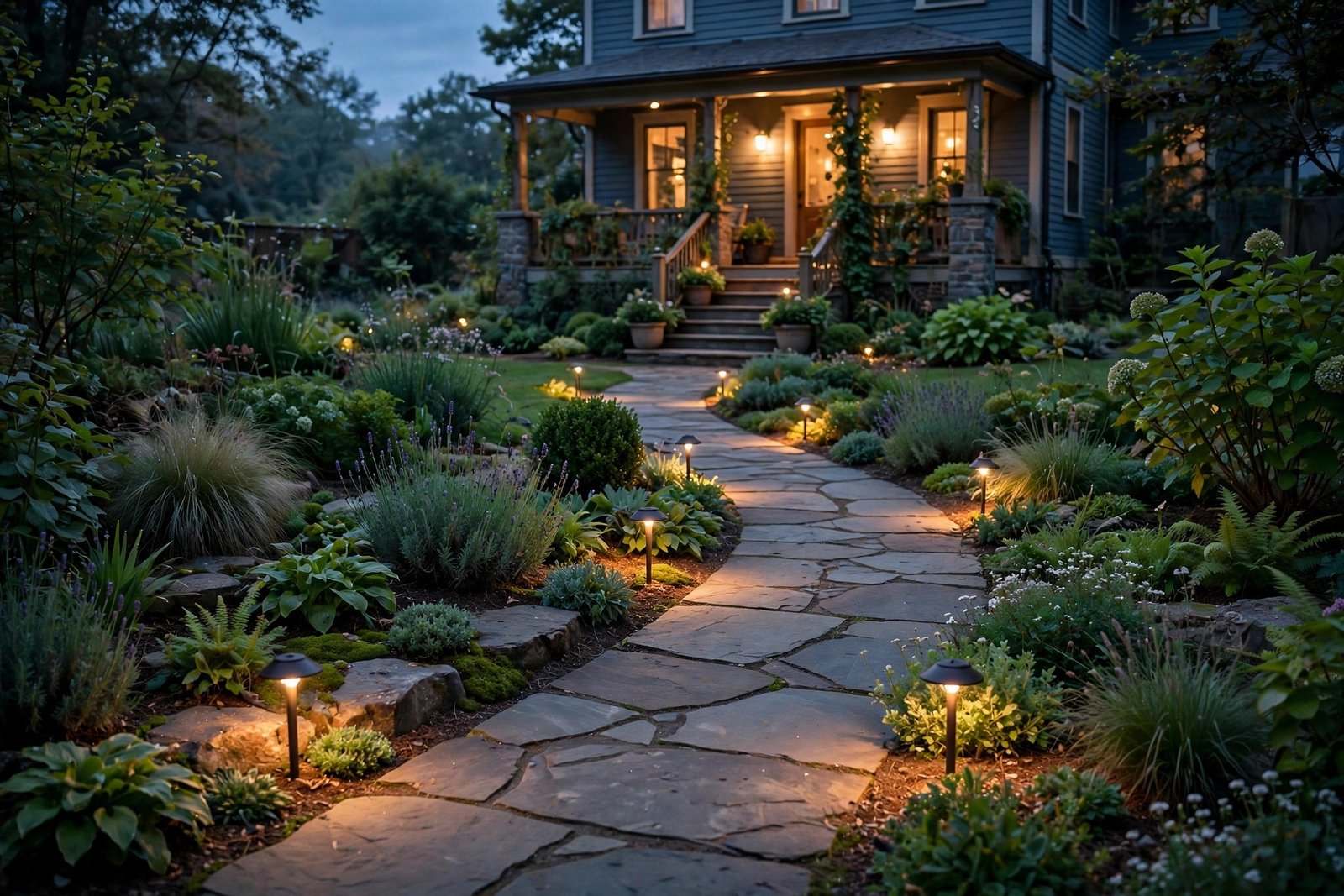
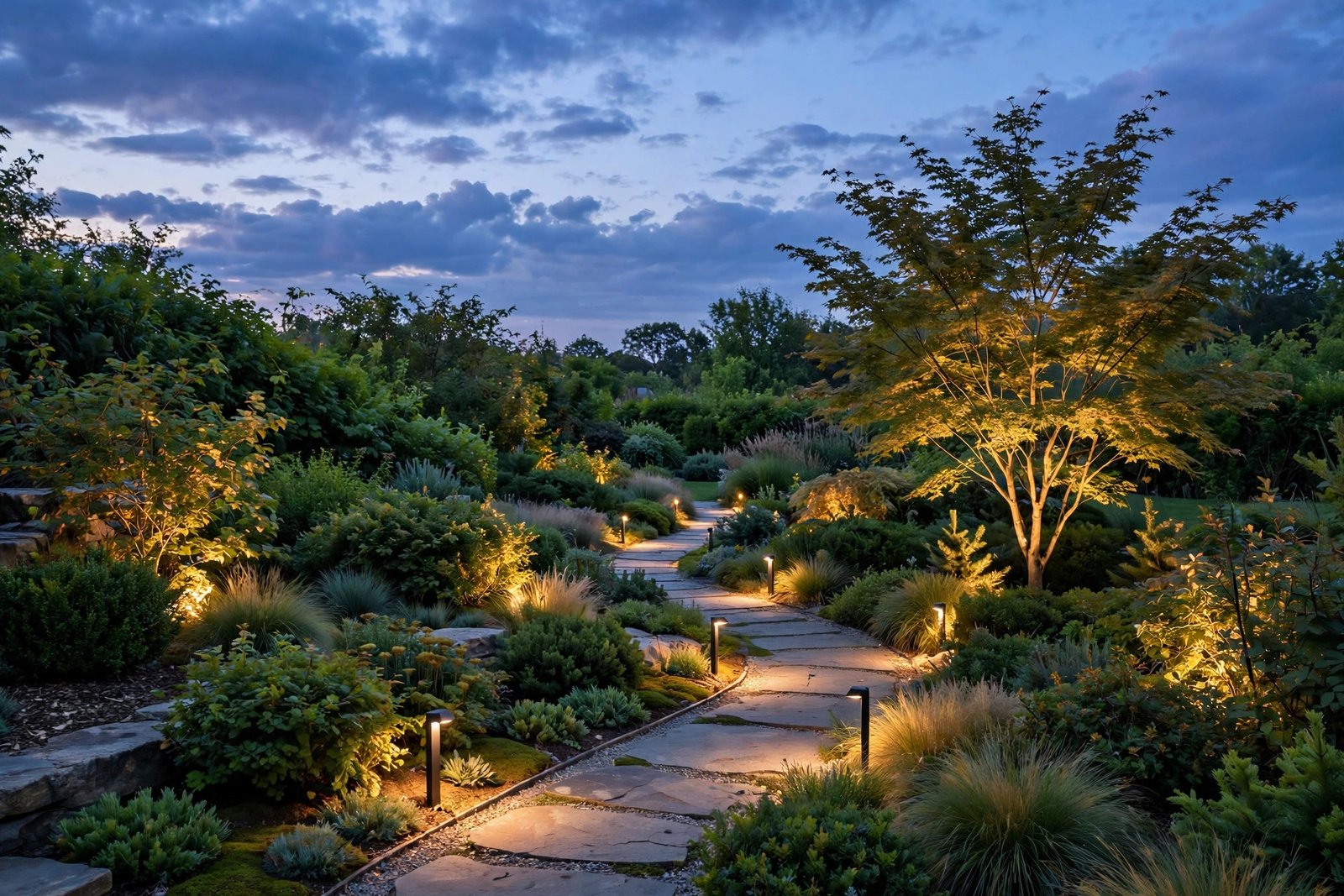
Path lights are short fixtures, usually on a stem or bollard, that throw light down and out over a walkway, steps, or driveway edge. Their job is safety and guidance: you see where to step, without glare in your eyes.
Place them along one side of a path, staggered rather than in a straight soldier row, about 6 to 8 feet apart for a typical walkway. Too close together and the path looks like a runway. Too far apart and dark gaps appear between pools of light. Keep the light low: a path light should light the ground, not the faces of people walking past it.
Spotlights: show the feature
Spotlights sit above ground on a stake or mount and aim a beam at something worth seeing: a tree trunk and canopy, a stone wall, a statue, the front of the house. They are the drama in a lighting plan, and they are the fixture most often overused.
Aim a spotlight up into a tree from a few feet out, not straight at the trunk from directly below, so the canopy catches light instead of a single bright stripe. One or two well-aimed spots on a feature beat five lights washing the same wall. And never aim a spotlight across a path or toward a seating area, where it shines into eyes instead of onto the feature.
Well lights: light without a fixture showing
Well lights, also called in-ground lights, sit flush in the ground with only the lens showing. They uplight trees, walls, and columns without a visible fixture during the day, which makes them the right choice where a stake light would look out of place — a front lawn, a formal bed, a driveway edge.
The trade-off is maintenance. A well light collects leaves, soil, and mower clippings over its lens, so it needs a quick clear-out now and then to stay bright. It also needs drainage around it, or it sits in water after rain. Place well lights where you can reach them easily for cleaning, not buried under dense shrubs.
Putting them together
A good plan layers the three: path lights along the walk, spotlights on one or two trees or the house front, well lights where a fixture would spoil the look. Start with the path, because safety comes first. Add one feature at a time, step back at night, and stop when the yard reads clearly without glare.
The most common mistake is lighting everything. A yard where every tree, wall, and bed glows looks like a parking lot, not a garden. Leave some darkness. The unlit areas are what make the lit ones worth looking at.
Bottom line
Path lights belong on walks, spotlights belong on features, and well lights belong where the fixture itself should disappear. Use all three, sparingly, and the yard will look intentional after dark instead of merely bright.
For a kit that includes spotlights and a transformer, see Best Low-Voltage Landscape Lighting Kits. For sizing that transformer, see How to Size a Landscape Lighting Transformer Without Overloading It.