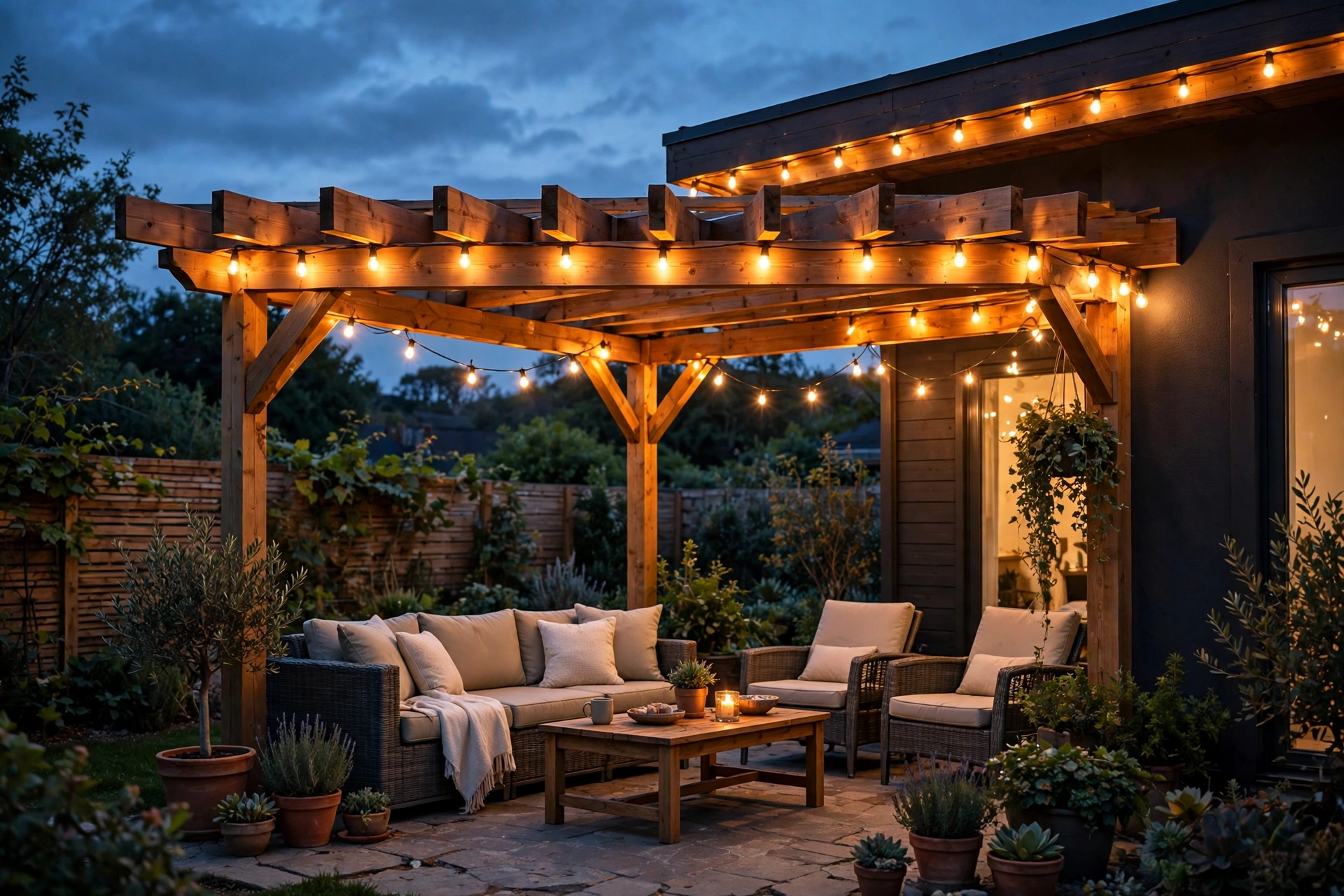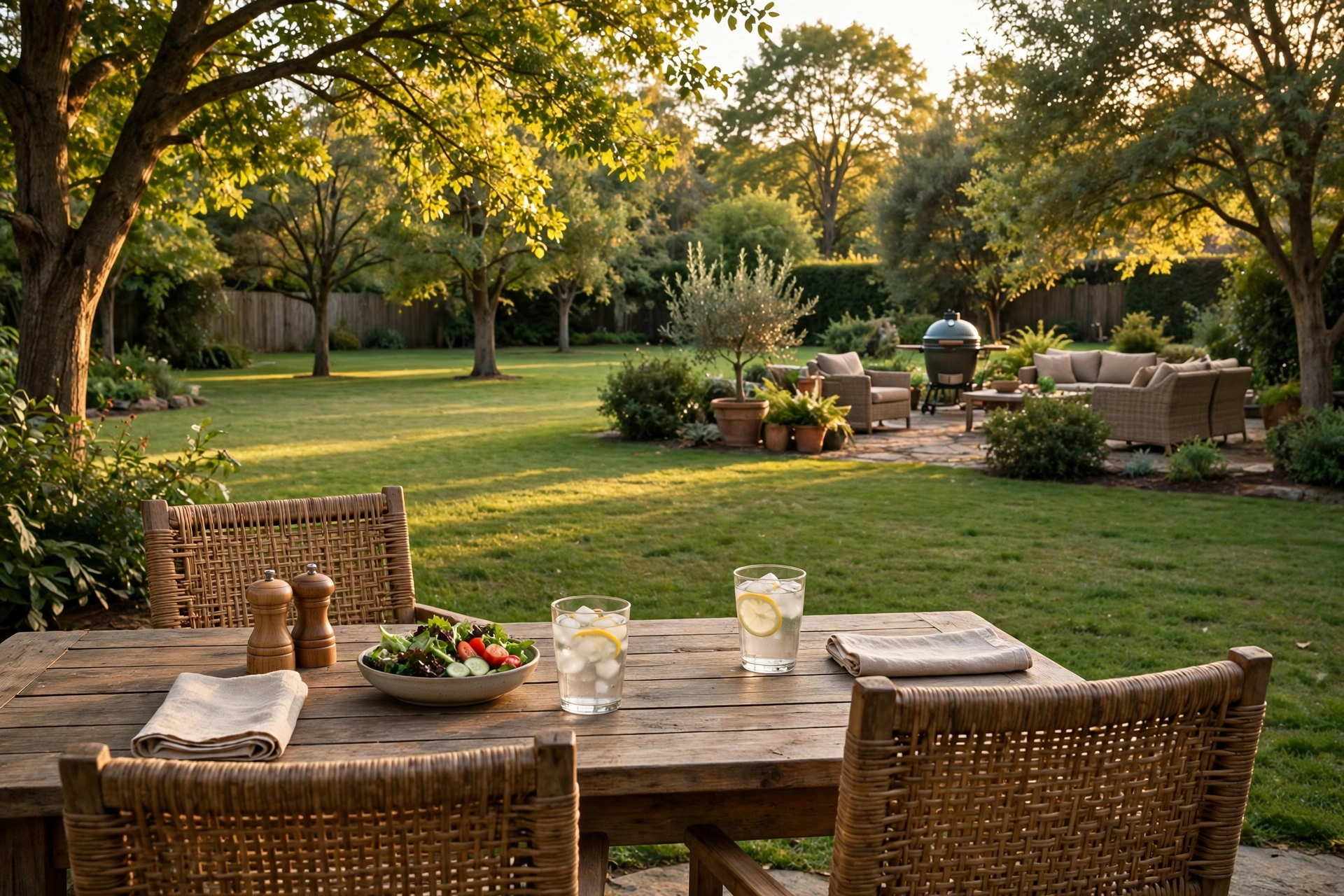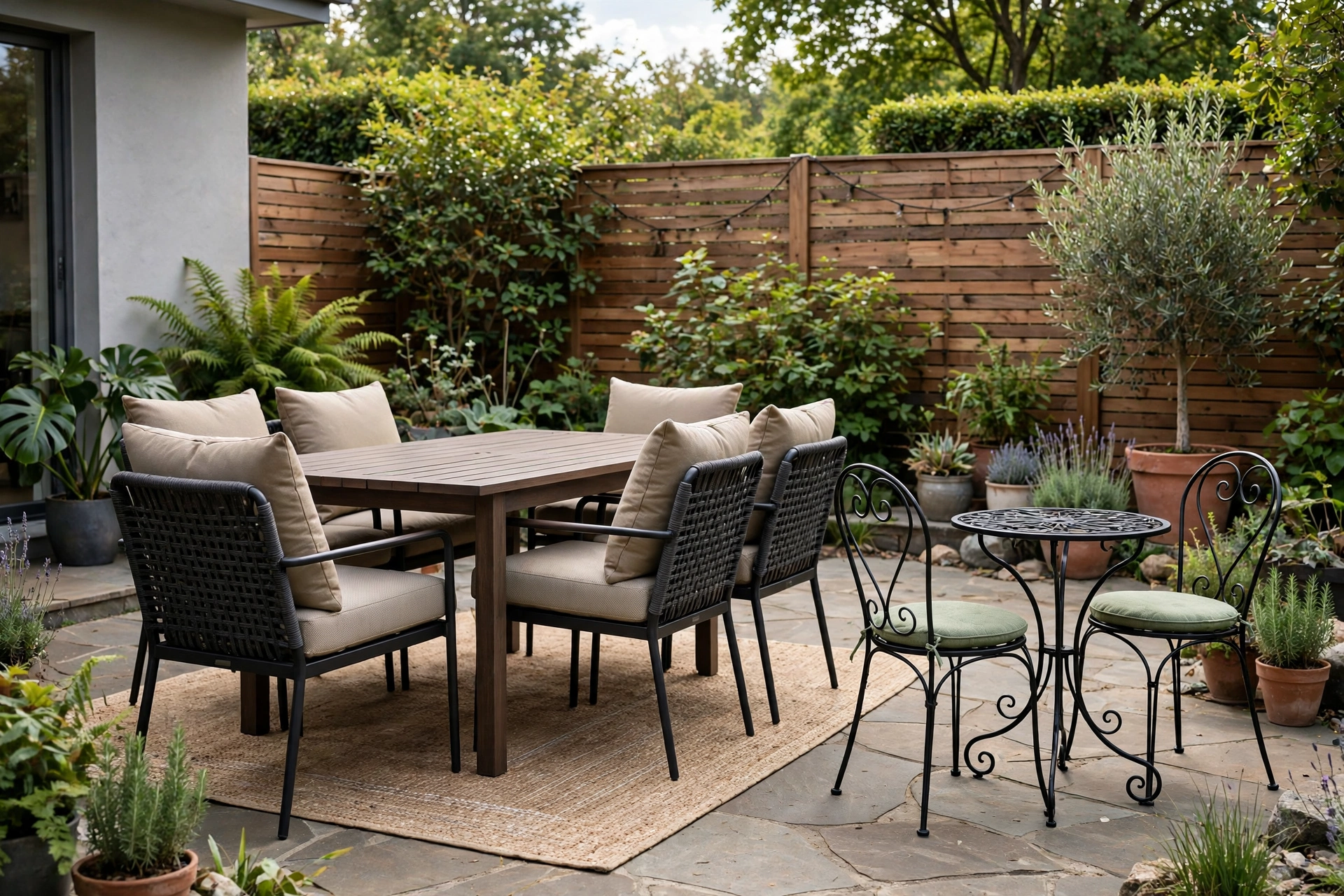
One patio set costs $300 and the one beside it costs $3,000, and from ten feet away they look like the same four chairs and a table. The difference is not the shape. It is the metal under the weave, the fabric on the cushions, and how many summers each one survives before it starts shedding, fading, or wobbling.
This is a price comparison, not a shopping list: real bands for the five set types people actually buy, what moves a set from one band to the next, and where the extra money stops buying anything you will notice.
The Price Bands at a Glance
| Set type | Typical price band | What sets the price | How long it lasts |
|---|---|---|---|
| 3-piece bistro set | $150–$300 | Two chairs, small table, steel or light aluminum | 2–4 seasons |
| 4-piece conversation set | $180–$900; premium $1,200–$2,500+ | Frame metal, weave density, cushion fabric | 2–3 years budget; 5–8 years mid-range; a decade or more premium |
| 7-piece dining set | $450–$1,800; designer to $4,700 | Table size, six chairs, teak vs. aluminum vs. wicker | 10–25 years for aluminum and teak |
| Sectional, 6–7 pieces | $550–$1,500 | Modular pieces, frame weight, cushion thickness | 8–18 years |
| Chaise lounge, each | $115–$470; premium $500–$1,200 | Frame, sling vs. cushion, recline mechanism | 3–10 years |
What the Extra Money Actually Buys
Three things decide where a set lands in its band, and they are the same three things in every category. First is the frame: powder-coated steel is the cheapest and the first to rust at any scratch, while powder-coated aluminum costs more and simply does not rust, which is why it is the standard frame once you pass the budget tier. Second is the weave: thin flat-strand resin over a light frame looks fine on delivery day and starts shedding within a couple of seasons, while dense high-density polyethylene (HDPE) weave over aluminum holds its color for five to eight years outdoors. Third is the cushion fabric: plain polyester fades and soaks, olefin holds up noticeably better, and solution-dyed acrylic — Sunbrella is the brand most people know — keeps its color five-plus years in direct sun and shrugs off chlorine.
Above roughly $1,200, you are also buying things that never show in a photo: a heavier frame that does not slide when you stand up, replaceable cushion covers, and a brand that will still sell you a matching cushion in four years. Below roughly $300, you are renting furniture — two or three seasons, then a replacement, which is a fair deal for a rental or a covered porch you rarely use and a bad deal for a sunny patio you live on.
Conversation Sets: $180 to $2,500 and Beyond
The four-piece conversation set — a loveseat, two chairs, and a coffee table — is the most-shopped patio set, and its bands are the clearest in the market. Budget sets run $180–$350: thin steel or aluminum tube, flat-strand weave, three-inch polyester cushions, good for two or three seasons with a cover. The sweet spot is $400–$900, where thicker aluminum frames, denser PE weave, and five-inch cushions with removable covers buy five to eight years of real use. Brand-name sets at $1,200–$2,500 add solution-dyed acrylic cushions, heavier frames, and replaceable parts for a decade or more. Past $3,000 you are paying for a designer name, a fabric warranty, and parts availability — real value if you keep furniture for fifteen years, decoration if you do not.
One practical check before you buy at any price: a four-piece resin set that weighs under 80 pounds in total is built from thin tubing and light foam, and you will feel it the first time you drag a chair across the deck. Weight is the fastest honest signal in a listing that hides its frame specs.
Dining Sets: $450 to $4,700
A seven-piece dining set — a table and six chairs — starts lower than most people expect and climbs faster than any other category. Aluminum dining sets with a wood-look top cluster around $450–$700, and they are the value pick for a family that eats outside all summer: no rust, no refinishing, and a table that survives a dropped plate. Mid-range resin wicker and aluminum sets run $1,200–$2,000, where the money goes into cushion quality and chair comfort rather than the table itself.
Teak and cast aluminum are the top of the band for a reason that shows up in the math. A certified Grade A teak dining set around $1,800 can last 25 to 50 years with basic care, which works out to roughly $36–$72 a year over its life — less than replacing a wicker set twice in the same period. Cast aluminum dining sets near $1,700 last 25 to 30 years for the same reason: nothing in them rusts, rots, or needs refinishing. Designer collections with Sunbrella cushions and handwoven wicker reach $4,700, and at that price you are buying the maker as much as the materials.
Sectionals: $550 to $1,500
Sectionals price by the piece and by the frame, and the spread is narrower than the conversation-set spread because almost every sectional in this range is resin wicker over metal. Steel-framed modular sectionals start around $550; the same layout over a heavy aluminum frame with thicker cushions runs $800–$1,500. The honest difference is lifespan: eight to twelve years for the steel-framed version, twelve to eighteen for aluminum-framed wicker, and the aluminum one is the only one of the two that forgives being left uncovered through a wet winter.
Measure before you fall for the price. A sectional that seats seven needs a bigger footprint than a conversation set with the same seat count, and delivery on a seven-piece set is often the hidden cost — a $900 sectional with $250 white-glove delivery and no return policy is a $1,150 gamble, so read the delivery and return terms before the price.
Chaise Lounges: $115 to $1,200 Each
Chaise lounges are the one category where buying in pairs changes the price completely. Budget aluminum loungers with textilene slings run $115–$220 each, and two-packs often land under $220 for the pair — the cheapest honest way to furnish a pool deck. Mid-range resin wicker loungers over rust-free aluminum, like the well-reviewed wicker models around $470 each, buy a real cushion and a frame that does not flex. Warehouse-club wicker loungers split the difference at roughly $140–$220 a chair in store, or about $200 each in a two-pack shipped to your door.
Premium loungers from furniture retailers run $500–$1,200 per chair, and the jump buys teak, eucalyptus, or thick-cushioned wicker with a frame that will outlast the fabric. That is a fair price for a chair you will lie on every afternoon from May to September, and a waste for a chair that gets used twice a summer.
Bistro Sets: $150 to $300
The three-piece bistro set is the smallest honest purchase in patio furniture: two chairs and a table small enough for a balcony. Prices cluster tightly at $150–$300 because there is not much furniture to price — the differences are frame metal and cushion thickness, and even the top of the band is a modest spend. It is also the set most likely to be bought twice, once cheap and once right, so if the balcony gets daily use, spend the extra $100 for aluminum over steel the first time.
When to Buy
Timing beats coupon-hunting for patio furniture. New stock lands in January through March at full price, and the same sets clear out in late July and again around Labor Day, often 25 to 40 percent off. If you can wait until August, you will often save 30 percent on the exact set you were eyeing in May — and the set you buy on clearance is the same set, not a cheaper version of it.
One more cost to count before you compare two prices: shade and heat. A set without shade gets used half as often, so if your patio bakes all afternoon, budget for an umbrella alongside the furniture — our guide to the best patio umbrella brands for a modern patio covers which ones hold up, and which patio umbrella brand has the best warranty matters more than it sounds once a canopy tears in year three. And if you plan to use the set past September, patio heaters that work in a small backyard stretch the season further than any cushion upgrade will.
Bottom Line
For most patios, the smart money lands in the middle of each band: a $400–$900 conversation set or a $700–$1,200 dining set with a powder-coated aluminum frame, dense HDPE weave, and olefin or solution-dyed acrylic cushions. That combination buys five to eight good years at the price of one cheap set replaced twice, and it is the only tier where every dollar goes into materials you will notice rather than a name you will not. Buy the cheapest steel set only when the furniture lives under a roof or the house is a rental — everywhere else, the aluminum frame is the purchase, and the chairs are just what comes with it.