
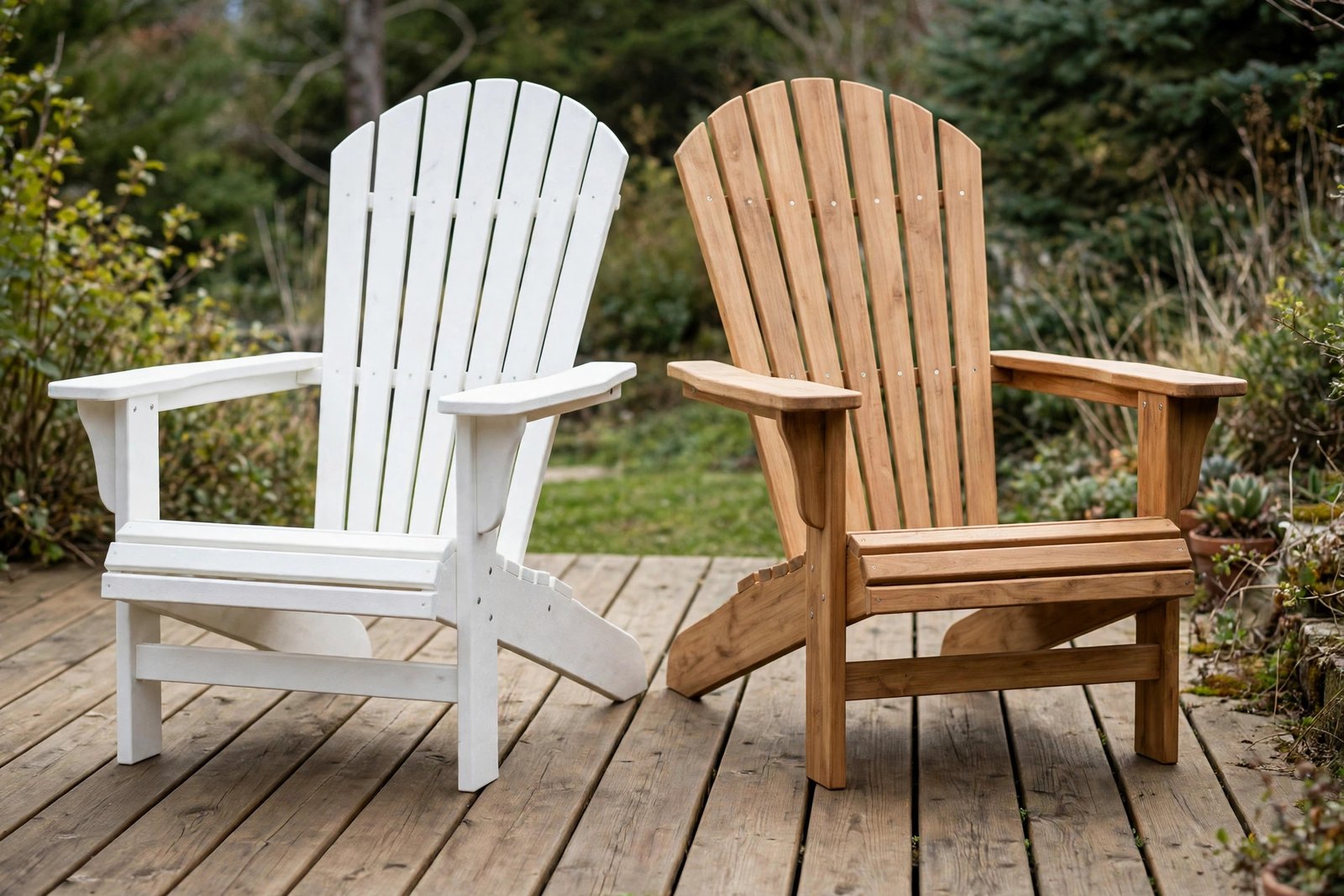
The Adirondack chair argument is really an argument about maintenance. The shape is identical either way; the material decides how many weekends you spend on the chair versus in it. HDPE lumber brands like POLYWOOD promise decades without staining. Cedar promises a natural look and a lighter chair, and asks for annual care in return. Both claims are mostly true, which is why the choice deserves more than a price comparison.
Start with the roundup if you want a pick: the best Adirondack chairs names the POLYWOOD Classic Folding as best overall. This comparison explains why, and when wood still wins.
Cost over ten years
HDPE chairs cost more up front — typically two to three times a basic cedar chair — and then almost nothing. Soap and water is the maintenance routine, and POLYWOOD backs the Classic line with a 20-year residential warranty against splintering, cracking, chipping, and peeling. Cedar costs less at purchase but needs a penetrating sealer or stain every year or two, plus sanding when the surface grays. Over a decade, the cedar chair’s supplies and weekends roughly erase its price advantage, and that assumes the chair is never left uncovered through a wet winter.
Comfort and weight
Comfort is nearly a tie: both materials take the same sloped-seat geometry, and cushion fit matters more than the frame material. Weight is not a tie. A cedar chair like the Shine Company Modern weighs about 19 pounds; the POLYWOOD Classic Folding weighs 37 pounds. If chairs move between the porch, the fire pit, and the garage, that 18-pound difference is felt every single time. If chairs stay put all season, it never matters.
Weather and aging
HDPE lumber is color-through material, so scratches do not show a different color underneath, and it will not rot, splinter, or feed insects. Its weakness is heat: dark colors get hot in direct sun, and the material can soften slightly on a very hot deck — it will not melt, but a dark chair in July is unpleasant to sit on bare-legged. Cedar weathers gracefully if you like silvered wood, and badly if you want it to stay honey-colored: holding the original color means sanding and resealing on schedule, and skipping a year shows.
Repairs and end of life
Cedar can be sanded, glued, and re-screwed by anyone with basic tools; a cracked slat is a Saturday fix. HDPE cannot be sanded back to new in the same way, but it rarely needs to be — the warranty covers the common failures, and individual POLYWOOD parts are sold as replacements. At end of life, cedar composts or burns; HDPE is recyclable in principle but rarely recycled in practice, which is the one genuine environmental point in wood’s favor.
The verdict
Choose HDPE if you want to buy chairs once and forget them, if storage is tight and folding matters, or if your chairs face sprinklers, pools, or salty air. Choose cedar if you enjoy the maintenance ritual, want the lightest chair, or plan to paint the chairs a custom color. Avoid the middle ground that satisfies nobody: thin molded resin chairs that imitate both and last like neither. For sizing once you have picked a material, see how to choose an Adirondack chair.