You stand over a freshly raked bed with a fistful of seed packets, and every one of them asks the same three questions: how far apart, how deep, and how long until dinner. The packets answer in shorthand, and two packets of the same vegetable can disagree with each other.
This table puts all three answers in one place for 34 vegetables, drawn from two university Extension planting guides — the University of Georgia’s Vegetable Planting Chart and Purdue Extension’s Gardener’s Home Guide — so you can check spacing, depth, and days to maturity without flipping between packets and pamphlets.
The table
Spacing is given in inches, first between rows, then between plants in the row. Sowing depth is how deep the seed goes; a dash means the crop goes in as a transplant, so there is no sowing depth to give. Days to maturity count from planting seed or setting transplants in the garden. The Purdue column shows Purdue’s figures wherever they differ from Georgia’s; where Purdue’s guide does not list the crop, the table says so.
| Vegetable | Spacing between rows | Spacing in row | Sowing depth | Days to maturity (UGA) | Purdue cross-check | Seed or plants per 100 ft |
|---|---|---|---|---|---|---|
| Asparagus | 36″ | 18–24″ | 6″ | 2nd year | Not listed in Purdue Table 1. | 50 roots |
| Beans, bush | 36″ | 2–4″ | 1–1½” | 50–60 | 55–60 days; rows 24″; depth 1–2″ | 0.5 lb |
| Beans, pole | 36″ | 4–12″ | 1–1½” | 65–75 | Not listed in Purdue Table 1. | 0.5 lb |
| Beans, lima | 36″ | 3–4″ | 1–1½” | 65–75 | Rows 24″; plants 6″; depth 1–2″ | 0.5 lb |
| Beets | 18–36″ | 2″ | ½” | 55–65 | Rows 12″; plants 3″; depth ½–1″ | 1 oz |
| Broccoli | 36″ | 12″ | — | 60–80 | 40–55 days; plants 18″ | 100 plants |
| Cabbage | 36″ | 12″ | — | 70–120 | 55 days; plants 18″ | 100 plants |
| Cantaloupe | 60″ | 36″ | 1″ | 80–90 | 85–90 days (as muskmelon); rows 48″; plants 18″ | 1 oz |
| Carrot | 18–36″ | 2–3″ | ¼” | 70–95 | 70–75 days; rows 12″; depth ½” | 0.5 oz |
| Cauliflower | 36″ | 12″ | — | 60–75 | 50–60 days; plants 18″ | 100 plants |
| Collards | 36″ | 8–16″ | ½” | 55–85 | Not listed in Purdue Table 1. | 0.5 oz |
| Corn, sweet | 36″ | 12–18″ | 1–1½” | 65–90 | 65–85 days; depth 1–2″ | 0.25 lb |
| Cucumber | 60″ | 12″ | ½–¾” | 50–65 | 55–70 days; rows 48″; plants 18″; depth 1″ | 1 oz |
| Eggplant | 36″ | 24″ | — | 75–90 | 55–70 days; rows 24″ | 50 plants |
| Kale | 36″ | 8–16″ | ½” | 50–70 | Not listed in Purdue Table 1. | 0.5 oz |
| Lettuce | 18–36″ | 8–12″ | ⅛” | 60–85 | 40–50 days (leaf lettuce); rows 12″; plants 4″; depth ½” | 0.25 oz |
| Mustard | 18–36″ | 2″ | ½” | 40–50 | Not listed in Purdue Table 1. | 0.5 oz |
| Okra | 36″ | 12″ | 1″ | 55–65 | Not listed in Purdue Table 1. | 1 oz |
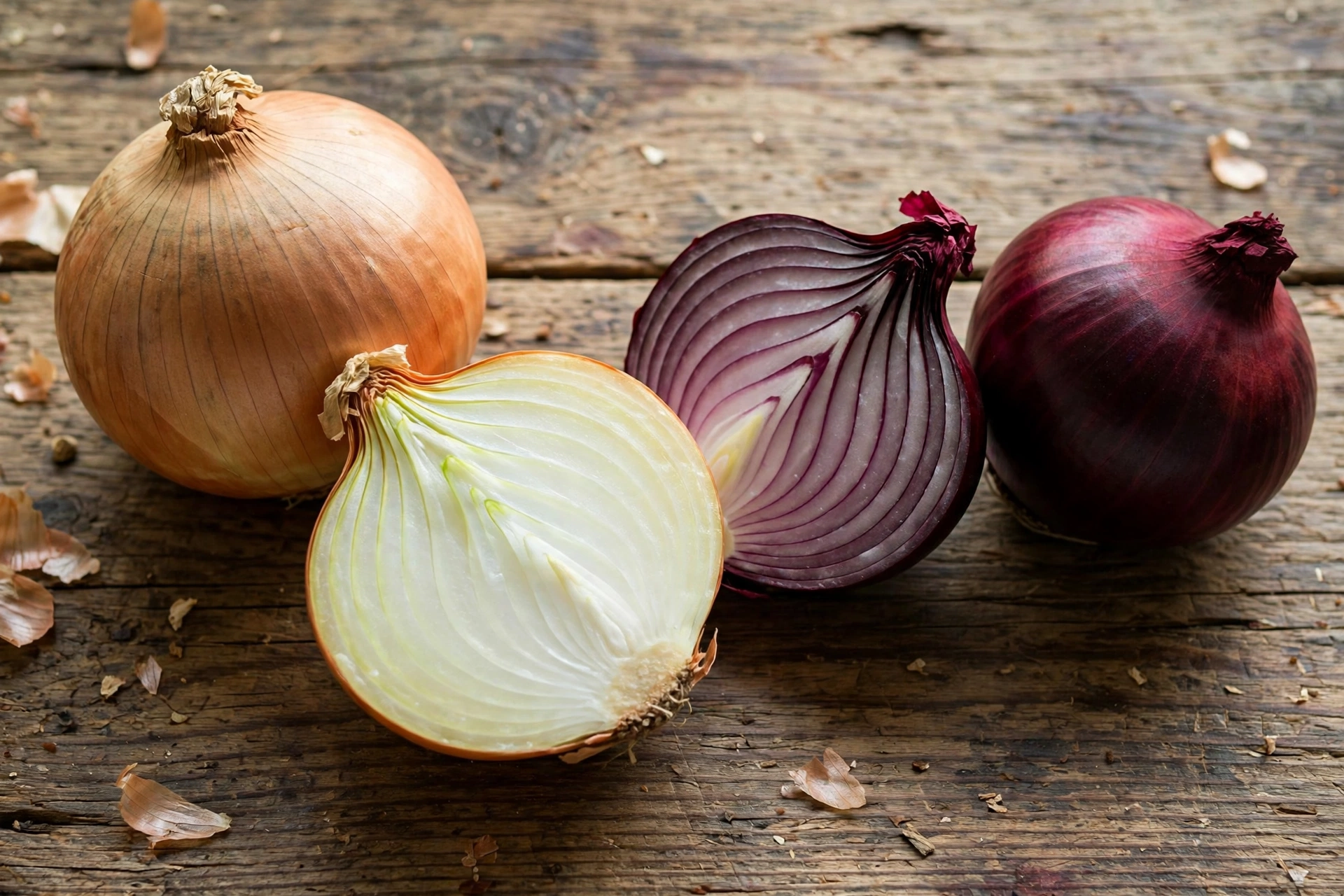
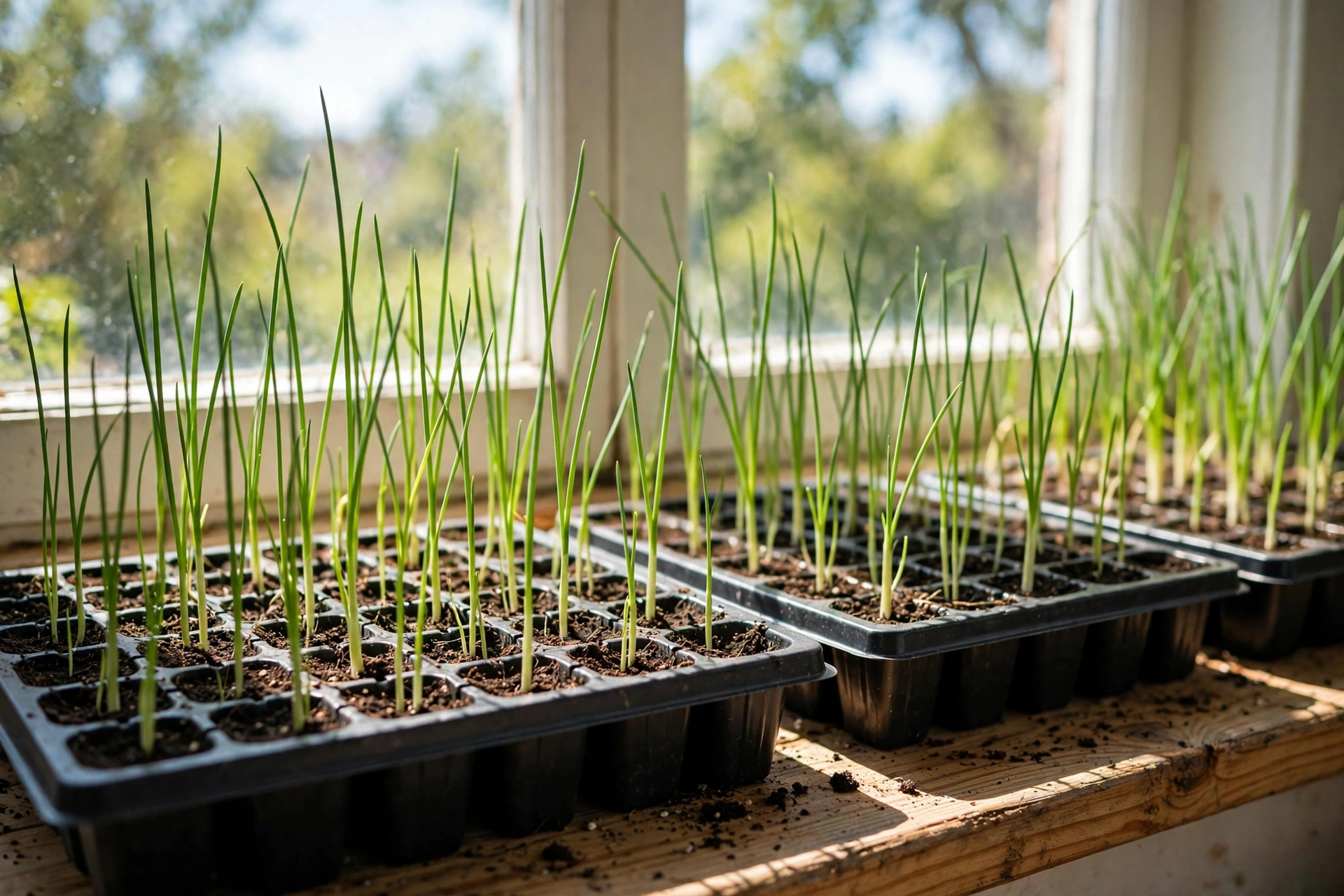
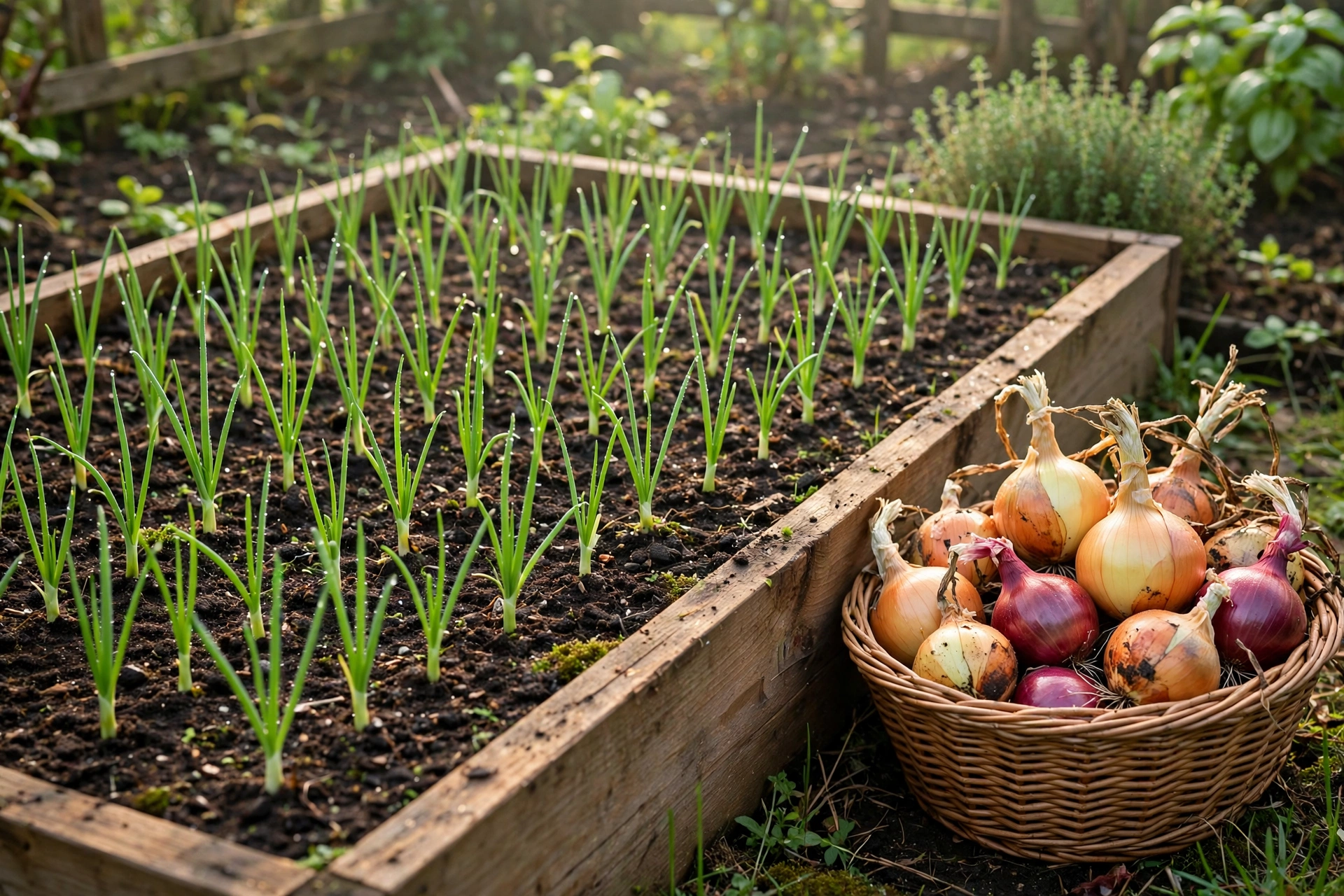
| Onion, green | 18–36″ | 3″ | — | 60–90 | 60 days (green); rows 12″; plants 2″; depth 1–4″ | 300 plants |
| Onion, dry bulb | 18–36″ | 3–4″ | — | 100–120 | 90–120 days; rows 12″; plants 2″; depth 1–4″ | 300 plants |
| Peas, garden | 36″ | 2″ | 1–2″ | 60–70 | 60–75 days; rows 12″; plants 1″; depth 2″ | 1 lb |
| Peas, Southern | 36″ | 3–4″ | 1–2″ | 60–70 | Not listed in Purdue Table 1. | 0.5 lb |
| Peppers, bell | 36″ | 24″ | — | 65–80 | 55–70 days; rows 24″; plants 18″ | 50 plants |
| Peppers, hot | 36″ | 24″ | — | 65–95 | 55–70 days; rows 24″; plants 18″ | 50 plants |
| Potatoes, Irish | 36″ | 12″ | 4–5″ | 70–90 | 90–130 days; plants 10″; depth 4″ | 12 lb |
| Potatoes, sweet | 36″ | 12″ | — | 90–120 | 130–140 days | 100 plants |
| Pumpkin | 72″ | 48″ | 1″ | 85–120 | 85–110 days; plants 72″ | 1 oz |
| Radish | 24″ | 1″ | ½” | 25–30 | Rows 12″ | 1 oz |
| Spinach | 18–36″ | 2″ | ½–¾” | 40–45 | Rows 12″; plants 3″; depth 1–2″ | 1 oz |
| Squash, summer | 36″ | 24″ | 1–2″ | 40–55 | 50–60 days; rows 48″; plants 48″; depth ½” | 0.5 oz |
| Squash, winter | 60″ | 36″ | 1–2″ | 85–120 | 85–110 days; rows 72″; plants 72″; depth 1″ | 0.5 oz |
| Tomato | 48″ | 24″ | — | 70–90 | 40–70 days | 50 plants |
| Turnip | 18–36″ | 2″ | ½” | 40–60 | 60–90 days; rows 12″; plants 4″ | 0.5 oz |
| Watermelon | 72″ | 36–48″ | 1–2″ | 80–90 | 75–90 days; depth 1″ | 1 oz |
Where the two guides disagree
The biggest gaps sit in days to maturity, and most of them have the same shape: Purdue’s number is shorter for crops that go in as transplants. Broccoli runs 60–80 days in Georgia’s chart against 40–55 in Purdue’s; cabbage 70–120 against 55; eggplant 75–90 against 55–70; tomato 70–90 against 40–70. The likely reason is the starting line: Georgia counts from planting seed or setting transplants in the garden, while Purdue’s table appears to count transplanted crops from transplanting. Neither number is wrong — they start the clock in different places, so plan on the longer figure and be pleasantly surprised.
Potatoes run the other way. Irish potatoes take 70–90 days in Georgia’s chart and 90–130 in Purdue’s; sweet potatoes 90–120 against 130–140. Turnips split the same way, 40–60 against 60–90. The numbers say the same crop takes longer in Purdue’s chart, so plan on the longer window for these three.
Lettuce looks like the widest gap of all — 60–85 days against 40–50 — but the two guides are not measuring the same lettuce. Purdue’s row is leaf lettuce; Georgia’s covers butterhead and romaine heads. Read Purdue’s figure as leaf lettuce, not as a contradiction.
Sowing depth disagrees on a few small seeds. Georgia says to plant carrots a quarter inch deep; Purdue says a half inch. Spinach is a half to three-quarters of an inch in Georgia’s chart, one to two inches in Purdue’s. Summer squash is one to two inches in Georgia’s chart, a half inch in Purdue’s. When the guides split on depth, the shallower figure is the safer bet in heavy soil, and Georgia’s own chart says to plant shallowly in clay when moisture is adequate.
How to use these numbers
Days to maturity vary by cultivar, temperature, and growing conditions — Georgia’s chart says so itself, and it is worth believing. Use the ranges as planning windows, not promises: a hot summer pulls most crops toward the short end, a cool one toward the long end.
Planting dates are not in this table on purpose. Georgia’s dates are Georgia’s, and Purdue’s are Indiana’s; your dates come from your own state’s Extension service. If you start seed indoors, our seed-starting date calculator works backward from your last frost date using this same Georgia chart. And once the seedlings are up, the next question is cold — our frost reference table sorts these same vegetables by how much cold each group takes.
Spacing travels beyond the vegetable bed, too. If you edge the rows with marigolds — the classic companion move — give them the same generous elbow room; our marigold timing, spacing, and deadheading guide covers when to sow them and how far apart they want to be.
Bottom line
When the two guides disagree, plant to the wider spacing and the longer maturity window. Crowded plants and an early harvest guess cost more than a little patience — and a bed planted with room to grow is the one that feeds you all summer.
Sources
University of Georgia Extension, Circular 963, “Vegetable Gardening in Georgia” — Vegetable Planting Chart — https://extension.uga.edu/publications/detail.html?number=C963 and https://fieldreport.caes.uga.edu/wp-content/uploads/2023/06/vegetable-planting-chart-for-Georgia-C963-UGA-extension.pdf — fetched November 7, 2026.
Purdue Extension, HO-32-W, “Gardener’s Home Guide,” Table 1 — https://www.extension.purdue.edu/extmedia/HO/HO-32-W.pdf — fetched November 7, 2026.