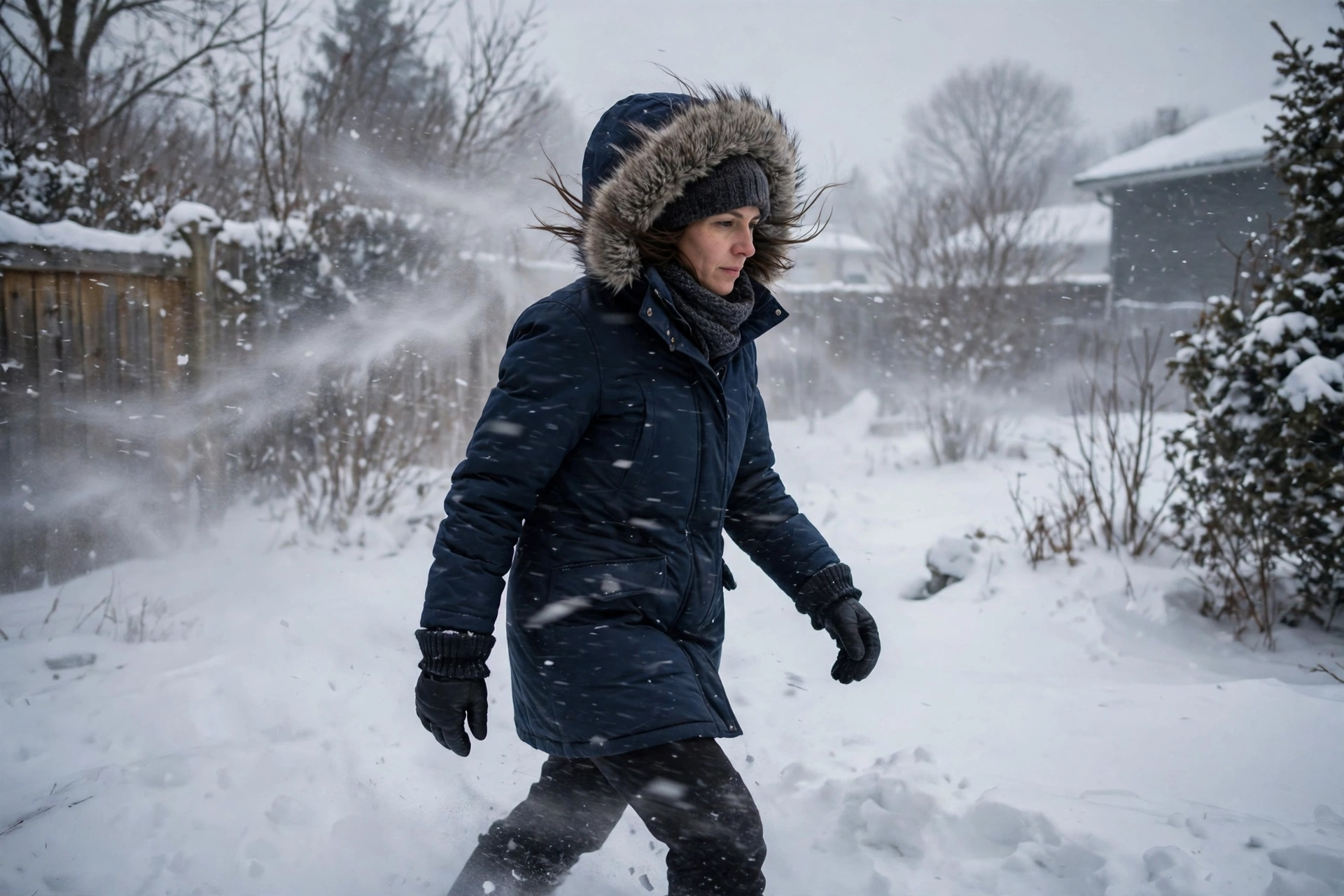
-19°F is what 0°F feels like once the wind picks up to 15 mph, and at that wind chill exposed skin can freeze in 30 minutes. The thermometer on the porch rarely tells the whole story on a January morning.
That gap between the air temperature and the wind chill decides ordinary winter jobs: how long the driveway can wait, whether the bird feeders get filled before breakfast or after, and how much skin stays covered while the firewood comes in. Guess wrong and a routine chore runs longer than your cheeks and fingers can take.
The National Weather Service chart gives the wind chill for the pairings winter actually delivers, along with the air temperatures where its frostbite bands begin.
Wind chill temperatures, by air temperature and wind speed
Read across from the wind speed to the column for the air temperature. Every cell is the wind chill in degrees Fahrenheit.
| Wind (mph) | 40°F | 30°F | 20°F | 10°F | 0°F | -10°F | -20°F | -30°F | Source |
|---|---|---|---|---|---|---|---|---|---|
| 5 mph | 36 | 25 | 13 | 1 | -11 | -22 | -34 | -46 | NWS |
| 10 mph | 34 | 21 | 9 | -4 | -16 | -28 | -41 | -53 | NWS |
| 15 mph | 32 | 19 | 6 | -7 | -19 | -32 | -45 | -58 | NWS |
| 20 mph | 30 | 17 | 4 | -9 | -22 | -35 | -48 | -61 | NWS |
| 25 mph | 29 | 16 | 3 | -11 | -24 | -37 | -51 | -64 | NWS |
| 30 mph | 28 | 15 | 1 | -12 | -26 | -39 | -53 | -67 | NWS |
| 40 mph | 27 | 13 | -1 | -15 | -29 | -43 | -57 | -71 | NWS |
| 60 mph | 25 | 10 | -4 | -19 | -33 | -48 | -62 | -76 | NWS |
Wind chill is defined only for air temperatures at or below 50°F and wind speeds above 3 mph, which is why the chart starts where it does. It also applies to people and animals, not to equipment: a radiator or an outdoor faucet cools faster in the wind, but never below the actual air temperature.
Where the frostbite bands begin
The chart shades three frostbite times for exposed skin: 30 minutes, 10 minutes, and 5 minutes. The table below gives the first air temperature, on the chart’s 5-degree steps, at which each band begins for a given wind speed; colder air sits in the same band or the next one down.
| Wind (mph) | 30-minute band starts | 10-minute band starts | 5-minute band starts | Source |
|---|---|---|---|---|
| 5 mph | -10°F | -40°F | Not reached on the chart | NWS |
| 10 mph | -5°F | -25°F | -45°F | NWS |
| 15 mph | 0°F | -20°F | -40°F | NWS |
| 20 mph | 0°F | -15°F | -35°F | NWS |
| 30 mph | 5°F | -10°F | -25°F | NWS |
| 40 mph | 5°F | -5°F | -20°F | NWS |
| 60 mph | 10°F | 0°F | -10°F | NWS |
Frostbite needs the air itself below freezing, whatever the wind chill says, and the Weather Service based its tests on adults. Treat these times as the outer limit and be more cautious with children, older family members, and anyone in poor health.
Working outside inside the limit
Once your pairing lands in the 10- or 5-minute band, the job gets split: clear half the driveway, warm up, then finish. A shovel that clears wide passes without throwing stone shortens every trip outside, and the same goes for clearing a gravel drive in fewer, cleaner passes.
Cover the gaps the wind finds first. It works in at the wrist between glove and cuff and at the neck before it bothers with anything thicker, so long cuffs and a zipped collar buy more working time than a heavier coat over the same openings.
Check your pairing before the first chore of the day, dress for the wind chill instead of the thermometer, and let the 30-minute band be the longest stretch anyone in the house spends outside at once.
Sources
National Weather Service (NOAA), “Understanding Wind Chill” and Wind Chill Chart — https://www.weather.gov/safety/cold-wind-chill-chart — fetched in full November 22, 2026; every published cell re-verified against the chart and the NWS wind chill formula on November 23, 2026.