Landscape & Leisure is reader-supported. When you buy through links on our site, including Botanical Interests seed links, we may earn a commission at no extra cost to you. Prices change, so click through to confirm current pricing.
Here’s the mistake that costs more seedlings than any other bag swap: you reach for the bag you already own. The potting soil is right there, it says “soil” on it, and the seed packet says “sow in soil.” Two weeks later the tray is a swamp, the seedlings are leggy or rotted, and the potting soil takes the blame for a job it was never designed to do.
Seed-starting mix and potting soil look like cousins. They are built for different jobs, and using the wrong one at the wrong stage is the fastest way to lose a tray. If your seeds never came up at all, check our guide to why seeds fail first — mix is one suspect among several.
| Trait | Seed-starting mix | Potting soil |
|---|---|---|
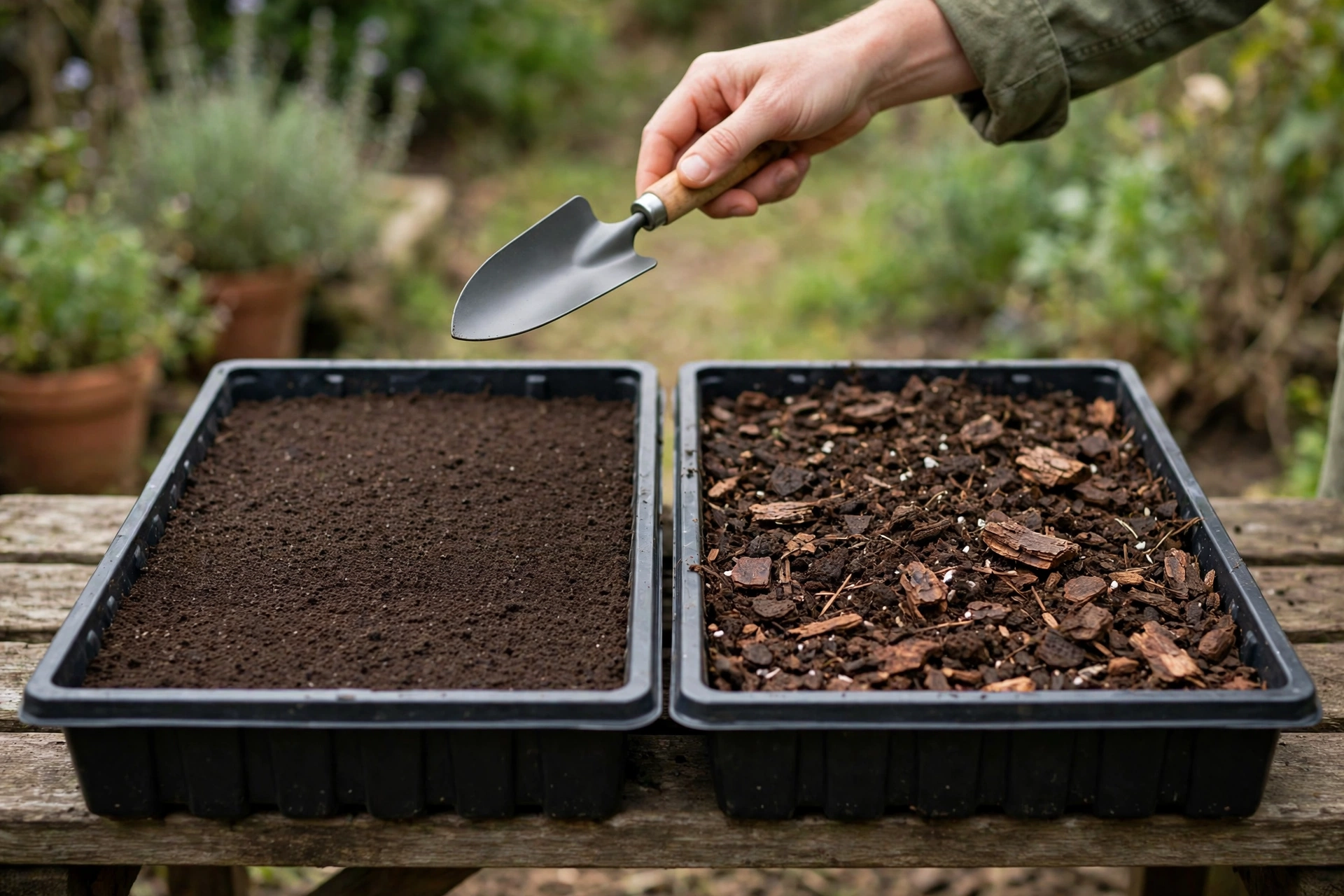
| Texture | Fine, light, uniform | Chunkier, with bark and larger particles |
| Nutrients | Very low — seedlings feed from the seed itself at first | Fertilizer included — can burn tender roots |
| Drainage | Fast-draining, holds moisture evenly | Holds more water — easy to overwater in a small cell |
| Sterility | Sterile, soilless — fewer damping-off fungi | Not sterile — fine for plants, risky for seeds |
| Best stage | Sowing through first true leaves | Potting up and growing on |
What seed-starting mix actually is
Seed-starting mix usually contains no soil at all. It’s a blend of fine peat or coir, vermiculite, and perlite: light enough for a tiny root to push through, fine enough for good seed-to-mix contact, and low in fertilizer because a germinating seed carries its own lunch. It drains fast, which matters because the number-one seedling killer is wet feet — the damping-off fungi that rot seeds and collapse stems love cool, soggy mix.
That sterility is the point, not a bonus. Purdue’s vegetable specialists recommend starting seedlings in sterilized, soilless mix in clean containers precisely because garden soil and used potting soil carry the fungi that cause damping-off. When a tray fails for no visible reason, unsterile mix is often the invisible one.
What potting soil is for
Potting soil is built for plants that already have roots. It’s chunkier, holds more water, and usually carries fertilizer — all good things for a tomato plant in a gallon pot, and all wrong for a seed in a cell. The bark chunks that give a potted plant structure are boulders to a seedling root. The fertilizer that feeds a growing plant can burn a root that is barely a thread. And the extra water retention that keeps a patio pot from drying out turns a seed tray into a swamp.
None of this makes potting soil bad. It makes it a second-stage product. The honest sequence is: start in seed mix, pot up into potting soil once seedlings have true leaves and roots that can handle it.
The verdict, by situation
Starting seeds indoors? Seed-starting mix, no contest. Fine texture, low fertilizer, sterile, fast-draining — every trait lines up with what a seed needs and none of what kills it.
Potting up seedlings with true leaves? Potting soil takes over. By then the plant wants nutrients and water-holding capacity, and its roots can handle bark and fertilizer.
Direct-sowing outdoors? Neither bag matters much. You’re sowing into garden soil, so spend the effort on depth, moisture, and timing instead — see our germination troubleshooting guide.
On a budget and tempted to use potting soil for seeds? If you must, screen out the big chunks, cut it with perlite for drainage, skip any extra fertilizer, and water from below. It can work. But a bag of seed mix is cheap insurance against the tray that rots, and most gardeners who switch never go back.
The kit that makes good mix work harder
Mix is only half the setup. Cells that drain, a tray that lets you water from below, and steady warmth for slow crops turn good mix into good germination. These three are the work horses:
Epic 6-Cell Seed Starting Trays
The right cell size for seed mix: good drainage, good spacing, and sturdy enough to reuse.
Epic 1020 Universal Bottom Tray
Bottom-water your seed mix and stop washing tiny seeds to the tray’s edge.
Seed Starting Heat Mat
Holds soil at germination temperature while the room cools overnight.
The one to skip for seeds: garden soil
If potting soil is the wrong bag, garden soil is the wrong planet. It’s heavy, compacts in a cell, drains poorly, and carries exactly the fungi that damping-off needs. No card for it here, and no place in a seed tray. Save it for the bed, where it belongs — and keep your stored seed in the conditions our seed-storage guide lays out, so the seed going into that good mix is worth the effort.
Bottom Line
Seed-starting mix for sowing, potting soil for growing on, garden soil never in a tray. Get the bag right and half the seed-starting problems on this site disappear before they start.