Dear Spade, Every fall I look at the blanket of leaves on my lawn and wonder whether I’m supposed to rake them all up or just let nature do its thing. One neighbor swears the leaves feed the lawn. The other neighbor swears they’ll kill it. Who’s right? — Leaf It to Me in Lansing, Michigan
Oh, I love this question, because both of your neighbors are right — and both of them are wrong — and the difference is about an inch of leaves. That is the whole argument, right there. A thin scattering of leaves on a lawn is a free snack for your soil. A thick, wet mat of them is a blanket your grass slowly suffocates under. Same leaves, completely different ending, and the only thing that changes is how many of them you leave behind.
So, What’s the Deal with Fall Leaves?
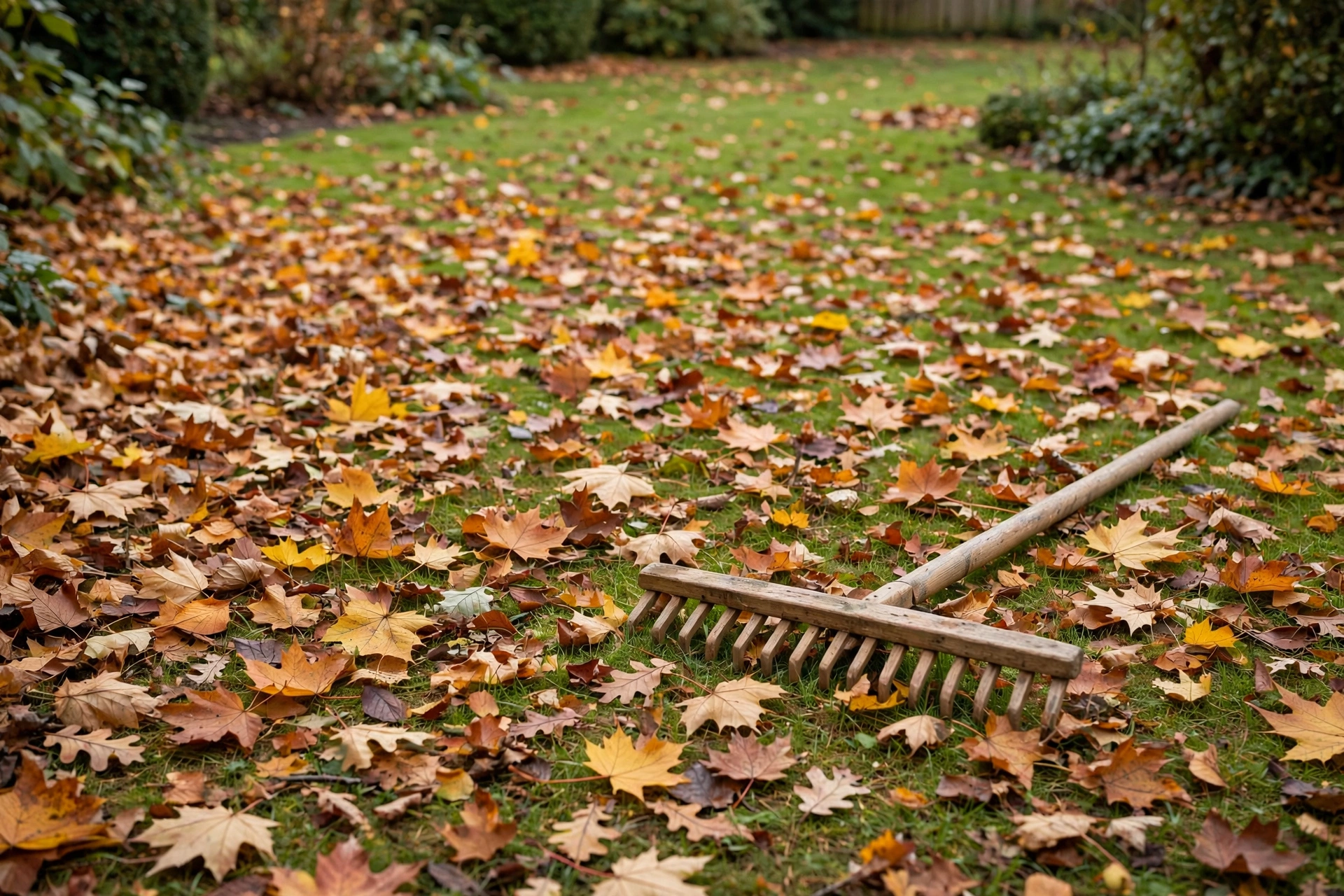
Here is the thing about a leaf: once it falls, it is not done working. A light layer — the kind you can still see grass poking through — breaks down over winter, and the worms and microbes underneath turn it into organic matter that feeds the soil. That is your first neighbor’s point, and it is a good one. Leaves are, quite literally, free fertilizer that falls out of the sky.
But here’s where it gets tricky. When the layer gets thick enough to hide the grass completely, the story flips. That mat blocks light and air, traps moisture against the grass blades, and holds it there all winter long. Under a snow-covered leaf mat, that is exactly the damp, airless condition snow mold loves — the gray, matted patches you find in spring where the grass looks like it spent the winter in a wet sweater. And a deep layer of leaves is also prime winter real estate for voles, who will happily tunnel underneath it and nibble your grass roots while you are inside drinking cocoa.
The Verdict
So let’s land this plainly: do not leave a thick blanket of leaves on your lawn all winter. Rake the heavy drifts, and mulch-mow the rest. That is the verdict, and your spring self will be grateful you listened.
So, let’s talk solutions, because this one is gloriously easy. Run your mower over the leaves — with the bag off and a mulching blade if you have one — until they are chopped into dime-sized pieces that sift down between the grass blades. At that size, they disappear into the lawn instead of sitting on top of it, and they break down over winter the way nature intended. You may need two passes on a heavy drop, and that is fine. Think of it as your last workout of the season.
What about the leaves that are too thick to mulch-mow, the drifts piled against the fence and under the maple? Rake those onto a tarp and haul them to the compost pile, where they become next year’s black gold — or shred them for mulch around the beds. And if the leaf fall in your yard is measured in wheelbarrows rather than handfuls, a lawn sweeper built for pine needles will gather a drift in a fraction of the time a rake takes, pine needles included. Your shoulders will send a thank-you note.
One more thing, for the spring: if a matted patch did smother a spot over winter, don’t panic. Come spring, rake the dead mat away, and if the grass underneath is truly gone, the guide to reseeding your lawn in five steps will walk you through patching it back in. Most lawns bounce back with a little raking and patience — they are tougher than they look.
Let the Leaves Work — Just Not Too Hard
Your two neighbors can both relax. The leaves are not the enemy, and they are not a miracle, either. They are a resource, and like every resource in the garden, the dose makes the difference. A little, chopped fine and worked into the lawn, feeds the soil all winter. A lot, left in a soggy mat, smothers the grass and invites every mold and vole in the neighborhood to move in.
So rake the drifts, mow the rest into confetti, and let the lawn breathe. Your grass will come through winter ready to grow, and you will have earned that cocoa. Seasonedly yours, The Seasoned Spade