The mistake costs you twice: once in the bag of salt, and again in spring, when the driveway shows you what the salt did. Most people reach for the ice melt first because it feels faster — scatter it, wait, walk away. But salt on top of three inches of snow is a slow, expensive way to make a slushy mess, and the mess refreezes into the exact sheet of ice you were trying to avoid. The order matters more than the product. Shovel first, melt second, and the driveway clears faster with less of both.
The Order That Works
Here is the routine, start to finish. Shovel the snow off while it is still snow. Then scatter ice melt thinly on the bare pavement that is left — the thin layer of packed snow and ice the shovel could not lift. Then walk away and let it work.
Why that order? Ice melt works by lowering the freezing point of water, so it melts the thin layer it touches. It cannot melt through inches of snow — the granules sink, dissolve, and quit before they reach the pavement. And every pound of salt you scatter on snow is a pound that washes onto the lawn edge and into the soil when it melts. Shoveling first means the melt only has to handle the thin layer left behind, which is the job it is actually built for.
Shovel vs Ice Melt at a Glance
| Snow shovel | Ice melt | |
|---|---|---|
| Best for | Removing snow before it packs down or melts and refreezes | Clearing the thin ice layer left after shoveling |
| Cost | One-time purchase, no refills | Bought by the bag, used up every storm |
| Effort | Physical work, done in minutes for a typical driveway | Scatter and wait — but wait time is 20 minutes or more |
| Concrete risk | None, if the blade is not metal on a soft surface | Salt speeds freeze-thaw damage, especially on new concrete |
| Lawn risk | None | Salt runoff burns grass along the driveway edge |
| Cold limit | Works at any temperature | Plain rock salt stops working well below about 15°F |
When the Shovel Wins
Any time there is more than an inch of snow on the ground, the shovel wins outright. Snow that sits gets packed down by foot traffic and tires, and packed snow turns into ice that no amount of salt will shift quickly. Shoveling while the snow is still fresh and fluffy takes a fraction of the effort of chipping at it later, and it removes the problem instead of relocating it.
Shovel early in the storm if you can. Clearing two inches twice beats clearing four inches once, and it keeps the bottom layer from bonding to the pavement. If the snow is light and dry, a wide pusher-style shovel moves it faster than a standard scoop — the VEVOR 36-Inch Snow Pusher Shovel is built for exactly that kind of wide, flat clearing, and a pusher earns its keep on any driveway wider than a single car.
When Ice Melt Earns Its Keep
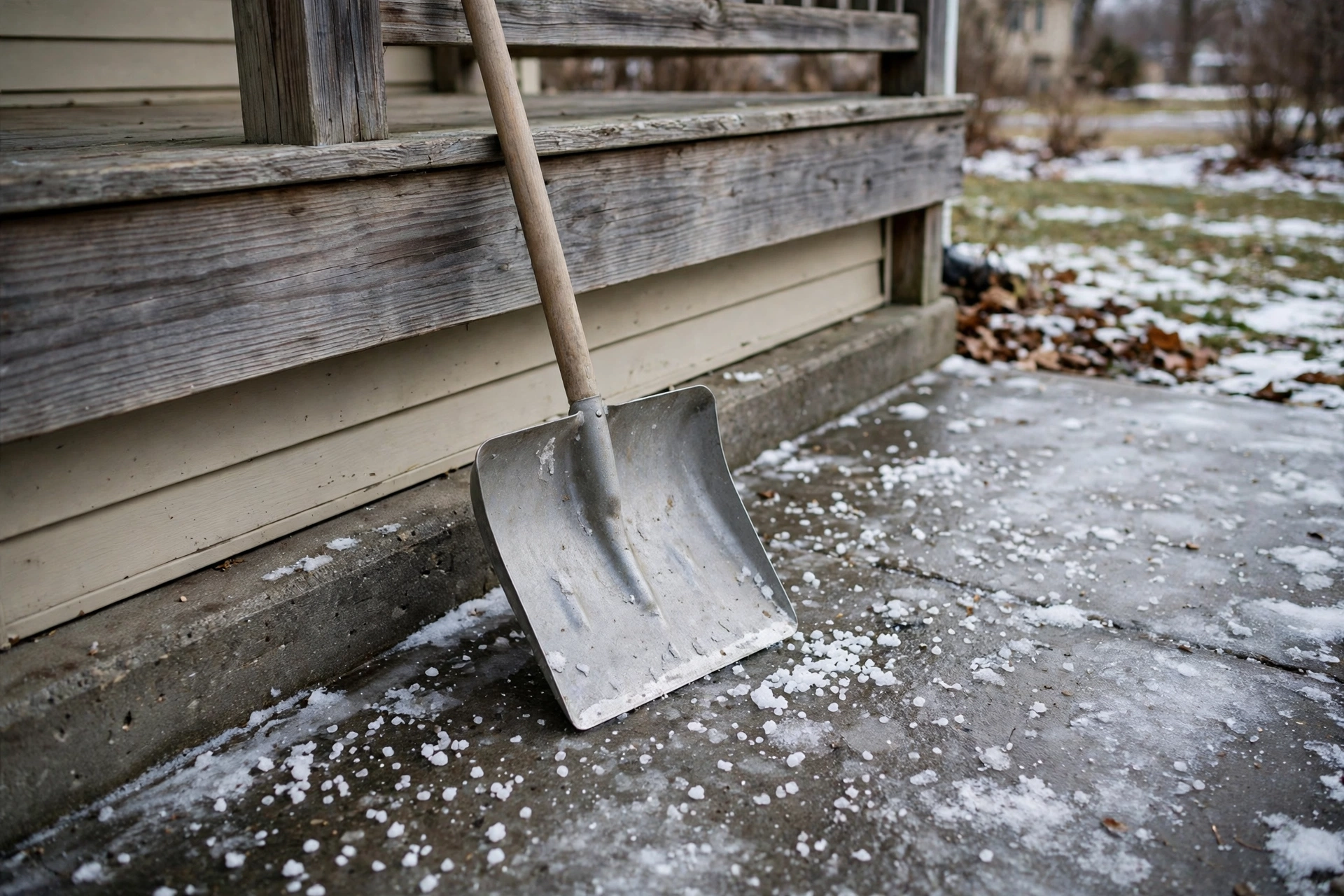
Ice melt has one job, and it does it well: the thin, bonded layer the shovel leaves behind. After you shovel, the pavement is never perfectly bare — there is a skin of packed snow and ice in the low spots, on the shaded side, and where tires pressed the snow flat. That is where the melt goes.
Scatter it thin enough to see pavement between the granules. A heavy hand does not melt ice faster; it just leaves more salt to wash onto the lawn and into the soil. Give it 20 minutes, then check — the ice should be loosened enough to scrape off with the shovel, and the pavement underneath should be drying. If it is still solid, the temperature is probably below the melt’s working range, and no amount of extra salt will fix that. Plain rock salt quits working well below about 15°F. In a real cold snap, the shovel and some sand for traction beat a bag of salt that cannot do its chemistry.
The Mistakes That Cost You in Spring
Salting new concrete. Concrete less than a year old is still curing, and salt speeds up the freeze-thaw cycles that crack and flake its surface. If your driveway is new, use sand for traction and skip the salt entirely for the first winter.
Salting the lawn edge by accident. Salt does not stay where you put it. It washes off the driveway with the meltwater and burns the grass along the edge, leaving a dead strip that shows up in April. Keep the scatter on the pavement, and sweep up the excess after the ice loosens.
Skipping the shovel on a “light” snow. An inch of snow left to melt on its own refreezes overnight into a sheet of ice that is harder to clear than the snow was. Shoveling an inch takes five minutes. Chipping the ice it becomes takes twenty.
Buying melt before you own a decent shovel. A bag of salt is a consumable; a good shovel lasts a decade. If the budget only covers one of them, the shovel is the purchase, and the melt is the refill.
Bottom Line
Shovel first, melt second, and use less of both. Clear the snow while it is still snow, then let a thin scatter of ice melt finish the layer the shovel could not lift. That order clears a driveway faster than salt alone, costs less across a winter, and leaves the concrete and the lawn edge in the shape you want them in come spring. The shovel does the work. The melt just cleans up after it.