Earl came over the fence last Tuesday with a thermos in one hand and an opinion in the other, which is his usual way of traveling. He had just split a cord of oak over at his place and stacked the whole pile in one afternoon, tight as a brick wall, right up against the side of his barn. He was proud of it, too. He stood there looking at my half-finished woodpile the way a man looks at a crooked picture frame, just itching to straighten it.
“Buck,” he says, “you’re making a production out of firewood.”
Well, maybe I am. November has a way of turning chores into ceremonies around here, and stacking firewood is the biggest one of them. The garden has gone quiet, the last of the tomatoes are a memory, and the work that is left is the slow kind — the kind you can do with a grandchild underfoot and a pot of coffee going cold on the porch rail.
The Gospel of Air
Daddy stacked wood the way some men shuffle cards, without looking and without hurrying, and the first thing he ever told me about a woodpile was that wood does not dry out because you wish it to. It dries because the air can get at it. That is the whole sermon, and Earl’s brick wall up against the barn is going to preach the opposite of it all winter long.
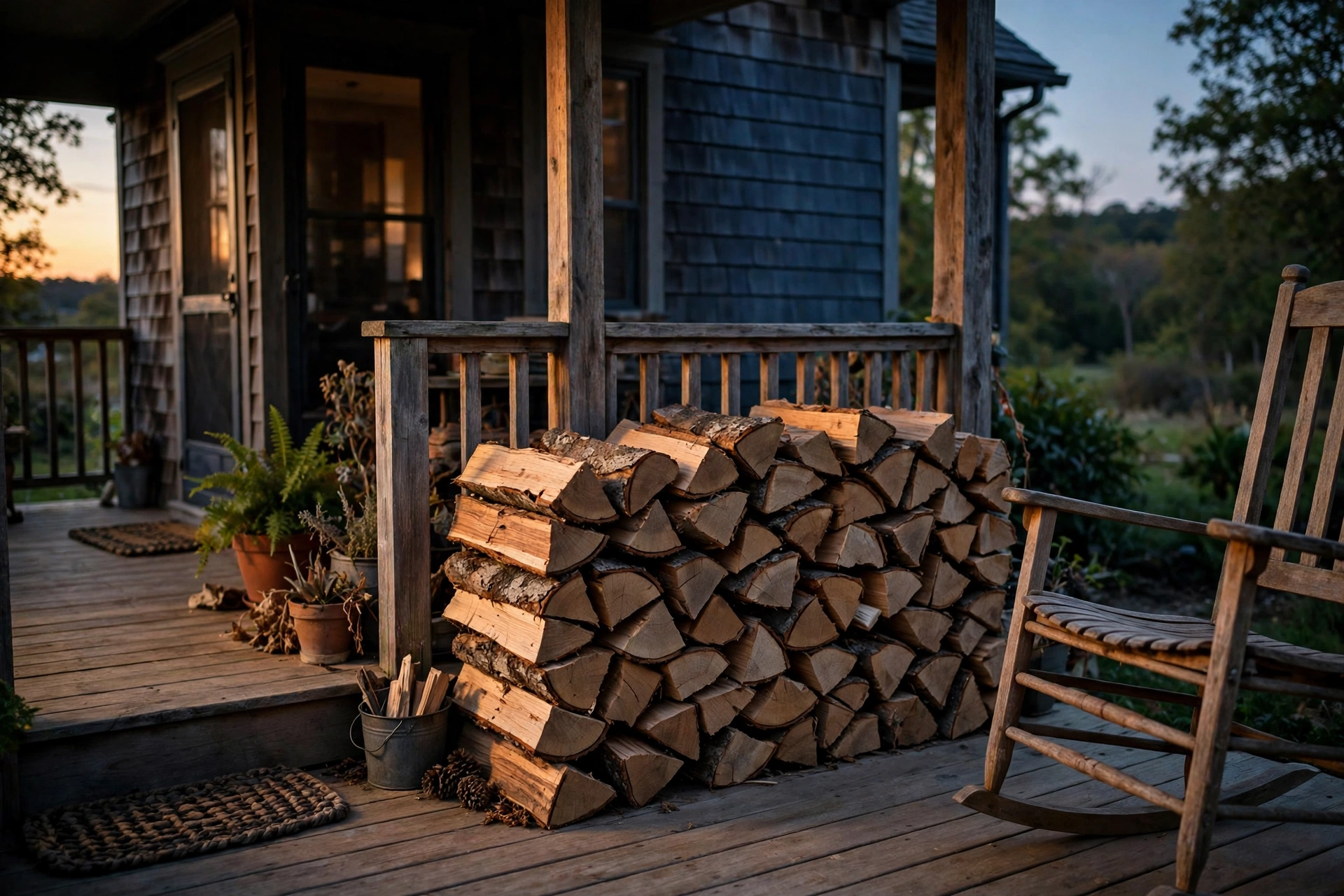
If you ask me, a good stack sits up off the ground on a couple of old rails or a pallet, because the bottom row will drink up every bit of damp the earth offers it. You lay the pieces bark side up, like little roofs, so the rain runs off instead of settling in. You leave the ends of the logs facing the wind and the sun, since that is where the moisture makes its exit, and you cover the top of the pile and leave the sides wide open. A tarp over the whole works, tucked in tight, is just a plastic tent full of wet air, and I have seen more good oak ruined under a tarp than I ever saw ruined in the open weather.
There is a plainer guide on this site to how to stack firewood so it actually dries, and it will tell you the same thing with less storytelling attached, if you are in a hurry. I am rarely in a hurry in November. November is not built for it.
How You Know a Log Is Ready
Mama judged firewood by knocking two pieces together, and I still do it her way, out by the pile, one log in each hand like a man about to play the spoons. Dry wood answers with a clean, hollow knock. Green wood just thuds, dull as a dropped potato, and it will hiss at you in the stove besides, spitting its own water back into the fire.
Oak is the patient one in the pile. Split in the spring, it wants a full turn of the seasons and then some before it burns the way oak ought to burn, while the softer woods are ready sooner and gone sooner, too. So the stack at our place is arranged the way Mabel arranges the pantry — what you will reach for first up front, what is still becoming itself at the back. Last winter’s leftovers stand closest to the door. This fall’s splitting stands at the far end, learning.
Earl, bless his heart, will burn half his pile before he admits the middle of it never dried. He will say the stove is at fault. The stove is never at fault.
A Chore Worth Keeping
Our pile lives on the porch end in one of those sturdy firewood racks Bobby Ray set level for me two autumns ago, and there is a satisfaction in seeing it fill up that I cannot rightly explain to anybody who has not watched a house get ready for winter. Every armload is a small promise. Cold is coming, and we have answered it ahead of time, one split log at a time.
That is the thing about Southern living — the rituals are just love with its sleeves rolled up. A woodpile is a garden by other means: you tend it in its season, you leave it room to breathe, and it keeps the whole house warm long after the work is forgotten. Earl will come around by January. He always does, usually with a thermos, standing close to our stove, saying what a fine fire we have.
That’s all for now, folks.