This site contains product affiliate links. We may receive a commission if you make a purchase after clicking on one of these links.
Here is the mistake: you stack the wood in October, burn it in December, and spend the whole winter wondering why the fire smokes, hisses, and never really gets hot. The wood wasn’t ready. Wood stacked this fall burns next winter, and no amount of kindling fixes wood that went into the stove wet.
Seasoning is not a vibe. It is a measurement, and the measurement is 20 percent. Wood burns most efficiently when its moisture content is at 20 percent or less, according to University of New Hampshire Extension. Above that line, part of every log’s heat goes to boiling water out of the wood instead of warming your room, and the smoke that doesn’t burn condenses in the flue as creosote. That is the whole story, and the stack is how you get there.
Time is the ingredient you can’t buy
Fresh-cut wood — green wood — can hold up to 80 percent water by weight, per West Virginia University Extension. It takes six to twelve months of drying to get below 20 percent, per UNH Extension, and Illinois Extension puts the usual range at six to nine months after cutting. Dense hardwoods like oak commonly need a full year, often two. Ash and softwoods can come in under six months.
That is why the calendar matters more than the technique. Wood cut and split in spring, stacked right, is burnable by fall. Wood cut in October is next winter’s wood. If you are stacking now, in November, you are building next year’s fires, and that is fine — as long as you know it.
Buying wood doesn’t skip the wait either. A bundle labeled “seasoned” is a claim, not a measurement. Test it the same way you test your own stack: split a piece and measure the fresh face. If it reads over 20 percent, it goes in the row for another season, whatever the bag said.
The stack that breathes
Wood dries when four things are true at once: it is cut to length, split open, held off the ground, and left in moving air. Miss any one of them and the calendar stretches.
Split it soon after cutting. Split wood dries far faster than rounds, because the split faces are where the water leaves. Rounds left whole barely dry at all, no matter how long they sit.
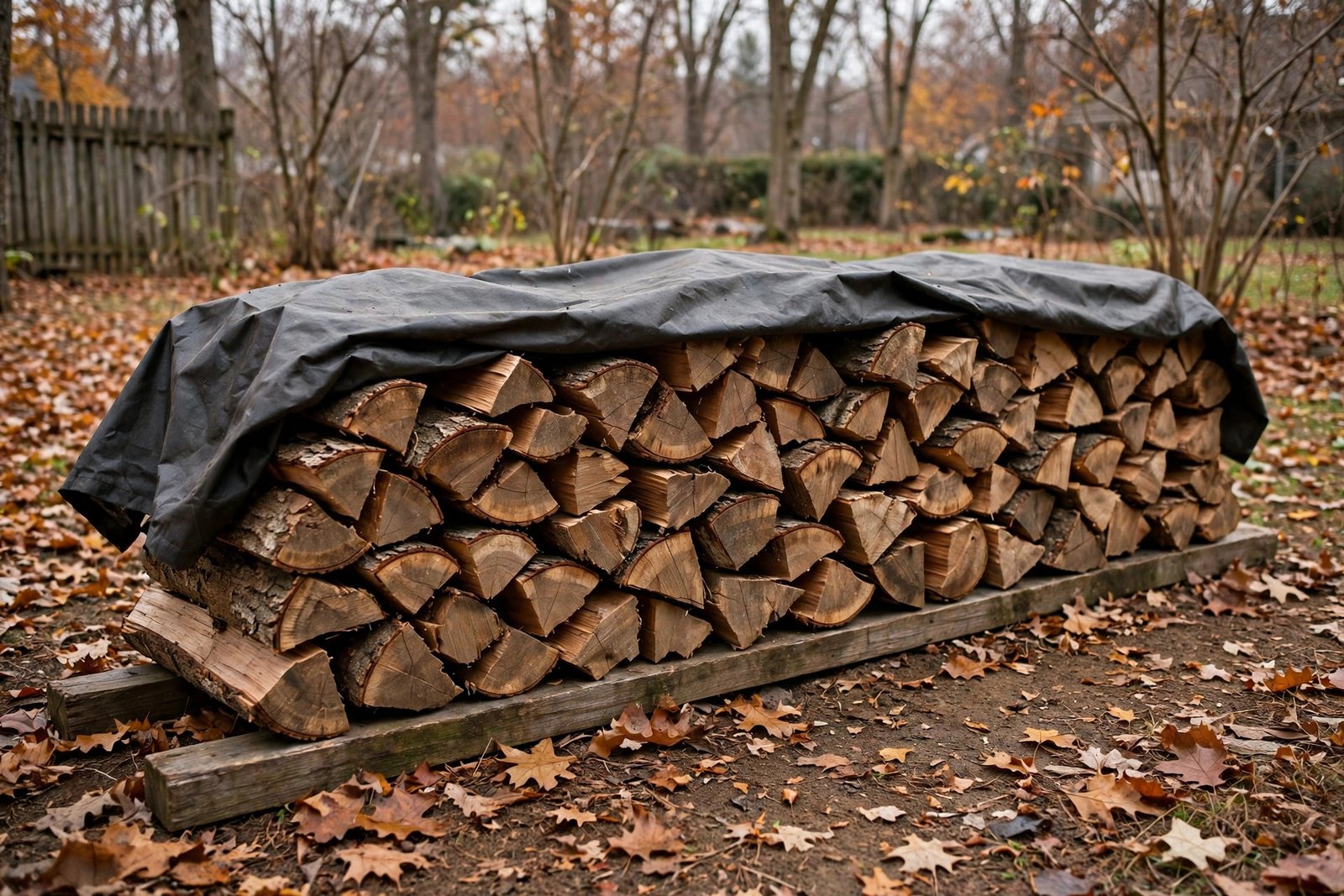
Get it off the ground. Two rails, a pair of old pallets, a row of bricks — anything that breaks contact with the soil. Wood sitting on dirt wicks moisture back up from below and rots from the bottom row up.
One row deep, in sun and wind. A single row dries faster than a double row, because air reaches every piece. A stack against a south-facing wall with wind exposure will beat a stack tucked in a damp corner every time, even if the damp corner looks tidier.
Leave gaps. A tight, neat wall of wood looks satisfying and dries slowly. Stack with small spaces between pieces and rows. The air moving through the gaps is doing the actual work.
Keep it a little away from the house. Seasoned wood still hosts insects, and they are welcome to stay outside. A stack against the siding is an invitation with a roof.
The 20% test
End cracks, lighter weight, and the ring-versus-thud knock test all hint at dryness. UNH Extension is direct about which evidence counts: the best and most reliable way to test firewood is a wood moisture meter. Everything else is a guess with good PR.
Test it right. Split a log, and push the meter’s pins into the freshly split face — not the bark, not the weathered end, which reads drier than the middle. Test several pieces from different parts of the pile. If the readings sit below 20 percent, the wood will burn cleanly and efficiently. From 20 to 25 percent, it will burn but give up heat and dirty the flue. Above 25 percent, it goes back in the row.
Pin-type meters are the right tool for this job. The pins reach past the dry shell into the wood that actually has to burn. Pinless meters scan the surface and are fine for a quick check, but the split-face pin reading is the one to trust before a log goes in the stove.
Tavool MT270 Wood Moisture Meter
Pin-type meter with eight wood-group settings and a backlit display — push the pins into a fresh split face and read the number, not the guess.
Buy the meter before you buy the wood. It costs less than one bad load of wet firewood, and it ends every argument about whether the pile is ready — including the one with the seller.
Cover the top, not the sides
This is the mistake that undoes a good stack. A tarp wrapped down to the ground traps the very moisture you spent six months releasing. The sides stay wet, the bottom row molds, and the pile you protected is the pile that never dried.
The rule, from EPA’s Burn Wise guidance, is simple: store wood outdoors, off the ground, with only the top covered. A cover that sheds rain and snow from above while the sides stay open to the wind is doing its job. A cover that seals the pile is a greenhouse for damp.
A fitted log-rack cover does this better than a blue tarp, because it is cut to sit on top and stay there in wind. Buy one sized to your rack or row, cover only, and leave the sides alone. If you use a tarp, drape it over the top and weight it down, and let the edges hang a few inches past the top row — no further.
VIVOHOME 4ft Waterproof Log Rack Cover
600D Oxford fabric with a waterproof coating and zipper — sized for a 4-foot row, and it covers the top while the sides stay open.
One more thing the cover can’t fix: a stack built in a low, wet spot. If the ground under the pile stays damp after rain, move the pile. No cover compensates for standing water underneath.
Which wood, and how long
Not all wood seasons on the same clock. The dense hardwoods that burn longest — oak, hickory — are also the slowest to dry, and a year is the honest expectation, two in a damp climate. Ash dries fast enough to surprise people, and most softwoods season in a single summer. Pine seasons quickly and burns fast; it is fine firewood, not long-burning firewood, and the old “pine causes creosote” story is really a wet-wood story. Dry pine at 20 percent burns cleaner than wet oak at 30 percent, every time.
Burn the oldest wood first. The row that has been drying longest is the row most likely to be ready, and rotating oldest-first keeps any single row from sitting so long it starts to rot. Mark the rows if you have to — a strip of paint on the end post, or just a habit of always taking from the same end.
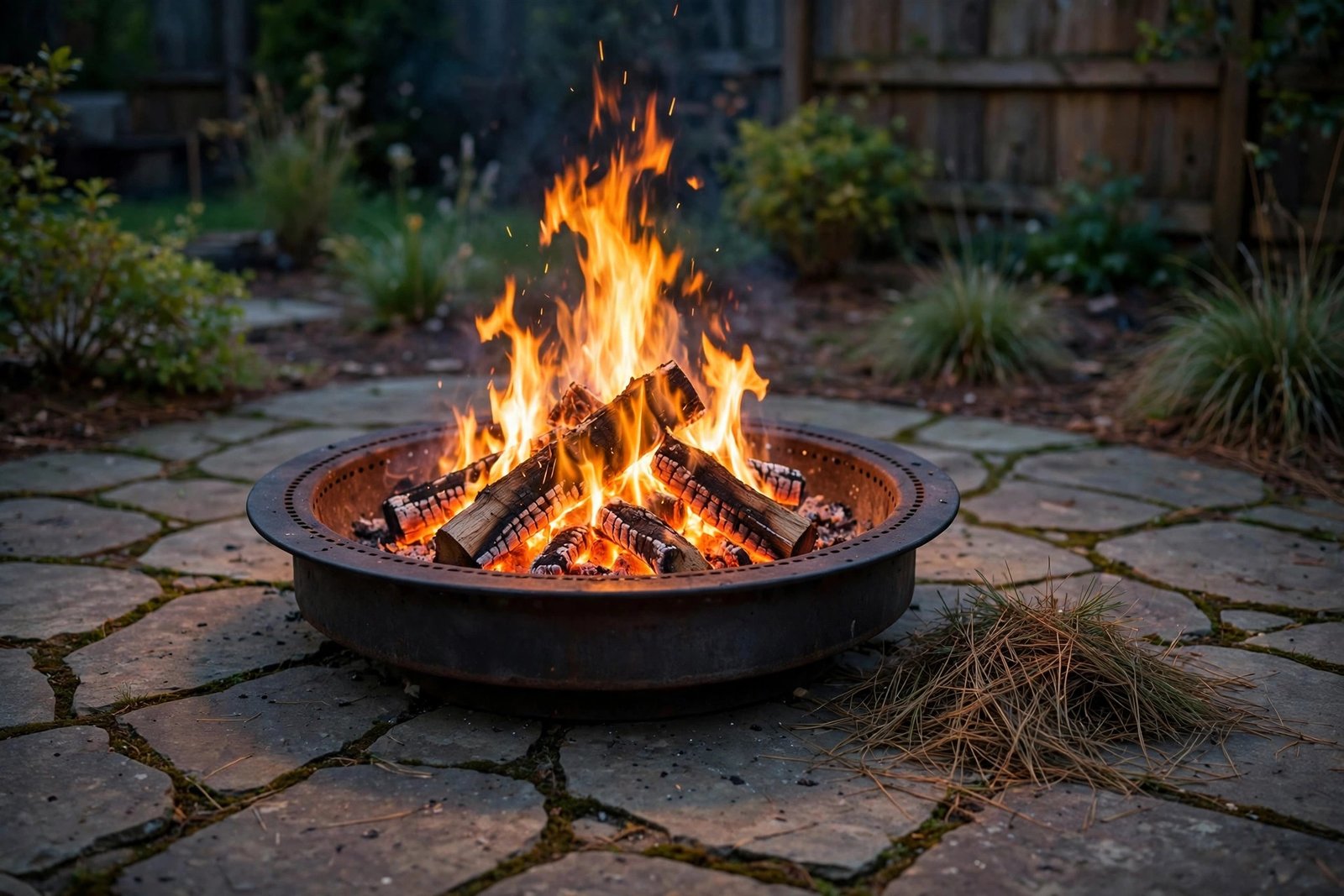
And keep the fire pit honest about what goes in it. Seasoned firewood is one thing; yard waste is another. Can you burn pine needles in a fire pit settles the most common version of that question. If the fire itself is the goal rather than the heat, the best smokeless fire pits for backyards roundup covers the cleanest-burning options. And the brush you clear while making room for the stack has its own answer in the VEVOR 420cc gas wood chipper review — a chipper earns its keep on exactly this kind of fall cleanup.
What to do this weekend
Split and stack what you cut this year, one row deep, off the ground, top covered only. Test the wood you plan to burn this winter, on a fresh split face, in several spots. If it reads under 20 percent, burn it with confidence. If it doesn’t, buy dry wood for this winter and let your stack finish the job for next year.
The woodpile is the only household project measured in seasons, not weekends. Do it right once, and every fire after that is just the payoff.