Landscape & Leisure is reader-supported. When you buy through links on our site, including Botanical Interests seed links, we may earn a commission at no extra cost to you. Prices change, so click through to confirm current pricing.
In February the garden is still under snow and the seed packets are the only green thing in the house — and that is exactly when onion seed wants to be started. Onions take up to 100 days to mature, so the head start you give them indoors is what turns a packet of dust-sized seed into bulbs the size of softballs by July. Wait until the soil is warm enough to plant outside, and you have already lost the season.
This guide covers the whole indoor start: when to sow, how to sow, how to keep the seedlings stocky, and how to move them outside without setting them back. If you have not picked your varieties yet, start with our best onion varieties roundup — day length decides the variety, and the variety decides the timing. For the sweet-versus-storage choice, see our sweet vs. storage onions comparison. And if you are new to indoor seed starting generally, our beginner’s guide to starting seeds indoors covers trays, light, and hardening off.
Why Onions Need the Indoor Head Start
An onion bulb is mostly leaves. Each green leaf feeds one ring of the bulb, so the more leaves a plant grows before the days get long enough to trigger bulbing, the bigger the bulb. A seed sown directly in the garden in May has only a few weeks of leaf growth before bulbing starts, and the result is a small onion. A seed sown indoors in February has months of leaf growth behind it by the time it goes out, and the bulb has something to grow on.
That is also why sets are a compromise. A set is a small bulb grown from seed the previous season, and it gives you a head start without the indoor work — but sets offer few varieties, and a set bigger than three-quarters of an inch across is more likely to bolt. Seed gives you the whole catalog, including the varieties in our onion roundup, and the plants stay in the ground growing instead of deciding to flower.
When to Sow: 10 to 12 Weeks Before Last Frost
Start bulb onions indoors 10 to 12 weeks before your region’s last frost date. That is the window Botanical Interests gives for bulb onions, and it is the one to trust — onions are slow, and the extra weeks matter. If your last frost lands around mid-May, that puts sowing in mid-February to early March. In zones 3 and cooler, February is the month to sow; the plants need every week of the indoor season.
Short-day southern varieties follow a different calendar: they are sown in fall to grow through the mild southern winter, so if you garden south of the 35th parallel, sow in mid-September through mid-October instead. Bunching onions are the exception in the other direction — they can be direct-sown as soon as the soil can be worked and temperatures stay above 45°F, and Tokyo Long White is ready in about 65 days.
| Task | When | Notes |
|---|---|---|
| Sow bulb onions indoors | 10–12 weeks before last frost | Mid-Feb to early Mar for a mid-May last frost |
| Sow short-day onions (South) | Mid-Sep to mid-Oct | Fall sowing for winter growth, south of the 35th parallel |
| Direct-sow bunching onions | As soon as soil can be worked, above 45°F | Tokyo Long White ready in about 65 days |
| Transplant seedlings out | Once the soil can be worked | Harden off first; onions tolerate light frost |
| Harvest bulb onions | When tops discolor and fall over | Lift, then cure 1–2 weeks in a dark, dry place |
How to Sow: Shallow, Close, and Moist
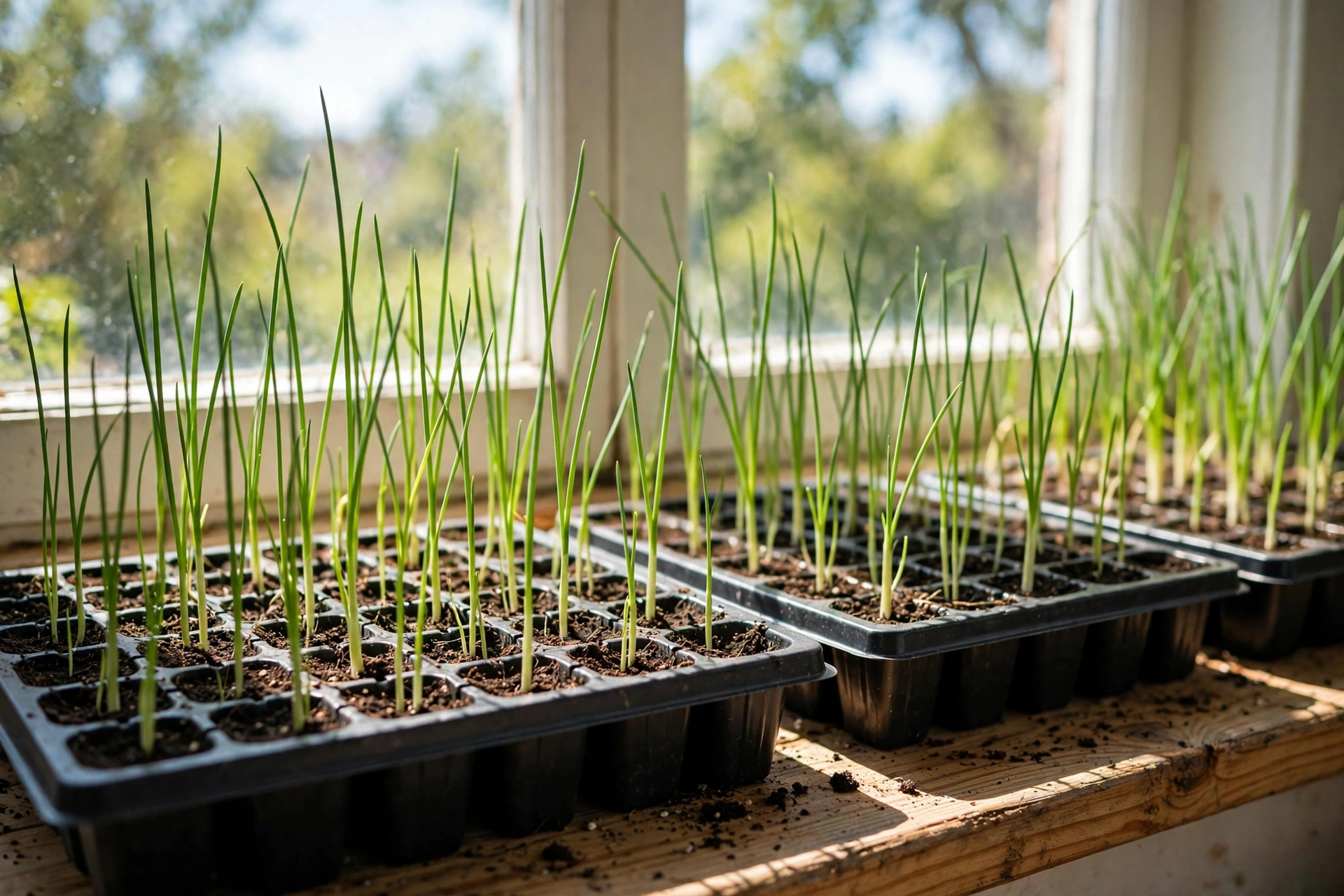
Use a flat or a cell tray with seed-starting mix. Onion seed is small, so sow it a quarter inch deep — barely covered — and about a half inch apart in flats, or 4 to 5 seeds per cell in trays. Cover lightly, water gently so the seed does not wash to one corner, and keep the mix consistently moist until germination, which usually takes 7 to 10 days.
Give them strong light and room temperature. A sunny windowsill is rarely enough for onions; a simple shop light hung a few inches above the seedlings for 10 to 12 hours a day keeps them stocky instead of leggy. Warmth helps germination, and a heat mat under the tray speeds it along on a cold windowsill.
Seed Starting Heat Mat
Bottom heat speeds onion germination on a cold windowsill, when the tray would otherwise sit at room temperature.
Keep Them Stocky: Trim the Tops
Onion seedlings grow tall and floppy fast, and tall floppy seedlings transplant badly. When the tops reach 5 or 6 inches and start to droop, trim them back to about 3 to 5 inches with clean scissors. It feels wrong the first time — you are cutting off growth you waited weeks for — but the plants respond by thickening up, and stocky seedlings with pencil-thick stems handle transplanting far better than tall thin ones. Trim again if they outgrow the lights before transplant day.
Thin the seedlings too, if you sowed thickly. Bulb onions need their space: thin to one strong seedling per cell, or to about an inch apart in flats, so each plant has room to build leaves. The thinnings are edible — snip them into a salad and call it the first harvest.
Transplanting: 4 to 6 Inches Apart, in Rows a Foot Apart
Harden them off first. Set the trays outside for a few hours a day over a week, bringing them in at night, so the seedlings adjust to wind and sun. Onions tolerate light frost, so you can transplant once the soil can be worked — you do not have to wait for the last frost date to pass.
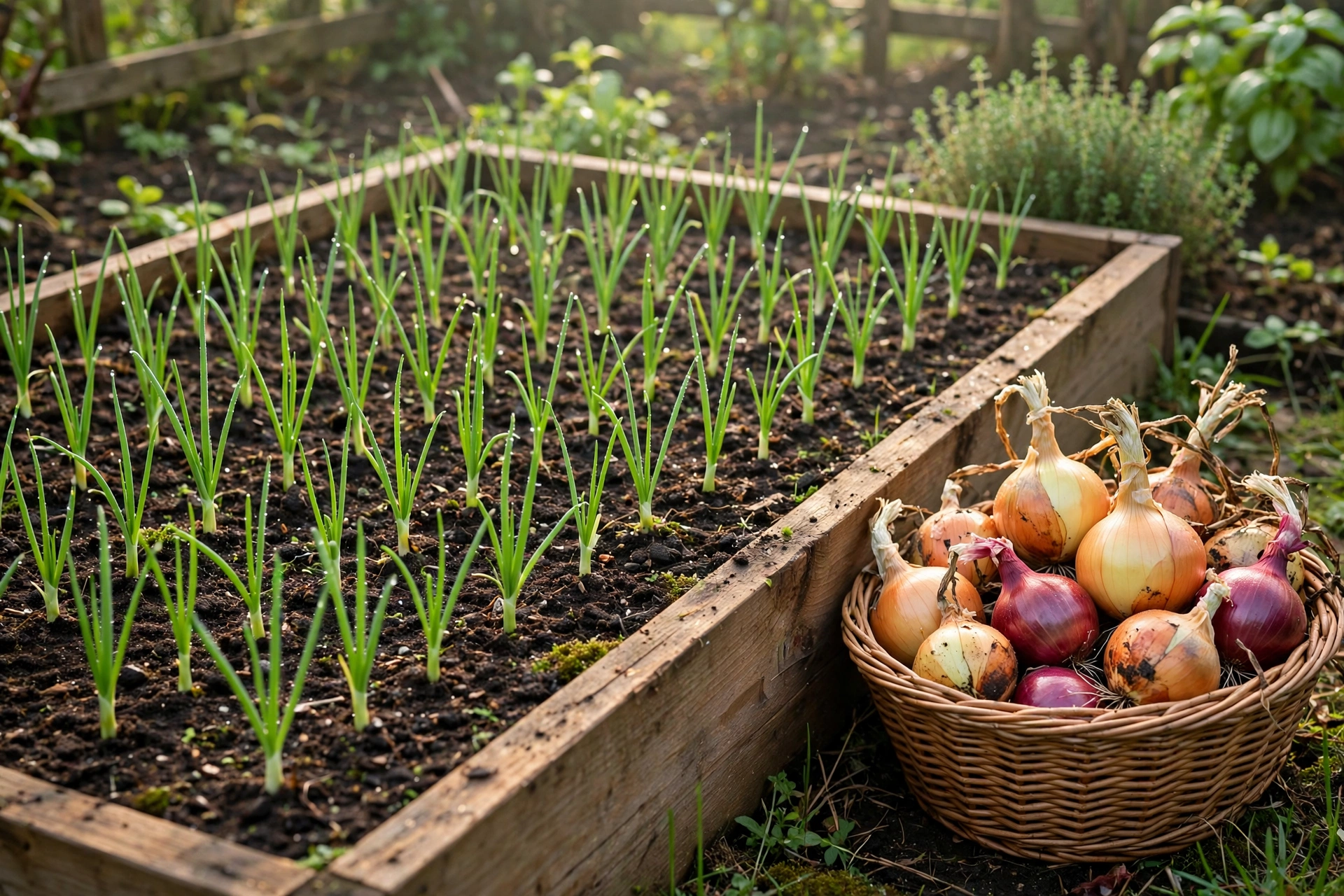
Space bulb onions 4 to 6 inches apart in rows 12 to 18 inches apart. Four inches gives you good-sized bulbs; six inches gives you the biggest ones, so space for the bulb you want, not the seedling you have. Set each seedling about an inch deep, firm the soil around it, and water it in. Bunching onions go closer, about an inch apart, and can be sown in succession every few weeks for a continuous harvest.
Keep them weeded and watered. Onion seedlings are small and do not compete well with weeds, so plant them in the least weedy part of the garden and mulch lightly once they are established. Consistent moisture matters most while the bulbs are sizing up; a dry spell in June is what turns a promising row into small onions.
Walla Walla Bulb Onion Seeds
The sweet giant to start first — bulbs up to 2 pounds from a February sowing.
Tokyo Long White Bunching/Scallion Onion Seeds
Mild scallions in about 65 days — sow a fresh row every few weeks for a continuous harvest.
What to Watch Next
The seedlings should stand up straight within a day of transplanting and start putting on new green growth within a week. If a seedling stays flat and pale, it went out too dry — water it in again and mulch around it. The one mistake that undoes the whole indoor start is letting the transplants sit in their cells too long: once the roots circle the cell, the plant stalls, and no amount of garden space makes up for it. Transplant when the stems are pencil-thick and the weather lets you work the soil, and the bulbs will do the rest.