This site contains product affiliate links. We may receive a commission if you make a purchase after clicking on one of these links.
The beds are bare now, and that empty stretch of sun is already deciding next summer. A packet of seed bought in the quiet months costs less than a flat of nursery plants in May, and the flowers don’t know the difference. The trick is picking annuals that actually want full sun — six or more hours of it — instead of ones that merely tolerate it.
What full sun really asks of a flower
A sunny bed is a hot, dry bed by mid-afternoon. The soil dries out faster, the leaves take the full heat of the day, and a plant that likes part shade will spend July looking tired no matter how often you water it. The annuals below were bred for exactly that spot: they bloom harder the more sun they get, and they keep going until frost instead of fading out in August.
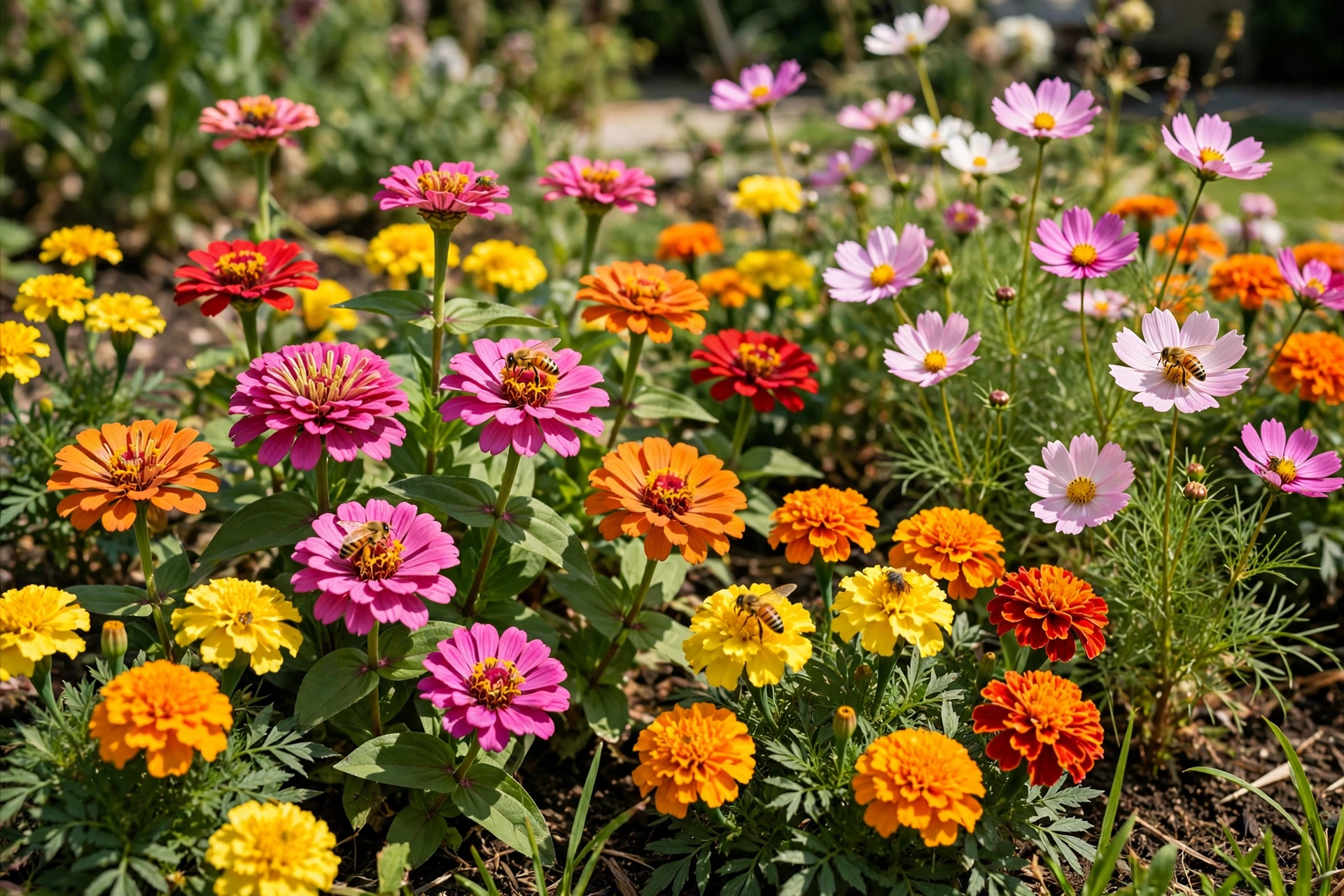
Three of them do most of the work in a sunny bed — zinnias, marigolds, and cosmos — with sunflowers holding the back row. Here’s how each one earns its place, and which varieties to sow.
Zinnias: the hardest-working flower in the bed
Zinnias are the first answer for a reason. They germinate in 3 to 10 days, grow fast, and bloom from midsummer until frost — and the more you cut them, the more they bloom. Sow the seed a quarter inch deep, either indoors 4 to 6 weeks before your last frost or straight into the bed 1 to 2 weeks after it. Give them room and air; crowded zinnias invite powdery mildew.
California Giants Blend is the one to start with. The flowers run 4 to 6 inches across on stems over two feet tall, which makes them proper cutting flowers, not just bedding plants. The blend has been sold since 1926, and it carries a 4.8-star rating across 76 reviews on Botanical Interests — one of the best-reviewed zinnias in their collection.
California Giants Blend Zinnia Seeds
Big 4- to 6-inch blooms on tall stems, cut-and-come-again all summer, and one of the best-reviewed zinnias Botanical Interests sells.
For the front of the bed, Thumbelina stays 12 to 24 inches tall with 1- to 1½-inch flowers, and it won an All-America Selections award back in 1963 — it has been earning that spot for a long time. If you want zinnias for cutting, read the best zinnia varieties to grow from seed first, and our guide to growing zinnias from seed covers sowing depth, spacing, and deadheading in detail.
Marigolds: the edging plant that pulls double duty
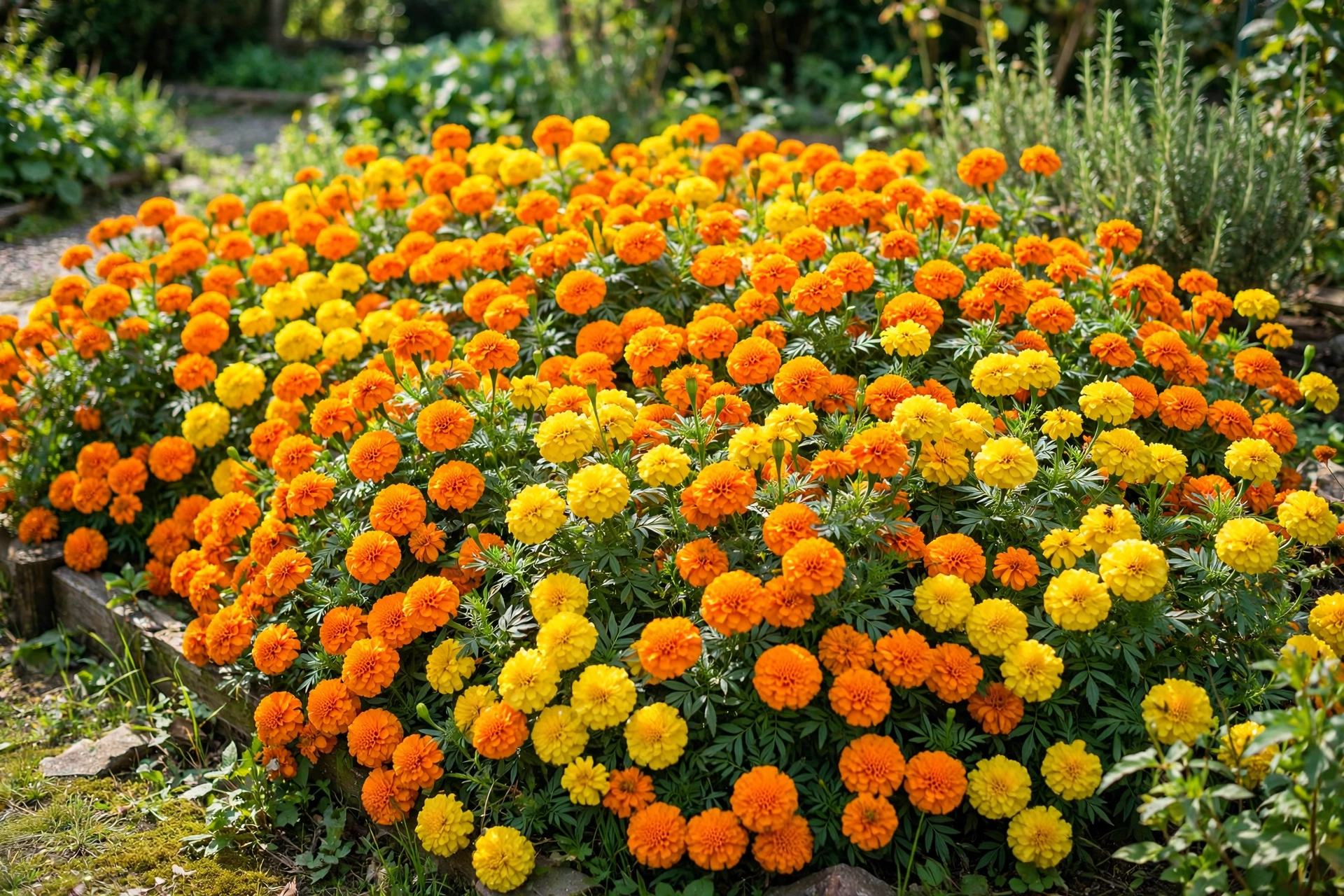
Marigolds are the plant you put where the bed meets the lawn, the path, or the vegetable rows. They bloom from spring to frost, they ask for almost nothing, and their roots and scent keep them useful around tomatoes and other vegetables. Sow a quarter inch deep, start indoors 4 to 6 weeks before last frost, or direct sow 1 to 2 weeks after, once the soil is 70 to 80 degrees. Germination takes 5 to 14 days.
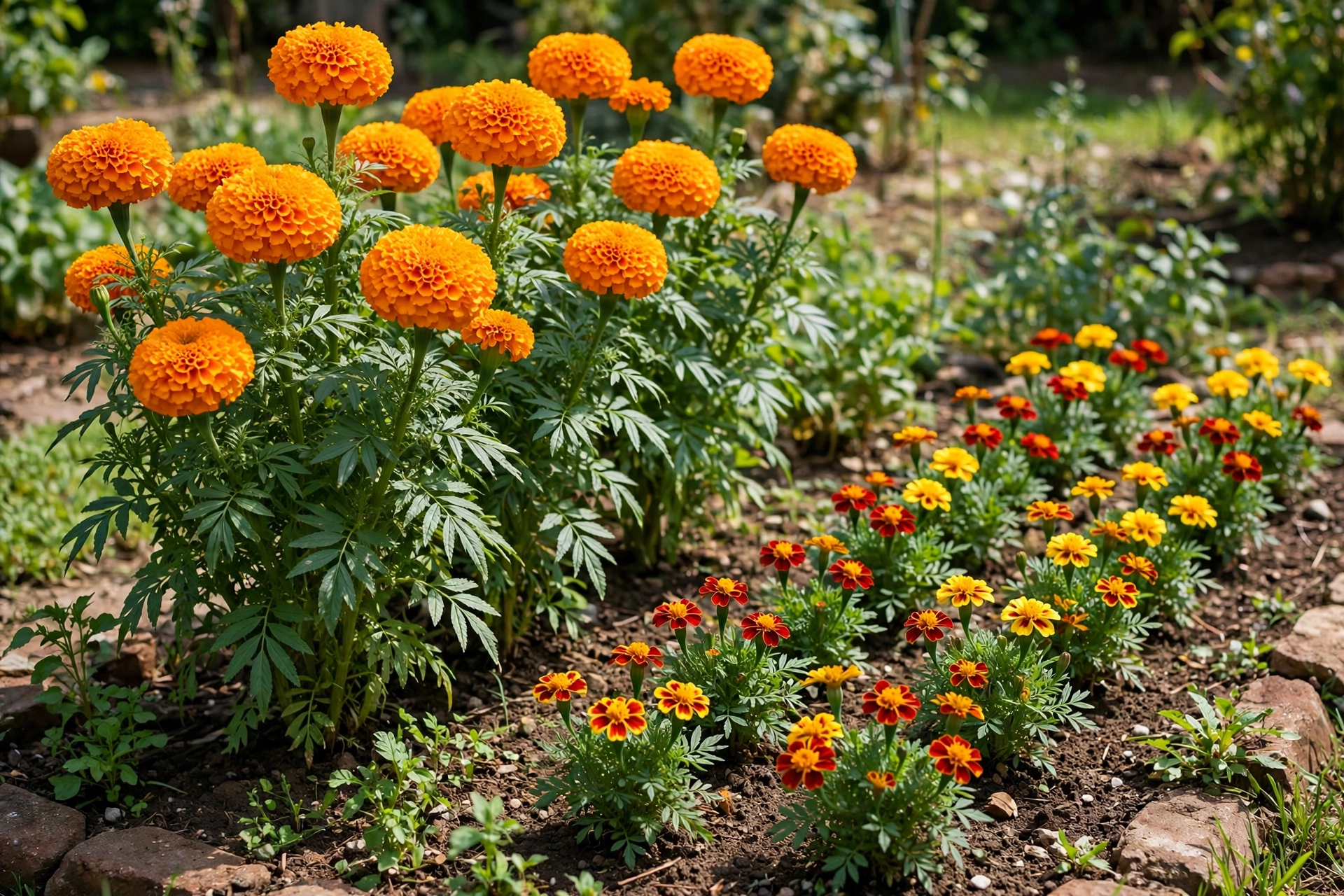
There are two kinds worth knowing. African marigolds (Tagetes erecta) grow 2 to 3 feet tall with double blooms 4 to 5 inches across — real presence. French marigolds (Tagetes patula) stay 6 to 18 inches with blooms up to 2 inches, and they are the better edging plant.
Crackerjack African Marigold is the tall one: 4-inch blooms on stems over two feet, rated 4.3 stars across 47 reviews. Sow groups of three seeds every 18 inches and thin to one plant per spot once seedlings reach an inch tall.
Crackerjack African Marigold Seeds
Tall, 4-inch blooms that hold up in full sun and anchor the back of a sunny border.
For the edge, Naughty Marietta is a French marigold with yellow-and-maroon bicolor flowers that won an All-America Selections award in 1947 and still carries a 4.8-star rating. Our marigold variety guide compares the two types in full, the growing guide covers timing, spacing, and deadheading, and French vs African marigolds settles which one fits your bed.
Cosmos: the one that thrives on neglect
Cosmos is the annual for the gardener who forgets to water. It is drought tolerant once established, it blooms from summer to frost, and it reseeds itself lightly enough to surprise you next year without taking over. It wants the same treatment as zinnias — full sun, ordinary soil, and no fussing.
Double Click Blend Cosmos is the showiest of the bunch: mostly double blooms in pink, white, and carmine-red that look like small chrysanthemums, on plants that stand up well in a sunny bed. It won a Fleuroselect Novelty Award, and it carries a 4.2-star rating across 26 reviews.
Double Click Blend Cosmos Seeds
Double, chrysanthemum-like blooms on a drought-tolerant plant that keeps flowering until frost.
If you want the classic single-flower look instead, Sensation Blend is the old standard. Cosmos and zinnias and marigolds all cut well together, and our comparison of the three sorts out which one to grow when you only have room for one.
Sunflowers for the back row
A sunny bed with a fence or a wall behind it wants one tall thing, and that thing is a sunflower. Mammoth grows a single 12-foot stalk with one flower 10 to 12 inches across, and it carries a perfect 5-star rating across 23 reviews. Sow a fresh round every month and the back row never goes bare. Keep it out of the middle of the bed — at that height it shades everything behind it, so it belongs at the very back, where its shadow falls outside the bed.
When to sow each one
| Annual | Start indoors | Direct sow | Blooms |
|---|---|---|---|
| Zinnias | 4–6 weeks before last frost | 1–2 weeks after last frost | Midsummer until frost |
| Marigolds | 4–6 weeks before last frost | 1–2 weeks after last frost, soil 70–80°F | Spring until frost |
| Cosmos | 4–6 weeks before last frost | After last frost | Summer until frost |
| Sunflowers | Not needed | After last frost, monthly for succession | Summer until frost |
The pattern is the same for all four: nothing goes out before the last frost, and everything goes in within a couple of weeks after it. Starting indoors buys you earlier blooms; direct sowing buys you less work. Either way, sow a quarter inch deep and keep the seedbed damp until seedlings are up.
How to keep them blooming all summer
Three habits make the difference between a bed that peaks in July and one that still looks good in September.
Deadhead every week. Snip off spent flowers before they set seed, and the plant puts its energy into new blooms instead. This matters most for zinnias and marigolds.
Water the soil, not the leaves. Morning watering at the base keeps foliage dry, and dry foliage is what keeps powdery mildew off zinnias. Water only when the top inch of soil is dry — marigolds especially dislike wet feet.
Pinch marigolds once. After a marigold has four or five sets of leaves, pinch the tip back to just above the third or fourth set. It branches out instead of growing one tall stem, and you get a fuller plant with more flowers.
Bottom line
If you plant one thing in your sunniest bed next spring, plant California Giants zinnias — tall, long-blooming, and the best cutting flower on this list. Back them with Crackerjack marigolds along the edge and Double Click cosmos where you forget to water, and put a Mammoth sunflower at the very back. Four packets, one sunny bed, color from midsummer until frost.