This site contains product affiliate links. We may receive a commission if you make a purchase after clicking on one of these links.
After a storm, the pile is the problem. Branches everywhere, most of them too big for the yard-waste bin and far too many for the curb. A chipper turns that pile into mulch — if the machine can actually handle what’s in it.
Vevor’s 420cc chipper can, right up to two inches. Past that, it will let you know, loudly, by clogging. That’s the whole review in one sentence: a strong machine with a hard limit, at a price that makes sense if your yard keeps producing branches and no sense at all if it doesn’t.
It’s a 12-horsepower gas machine for a homeowner with regular branch volume — seasonal pruning, storm cleanup, a wooded lot — who wants the chipper in the garage instead of a rental reservation. It is not for the biggest limb on the pile, and it is not a stump grinder or a lot-clearing machine. If your yard is a couple of ornamental trees and a lawn, you don’t need this machine at all.
A simple machine with one hard rule
The engine is a 420cc four-stroke, 12 horsepower, turning 3,600 RPM. That’s plenty of power for the job — and here’s the thing worth understanding before anything else: engine power doesn’t raise the chipping ceiling. The ceiling is set by the feed and the blades, and it’s two inches. Period.
Two funnels split the work. The top funnel takes branches up to two inches, fed end-first, one at a time, at a pace the blades can handle. The side funnel, 6.7 inches wide, takes lighter, leafy material. Sort as you feed and the machine stays happy. The cutting set is two reversible, double-edged blades in Q235 carbon steel — flip them when one edge dulls and keep working. When an edge dulls, flipping the blade is a ten-minute job instead of a parts order. Keep the feed clean, because rocks, dirt, and metal dull any blade fast, and a dull blade is what turns a good feeding day into a clogging day.
The rest of the machine is refreshingly mechanical. Pull-start, manual choke and throttle, hand-fed funnels, no electronics to fail. The tank holds 1.4 gallons, enough for a full cleanup session without refueling. It rolls on 10-inch wheels with a towing handle, so it goes to the pile instead of the pile coming to it. It stands about 34 by 29 by 54 inches, so plan its parking spot before it arrives: dry storage, room to work around it, a clear path to the pile.
Vevor sells tools, hardware, and outdoor equipment direct to buyers through its own site and marketplaces, sourcing from manufacturers and rebranding rather than operating a dealer network. Judge this chipper on its own listing and manual, as this site’s overview of Vevor lawn and garden tools advises. The manual, to its credit, names the failures to expect — clogging, stalling, material left unchipped — and the causes: too fast, too wet, too big.
The two-inch rule is the whole review
Feed it right and it’s a pleasure. Dry branches at or under two inches chip cleanly when fed steadily, one at a time, with the discharge sounding steady. The dual funnels earn their keep here: branches through the top, light stuff through the side, and the pile shrinks fast. Let the machine set the pace. Pushing branches in faster doesn’t chip faster — it stalls faster.
Feed it wrong and you’ll meet the machine’s other personality. Green and wet branches clog. Leaves jam the side chute. Anything near the headline diameter stalls it. The causes are always the same three: too fast, too wet, too big. There’s no convenient clean-out port, so clearing a clog means taking things apart with several screws — wet material and leaves the worst offenders. Budget time after every job to clean the chute and funnels while the debris is still dry.
Assembly is the other real cost, and it’s worth going in with open eyes. Budget an afternoon and a second person. The instructions under-explain the build, the machine is a heavy lift for one person, and the break-in steps — oil in, fresh fuel, choke used right — have to be followed. Starting a cold engine isn’t a one-pull affair. None of this is unusual for a gas machine. It is the opposite of plug-and-play, and if that sentence bothers you, this isn’t your machine.
The review count tells the same limits-first story: 113 reviews at 4.2 out of 5, shared across the 420cc and its 7HP sibling. More than half are five stars. The complaints rhyme — clogs, stalls, and the diameter limit — and they’re steady enough to take seriously. Nobody loves this machine for what it can’t do. Plenty of owners love it for what it can.
A Saturday with the chipper
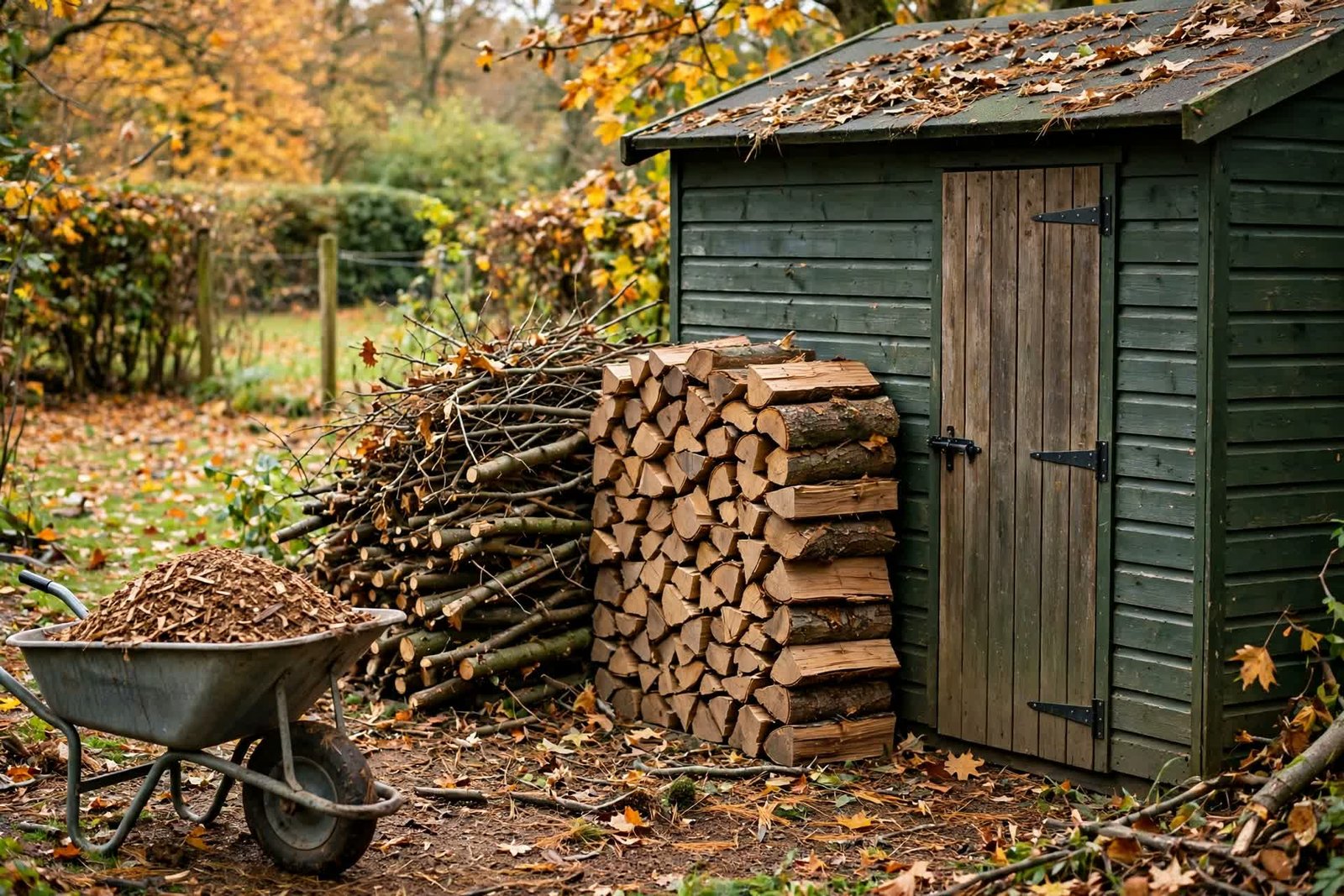
Here’s the day it earns its keep. A storm drops branches across a wooded acre, most of them under two inches, with leafy debris mixed in. You roll the chipper to the largest pile — it goes where the work is, which is the whole point of the wheels — and sort as you go: branches for the top funnel, light material for the side. Feed steadily, one branch at a time, and stop when the discharge sound changes. By afternoon the pile is mulch, and the mulch goes straight onto beds and paths.
Spring pruning day runs the same way. Fruit trees, lilacs, overgrown shrubs — dry stems and branches are exactly what this class of machine handles best. Fed dry, sorted, and within the limit, the chipper reduces a season of pruning to mulch in an afternoon. Wet spring prunings and green, sappy growth are the exception. Dry them first, or expect clogs.
The rhythm is the skill, and it’s a short course. Feed one branch at a time and let the blades pull it in — pushing harder doesn’t chip faster, it stalls faster. When the sound drops and the discharge thins, stop feeding and let the machine clear itself before you offer it more. That pause feels slow the first time you do it. It’s the difference between an afternoon that ends with mulch and an afternoon that ends with a screwdriver. And the mulch is the quiet payoff of the whole job: what was a storm pile in the morning is bedding for the garden paths by evening, with nothing hauled to the curb and nothing left rotting in a corner of the lot.
The maintenance rhythm is simple and non-negotiable. Check the oil before every session. Inspect the blades before each use and flip them when they dull. Clean the chute and funnels after every job, while the debris is still dry. Swap the spark plug and air filter on schedule. Run fresh 87-octane gas — ethanol-free if you can find it — and store the machine dry with stale fuel drained. Keep spare blades, a plug, and fresh fuel on hand before the first big job, and the machine stays a pleasure instead of a project.
Do the rental math honestly before you buy. A rental chipper runs by the day, plus the pickup and the return, plus the next storm that doesn’t wait for a reservation. At $1,109.90, this machine costs roughly what a handful of rental days would — and then it stays in the garage. That math only works if the pile keeps coming back. One small brush pile a year? Rent one for a day, hire a service, or use municipal brush collection, and keep your garage space.
The 420cc or its smaller sibling?
The only comparison that matters is inside Vevor’s own line, and it’s a price-and-power gap, not a quality ranking.
| Factor | 420cc (this review) | 7HP sibling |
|---|---|---|
| Price | $1,109.90, in stock | $569.90, out of stock |
| Engine | 420cc, 12 HP / 8.6 kW, 3,600 RPM | 212cc, 7 HP, 3,600 RPM |
| Max diameter | 2 in (top funnel) | 3 in headline; 2 in, in practice |
| Blades | 0+2 rotary, Q235 steel | 0+2 rotary, Q235 steel |
| Reviews | 113 reviews, 4.2/5 — shared across both listings | Same shared figure |
Twice the money for twice the displacement, the same blade set, and the same two-inch reality. If the smaller machine comes back in stock and your pile is modest, it’s the value buy. If you want the bigger engine and the bigger funnels, this is the one. For the broader pattern of how Vevor gear holds up, this site’s Vevor vs the Big-Box Brands comparison is worth a read.
VEVOR 420cc Gas Wood Chipper (12 HP)
Strong inside its two-inch limit, clog-prone outside it. Read the limits before you buy.
Who should buy it
Buy it if your regular branch output stays under two inches, you’re comfortable with gas-engine maintenance, and you’ll read the manual before the first job. At $1,109.90 it costs roughly what a handful of rental days would, and it stays in the garage for the next storm.
Don’t buy it for limbs over two inches, for a single small pile, or on the strength of a shared review count. Rent one for a day, hire a service, or use municipal brush collection. A property whose regular output is three-inch limbs needs a bigger machine or a service — and no headline number changes that.