This post contains affiliate links. We may receive a commission if you make a purchase after clicking on one of these links.
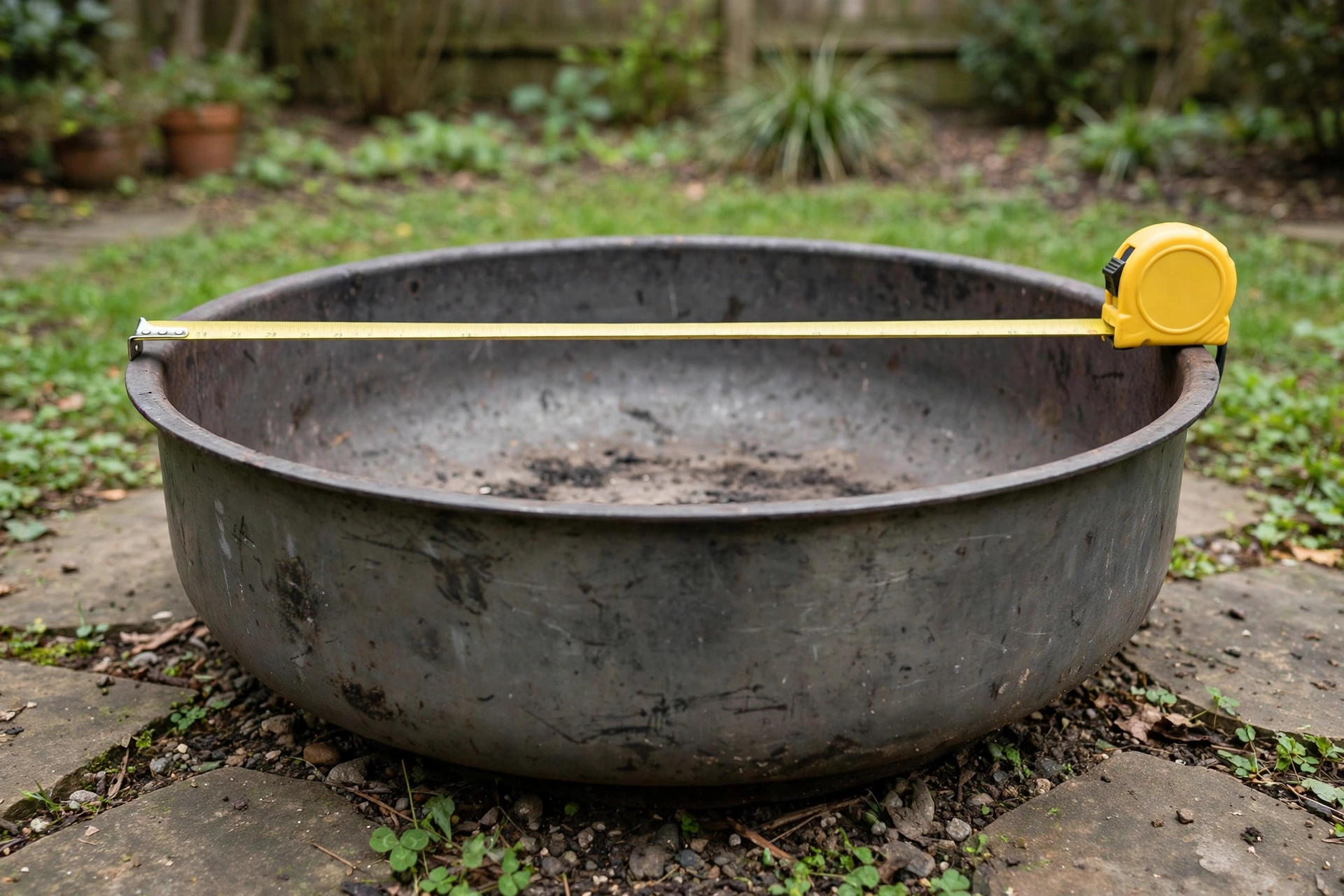
Two inches. Measure the inside of your fire pit, subtract 2 inches, and the number left over is the largest cooking grate that will sit level in or on that pit. That one subtraction settles the purchase.
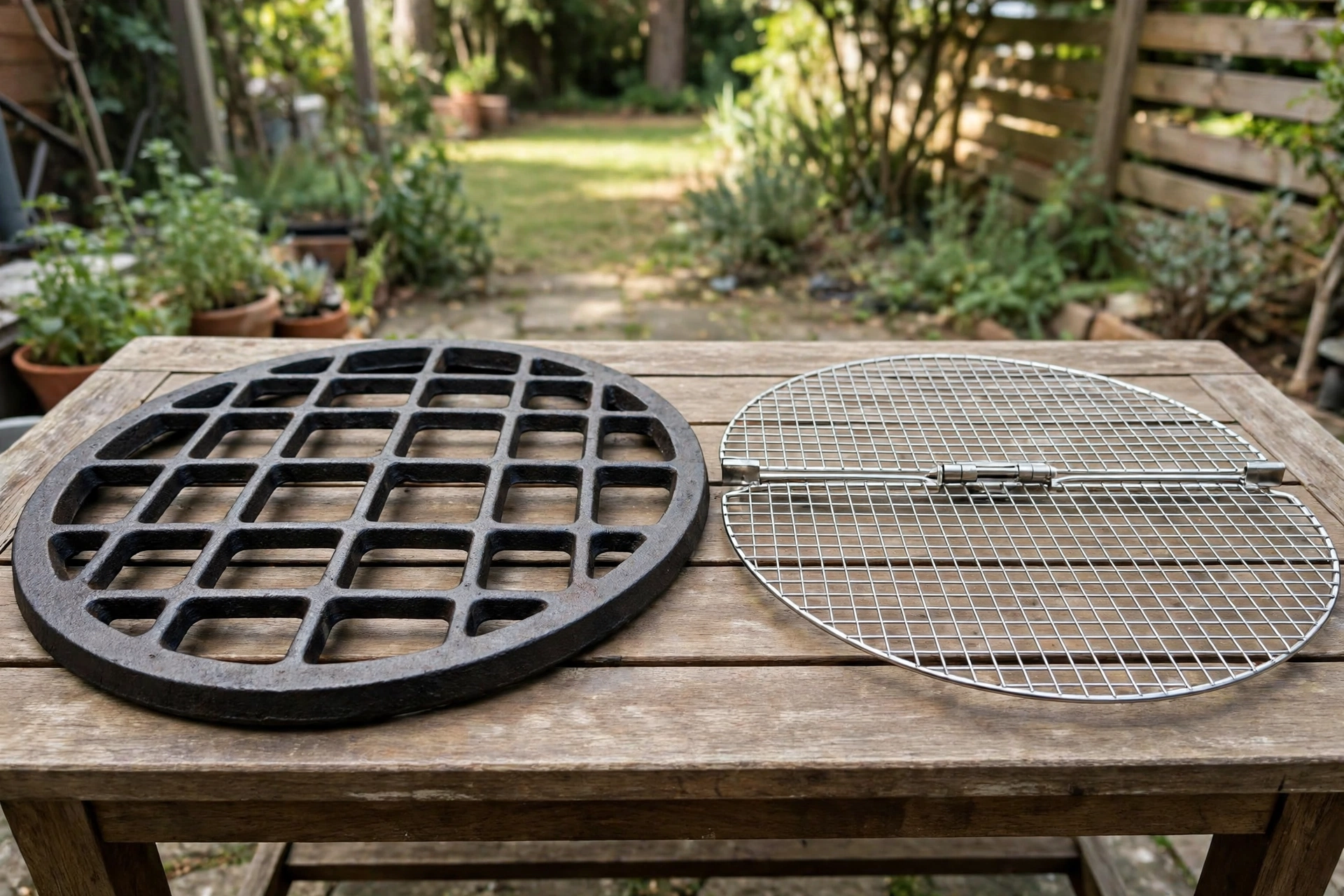
Here is the mistake it prevents. Most people buy the grate that matches the pit’s advertised size — a 24-inch grate for a “24-inch” pit — and advertised size is the outside diameter, rim included. The grate arrives, drops straight through the opening or perches on the rim at a tilt, and goes back in the box.
Returns in this category are almost never about quality. They are about one measurement taken in the wrong place, so take it in the right place and buy once.
Measure the inside, at the height the grate will sit
Use the inside diameter. Run the tape across the inner walls of the bowl or ring, not across the decorative rim. On a 24-inch advertised pit, the inside usually measures closer to 22 inches, which makes a 20- to 22-inch grate the right buy — not a 24.
Measure where the grate rests. Fire bowls taper, so the diameter at the rim is wider than the diameter six inches down. If your grate will sit down inside the bowl on a ledge or on the logs’ level, measure at that depth, because a grate sized to the rim will wedge or tilt lower down.
Leave the 2 inches. Clearance is not sloppiness. It gives you room to lift the grate with a gloved hand or a hook, lets the grate expand slightly as it heats, and keeps a loaded grate from binding against the wall when you shift it.
Pit size to grate size, with the cooking area you actually get
| Pit inside diameter | Grate to buy | Cooking area | Feeds |
|---|---|---|---|
| 19.5 inches | 17.5 inches | About 241 sq in | 2–4 people |
| 24 inches | 22 inches | About 380 sq in | 4–6 people |
| 26–27 inches | 24 inches | About 452 sq in | 6–8 people |
| 32 inches | 30 inches | About 707 sq in | A crowd, in batches |
The cooking areas are plain circle math — radius squared, times 3.14 — so you can check any size a listing claims. That check matters, because some listings quote the pit size a grate “fits” instead of the grate’s own diameter, and a 24-inch fit can hide a 22-inch surface.
The 19.5-inch row is not a guess, either. Solo Stove’s Bonfire is a 19.5-inch pit, and its factory grill top measures 17.5 inches — the same 2-inch gap, applied by the manufacturer.
Height is the second measurement, and people skip it
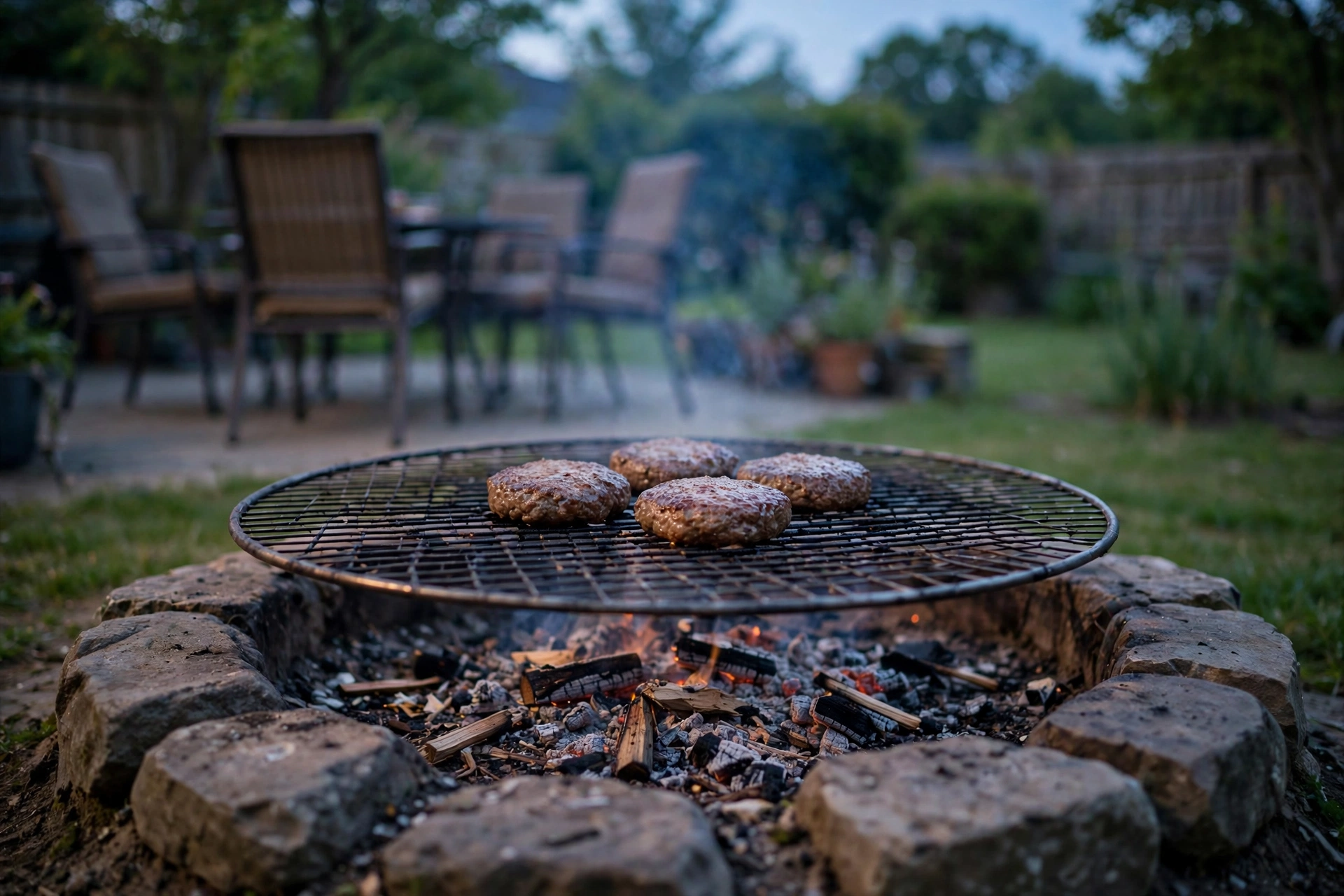
A grate at the right diameter and the wrong height still cooks badly. For grilling, the food should sit roughly 4 to 6 inches above the coal bed: closer and the outside chars before the middle cooks, farther and you get warmth without a sear.
Drop-in grates inherit whatever height your pit gives them, which is why post-mounted and swing grates exist. Solo Stove’s Hub, for reference, raises its grill top a full 8 inches above the Bonfire’s rim, and adjustable-post grates let you dial the gap as the coals burn down instead of accepting it.
When the fire is right, you can hear it settle — the crackle drops off, the coals tick as they shrink, and the grate stops smoking and starts to shimmer. That coal bed, at the right distance under the right size grate, is the whole technique.
One grate that fits most backyard pits
If your pit measures 26 to 27 inches inside — the most common backyard size — the 24-inch Stanbroil is the safe default: stainless steel, 452 square inches of cooking surface, and a swing stand that solves the height problem by moving the food instead of the fire. It is the best value pick in our roundup of the best fire pit cooking grates and grills, and the sizing logic there matches the math above.
BEST VALUE
Stanbroil Fire Pit Campfire Grill Grate
A 24-inch stainless grate with 452 square inches of cooking room, on a swing stand that travels well.
Square pits and secondhand grates
Square or rectangular pits: size by the shorter inside dimension and leave the same 2 inches. A rectangular grate that fits the length but crowds the width will rock on the rim, and a rocking grate under a load of food is worse than a smaller one that sits flat.
Buying for someone else’s pit: get the inside measurement before you order, or do not order a grate at all. A gift grate in the wrong size is a return with a bow on it — the safer presents are in our list of gifts for fire pit lovers, where fit is not a measurement.
And if the grate you are eyeing is actually a replacement grill grate from a kettle or gas grill, read fire pit cooking grate vs grill grate before you spend anything. The two are built differently, and the difference decides whether the cheap option works or warps. If your pit itself lives outside all year, the weather-resistant models in our guide to the best waterproof fire pits are sized with the same inside measurements used here.
Do this, not that
Do measure the inside of your pit, subtract 2 inches, and buy that grate — for most backyard pits, the 24-inch. Do not buy by the number printed on the pit’s box. The tape measure takes thirty seconds, and it is the difference between cooking this weekend and shipping a box back on Monday.