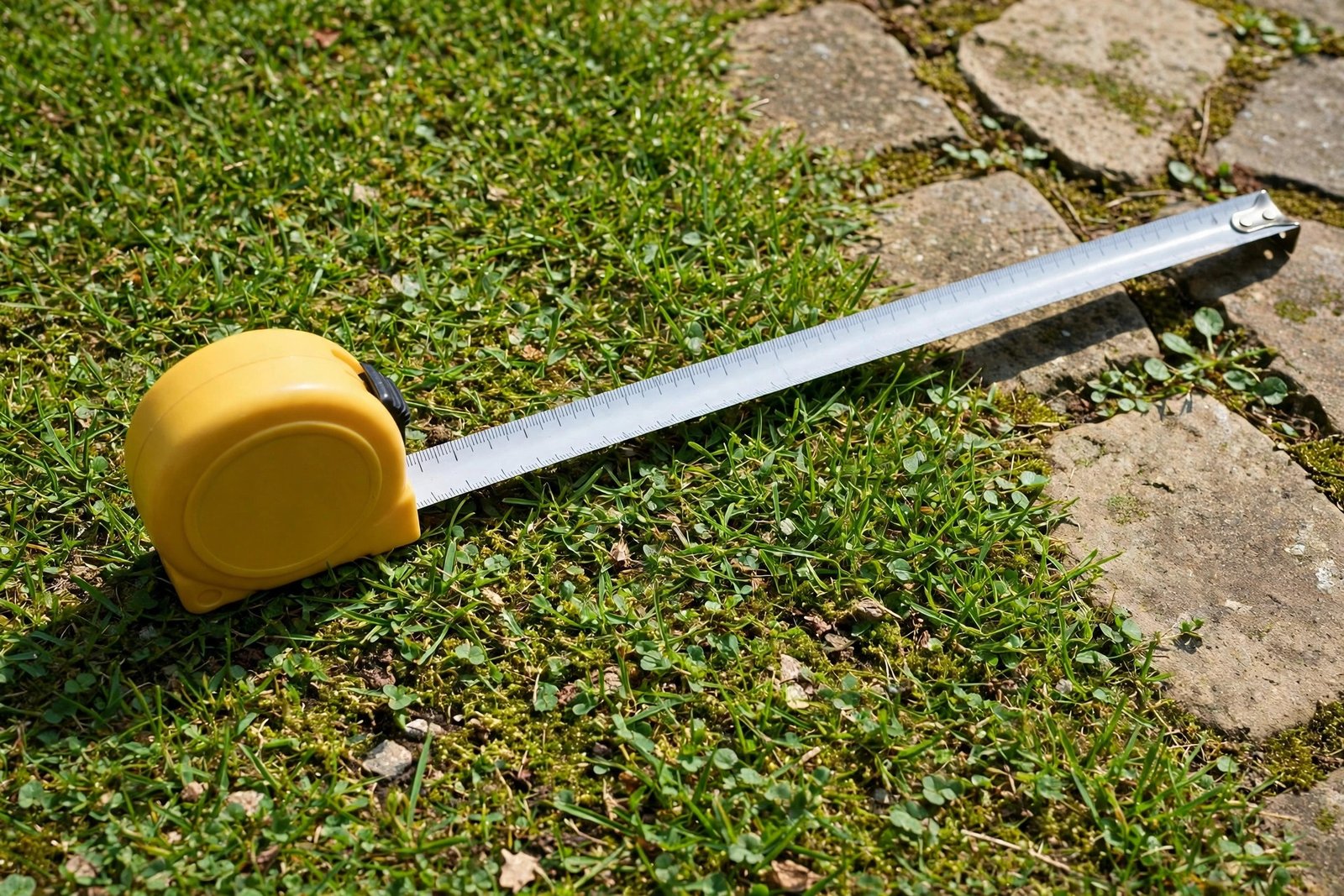
Start with the tape measure, not the deck. The most common zero-turn regret is not buying too little mower — it is buying a deck that cannot get through the gate, scalps the high spots, or turns a simple yard into a wrestling match. Deck size is a fit question first and a speed question second.
What the inches actually buy you
A wider deck cuts a wider path, so each pass covers more ground. Going from 42 to 54 inches widens each pass by a foot, which trims the number of passes across an open acre by roughly a fifth. That is a real saving on open ground. It shrinks fast once you add trees, beds, and fences, because a wide deck is harder to thread between obstacles and slower to maneuver in tight corners.
Width also changes the mower’s footprint. A 54-inch deck needs wider gates, a wider trailer, and more shed space than a 42-inch deck. Measure the narrowest gate the mower must pass, the trailer ramp, and the shed door — then subtract a few inches for the discharge chute and your own margin. If the deck does not clear all three, it does not fit, no matter how fast it looks on paper.
42 inches: the one-acre default
For most one-acre yards, 42 inches is the sensible default. It fits a standard 48-inch gate with room to spare, turns comfortably around trees, and is the easiest size to store and trailer. Its trade-off is time: on wide-open ground it takes more passes than a bigger deck, but on a typical acre with obstacles, the maneuverability gives much of that time back.
Choose 42 inches if your gates are narrow, your yard is broken up by trees and beds, or your storage is tight. It is also the kindest size for uneven ground, where a narrower deck follows the contours instead of bridging over high spots and scalping them.
48 inches: the middle ground
A 48-inch deck suits an acre that is mostly open with a few obstacles, and gates of at least 54 inches. It cuts noticeably faster than a 42 on straight runs without becoming unwieldy around a tree line. It is the size to pick when your yard is open enough that pass count matters, but not so open that you can swing a 54 without thinking.
The catch is the same fit test. A 48-inch deck plus its chute needs a genuinely wide gate. If your only back-yard access is a 48-inch gate, a 48-inch deck is a non-starter, not a tight squeeze.
54 inches: open ground only
A 54-inch deck belongs on open, fairly level ground with wide access — the kind of acre where you can run long, straight passes without threading anything. There it is genuinely faster, and the time saving is easy to feel. On rolling or obstacle-filled ground, it scalps high spots, bridges dips, and fights you at every turn. It also demands the widest gates, the biggest trailer, and the most storage.
Choose 54 inches only if your acre is open, your gates clear it with room to spare, and your ground is level enough that a wide deck will not scalp. Otherwise the extra inches cost you more in frustration than they save in time.
The fit test, in order
Measure the narrowest gate. If the deck plus chute does not clear it, stop there. No deck is worth rebuilding a fence for.
Walk the slopes. Wide decks scalp on uneven ground. If your yard rolls, favor the narrower deck and check the mower’s slope rating.
Count the obstacles. Trees, beds, play equipment, and tight corners all favor a narrower, nimbler deck. Open rectangles favor width.
Check storage and trailer. The mower has to live somewhere and, sooner or later, ride somewhere. Both must fit the deck you buy.
Bottom line
For one acre, start at 42 inches unless your ground is open, level, and wide-gated enough to earn a 48 or 54. Bigger is faster only where it fits and where the ground lets it run. Pair this with the power decision in Gas vs Electric Zero-Turn Mowers and the worth-it math in Is a Zero-Turn Mower Worth It for 1 Acre?, and compare models in our best zero-turn mowers for homeowners roundup.