Disclosure: This post contains affiliate links. If you buy through them, we may earn a commission at no extra cost to you.
Open a can of pumpkin and the label reads like a promise: 100% pumpkin, nothing else. The pie that comes out of it is smooth, dense, and the deep orange everyone expects in November.
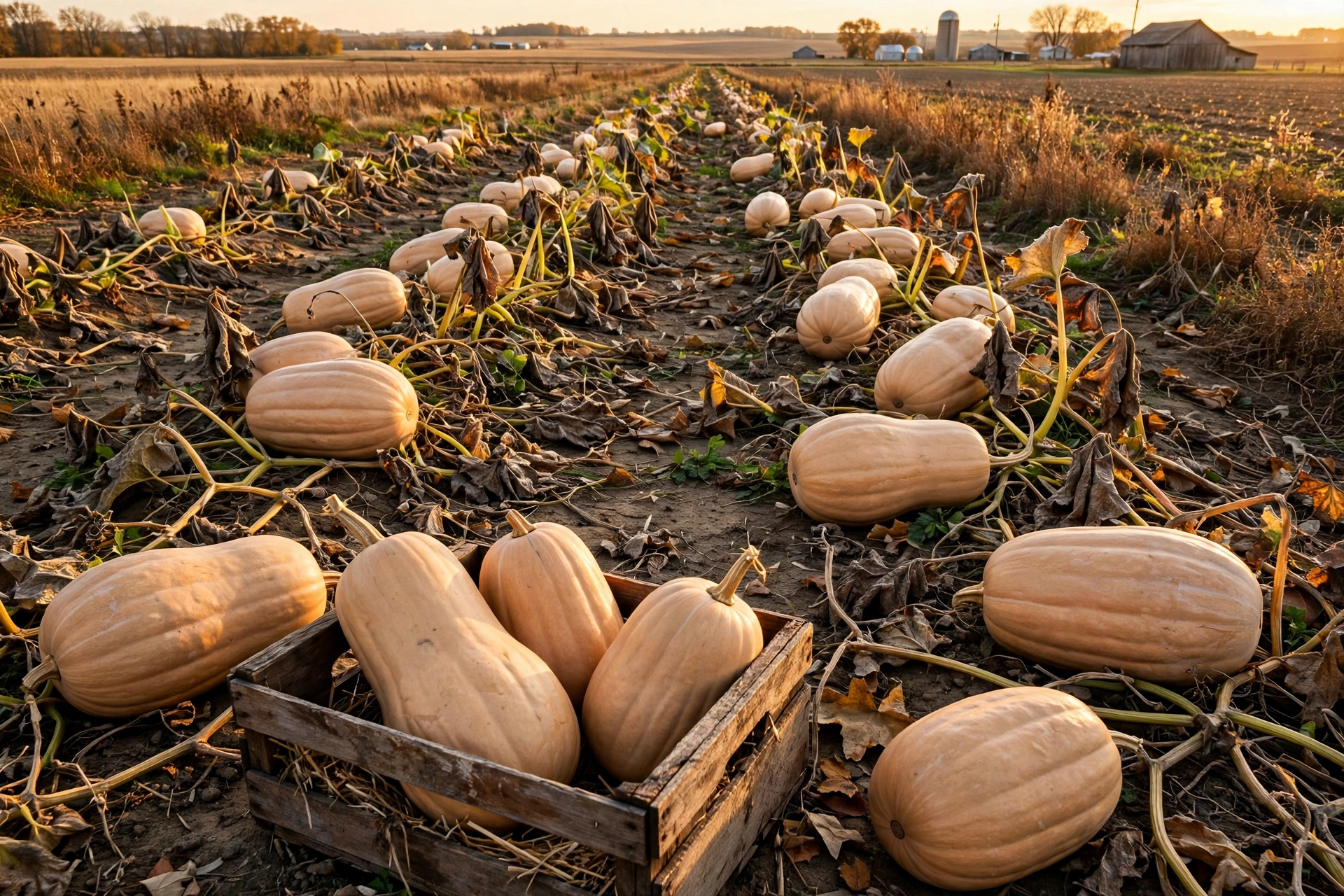
The fruit that filled the can never sat on anybody’s porch. It was tan, oblong, and heavy — shaped more like an overgrown butternut than a jack-o’-lantern. And by the standards of the seed world, that’s not a scandal. It’s the whole reason the pie works.
The pumpkin in the can has a name
Most canned pumpkin in the United States starts as a single variety: the Dickinson.
The Dickinson is a cultivar of Cucurbita moschata, the same species as butternut squash. It traces to farmer Elijah Dickinson, who grew it in Kentucky in the early 1800s and brought it to central Illinois, where the dark soil suited it. Libby’s bought the Dickinson canning operation in 1929 and spent the decades since breeding its own proprietary strain, Libby’s Select Dickinson, grown under contract in the fields around Morton, Illinois.
The scale is hard to overstate. University of Illinois Extension puts the Morton plant’s output at about 85 percent of the world’s canned pumpkin, and Libby’s says it cans enough each year to make 90 million pumpkin pies. The fruit itself is bred for the can, not the camera: pale skin, thick walls, and flesh selected to be dense, sweet, and fine-grained.
So the dominant “pumpkin” in American pie is a squash by species, grown in one corner of Illinois, from seed you cannot buy.
Why the label is legal
This isn’t a loophole a company slipped through. It’s a written federal position older than most of the farms involved.
The FDA’s compliance policy guide on pumpkin labeling (CPG Sec. 585.725) notes that canned pumpkin has traditionally been packed from field pumpkins, from firm-shelled, golden-fleshed sweet squash, or from a blend of the two. Since 1938, the agency has told canners it will not take action against the word “pumpkin” on a can of golden-fleshed sweet squash, as long as the label doesn’t mislead.
The botanical reality underneath the policy is simple: “pumpkin” was never the name of one plant. It’s a kitchen word. Botanically, pumpkins are squash — members of the genus Cucurbita spread across several species — and the round orange carving kind is just the one that got famous in October.
Why squash makes the better pie
The usual suspect in a failed pumpkin pie is water, and this is where the species split matters.
A carving pumpkin (Cucurbita pepo) is bred to be big, thin-walled, and hollow enough to hold a candle. Its flesh is stringy and wet. Roast one and purée it, and you get a loose, pale mash that weeps into the custard — the pie that slumps when it’s sliced.
A moschata like the Dickinson is built the other way: thick flesh, small seed cavity, low water, natural sugars concentrated in a dense pack. Puréed, it holds its body, which is exactly what a custard needs to set clean and slice smooth. The can’s famous consistency isn’t a processing trick. It’s a variety choice, made a century ago and repeated every season since.
Grow your own pie filling
You can’t plant Libby’s Select — the seed is proprietary and grown under contract. But you can plant the species, and for pie purposes the species is most of the story.
Start with the moschatas. Waltham Butternut is the Dickinson’s best-known cousin: tan, thick-necked, and reliably sweet, with flesh that roasts down dense. Honeynut is a smaller, single-serving-sized moschata bred for concentrated sweetness — a few plants will cover a season of pies.
Or grow a true pie pumpkin. Sugar Pie is a Cucurbita pepo bred for the kitchen instead of the porch: small 6- to 7-inch fruit, 90 to 115 days, with flesh far denser than a carving pumpkin’s. It’s the honest version of what most people picture when they picture a pie pumpkin.
One kitchen adjustment makes the homegrown route match the can: drain the purée. Roast the squash, purée it, then let it sit in a fine strainer — or cook it down gently — until it holds a spoon the way canned purée does. That single step closes most of the gap between a garden pie and a bakery one.
And a note for seed savers: pepo and moschata are different species and rarely cross, even planted side by side. Save seed from your Sugar Pie and your butternut in the same year, and each comes back true.
The can wasn’t lying
So the reel-worthy version — “your pumpkin pie is secretly squash” — gets the facts right and the story backwards. Nothing was swapped in. The canning industry picked its squash on purpose, the FDA wrote the naming rule down in 1938, and the pie on the table is better for both decisions.
Next Thanksgiving, the label will still say pumpkin. Picture the tan fruit in an Illinois field instead of the orange one on the porch, and the label reads just fine.
Sources
- FDA Compliance Policy Guide Sec. 585.725, “Pumpkin” — Labeling Articles Made from Certain Varieties of Squash (first issued 1969; reissued December 1988; position held since 1938).
- University of Illinois Extension — Morton, Illinois processing share (~85% of the world’s canned pumpkin) and Illinois processing-pumpkin production.
- NC State Extension — pumpkin and squash species guide (carving pumpkins’ thin walls and limited flesh; moschata types suited to cooking).
- Libby’s — Libby’s Select Dickinson variety and annual production (“90 million pumpkin pies”).