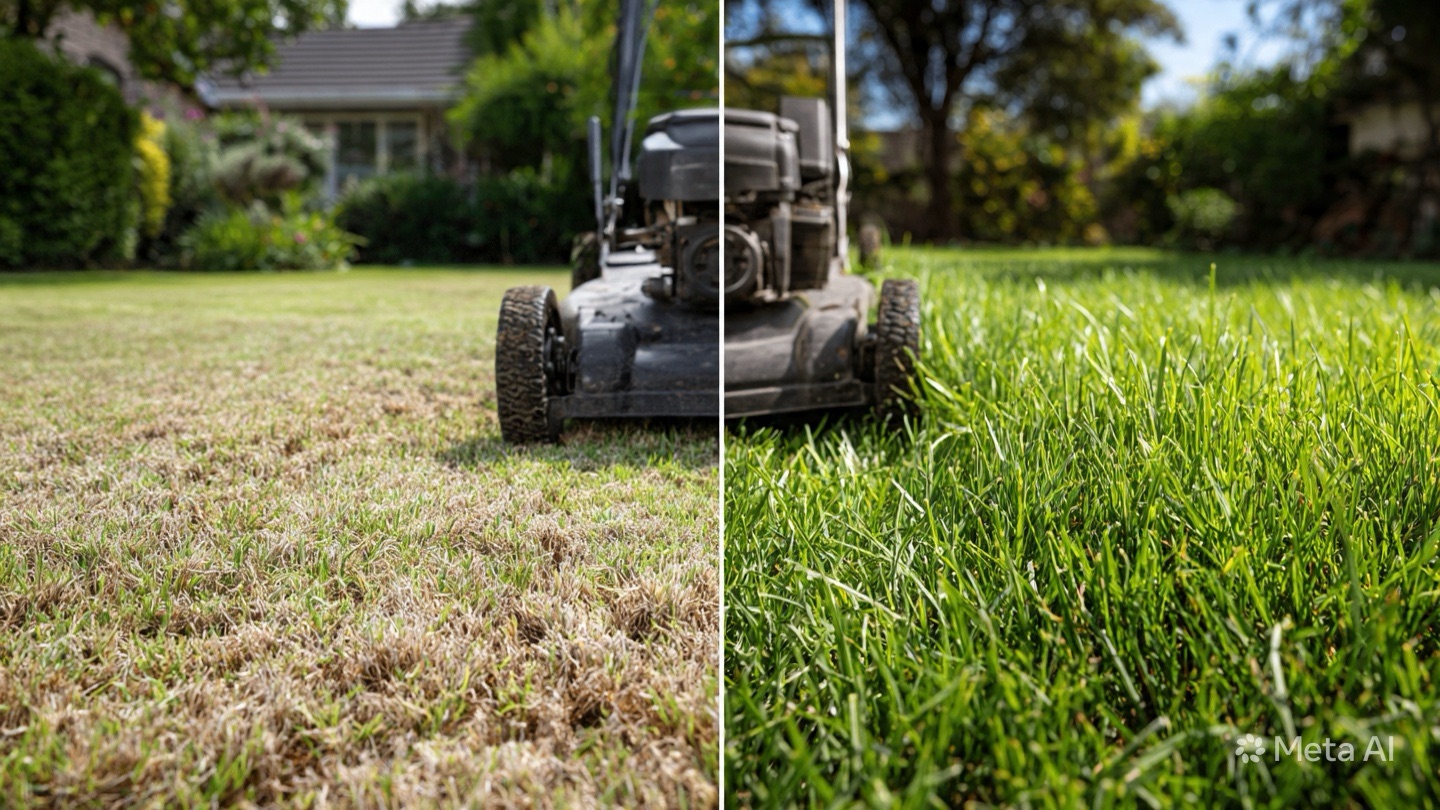
Your lawn talks. Brown spots, yellow streaks, and mushrooms popping up are all signals that something’s off beneath the surface. The good news: most lawn problems are fixable once you know what you’re looking at.
Here’s how to diagnose the 8 most common issues and get your grass back to thick, green, and healthy.
1. Thin Grass
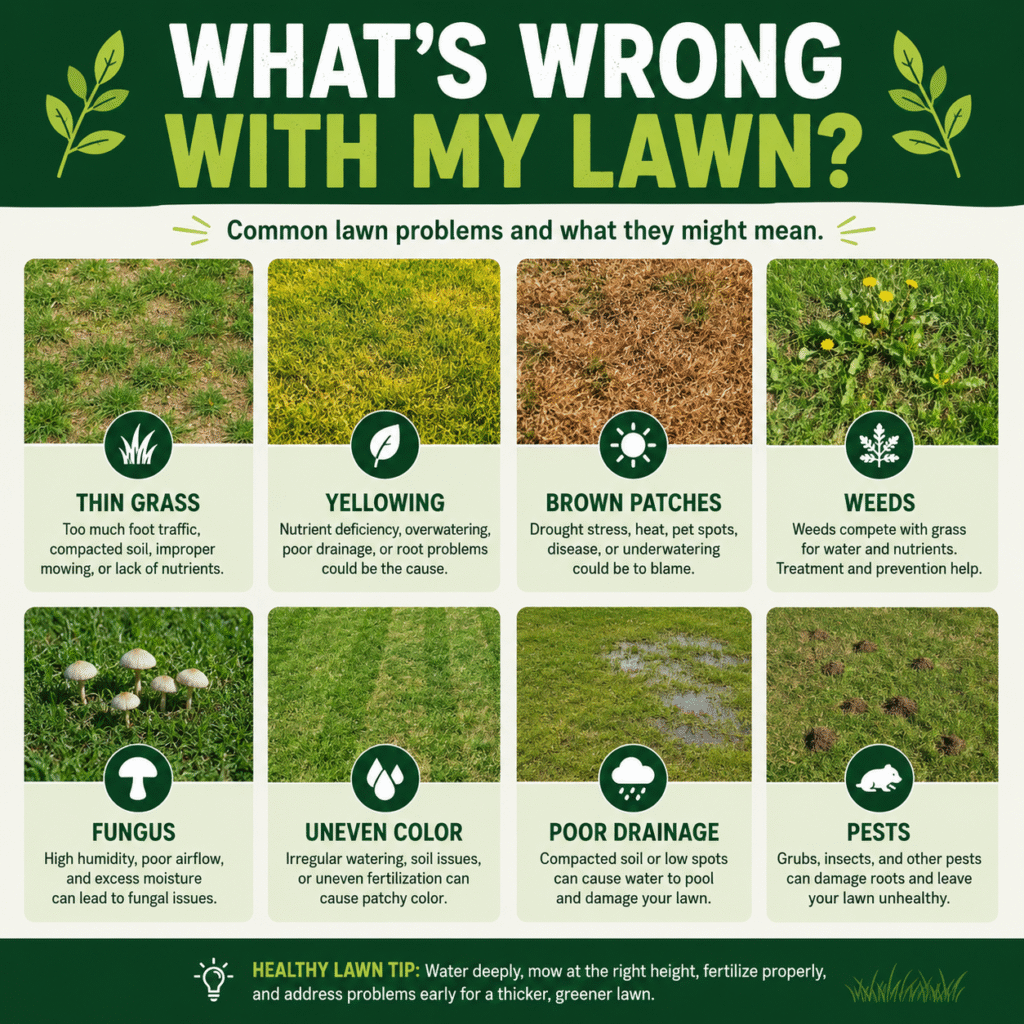
What it looks like: Bare patches or sparse growth where you can see soil between blades.
What it means: Thin grass usually points to stress. The top culprits are heavy foot traffic, compacted soil, mowing too short, or missing nutrients.
Fix it: Core aerate to relieve compaction, overseed in early fall or spring, and raise your mower blade. Grass cut at 3-4 inches develops deeper roots and crowds out weeds naturally.
2. Yellowing
What it looks like: A general pale or yellow cast instead of deep green.
What it means: Yellow often signals a nutrient issue, especially nitrogen deficiency. But it can also come from overwatering, poor drainage, or damaged roots.
Fix it: Start with a soil test. If nitrogen is low, apply a balanced fertilizer. If the soil is soggy, cut back watering to 1-1.5 inches per week, including rainfall.
3. Brown Patches
What it looks like: Irregular dead spots that turn brown and crispy.
What it means: Could be drought stress, pet urine, lawn disease, or simple underwatering. In summer, heat is usually the trigger.
Fix it: Water deeply and infrequently to encourage deep roots. For pet spots, flush the area with water right away. If the patch spreads in a circle, you might have a fungal disease and should check with a local extension office.
4. Weeds
What it looks like: Dandelions, crabgrass, clover, or other plants invading the turf.
What it means: Weeds are opportunists. They move in when grass is thin, stressed, or scalped. They compete for water, sunlight, and nutrients.
Fix it: The best defense is thick, healthy grass. Mow high, feed appropriately, and pull weeds before they seed. Use pre-emergent herbicide in spring for crabgrass.
5. Fungus
What it looks like: Mushrooms, slimy patches, or circular rings of discolored grass.
What it means: Fungi thrive with high humidity, poor airflow, and excess moisture. It’s common after rainy periods or with evening watering.
Fix it: Water early in the morning so blades dry quickly. Improve airflow by pruning nearby shrubs and dethatching if needed. Most lawn mushrooms are harmless and disappear as conditions dry.
6. Uneven Color
What it looks like: Streaks or blotches where some areas are dark green and others are pale.
What it means: This is usually a water or fertilizer issue. Uneven watering, soil differences, or a faulty spreader application can all cause striping.
Fix it: Check your sprinkler coverage for dry spots. When fertilizing, apply in two passes at half rate, walking perpendicular directions for even coverage.
7. Poor Drainage
What it looks like: Puddles that linger for hours after rain, or spongy, squishy turf.
What it means: Compacted soil or low spots prevent water from soaking in. Roots sitting in water can rot, killing the grass.
Fix it: Aerate compacted areas yearly. For low spots, topdress with a soil/sand mix to gradually level the area. In severe cases, a French drain may be needed.
8. Pests
What it looks like: Turf that pulls up easily like a carpet, or small mounds of soil from digging.
What it means: Grubs, chinch bugs, and other insects eat grass roots. Moles and voles tunnel through, disrupting the lawn.
Fix it: If you can peel back the sod and see white grubs, apply a curative insecticide in late summer. For critters, reduce watering to make soil less attractive and consider traps for active tunnels.
The Pro Approach to a Healthy Lawn
Most lawn issues come down to four fundamentals. Master these and you’ll prevent 80% of problems before they start:
Your lawn won’t turn around overnight, but consistent care pays off. Address the root cause, not just the symptom, and you’ll be back to barefoot-worthy grass soon.