You have a bag labelled lawn sand, a lawn with moss in the shady corner, and advice that seems to use the same words for two different jobs. Timing matters here, but first the bag has to be the right one.
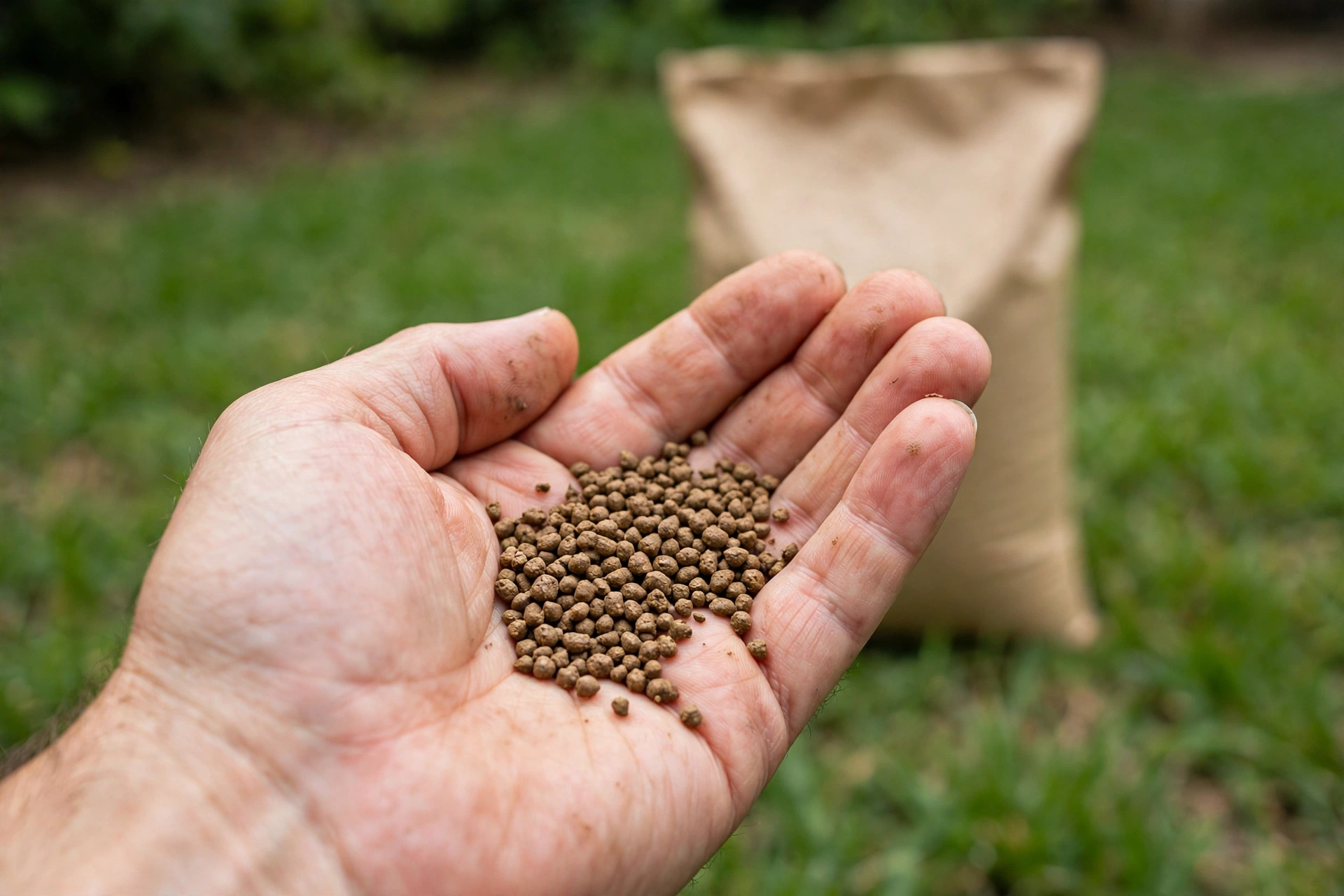
Lawn sand in this post means the traditional iron-sulphate treatment used on lawns, typically a mix of sand, ammonium sulphate, and iron sulphate, applied to feed the grass and scorch moss and some broadleaf weeds. It is not the plain sand used to level a lawn — that different job is covered in our guide to levelling a lawn with sand.
When is the best time to apply lawn sand?
Apply lawn sand in active growth, most commonly in spring, with early autumn as the second window, when the grass is growing well enough to recover and fill in after moss blackens. Pick a dry day when rain is not immediately forecast to wash the treatment off the leaves, and when the lawn is not stressed by drought or frost.
Spring earns the first recommendation because moss is active, grass is about to grow strongly, and any thin spots left after treatment have a full season to fill. Early autumn works for the same reason, provided you leave enough growing weeks before winter.
When not to apply it
Not in drought or heat stress. Iron treatments can scorch stressed grass as well as moss.
Not on a frozen or dormant lawn. There is no active growth to recover, and the treatment sits where it fell.
Not right before heavy rain. The treatment needs contact time on moss and leaves to do its work.
How to apply it well
Measure your lawn and follow the bag rate. Lawn sand is a treatment, not a topdressing — more is not better, and over-application scorches grass.
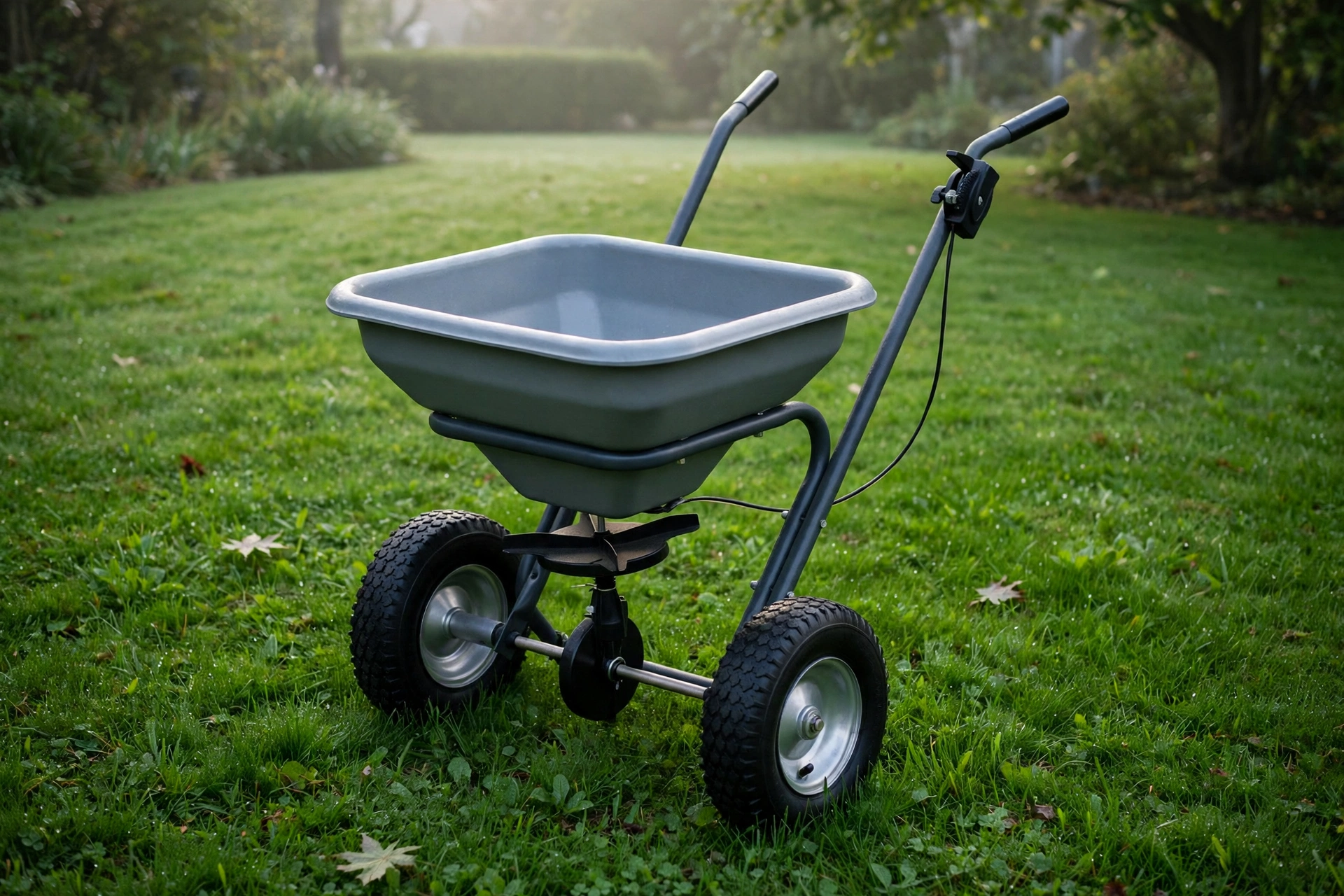
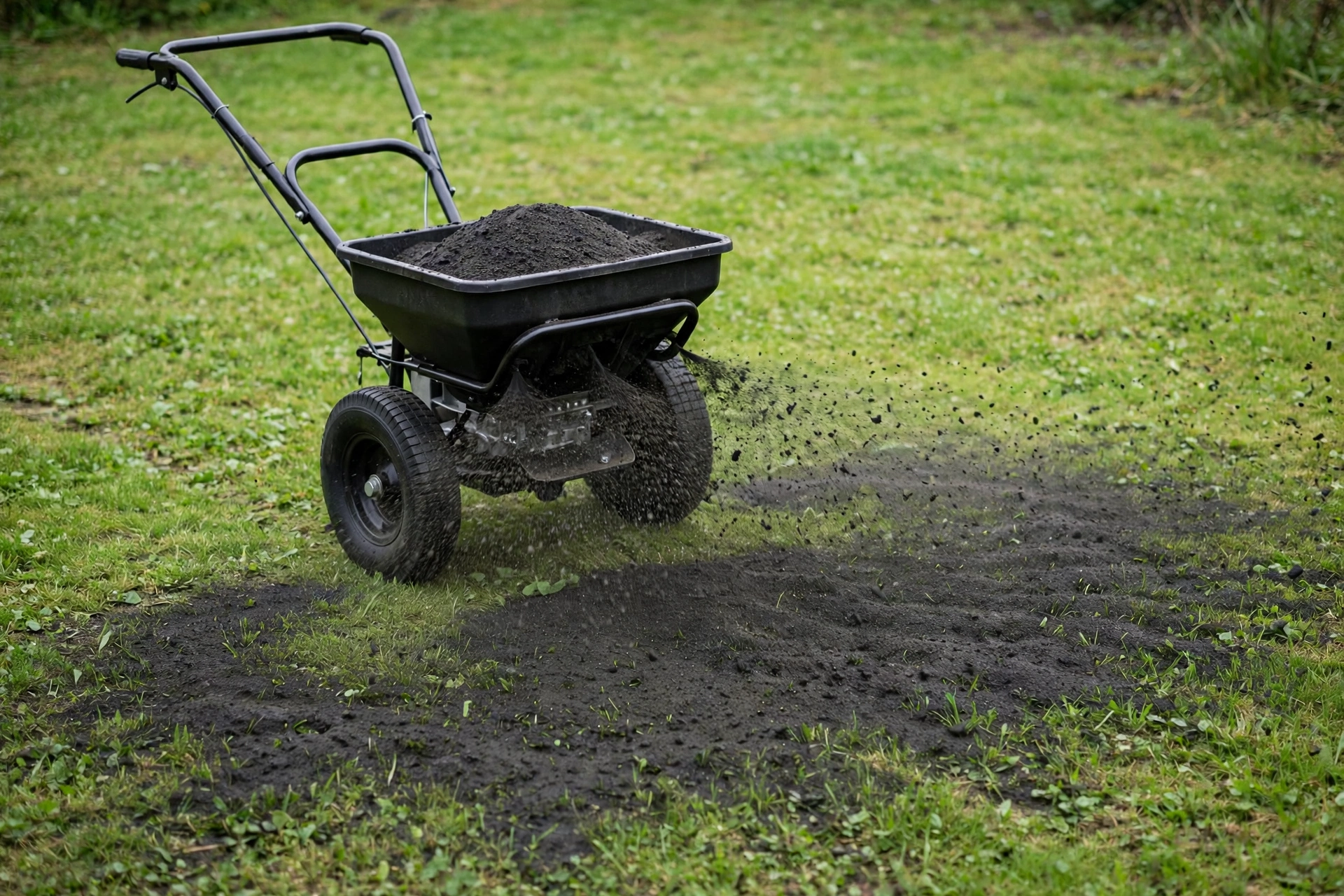
Spread evenly. Use a spreader and work in overlapping passes, because stripes of heavy application show up as stripes of scorch.
Expect moss to blacken. That colour change is the treatment working. Rake out dead moss after it has had time to act, then overseed bare patches if the grass does not fill in on its own.
Keep it off paths and patios. Iron stains hard surfaces, so sweep stray granules off pavement promptly.
Bottom line
Apply lawn sand on a dry day in spring, while the grass is growing strongly, and use early autumn as your second chance. If your goal is levelling bumps, you want plain sand and a different season guide, not this treatment.
After you apply it
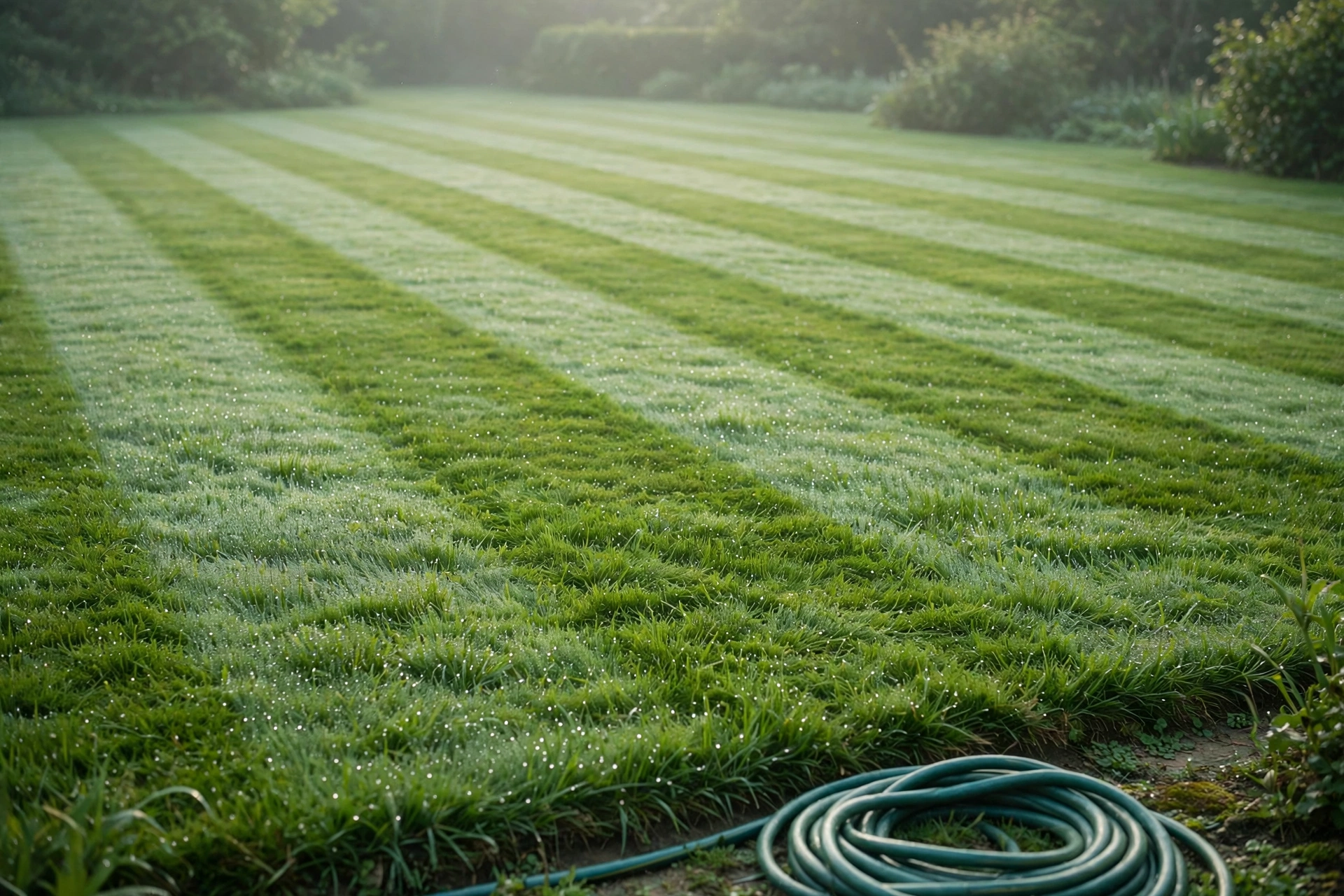
Watering is not the immediate next step for most lawn sand treatments, because the iron needs time on the moss and leaf. Follow the specific bag instructions for your product on watering and mowing intervals, since formulations differ. What stays constant is the sequence: treat in active growth, let the moss blacken, rake it out, and then overseed any bare ground promptly so weeds do not take the space moss left behind.