Landscape & Leisure is reader-supported. When you buy through links on our site, including Botanical Interests seed links, we may earn a commission at no extra cost to you. Prices change, so click through to confirm current pricing.
Here is the mistake: sowing every pea and bean seed on the same Saturday in May, then eating peas for ten days, beans for two weeks, and nothing for the rest of the summer. Peas and beans are built for repeat sowings. A second sowing costs one seed packet and ten minutes. A single sowing costs the whole second half of the season.
This guide sets out a succession calendar for peas and beans that works in a northern garden: peas early and again late, beans in waves after the soil warms. For the varieties behind this calendar, see our snap pea and green bean roundup; for the pole-versus-bush choice that decides how much structure each wave needs, see our pole beans vs. bush beans comparison.
What Goes Wrong With One Sowing
Peas and beans fail on different clocks. Peas are cool-season plants that slow down in heat; Botanical Interests lists Sugar Snap for sowing 4 to 6 weeks before the average last frost, with a second window 10 to 12 weeks before the average first frost. One spring sowing gives one flush, then heat ends it. Bush beans concentrate their crop: Botanical Interests describes bush-type beans as producing most of their crop over a 2- to 3-week period. One sowing gives a glut, then a gap, then a trip back to the store.
Succession planting fixes both failures the same way: sow little, sow often, and let each wave replace the last. The checkable fact that anchors the calendar is the bean window itself — Kentucky Wonder’s product page recommends successive sowings every 7 to 14 days, up to 80 days before the average first fall frost. That is not a guess. It is the sowing rhythm the variety was selected for.
The Succession Calendar
Work backward from frost dates, not forward from enthusiasm. In much of Zone 4, the average last frost lands around mid-May and the first fall frost around late September to early October. Adjust both dates to your own county’s averages before sowing — a week either way changes the last safe sowing.
Step 1: Sow peas as soon as the soil allows
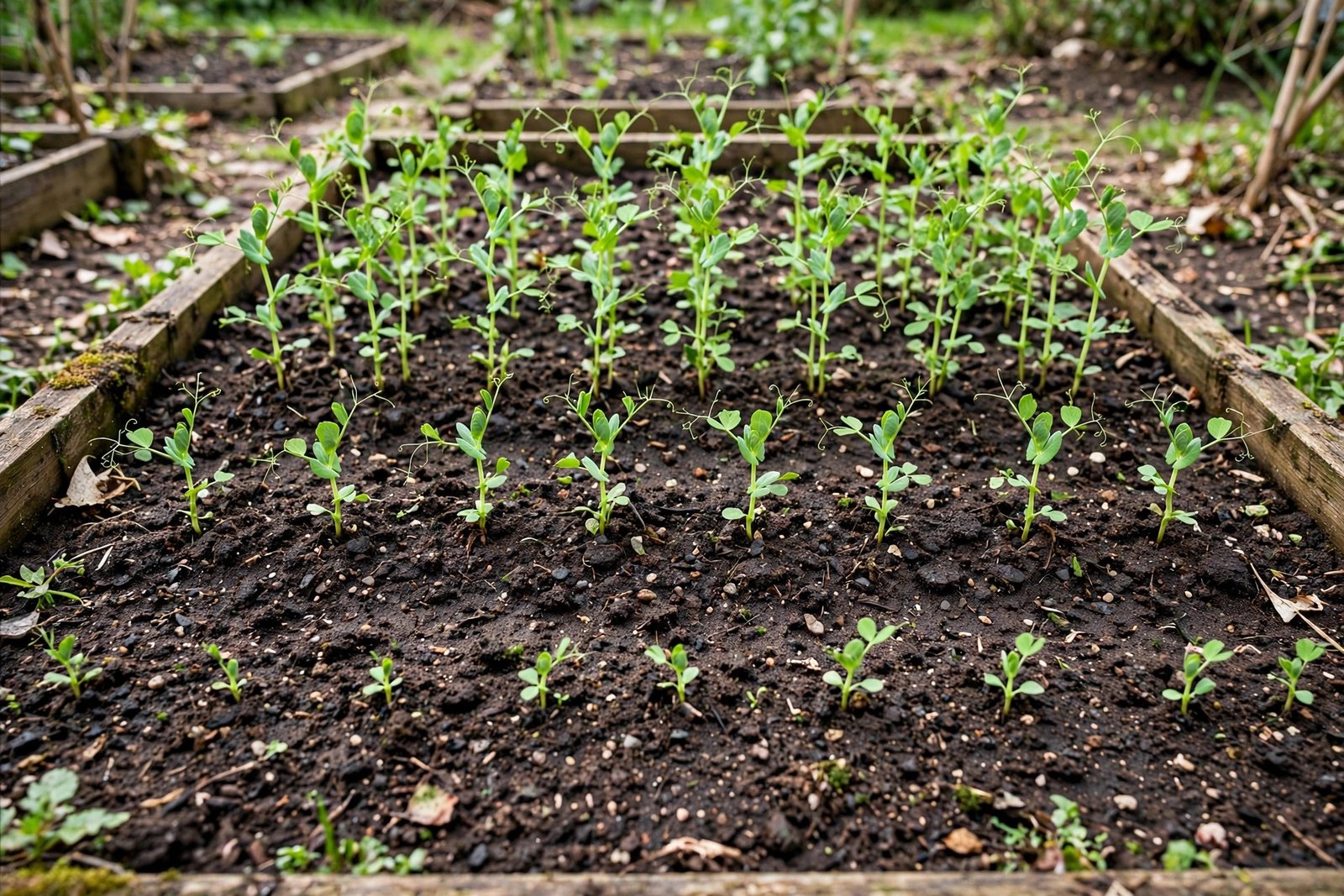
When: 4 to 6 weeks before the average last frost, once soil is at least 40°F. How: direct sow, 1 inch deep, seeds 2 inches apart, with a trellis in place for tall varieties like Sugar Snap. Peas do not transplant well, and Botanical Interests advises against starting them indoors. Sow a short row, not the whole bed — the second sowing comes later.
Step 2: Sow beans only after the soil warms
When: 1 to 2 weeks after the average last frost, when soil is at least 65°F, ideally 70° to 85°F. How: direct sow 1 inch deep. Do not rush this step to match the pea sowing. Beans sown into cold soil rot; beans sown into warm soil emerge in 6 to 12 days. In very hot areas, skip sowing as sustained heat above 90°F approaches, since heat prevents beans from forming.
Step 3: Repeat beans every 7 to 14 days
When: every 7 to 14 days after the first bean sowing, stopping 80 days before the average first fall frost. How: sow a short row each time, rotating the spot so no row follows itself. Bush beans are the workhorse here: each sowing produces over 2 to 3 weeks, so overlapping waves keep the picking continuous. Mark each sowing date on the row label — without dates, waves blur into one bed and the calendar falls apart.
Step 4: Sow peas again for fall
When: 10 to 12 weeks before the average first frost. How: direct sow as in spring, choosing a variety with disease resistance for the damper late season — Oregon Sugar Pod II and Cascadia both carry mildew resistance, and Sugar Daddy adds tolerance of bean leaf roll virus. Fall peas get the same trellis treatment as spring peas. In mild climates, Botanical Interests notes peas can be sown in fall or winter for a winter harvest; in Zone 4, treat the late-summer sowing as the fall crop.
Step 5: Stop in time
When: no bean sowing later than 80 days before the first fall frost; no pea sowing later than the fall window above. How: count backward from your frost date and write the stop date down. Late sowings that never mature waste seed and bed space that a fall crop — our root crop varieties and direct-sowing guide cover fall roots — could have used.
Three Varieties That Carry a Succession Calendar
Most varieties will succession-sow. These three earn their place because each one solves a specific wave: the early pea, the repeat bean, and the fast bean that rescues a late start.
Sugar Snap opens the calendar. Its 70-day maturity and extended harvest reward the earliest sowing, and regular picking increases yield. Hold the vine with one hand while picking with the other — the vines are fragile, and a pulled vine ends that wave early.
Sugar Snap Snap Pea Seeds
The 70-day snap pea that opens the succession calendar, with an extended harvest if picked regularly.
Kentucky Wonder carries the bean waves. As a pole bean it keeps producing over the season rather than finishing in one flush, and the 7- to 14-day repeat-sowing rhythm on its product page is the calendar in miniature. One packet sows up to 20 feet or two 4-foot teepees, so a single packet covers several waves.
Kentucky Wonder Pole Bean Seeds
63 days to 7- to 9-inch pods, built for repeat sowings every 7 to 14 days on a trellis.
Contender rescues a late start. At 50 days from sowing it is the fastest bean in this cluster, it tolerates heat and powdery mildew where other varieties suffer, and it has been a stringless favorite since 1949. If the first bean wave failed or the calendar slipped, Contender is the variety that still has time.
Contender Bush Bean Seeds
50 days, heat- and mildew-tolerant — the bush bean that still has time when the calendar slips.
What Usually Breaks the Calendar
Sowing beans with the peas. Same-day sowing feels efficient and wastes the bean seed. Beans need warm soil; peas need cool soil. Sow on each crop’s clock, not on the same Saturday.
Sowing the whole packet at once. A full packet of bush beans in one row is a two-week glut. Sow a third of the row, wait 7 to 14 days, sow again. The packet lasts the season instead of one weekend.
Skipping the fall pea sowing. Gardeners remember the spring peas and forget the fall window entirely. The fall sowing — 10 to 12 weeks before the first frost — is often the better crop, with cooler weather and fewer heat problems.
Pulling vines at harvest. Pea vines are fragile. Snap beans are ready when the pod snaps cleanly in half; hold the stem with one hand and the pod with the other so the branch keeps producing. A branch pulled off ends its wave.
What to Do Next
Sow the first pea row now if the soil allows, put the trellis up the same day, and write the bean start date — one to two weeks after the last frost, soil at 65°F or warmer — on the calendar before you forget it. Then sow beans every 7 to 14 days until the 80-day stop date. That rhythm, not a bigger bed, is what keeps peas and beans on the table all season. For the watering side of the same beds, our drip irrigation roundup covers systems sized for vegetable gardens.