Landscape & Leisure is reader-supported. When you buy through links on our site, including Botanical Interests seed links, we may earn a commission at no extra cost to you. Prices change, so click through to confirm current pricing.
Peas and beans look like the same job — sow, climb or bush out, pick a lot — but they run on opposite calendars. Peas want cool soil and an early start. Beans sulk in cold soil and want real warmth. Plant them on the same day and one of them loses. The varieties below are the ones that earn their space once the timing is right, with the support and spacing each one actually needs.
For the sowing calendar that keeps both crops coming in waves, see our guide to succession planting peas and beans. For the pole-versus-bush decision, our pole beans vs. bush beans comparison settles which habit fits your garden.
Why Timing Decides Peas and Beans
Peas are a cool-season crop. Botanical Interests lists Sugar Snap for direct sowing 4 to 6 weeks before the average last frost, once soil reaches at least 40°F, ideally 60° to 80°F. Germination takes 5 to 10 days in that window. Wait until the soil is warm and the plants run into summer heat, and the harvest window shortens fast — peas grow best below 85°F.
Beans are the reverse. Kentucky Wonder, for example, goes in 1 to 2 weeks after the average last frost, when soil is at least 65°F and ideally 70° to 85°F. Sow beans into cold, wet soil and seeds rot instead of sprouting; Botanical Interests notes bean seedlings are sensitive to root disturbance, so direct sowing beats transplanting for both crops. That single difference — peas early, beans after the frost date plus a warm-soil check — is most of the success with this pair.
How We Picked These Varieties
Three tests. First, the variety has to be in stock and sold by Botanical Interests now, not a catalog memory. Second, it has to carry a real distinction: a shorter vine, a faster maturity, a pod shape that solves a kitchen problem. Third, gardeners have to rate it well — every pick below carries a 4-star-or-better average in Botanical Interests reviews. Days to maturity and heights are from the product pages, not from memory.
Best Overall: Sugar Snap Snap Pea
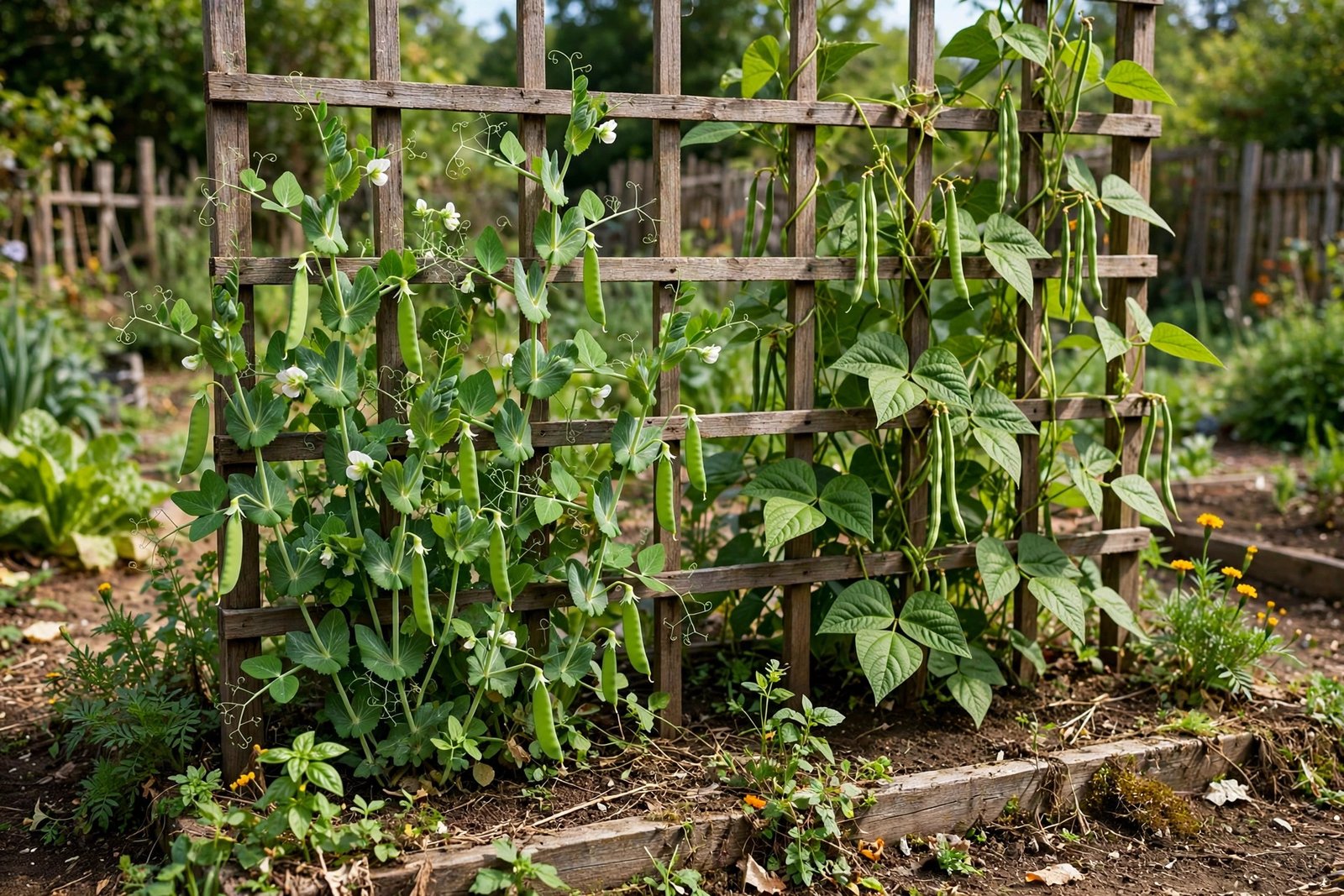
Sugar Snap is the snap pea other snap peas are measured against, and the numbers explain why. It is an All-America Selections winner with thick, crunchy 3-inch pods, plump peas inside, and a 70-day maturity from sowing. The trade-off is height: vines climb 6 to 8 feet, so this variety needs a real trellis, poles, or netting from day one. Give it that support and pick regularly, and it produces over an extended harvest.
Pros: proven flavor and crunch; extended harvest with regular picking; tolerates some heat for a pea.
Cons: tall vines demand a sturdy 6- to 8-foot trellis; needs the early, cool sowing window.
Sugar Snap Snap Pea Seeds
The All-America Selections winner: 3-inch crunchy pods on tall vines, over a long picking season.
Runner-Up: Sugar Daddy Snap Pea
Sugar Daddy was bred as the fix for Sugar Snap’s two inconveniences: strings and height. The pods are stringless, the vines stop at 24 to 30 inches, and the 3-inch pods stay slender and deep green. A short fence or low trellis makes harvesting easier, but the plants do not need the tall structure Sugar Snap demands. It also carries resistance to powdery mildew and tolerance of bean leaf roll virus, which matters when a second sowing runs into warmer, damper weather.
Pros: stringless pods; short vines fit small gardens and containers; improved disease resistance.
Cons: smaller plants mean a smaller per-plant harvest than a full trellis of Sugar Snap.
Sugar Daddy Snap Pea Seeds
Stringless 3-inch pods on 24- to 30-inch vines — the snap pea for gardeners without a tall trellis.
Best Snow Pea: Oregon Sugar Pod II
Snow peas are picked flat, before the seeds swell, and Oregon Sugar Pod II is built for that job: 4-inch pods on short 28-inch vines, with resistance to mildew, pea enation virus, and leaf roll. It is also the snow pea to choose for a late-summer sowing, since Botanical Interests rates it as an excellent freezer and late-summer variety. Harvest while the pods are still flat and tender; once the seeds form, the texture that makes a snow pea a snow pea is gone.
Pros: heavy yields of 4-inch flat pods; short vines are easy to manage; strong disease resistance.
Cons: must be picked flat — oversized pods lose their appeal fast.
Oregon Sugar Pod II Snow Pea Seeds
Flat 4-inch pods on 28-inch vines, with the disease resistance a late-summer sowing needs.
Best Pole Bean: Kentucky Wonder Pole Bean
Kentucky Wonder has been grown since it was released in 1877, and it is still the pole bean to beat for a home trellis. The pods run 7 to 9 inches long and half an inch wide, stringless when picked young, maturing in 63 days. One packet sows up to 20 feet of row or two 4-foot teepees, with seeds spaced 6 inches apart. It resists bean common mosaic virus. The cost is the structure: plan on a teepee, trellis, or poles before sowing, because a pole bean without support becomes a tangled ground cover.
Pros: long, heavy harvest over the season; historic reliability; virus resistance.
Cons: needs a sturdy trellis; pods get stringy if left to size up.
Kentucky Wonder Pole Bean Seeds
7- to 9-inch pods in 63 days on a trellis — the classic pole bean, grown since 1877.
Best Bush Bean: Blue Lake 274 Bush Bean
Blue Lake 274 is the bush bean for gardeners who want the harvest without the trellis. Plants reach 16 to 18 inches, produce round 6-inch pods all at once, and stay stringless when picked young. The pods are a strong freezer bean, and the compact plants work in containers. Disease resistance is part of the package. The trade-off is concentration: bush beans produce most of their crop over 2 to 3 weeks, so a single sowing gives a glut, then a gap — which is exactly why our succession planting guide staggers bush bean sowings.
Pros: no staking; large, uniform crop; excellent for freezing.
Cons: concentrated harvest window; needs repeat sowings for a steady supply.
Blue Lake 274 Bush Bean Seeds
Round 6-inch pods on 16- to 18-inch plants — a heavy, freezable crop with no trellis.
Best Filet Bean: Jade Bush Bean
Jade is the filet bean for gardeners who have watched bean pods rot where they touch damp soil. The upright, bushy plants hold long, straight, stringless pods high, avoiding tip rot, and the pods stay tender and sweet with a dark green color. Plants tolerate heat and cold better than many bean types and resist bean common mosaic viruses. Pick filet beans often and young; a filet bean left to thicken loses the tenderness that justifies growing it.
Pros: pods held high off the soil; heat and cold tolerance; strong virus resistance.
Cons: needs frequent picking at the slender stage to stay at its best.
Jade Bush Bean Seeds
Long, straight, stringless pods held high off the soil, on heat- and cold-tolerant bush plants.
Best Yellow Bean: Gold Rush Bush Bean
Yellow beans solve a practical problem before they solve a culinary one: you can see them. Gold Rush bears clusters of golden-yellow pods against green foliage, so pods are easy to spot and harvest before they oversize. The beans hold their quality well both on the plant and after picking, plants resist disease, and the compact habit suits containers. For a household that loses green beans in the foliage until they are too big, a yellow bean is a genuine upgrade, not just a color choice.
Pros: easy-to-spot yellow pods; holds quality on the plant and after harvest; container-friendly.
Cons: yellow pods turn green when cooked, so the color is a harvest aid, not a serving feature.
Gold Rush Bush Bean Seeds
Golden-yellow pods that are easy to spot and pick at the right size, on compact disease-resistant plants.
The One We Would Skip for a First Planting
Sugar Magnolia snap pea is a fine variety, but it does the same tall-trellis job as Sugar Snap at a higher packet price, without Sugar Snap’s track record or Sugar Daddy’s compact habit. For a first planting, spend the trellis effort on Sugar Snap and the small-space slot on Sugar Daddy. Add Sugar Magnolia later, once the support and the sowing rhythm are already working.
Two more varieties deserve a mention without a card. Contender bush bean matures in just 50 days and tolerates heat and powdery mildew, which makes it a strong late-succession pick — see the succession guide for where it fits. Cascadia snap pea, with self-supporting 30-inch vines and 3-inch pods, is the low-structure snap pea for a late-summer sowing.
Side-by-Side Comparison
| Variety | Type | Height | Days to maturity | Best for |
|---|---|---|---|---|
| Sugar Snap | Snap pea | 6–8 ft vine | 70 days | Long harvest on a tall trellis |
| Sugar Daddy | Snap pea | 24–30 in. | — | Small gardens, no tall trellis |
| Oregon Sugar Pod II | Snow pea | 28 in. vine | — | Flat pods, late-summer sowing |
| Kentucky Wonder | Pole bean | Vine | 63 days | Season-long picking on a trellis |
| Blue Lake 274 | Bush bean | 16–18 in. | — | Heavy crop for freezing, no staking |
| Jade | Filet bush bean | Bush | — | Tender pods held off the soil |
| Gold Rush | Bush bean | Bush | — | Easy-to-spot yellow pods |
| Contender | Bush bean | Bush | 50 days | Fast, heat-tolerant late sowing |
Days marked “—” are not listed on the Botanical Interests product page for that variety; heights and pod sizes above are from the same pages.
Final Thoughts
Start with Sugar Snap on a tall trellis and one bush bean — Blue Lake 274 for freezing, Jade for filet tenderness — sown after the soil warms. That pair covers the season’s two calendars with the least structure and the most forgiveness. The one honest trade-off: the best pea in this roundup is also the most demanding of support. Build the trellis before sowing, not after the vines are already looking for something to climb. For more on getting the first sowing right, our beginner vegetable seed roundup and guide to starting seeds indoors cover the wider planting picture.