Landscape & Leisure is reader-supported. When you buy through links on our site, including Botanical Interests seed links, we may earn a commission at no extra cost to you. Prices change, so click through to confirm current pricing.
Here is the mistake: growing winter squash like summer squash. Pick it young, eat it this week, and you get a bland, watery squash that was never meant to be eaten immature. Or grow summer squash like winter squash — leave it on the vine to “ripen” — and you get a seedy marrow while the plant stops producing. Summer and winter squash are the same family with opposite harvest rules. Get the rule right and both crops pay. Get it wrong and neither does.
For the summer varieties behind this comparison, see our summer squash and zucchini roundup. For the sowing method both kinds share, see our direct sow vs. transplant guide.
What Went Wrong: One Plant, Two Harvest Rules
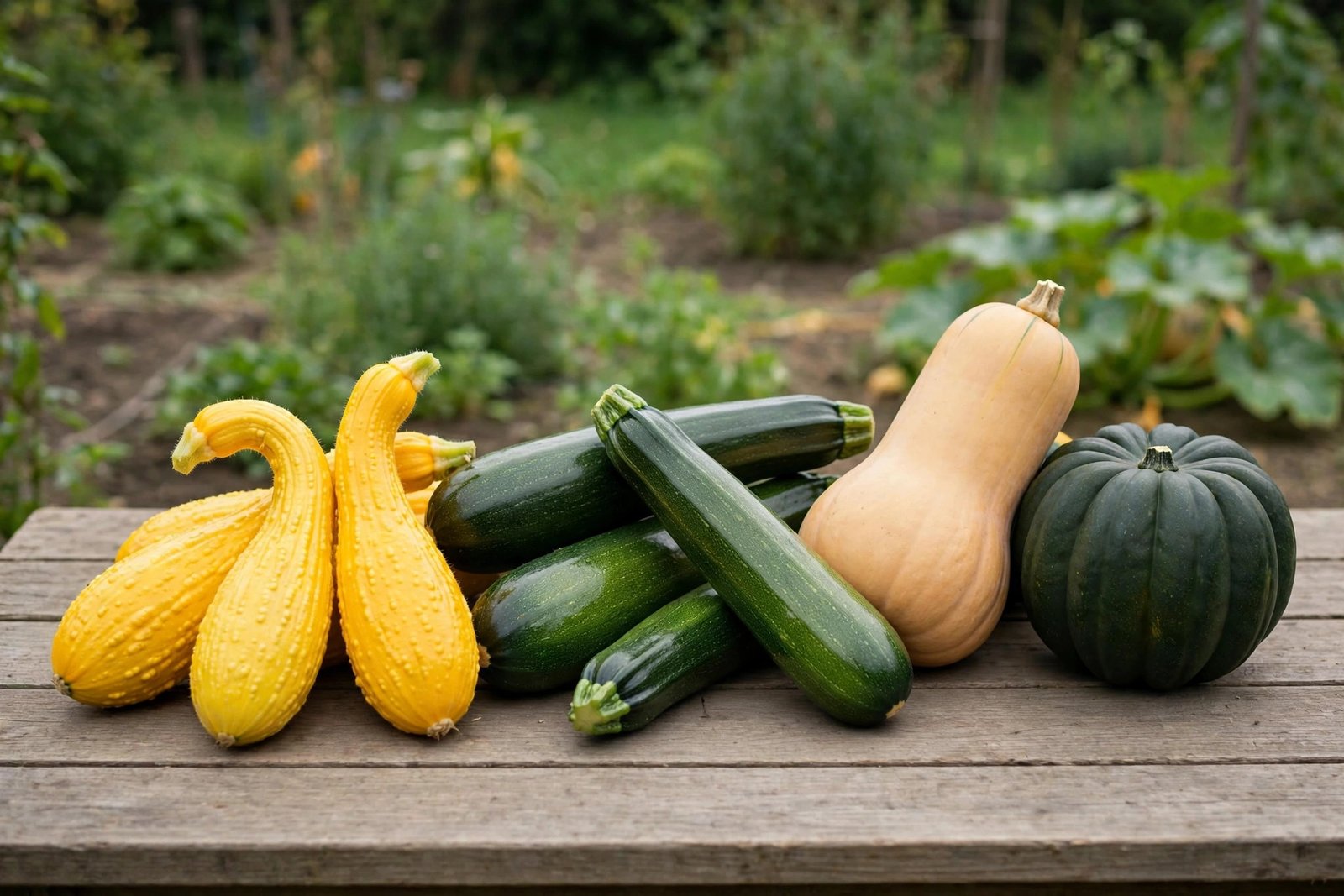
Summer squash is picked immature, while the skin is still tender and the seeds are barely formed. Early Prolific Straightneck is picked at 4 to 7 inches; Emerald Delight at 6 to 8 inches. Harvest frequently, because young fruit keeps the plant flowering, and fruit left to size up gets seedy and slows production. That is the summer rule, and it runs all season.
Winter squash is the reverse: left on the vine until the rind hardens, the stem dries, and the flesh sweetens in storage. Honeynut, a compact butternut type, stores up to 6 months. Waltham Butternut, a 1970 All-America Selections winner, stores for months, with 4 to 5 fruits per plant and solid stems that resist squash vine borers. The winter rule is patience followed by curing — pick too early and the squash never sweetens; pick with a damaged stem and it rots in storage. Handle winter squash gently even though the fruit feels indestructible, because bruising can spoil it.
Summer vs. Winter Squash, Side by Side
| Factor | Summer squash | Winter squash |
|---|---|---|
| Harvest | Young and tender, all season | Fully mature, rind hard, before frost |
| Pick size | 4–8 in., by variety | Full size, skin resists a fingernail |
| Storage | Days in the fridge, eaten fresh | Weeks to months, cured, cool and dry |
| Plant habit | Compact bush, mostly | Sprawling vine, mostly |
| Picking rhythm | Every 2–3 days, all summer | Once, at maturity, then cure |
| Failure mode | Left too long: seedy, plant stalls | Picked too early: never sweetens |
The Summer Anchor
Emerald Delight is the summer squash that shows why the summer rule works. Its compact, open habit makes the 6- to 8-inch fruit visible before it hides, and its resistance to powdery mildew and two mosaic viruses keeps the plant producing through the season. Pick it young, pick it often, and the plant answers with more fruit. Leave it, and the same plant that produced all summer goes quiet — the cost of breaking the summer rule, paid in lost harvest.
Emerald Delight Summer Squash Seeds
Compact, open plants with visible 6- to 8-inch fruit — the summer squash that rewards frequent picking.
The Winter Picks
Waltham Butternut is the winter squash standard: rich, sweet flavor for roasting, baking, or soup, 4 to 5 fruits per plant, solid stems that resist vine borers, and storage measured in months. It is the variety to grow when the goal is a pantry shelf, not a week of dinners. The trade-off is space and time: butternut vines sprawl, and the fruit needs the full season to mature and sweeten.
Waltham Butternut Winter Squash Seeds
4 to 5 fruits per plant, borer-resistant stems, and storage measured in months.
Honeynut is the winter squash for a small garden. A Cornell breeder and a farm-to-table chef spent 6 years crossing butternut with buttercup to create a 4- to 5-inch butternut with thin, edible skin that turns terracotta when ripe. Compact vines suit containers or trellises, plants resist powdery mildew and squash vine borers, and the fruit stores up to 6 months. If Waltham is too much vine for the space, Honeynut is the winter squash that still fits.
Honeynut Winter Squash Seeds
A 4- to 5-inch butternut on compact vines, storing up to 6 months — winter squash for small gardens.
Table King Acorn is the single-serving winter squash: the familiar ribbed acorn shape, sized for one or two people, with the same cure-and-store handling as butternut. It is the winter squash to grow when the household will not finish a full butternut before it spoils once cut. Vegetable Spaghetti, whose flesh falls into strands like spaghetti when cooked, is the other winter type worth a row — savory, and a direct substitute for pasta in the kitchen. Lakota is the heritage option for gardeners who want a winter squash with a story and a long storage life.
Table King Acorn Winter Squash Seeds
The classic ribbed acorn squash, sized for one or two people, cured and stored like any winter squash.
How to Cure and Store Winter Squash
Harvest at maturity, before the first hard frost. The rind should resist a fingernail, the stem should be dry and corky, and the skin color should match the ripe color — terracotta for Honeynut, tan for butternut. Cut with clippers, leaving a few inches of stem. A stem torn off at the fruit invites rot.
Cure in a warm, airy spot. Cure harvested winter squash for about 10 to 14 days in warm, dry air so the rind hardens and small cuts heal. This is the step that turns a good squash into a storable one, and skipping it is the most common storage mistake.
Store cool, dry, and uncrowded. Move cured squash to a cool, dry place — a basement shelf or cool pantry, not the fridge — with air space between fruit. Check monthly and use any fruit with soft spots first. Honeynut stores up to 6 months and Waltham for months under these conditions; a bruised or stemless fruit will not make it, however good the variety.
Do not store summer squash this way. Summer squash has no hard rind to cure and no storage life to gain. Eat it fresh, freeze it cooked, or give it away. The neighbor joke about zucchini exists because summer squash kept like winter squash was never a plan.
What to Do Next
Grow both kinds, on purpose, in different parts of the garden: a compact summer squash bush or two near the kitchen door for daily picking, and a winter squash vine — Waltham where space allows, Honeynut where it does not — given the full season to mature. Sow both after the last frost in warm soil, as our direct sow guide sets out. Pick the summer squash young and often, leave the winter squash alone until the rind hardens, and cure it before storing. That split — daily picking on one side, patience on the other — is the whole comparison, and the whole harvest.