Landscape & Leisure is reader-supported. When you buy through links on our site, including Botanical Interests seed links, we may earn a commission at no extra cost to you. Prices change, so click through to confirm current pricing.
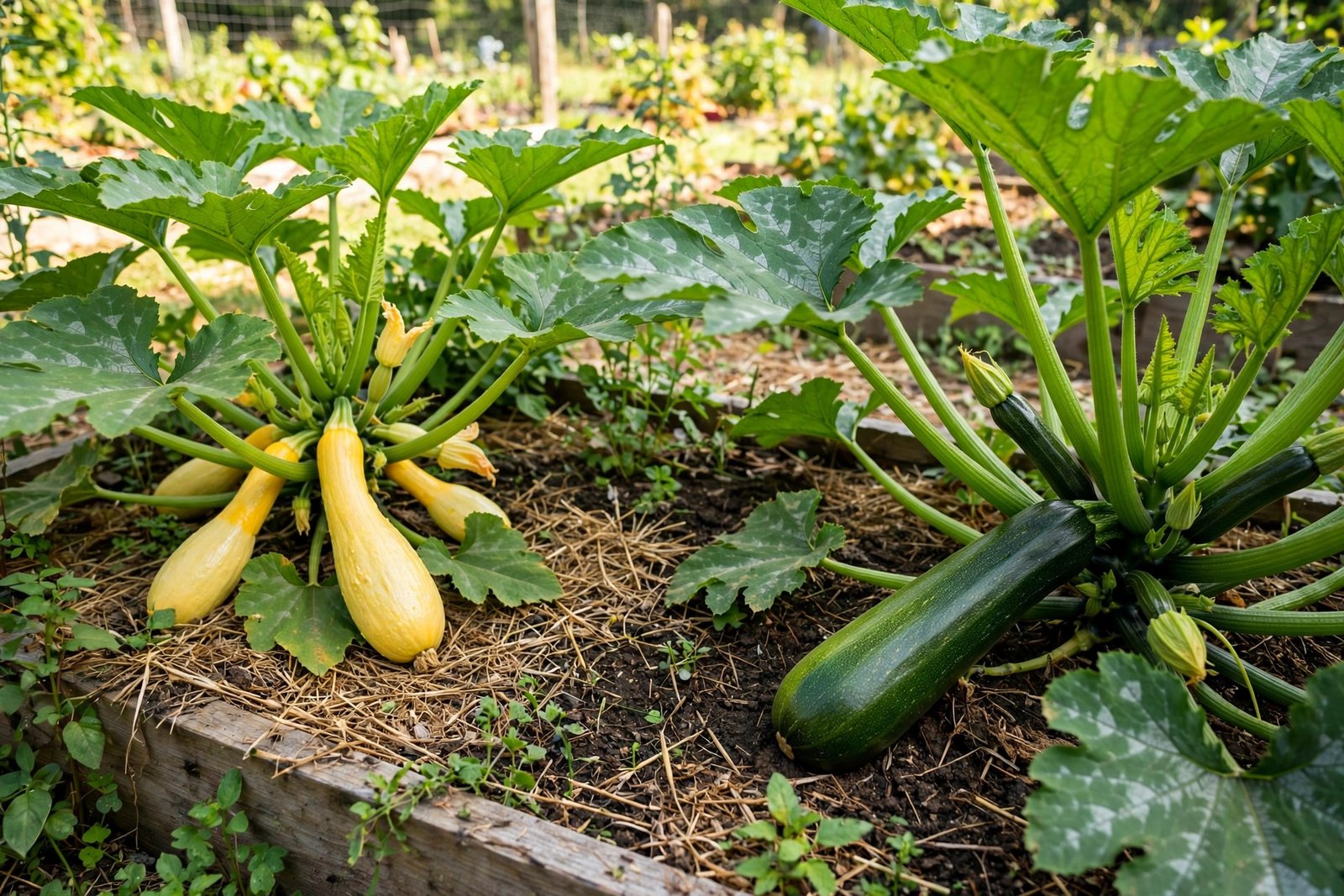
Summer squash has one job: produce more than a household can eat, starting about six weeks after sowing. The difference between a good squash summer and a squash avalanche is variety choice and picking rhythm, not effort. A compact, disease-resistant bush that shows its fruit beats a sprawling vine that hides baseball-bat zucchini under dinner-plate leaves. The seven varieties below are picked for steady, pickable harvests — with the one honest trade-off each variety carries.
For the sowing method behind these varieties, see our guide to starting squash by direct sowing or transplanting. For how summer squash differs from the winter squash that stores for months, see our summer squash vs. winter squash comparison.
How We Picked These Varieties
Three tests, same as every roundup. First, in stock and sold by Botanical Interests now. Second, a real distinction: a compact habit, a faster maturity, a fruit shape that suits a specific kitchen job. Third, the varieties below are rated well by gardeners. Fruit sizes, days to maturity, and disease resistance are from the Botanical Interests product pages. One checkable fact anchors the whole roundup: Early Prolific Straightneck, an All-America Selections winner, is ready to harvest in just 45 days. That is the speed summer squash is capable of, and the standard the other varieties are judged against.
Best Overall: Emerald Delight Summer Squash
Emerald Delight solves the classic zucchini problem: fruit that hides. It was developed with a more compact, open growing habit so the 6- to 8-inch fruit, with very dark green shiny skin and a creamy white interior, is easier to spot before it turns into a marrow. Plants resist powdery mildew, zucchini yellow mosaic virus, and watermelon mosaic virus 2 — the disease trio that ends many zucchini seasons early. The trade-off is size honesty: even a compact zucchini is a big plant, and one reviewer noted the leaves still overwhelm a small raised bed. Give it room, pick often, and it earns the top slot.
Pros: open habit makes fruit visible; strong virus and mildew resistance; classic dark-green zucchini flavor and texture.
Cons: still a large plant for a small raised bed; needs frequent picking to stay productive.
Emerald Delight Summer Squash Seeds
Compact, open plants with visible 6- to 8-inch fruit and resistance to mildew and two mosaic viruses.
Runner-Up: Triumph Summer Squash
Triumph is the zucchini for gardeners who dread picking through spiny leaves. It grows on compact bush-type vines with reduced spines and an open habit, so harvesting hurts less and goes faster. It is vigorous and adaptable across climates, with intermediate resistance to zucchini yellow mosaic virus, watermelon mosaic virus, papaya ringspot virus, and powdery mildew. The fruit is the classic green zucchini, dependable rather than distinctive — which is exactly what a runner-up should be.
Pros: reduced spines make picking easier; compact bush habit; broad disease resistance.
Cons: classic rather than distinctive fruit; a newer variety with fewer gardener reviews than the leaders.
Triumph Summer Squash Seeds
Compact bushes with reduced spines and the classic green zucchini, backed by broad virus resistance.
Best Yellow Squash: Early Prolific Straightneck
Early Prolific Straightneck is the fastest variety in this roundup and the one with the longest track record: an All-America Selections award winner, ready in 45 days, with thick, firm, fine-grained lemon-yellow fruit picked at 4 to 7 inches. It can be eaten raw, pickled, or cooked, including in sweet breads. The warning on its own product page is worth repeating: left on the vine, it may grow so big it would take two people to carry. Pick at 4 to 7 inches, or smaller for baby size, and it keeps producing. Pick late, and the plant slows down while the fruit gets seedy.
Pros: 45 days to harvest; versatile in the kitchen; proven award-winning variety.
Cons: fruits size up fast if picking lapses; needs the same frequent harvest as every summer squash.
Early Prolific Straightneck Summer Squash Seeds
Lemon-yellow fruit in 45 days — the fastest, most versatile summer squash in this roundup.
Best Grilling Zucchini: Max’s Gold Summer Squash
Max’s Gold earns its place at the grill, not just in the sauté pan. The long, straight, golden fruits have a small seed cavity, which means more firm, flavorful squash per fruit and less seedy middle to scoop out. The color is genuinely beautiful outside, and the firm texture holds up to grilling, fresh snacking, and salads. Harvest frequently so plants keep producing through the summer — the same rule as every summer squash, with a variety that rewards the effort.
Pros: firm texture and small seed cavity; golden fruit that grills well; steady production with frequent picking.
Cons: golden color fades with heavy cooking; no disease-resistance claims to lean on.
Max’s Gold Summer Squash Seeds
Long, straight, golden zucchini with a small seed cavity — firm enough for the grill.
Best for Stuffing: Dirani Summer Squash
Dirani is the squash for the stuffed-squash dish Koosa — Botanical Interests includes the recipe inside the packet. The plant’s compact habit and continuous production keep fruit coming all summer, and large leaves protect the fruit. Harvest when small for fresh use, or let fruit grow larger for stuffing and baking, using it in any recipe calling for zucchini. For a gardener who cooks stuffed squash, that flexibility — small fruit fresh, larger fruit stuffed — is the whole point of the variety.
Pros: bred for stuffing, with the recipe included; compact habit; continuous summer production.
Cons: larger fruit for stuffing still needs timely picking; less widely reviewed than the leaders.
Dirani Summer Squash Seeds
Compact plants with continuous production — small fruit fresh, larger fruit for stuffing and baking.
Best Classic Zucchini: Black Beauty Summer Squash
Black Beauty is the dark-green zucchini most gardeners picture when they hear the word. It is the long-standing standard in the Botanical Interests catalog — familiar, productive, and the variety a first-time squash grower is least likely to regret. It carries no novelty claim, and that is the point: when the goal is a reliable pile of zucchini for a household that cooks it three ways a week, the standard variety, picked young and often, is the right buy. Pair it with one of the disease-resistant picks above if mildew has ended your zucchini seasons early.
Pros: familiar, proven zucchini; productive bush plants; easy to find cooking uses for.
Cons: no standout disease-resistance or compact-habit claim in its favor; hides fruit like any vigorous zucchini.
Black Beauty Summer Squash Seeds
The familiar dark-green zucchini — the reliable standard for a first squash planting.
Best Pattypan: Scallop Blend Summer Squash
Pattypan squash is the shape that gets people to try squash who think they do not like squash. The scalloped, saucer-shaped fruit in this blend is harvested young, when it is tender and nutty, and the blend gives a mix of colors from one packet. At $2.69 it is also the lowest-priced pick in this roundup. The trade-off is the same as every pattypan: the harvest window is short, and fruit left to size up gets seedy and tough. Pick small, pick often, and pattypan earns its place.
Pros: distinctive scalloped shape; tender when picked young; lowest packet price in the roundup.
Cons: short harvest window; oversized fruit loses texture fast.
Scallop Blend Summer (Patty Pan) Squash Seeds
Scalloped pattypan squash in a color blend — tender and nutty when picked young.
The One We Would Skip for a First Planting
Gelber Englischer is a beautiful heirloom pattypan — vibrant yellow fruit with creamy yellow and light green stripes, from the Gatersleben seed bank in Germany. It is also the least forgiving pick here: Botanical Interests advises harvesting at 2 to 4 inches wide, and fruit left on the vine grows large, turns dark orange, and is best for decoration rather than eating. For a first planting, that narrow window is a risk. Grow Scallop Blend first, learn the pattypan picking rhythm, and add Gelber Englischer once the habit is set.
Side-by-Side Comparison
| Variety | Fruit | Habit | Best for |
|---|---|---|---|
| Emerald Delight | Dark green zucchini, 6–8 in. | Compact, open | Visible fruit, disease resistance |
| Triumph | Classic green zucchini | Compact bush, reduced spines | Easy, comfortable picking |
| Early Prolific Straightneck | Lemon yellow, 4–7 in. | Bush | Fastest harvest, 45 days |
| Max’s Gold | Golden zucchini, long and straight | Bush | Grilling, firm texture |
| Dirani | Zucchini-type, small to large | Compact | Stuffing and baking |
| Black Beauty | Dark green zucchini | Bush | Reliable standard planting |
| Scallop Blend | Scalloped pattypan mix | Bush | Pattypan shape, low price |
Final Thoughts
Plant one compact, disease-resistant zucchini — Emerald Delight or Triumph — plus Early Prolific Straightneck for the fast yellow harvest, and pick every two to three days. That trio covers the kitchen, the grill, and the early season, and the picking rhythm does more for yield than any extra variety would. The honest trade-off stands: the best zucchini here is still a big plant that hides its fruit. Choose the open-habit variety, give it room, and check under the leaves before the fruit checks itself. For the sowing details, our direct sow vs. transplant guide has the soil temperatures and timing, and our beginner vegetable seed roundup puts squash in the wider first-garden plan.