Spring’s first warm weekend has a familiar disappointment: cushions that went into storage clean-ish and came out smelling like a basement. The mold did not start in spring. It started on the day the cushions were put away damp, in a sealed bag, in a cold garage.
Cushions survive winter when three things happen in order: they go in clean, they go in dry, and the place they sleep can breathe. Miss any one of the three and the other two cannot save them.
Why Cushions Mold in Storage
Foam holds water longer than fabric suggests. A cushion that feels dry on the surface can still be damp in the middle after a rainy week, and a sealed container turns that dampness into a mold farm over a cold winter. Mildew needs only moisture, darkness, and time — and winter storage provides all three in abundance.
The fix is not a fancier bag. It is patience before the bag. Cushions need a full drying window, not a quick wipe, and they need storage that lets a little air move. A breathable bag or a ventilated box beats an airtight tote every time for foam cushions.
When to Put Them Away
Put cushions away before the first stretch of cold, wet weather settles in, not after it. In the Upper Midwest that usually means late October, while there are still dry, breezy days for the cleaning and drying steps below. Waiting until the first snow means storing cushions that have already sat through rain and frost.
If a cushion has already been rained on, do not rush it inside. Give it a dry, sunny, or at least breezy day standing on edge, where air reaches both faces. Foam dries from the outside in, and the middle is always last.
The Steps, in Order
- Brush off loose dirt. Shake each cushion outdoors and brush the seams, where pollen and grit collect.
- Wash the covers. Follow the care label; most outdoor cushion covers tolerate a gentle machine wash, and a mild soap-and-water scrub handles the rest. Rinse well — soap residue attracts dirt and holds moisture.
- Dry completely, on edge. Stand cushions on their sides in moving air until the foam feels dry all the way through, not just on the surface. Press the middle: if it feels cool or heavy, it is still wet. Give it another day.
- Store upright, loosely, in breathable storage. A ventilated deck box, a breathable storage bag, or a shed shelf with air around it all work. Do not vacuum-seal foam cushions for the winter — compressed foam recovers slowly, and a sealed bag traps any remaining moisture.
- Keep them off concrete. A pallet, shelf, or even a folded tarp under the storage keeps ground moisture from wicking up through the winter.
What Not to Do
Do not store cushions in a plastic garbage bag tied shut. Do not stack heavy items on top of them all winter — foam takes a set under sustained weight. And do not bring moldy cushions straight back to the patio in spring and hope the sun fixes them; brush mold outdoors, wash with mild soap, dry fully, and only then put them back on the furniture.
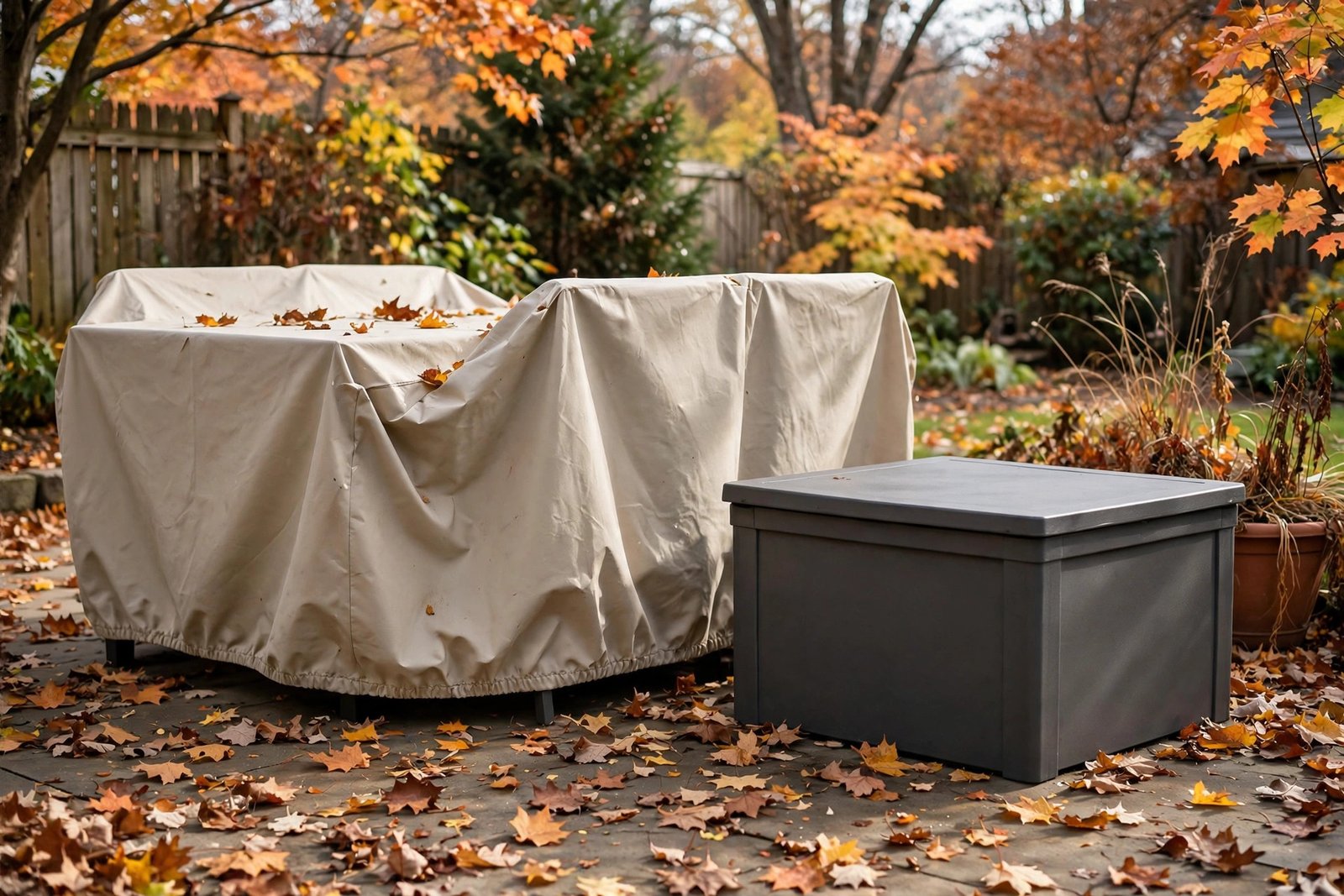
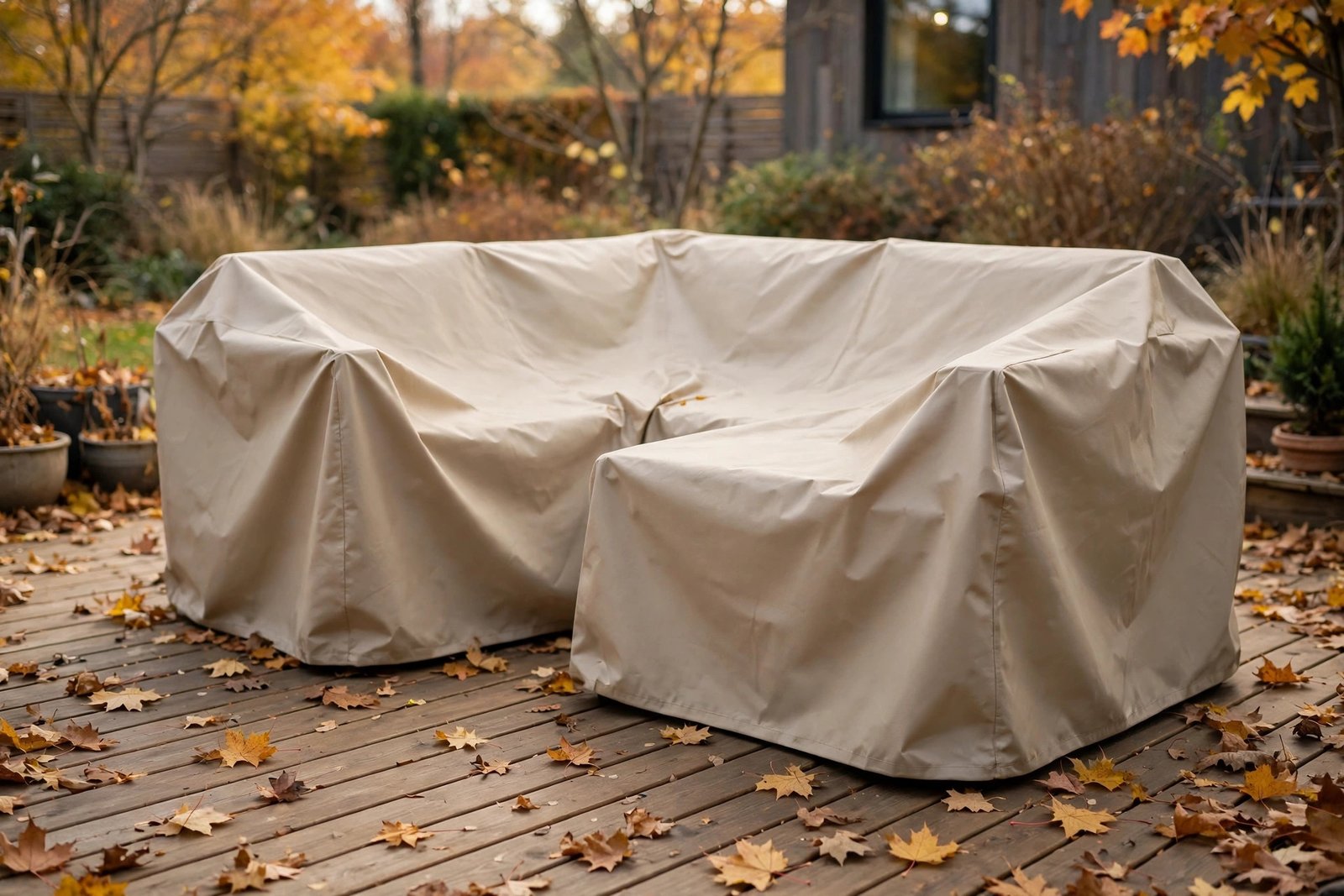
If the frames are staying outside under covers, the best winter patio furniture covers guide picks covers that breathe, so the frames do not trade cushion mold for frame mildew. And for the whole-set decision — cover, deck box, or indoors — see cover vs deck box vs indoor storage.
What to Watch Next
Check the cushions once mid-winter, on a dry day. A quick sniff and a press of the middle tells you whether the storage is working. If anything smells musty, pull it out, dry it, and move it to better air before the smell becomes a stain. Come spring, cushions stored clean, dry, and breathing come back the way they went in — which is the whole point of putting them away at all.