Most homeowners winterize their patio furniture with whichever option is closest: the cover still in the box, the deck box already on the patio, or the garage if there is room. All three work. They do not work equally well, and the best one depends on what you are storing.
Here is the verdict up front. Indoors wins outright for anything soft. A deck box wins for convenience on cushions and small items. A cover wins for frames that are too big to move. The mistake is using one option for everything.
Covers: Best for Frames That Stay Put
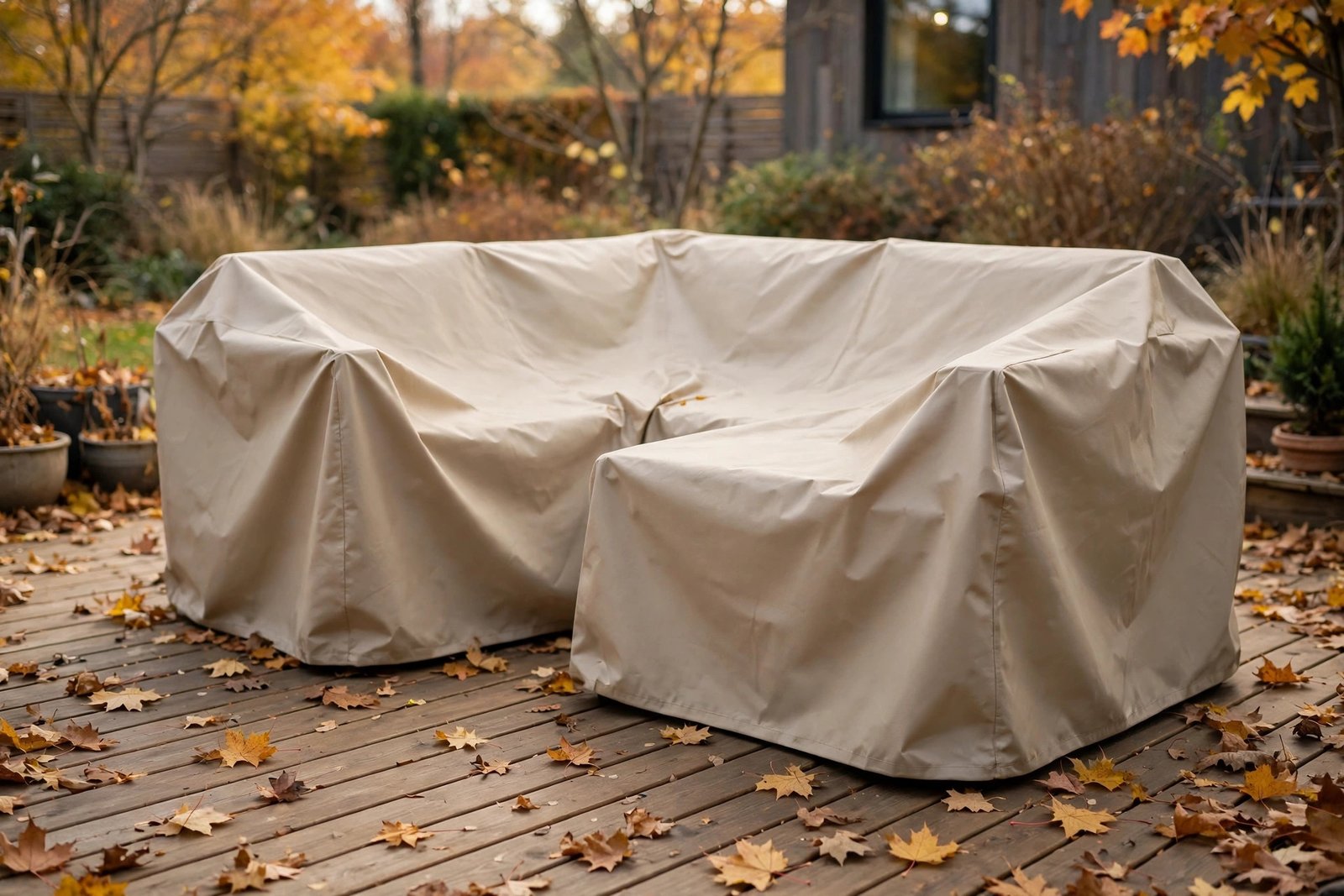
A good cover — vented, taped seams, strapped down — protects a table, chairs, or sectional that would take two people and a truck to move. The best winter covers shed snow, breathe enough to limit condensation, and stay on in wind. The cost is low and the effort is an afternoon.
Where covers lose: cushions left underneath them. A cover over a cushion traps the moisture the cushion already holds, and by spring the cushion smells like the inside of the cover. Covers protect frames. They do not protect foam. Take the cushions off first — how to store patio cushions for winter covers the routine — and the cover’s job gets much easier.
Deck Boxes: Best for Cushions and Small Gear
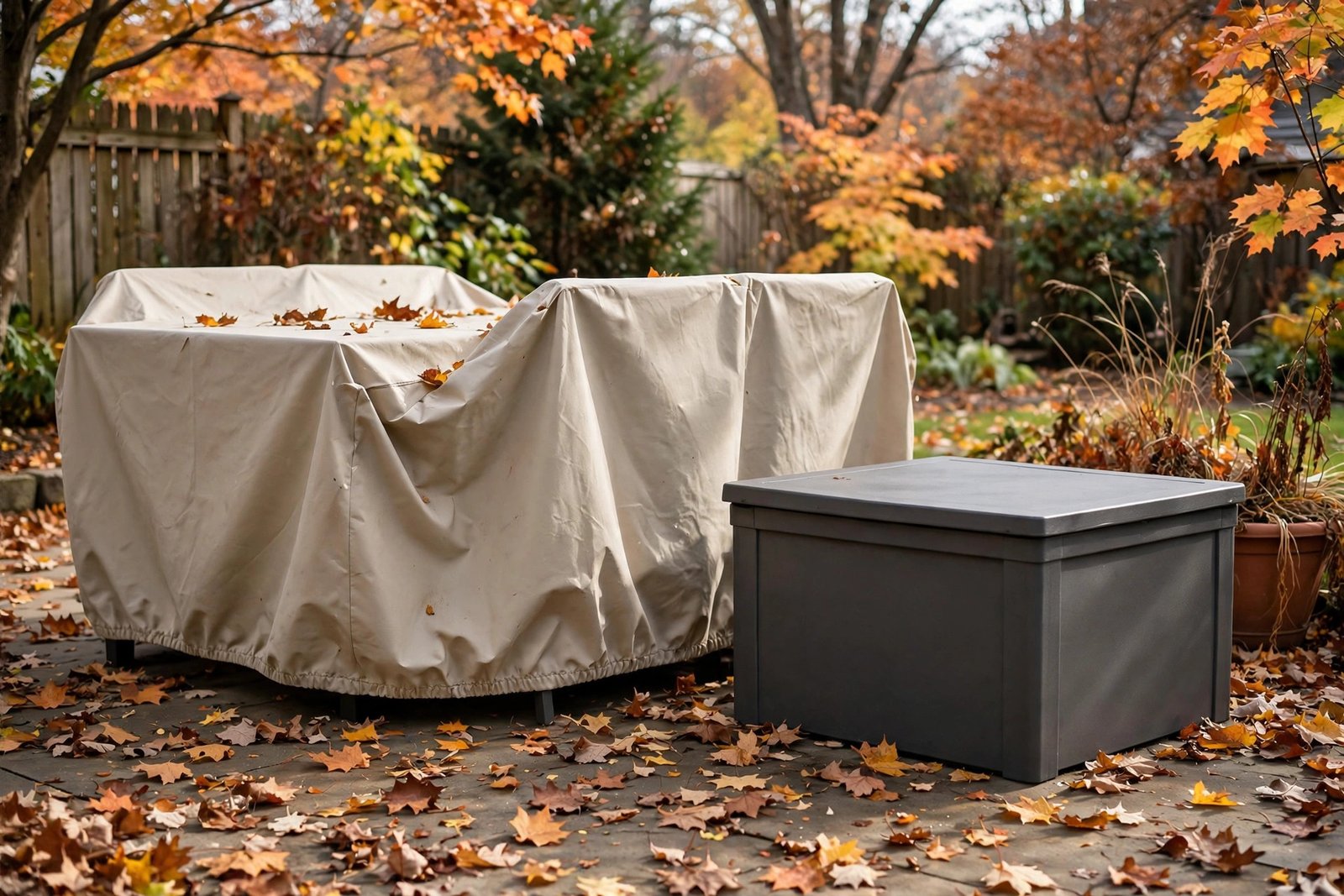
A deck box is the handiest storage on the patio: lift the lid, drop the cushions in, done. For chair cushions, throw pillows, and small accessories, a weather-resistant resin box with a lid that seals is genuinely good protection, and it stays useful all summer for the same job. Our deck storage box guide covers the best ones and the sizing math.
Where deck boxes lose: size and ventilation. A full sofa’s cushions will not fit in most boxes, and a box packed tight with damp cushions and closed for five months is a mold box, not a storage box. Deck boxes work when the cushions going in are clean, dry, and not packed solid — and when the box itself has some airflow rather than a perfect seal.
Indoors: Best Protection, Highest Hassle
A garage, basement, or shed beats both outdoor options for anything soft, valuable, or moisture-sensitive. Cushions stay clean, frames avoid freeze-thaw cycles, and nothing blows away in a January storm. If the furniture is wicker, teak, or anything you would be upset to replace, indoors is the honest answer.
Where indoors loses: space and effort. A sectional does not fit through most garage doors without disassembly, and a garage already holding a car, a mower, and a shed’s worth of tools may not have a wall to spare. Indoors is the best protection and the least convenient — which is why most people use it for cushions and covers for frames, and that split is exactly right.
At a Glance
| Option | Best for | Protection | Hassle |
|---|---|---|---|
| Cover | Frames that stay outside | Good for frames; poor for cushions left underneath | Low |
| Deck box | Cushions and small items | Good if dry and not packed tight | Low |
| Indoors | Cushions, wicker, and valuables | Best overall | High for large pieces |
The Verdict
Split the job. Frames stay outside under a vented, strapped cover. Cushions go indoors or into a dry, ventilated deck box. Full sets with room indoors go indoors entirely. That split gives you the best protection where it matters and the least work where it does not — and it is the plan most people actually stick with past the first winter.
One thing undoes all three options: putting things away wet. Clean and dry everything before it goes under a cover, into a box, or into the garage, and check it once mid-winter. Protection is mostly a drying problem with a storage label on it.