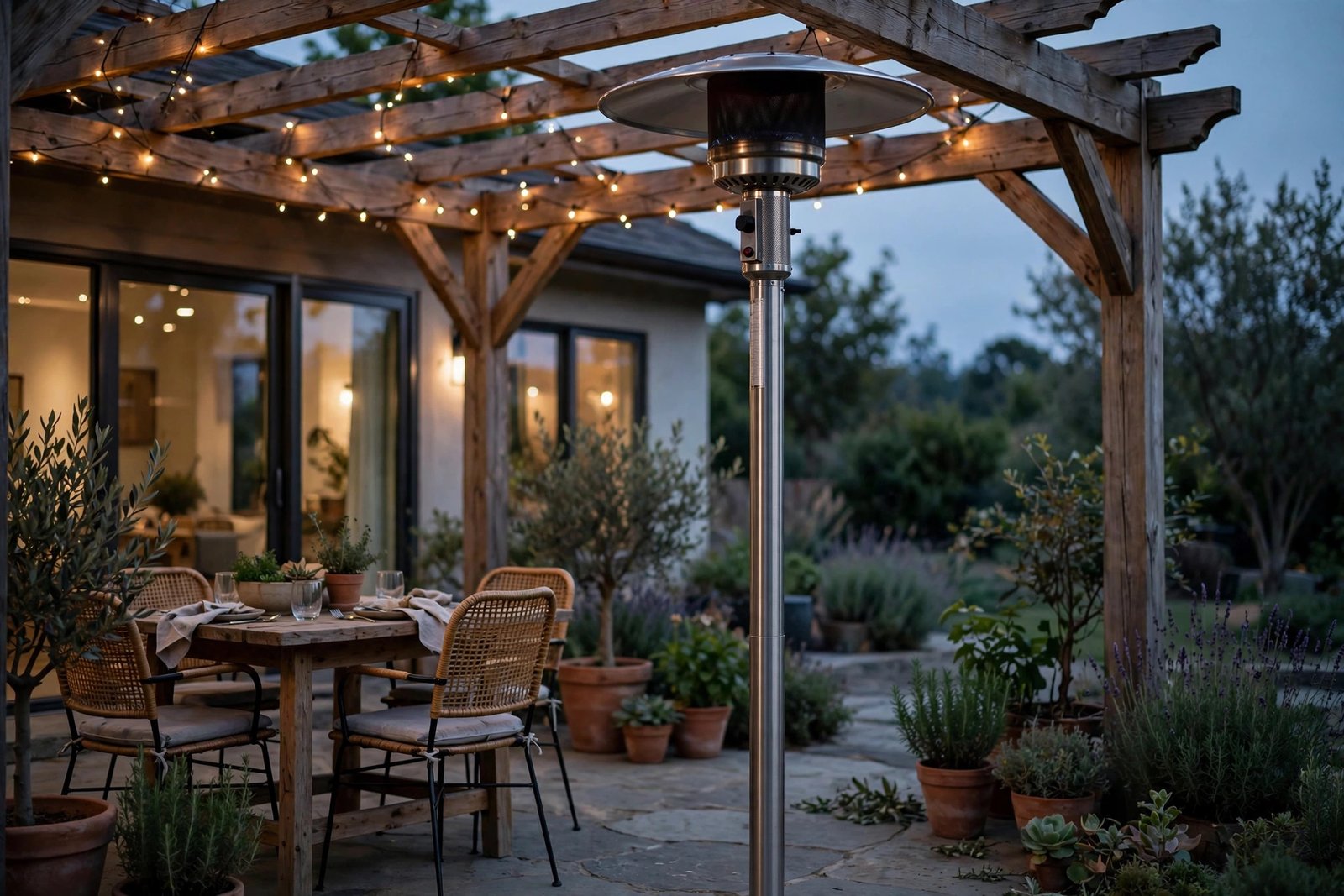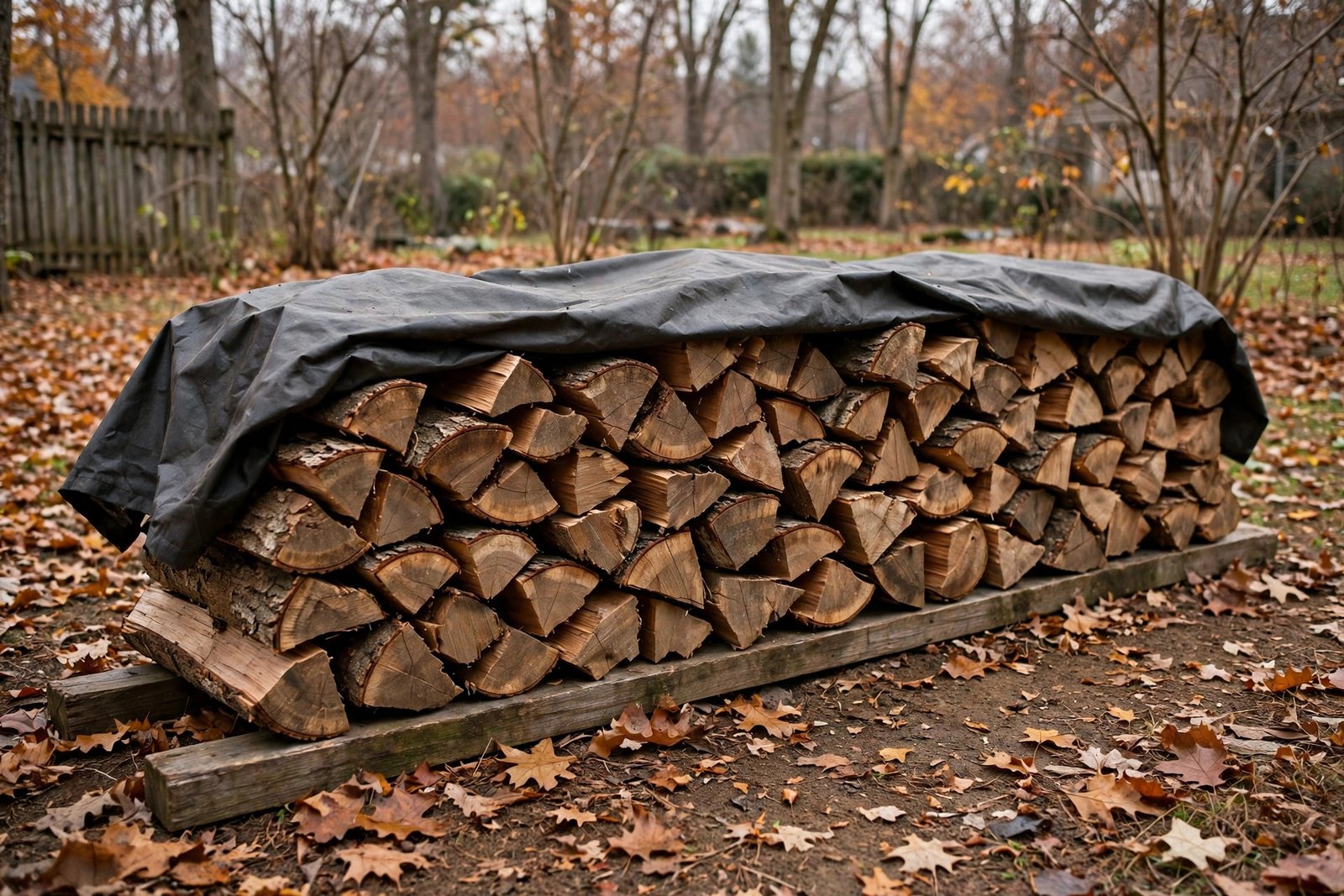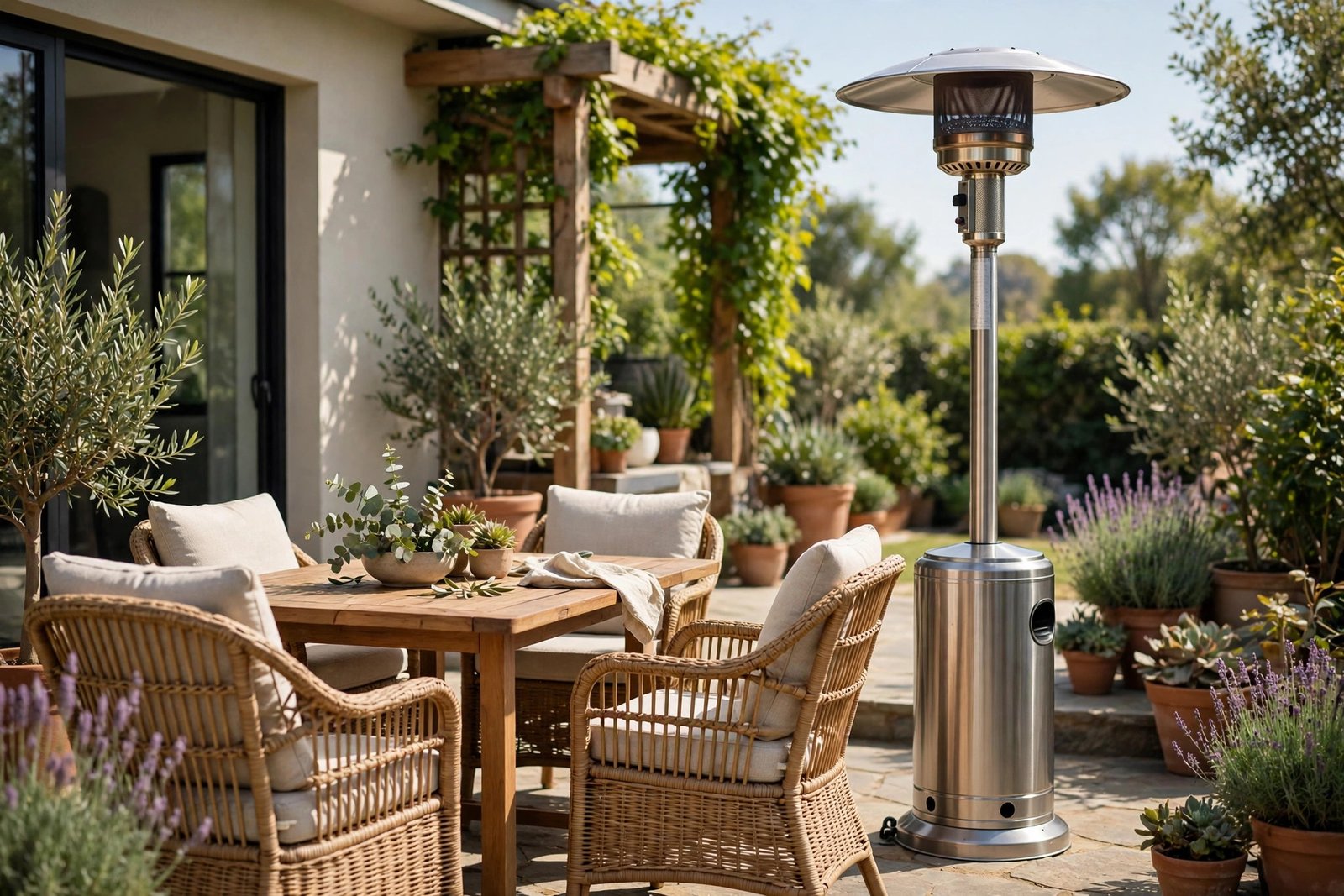
When the evenings turn cold enough that the heater stays off, it is time to put it away properly. Winter storage is a short job, and most of it is cleaning and covering. One part of it is a safety rule with no exceptions, and it is the part people get wrong most often.
The rule first, because everything else hangs on it: the heater and the fire pit can go in the garage. The propane tank cannot. Tanks stay outside, upright, with the valve closed, all winter. The rest of this guide is the routine around that rule.
When to put it away
Put heaters and fire pits away after your last real use of the season, before the first stretch of freezing weather makes the job miserable. For most northern yards that means late fall, once evening gatherings have moved indoors for good. Do not wait for the first snow to remind you — cold fingers, a wet cover, and a burner full of leaves are a worse combination than a dry afternoon in November.
Whatever you store, start cold. Never cover, move, or store a heater or fire pit that is still warm from use, and never clean a burner while it is hot. Let everything cool completely, ideally overnight, before you touch it.
The propane tank rule
Propane vapor is heavier than air. If a valve leaks in an enclosed space, the gas pools near the floor and waits for an ignition source — a water heater pilot light, a furnace igniter, a light switch spark. That is why fire codes require cylinders to be stored outdoors with ventilation, and why a garage, basement, or shed is not a tank’s winter home, even a detached one with a window cracked.
Here is the routine for the tank:
- Close the valve fully by turning it clockwise until it stops, then disconnect the tank from the heater or fire pit.
- Put the plastic safety cap on the valve outlet. It keeps dirt out and protects the valve from knocks.
- Stand the tank upright on a flat, stable surface — concrete or gravel, not a wood deck or bare soil that shifts. The pressure relief valve only works correctly when the tank is upright.
- Keep it outside and ventilated, away from doors, windows, air intakes, and ignition sources. Clear snow and ice from around the valve so the tank stays accessible and inspectable.
- Keep it out of extreme heat. Tanks are built to vent if pressure climbs, and manuals warn against letting them exceed 120 degrees Fahrenheit. Winter sun on a dark tank is rarely the problem; a spot next to a dryer vent or a furnace exhaust is.
Cold itself is not the enemy. Propane does not freeze in any winter you will see, and a partially full tank stores just fine — propane does not go stale the way gasoline does. What cold does do is lower vapor pressure, so a nearly empty tank may run weakly on the first warm night in spring. That is a performance quirk, not a storage failure, and it is fixed by a refill, not by warming the tank with a flame or a space heater, which you should never do.
Storing a freestanding patio heater
With the tank disconnected and outside, the heater itself is straightforward. Wipe down the reflector and pole, brush debris out of the burner area, and check the hose and regulator for cracks or wear while you can still see them in daylight. A hose that spent the summer in the sun deserves a real look, not a glance.
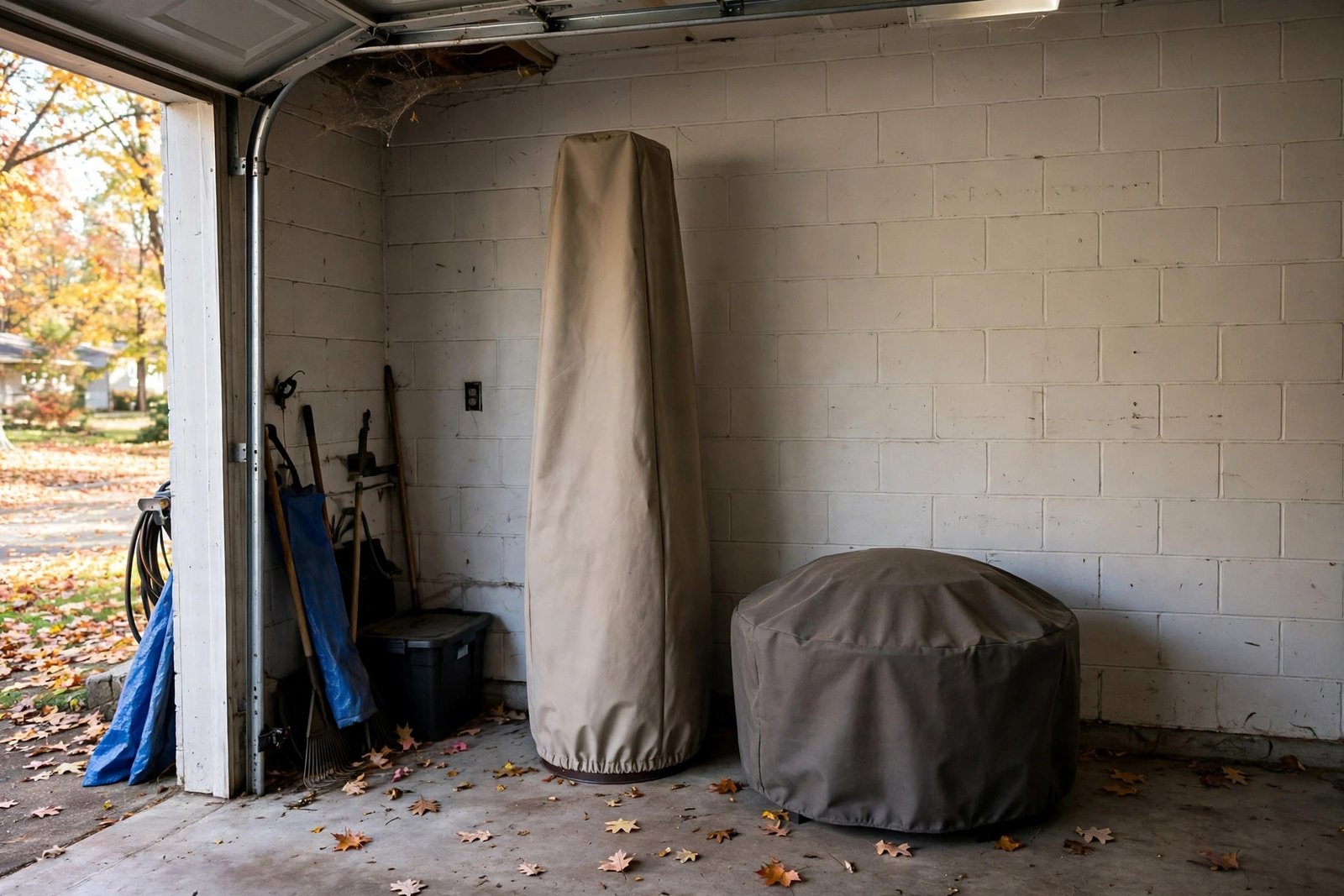
Store the heater upright, covered, in a dry spot — a garage corner or a shed works fine for the heater itself, since the fuel is no longer attached. If you have the manufacturer’s cover, use it; if not, any breathable cover that keeps dust and meltwater off will do. Avoid wrapping a heater tightly in plastic sheeting, which traps moisture against the metal all winter. If you are deciding between heater types for next season, our electric vs. propane comparison covers how the two families differ in running cost and upkeep.
Storing a fire pit
A wood-burning fire pit needs ash out before anything else. Cold ash can hide embers longer than you expect, so scoop it into a metal container, wet it down, and wait a day before disposing of it. Scrub the bowl, clear the drain holes if it has them, and let it dry fully before covering — a cover over a damp bowl is a rust farm by spring.
A propane fire pit table follows the same tank rule as a heater: disconnect the tank, cap it, and store it outside and upright. Clean the burner of leaves and debris, cover the burner pan so water and ice do not sit in it, and cover the whole table. If your table has a lid, close it over the covered burner for a second layer of protection. Glass fire beads or lava rock can stay in place as long as they are dry when covered.
For either type, the cover matters more than people think. A fitted cover keeps meltwater out of the burner and the bowl; a loose tarp that pools water in the middle does the opposite. If your cover sags, prop it or tighten it so water runs off instead of collecting.
Electric heaters are the exception
An electric patio heater has no tank and no combustion, so its winter routine is the simplest of all: unplug it, wipe it down, and store it indoors if you like. Wall- and ceiling-mounted units can usually stay mounted all winter as long as the power is off and the unit is rated for outdoor exposure, which it should be if it was installed correctly. Check the manual for your model’s storage guidance before you assume, and coil the cord loosely rather than wrapping it tight around the unit.
The spring restart checklist
When warm evenings return, do not just reconnect and light. Run through the short version of this guide in reverse: inspect the hose and regulator for cracks, check the tank valve and cap, clear the burner of nests and debris, and test for leaks at every connection with soapy water before the first real use. Bubbles mean a leak, and a leaking connection gets fixed or replaced, not lit.
Put the cover back on between uses in spring, too — a heater that survived winter storage deserves better than a month of pollen, rain, and bird activity before its first night back. For more on using heaters safely under a roof, see our guide to patio heaters under covered patios and pergolas, and for the rest of the patio, our cushion winter storage guide covers the soft furnishings.