Landscape & Leisure is reader-supported. When you buy through links on our site, including Botanical Interests seed links, we may earn a commission at no extra cost to you. Prices change, so click through to confirm current pricing.
Potatoes are one of the first things you can plant, and that is exactly why the timing trips people up. The soil looks ready before it is warm, the seed potatoes are sitting in the garden center in March, and the temptation is to get them in the ground on the first nice weekend. Hold off until the soil has actually warmed. In the Twin Cities area that means early April for most years, earlier in the south of the state, and into May farther north.
Once the soil is warm, the rest is a rhythm: plant, feed, hill, water, and wait for the tops to tell you they are done. Here is that rhythm, step by step, with the numbers that make it work.
Why timing comes first
Potatoes grow from seed tubers, not from packets, and cold, wet soil is where tuber pieces rot instead of sprouting. Warm soil gets them growing fast, and fast growth is what keeps disease from getting a foothold. The same logic runs the whole season: every job below has a moment when it helps and a moment when it is too late, and the difference is usually a week or two.
Potatoes also eat more than most vegetables. They want well-drained, sandy soil, slightly acidic at pH 6 to 6.5, and they want more fertilizer than the row next to them. A soil test before planting is worth the wait, and compost or manure worked in beforehand covers the micronutrients a bag of fertilizer misses.
| Step | When | How |
|---|---|---|
| Cut seed pieces | A few days before planting | 1¼-inch chunks, 1 to 3 eyes each, healed at 60 to 70°F |
| Plant | As soon as soil warms | 10 to 12 inches apart, 3 to 5 inches deep, rows 30 to 36 inches apart |
| Side-dress | 4 weeks after planting, again 2 weeks later | 0.15 pounds actual nitrogen per 50 feet of row |
| Start hilling | Stems about a foot tall | Mound soil, once or twice more, 6 to 8 inches total |
| New potatoes | 7 to 8 weeks after planting | Dig beside the plant, or turn it over |
| Mature harvest | After tops dry | Fork wide on a dry, warm day; sort out damaged tubers |
Step 1: Cut the seed pieces, then let them heal
Start with certified seed tubers. Small whole tubers, one to one and a quarter inches across, are ideal because they need no cutting at all. Larger ones get cut into chunks about one and a quarter inches across, and every piece must carry at least one eye, the little indentation that becomes the shoot. Two or three eyes per piece is better.
Use a clean knife on a clean board, then wait. Lay the cut pieces on a tray at room temperature, 60 to 70 degrees, for a few days until each cut surface dries and forms a tough protective layer. Planting freshly cut pieces skips that healing and invites rot. Do not rub off any sprouts that form while you wait.
What not to plant. Grocery-store potatoes may be treated to stay dormant, so they grow slowly, and they can carry disease that lingers in the soil. Your own saved tubers carry the same risk. Start clean, every year.
Step 2: Plant when the soil is warm
Set pieces cut side down, 10 to 12 inches apart and three to five inches deep, in rows 30 to 36 inches apart. Closer spacing gives you more, smaller tubers; wider spacing gives you fewer, larger ones. Cover with four inches of soil or compost.
Water deeply, not often. About an inch of rain a week is the target, soaked in once or twice a week rather than sprinkled daily. An inch of water wets sandy soil to about ten inches and heavy clay to about six, so check with a trowel: if only the top inch or two is wet, keep the water running. Dry soil during early growth is what makes knobby, hollow tubers later.
Step 3: Feed at four weeks, and again two weeks later
Side-dress about four weeks after planting. As you hill, work in 0.15 pounds of actual nitrogen per 50 feet of row, then repeat the hilling and feeding two weeks later. Skip any fertilizer that contains a weed killer: the kind sold as weed-and-feed can kill your potatoes along with the weeds.
Weed shallow. A hoe run just deep enough to cut weeds off below the surface keeps the patch clean without slicing the shallow roots and stolons that are forming your crop.
Step 4: Hill when the stems reach a foot
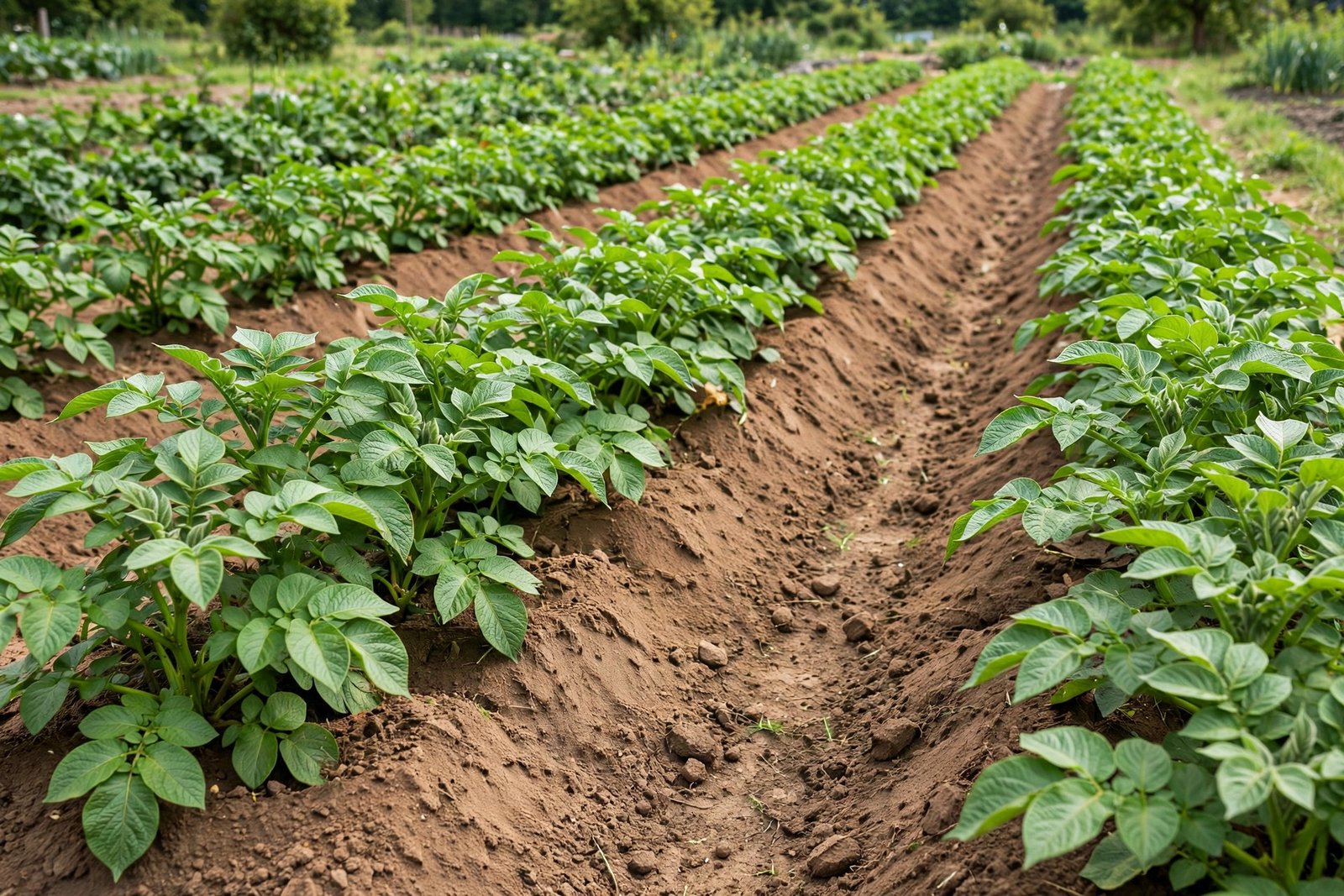
Start hilling when stems are about a foot tall, then hill once or twice more during the season. By the end you will have mounded six to eight inches of soil in total along the plants. The reason is simple and worth understanding: tubers form on thin stems called stolons that grow off the buried main stem, so more buried stem means more places for tubers to form. Hilling also keeps shallow tubers out of the light, where they turn green and bitter.
Do not hill late. A third hilling in late July, after the plants have mostly finished, does little for the crop. The hilling that matters happens while the plants are actively growing and flowering. If you planted in a shallow trench, you can push the plant down into the trench instead of mounding up; the effect is the same.
The Clancy path: growing potatoes from seed
Clancy breaks the tuber rule, and its calendar runs earlier than the rest of the patch. Start the pelleted seed indoors four to six weeks before your average last frost, at 60 to 70 degrees for germination, which takes seven to fourteen days. In mild climates you can also start seed in midsummer for a fall crop.
Set seedlings out 12 inches apart in rows three feet apart, and hill the same way as tuber-grown plants, a few times during the season, until you have mounded about 12 inches of soil around them. The crop matures 85 to 110 days from transplanting, and one packet gives you about nine plants. Because the seed is sterile, it sidesteps the tuber diseases that saved seed can carry.
Clancy Potato Seeds
True potato seed for small creamy-skinned creamers; start indoors 4 to 6 weeks before last frost, 85 to 110 days to maturity.
The grow-bag method, for patios and poor soil
If your soil is heavy clay or your garden is a patio, skip the trench entirely. Plant in a grow bag, add soil or compost as the plants grow, and tip the bag over at harvest instead of digging. The lined bags below hold moisture through hot, dry stretches, which is exactly when container potatoes suffer most, and the bottom quarter stays unlined so the bag still drains.
Epic Grow Bags – Lined
Lined bags that keep container soil moist while still draining; add soil as plants grow, then tip to harvest.
Bottom heat for the indoor start
A cool seed-starting shelf is the usual reason Clancy seed sits instead of sprouting. The seed wants 60 to 70 degrees, and a mat under the tray raises soil temperature by 10 to 20 degrees, which is often the whole gap between a basement in February and germination. Set the tray on the mat, plug it in, and check moisture daily, since warm soil dries faster.
Epic Seed Starting Heat Mat
Lifts soil temperature 10 to 20 degrees for the 60 to 70 degree germination Clancy seed wants; fits a standard 1020 tray.
Step 5: Harvest on a dry, warm day
New potatoes come first. About seven to eight weeks after planting, dig down about a foot beside a plant and turn it over to pick the tender tubers, or take a few and leave the plant to keep producing. Eat new potatoes soon; their skins are too soft for storage.
Mature tubers wait for the tops. Harvest after the plants have dried, or when tubers have reached full size. Dig with a spading fork, wide around the hill, on a dry, warm day, and take care not to pierce tubers with the tines. Any potato you nick goes in the eat-first pile, never into storage, because damaged tubers spoil and take their neighbors with them.
Choose your varieties first with the best potato varieties for home gardens, and once the crop is in, cure and store it properly so it lasts into winter. If your rotation also includes beets and carrots, the carrot, beet, and radish roundup covers the other root crops in the same bed. And one last timing note: do not plant potatoes where tomatoes, potatoes, peppers, eggplants, or tomatillos grew in the past three or four years. The diseases that live in that soil do not care that you rotated everything else.