Landscape & Leisure is reader-supported. When you buy through links on our site, including Botanical Interests seed links, we may earn a commission at no extra cost to you. Prices change, so click through to confirm current pricing.
You dig a beautiful crop, you haul it inside feeling like a farmer, and then a month later you open the bin and find sprouts, soft spots, and a few potatoes gone green. The harvest was fine. The storage failed. Nearly every potato problem after digging comes down to one of three things: light, moisture, or damage, and each one has a fix you can apply before the next bin goes in.
Start with curing, because it decides everything that follows. Then learn to read the symptoms, so a green potato, a scabby potato, or a sprouting potato tells you what to change instead of just what to throw away.
First, cure them: dry, airy, and patient
Dig on a dry, warm day and sort as you go. Use a spading fork, digging wide around the hill so the tines do not pierce tubers. Any potato you nick goes in the eat-first pile. Damaged tubers spoil in storage, and one rotting potato can take the bin with it.
Do not wash them. Gently brush off dried soil, but leave the skins alone. If the skins rub off easily under your thumb, the potatoes are not ready for storage yet. Give them a few days in a dry, well-ventilated spot first, the way Botanical Interests describes curing its Clancy crop, and then keep them at 60 to 65 degrees with good air for ten days or more until the skins set and small wounds heal. That is the University of Minnesota’s bar for a full cure, and it is what makes the difference between potatoes that keep for months and potatoes that shrivel by December.
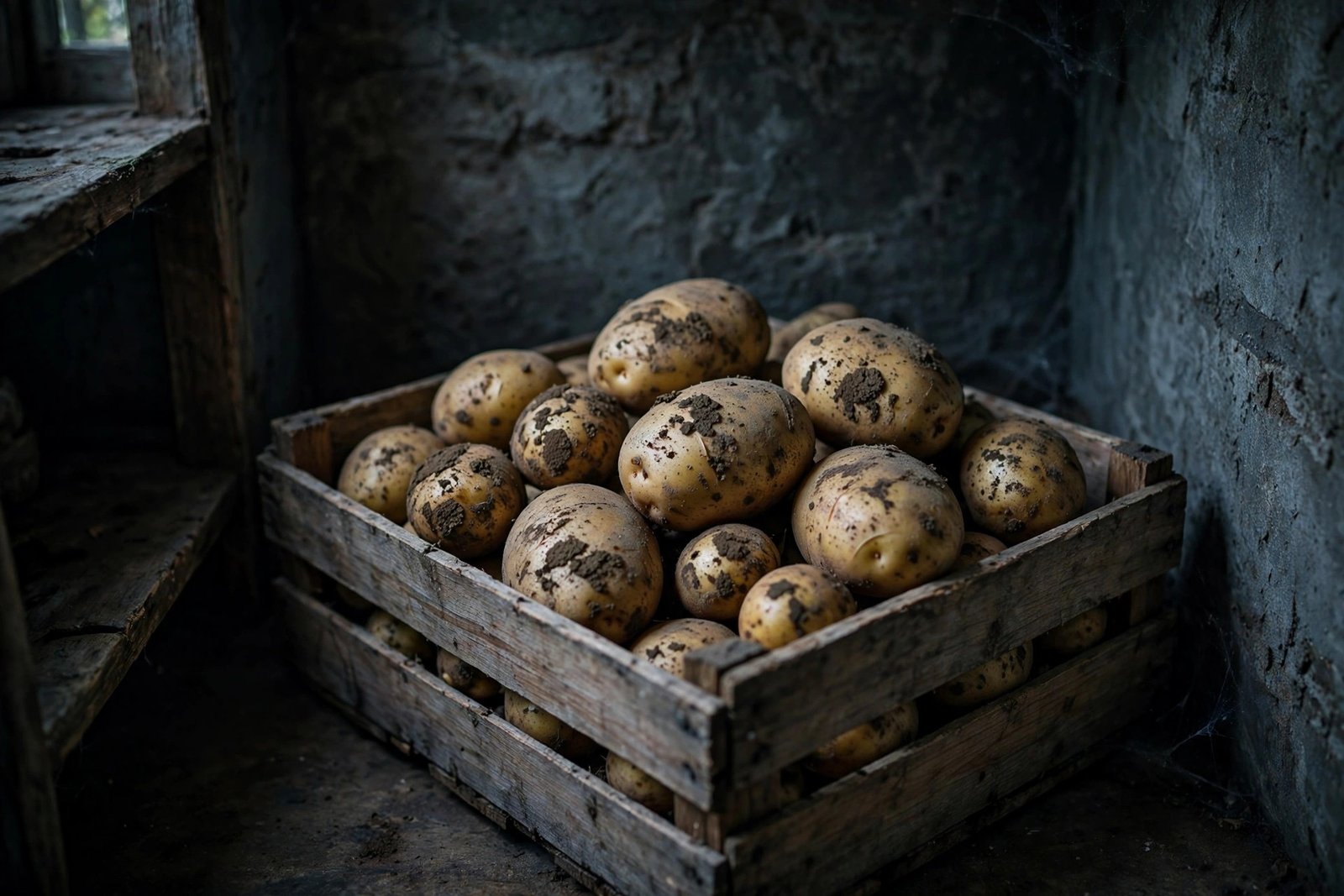
Then store them dark, cold, and moist. The target is 32 to 40 degrees with about 95 percent relative humidity, which for most homes means a cold cellar, a garage that stays above freezing, or the refrigerator. Potatoes meant for frying are the exception: hold those at 40 to 50 degrees instead, since colder storage sweetens them and darkens them in the fryer. Check the bin as the weeks pass, pull out anything soft or shriveled, and eat those first.
What is wrong with my potatoes? The diagnosis table
| Symptom | Likely cause | Fix |
|---|---|---|
| Green skin | Tubers exposed to light | Cut green areas away; hill better next year; do not eat extensively green potatoes |
| Hollow center | Uneven watering after flowering | Water evenly, about an inch a week; safe to eat |
| Rough, corky spots | Potato scab, a bacterial disease | Peel and eat; rotate beds; keep soil evenly moist |
| Spots on leaves, dying tops | Early or late blight | Remove affected tops; rotate out of the family for 3 to 4 years |
| Soft, rotting tubers | Harvest damage or wet storage | Eat damaged tubers first; never store them; cure fully |
| Sprouting in storage | Warm or long storage | Remove sprouts before cooking; store colder and darker |
| Small, knobby tubers | Dry soil during early growth | Water deeply once or twice a week next season |
Green skin: the light problem
What you see: green patches on the skin, sometimes spreading under it. What caused it: tubers exposed to light, either in the ground because hilling was thin, or in storage because the bin sat near a window. Light triggers chlorophyll and other substances, including solanine, which is toxic in large amounts.
What to do: cut away green areas before cooking, and do not eat potatoes with extensive green areas. Next season, hill more thoroughly, six to eight inches of soil in total, and keep the storage bin in the dark. This is the most preventable problem in the whole table.
Hollow heart: the watering problem
What you see: an irregular hole in the center of an otherwise fine potato, found when you cut it open. What caused it: alternating periods of fast and slow growth, usually uneven watering right after flowering, when watering is easy to forget. Poor nutrition can contribute.
What to do: nothing, for the potato in your hand. Hollow heart does not affect flavor or safety, so cook it. For next year, water evenly through the season, about an inch a week, soaked in deeply, and fertilize according to a soil test. Even watering is the whole prevention.
Scab: ugly, but edible
What you see: dark, rough, corky spots on the skin. What caused it: potato scab, a bacterial disease. It does not rot the tuber, and it does not change the taste. It just looks bad, which is why it causes more worry than it deserves.
What to do: peel and eat. For next year, rotate the bed away from the nightshade family for three or four years. Choosing a variety with scab resistance helps if scab has been a repeat problem in your garden.
Blight and wilt: the leaf problems that reach the tubers
What you see: spots on the leaves, yellowing, wilting tops, sometimes tubers that rot from the field. Early blight is a common fungal disease that spots leaves; late blight can hit leaves and tubers both, though it does not appear every year everywhere. Verticillium wilt yellows and wilts plants.
What to do: remove affected tops, do not compost diseased material where it can return to the garden, and rotate out of potatoes, tomatoes, peppers, eggplants, and tomatillos for three or four years. If blight has hit your garden before, a resistant or tolerant variety is the single best prevention next season: resistant means it will not become diseased, tolerant means it gets sick more slowly and less seriously.
Sprouting and shriveling: the storage drift
What you see: sprouts pushing out of stored potatoes, skins going soft or wrinkled. What caused it: storage that is too warm, too dry, or simply too long. The longer potatoes sit, the more likely they are to sprout, and sprouts themselves are toxic, so they always come off before cooking.
What to do: remove sprouts before preparing, move the bin colder and darker if you can, and eat the soft or shriveled ones first. The deeper fix is at harvest: fully cured potatoes with set skins, stored at 32 to 40 degrees, hold for months. Potatoes that went into the bin uncured were already on a countdown.
Small, knobby tubers: the early drought
What you see: a disappointing harvest of small, misshapen potatoes from plants that looked fine above ground. What caused it: most often, a lack of moisture during early growth, when the plant was deciding how many tubers to form and how big to make them.
What to do: next season, soak the soil thoroughly once or twice a week instead of sprinkling, and check with a trowel that water is reaching six to ten inches down. Small tubers still eat well, by the way. Boil them whole with butter and call them new potatoes, whatever the calendar says.
The harvest basket that earns its keep
One piece of gear genuinely helps at this stage, because most harvest damage happens between the row and the kitchen. A sturdy basket with a wire mesh bottom lets you rinse soil off right in the basket, carries a full hill without bruising the tubers underneath, and keeps the eat-first pile separate from the storage pile. The basket below comes in two sizes, 8-quart and 16-quart, is built from pine, birch, and oak with a weather-resistant oil finish, and carries a 4.9 out of 5 rating across 50 reviews.
Harvest Basket
Wire-mesh basket for rinsing and carrying the harvest without bruising; 8-quart and 16-quart sizes, 4.9 out of 5 across 50 reviews.
Start clean next year
Most of the problems above trace back to one decision: what you planted. Grocery-store potatoes and saved tubers can carry disease into the bed, and disease in the soil outlasts any one season. Growing from true seed sidesteps tuber-borne disease entirely, which is one more reason Clancy earns a row even for gardeners who already grow tubers.
Clancy Potato Seeds
Sterile true seed that avoids tuber-borne disease; small creamy-skinned creamers, 85 to 110 days from transplanting.
When to try again
If a whole crop failed, do not replant potatoes in the same bed next year. Rotate to a bed that has not grown a nightshade in three or four years, start with certified seed tubers or true seed, and fix the one cause the symptoms pointed to: light, water, or damage. Potatoes forgive a bad season more readily than most crops, provided the next season starts clean. Pick your types with the best potato varieties for home gardens, get the timing right with the planting and hilling guide, and round out the root-crop bed with the carrot, beet, and radish varieties.