Landscape & Leisure is reader-supported. When you buy through links on our site, including Botanical Interests seed links, we may earn a commission at no extra cost to you. Prices change, so click through to confirm current pricing.
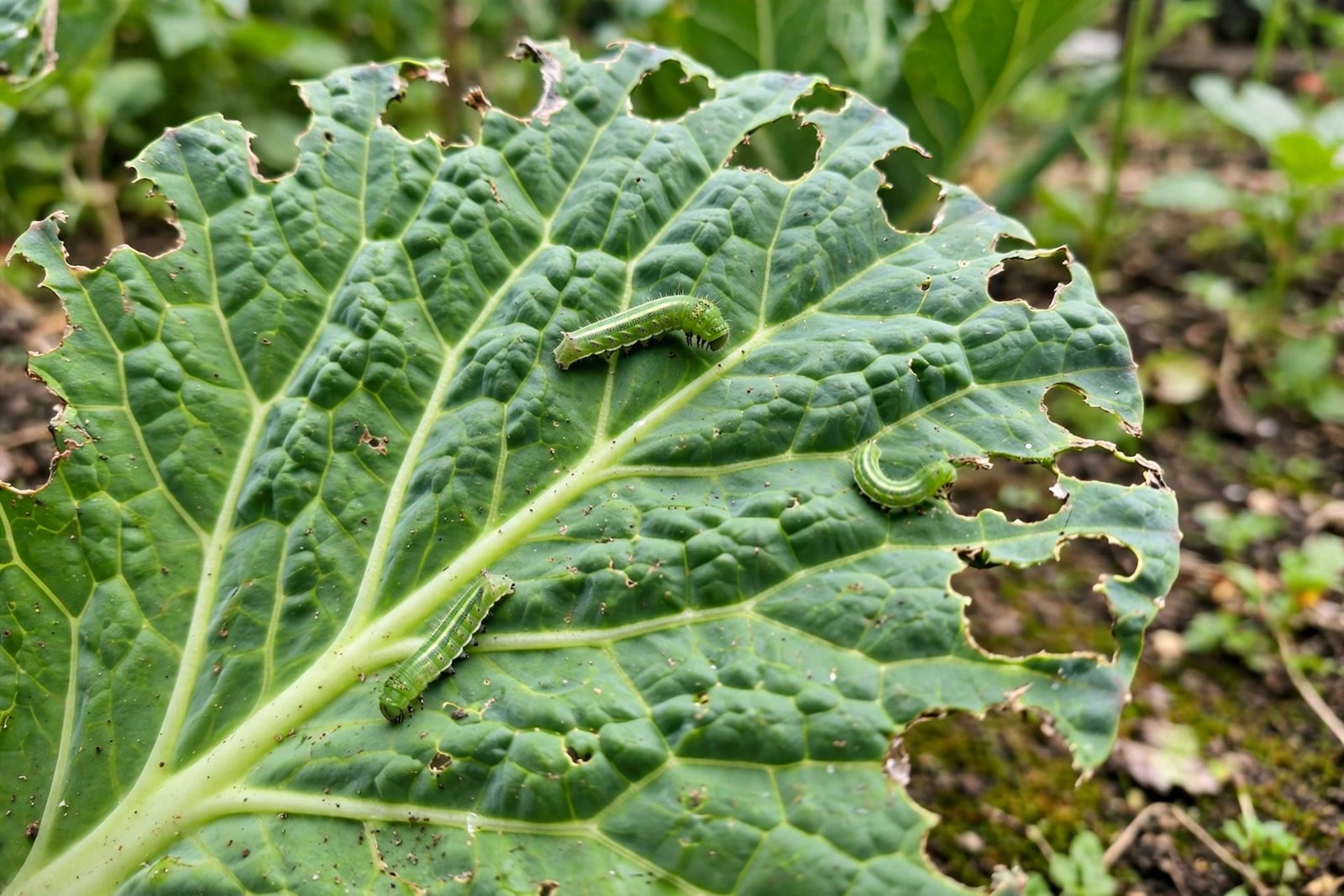
You walk out to the cabbage patch, coffee in hand, and stop. Yesterday those leaves were whole. Today they look like lace. Something has been eating your brassicas overnight, and the first job is not reaching for a spray — it is figuring out what, exactly, you are looking at. Different pests need different fixes, and the wrong fix wastes a week your plants do not have.
This guide works the way a diagnosis should: symptom first, then the creature that causes it, then the fix that fits. Start with the table, then read the section that matches what you see.
| What you see | Likely cause | Fix that fits |
|---|---|---|
| Large ragged holes, velvety green caterpillar | Imported cabbageworm | Handpick; row covers at planting; Bt for caterpillars |
| Holes plus a caterpillar that arches like an inchworm | Cabbage looper | Handpick; row covers; Bt for caterpillars |
| Many small holes, tiny smooth caterpillar | Diamondback moth larva | Row covers; Bt; remove weedy mustard relatives nearby |
| Tiny shot holes in seedlings | Flea beetles | Row covers; transplant instead of direct seeding |
| Wilting plant, white maggots at the roots | Cabbage maggot | Prevention only — row covers next planting; rotate beds |
| No heads, big leaves, or tiny premature heads | Too much nitrogen, crowding, or transplant stress | Space plants properly; water steadily; do not hold seedlings too long indoors |
Meet the adults first
Half of brassica diagnosis happens before you ever see a caterpillar. The imported cabbageworm is the larva of the familiar white butterfly that flutters over the garden all summer — the one with the dark spots on its wings. If you see white butterflies hovering over your cabbage, eggs are being laid on the undersides of the leaves right now.

That is your early warning system. Check the undersides of leaves once a week, crush any tiny yellow eggs you find, and cover the plants with row cover before the butterflies arrive. Row cover at planting time is the single most effective prevention for nearly every pest on this page — it keeps the adults off the plants so the larvae never hatch.
The caterpillar trio: tell them apart by feel and movement
Size alone will not identify a brassica caterpillar. University of Minnesota Extension’s rule is to look at texture and movement instead. The imported cabbageworm is velvety to the touch, green, and the most abundant of the group. The cabbage looper is smooth and moves in an inchworm fashion, arching its back as it goes. The diamondback moth larva is small, smooth, and tapered at both ends — and it wriggles violently when disturbed.
Why does the distinction matter? Because the threshold for action depends on the pest and the growth stage. Extension scouting thresholds for cabbage run around 10% of plants infested at transplant and cupping stages, rising to 30% of plants with one or more medium-to-large larvae once heads start to form. In plain terms: a few caterpillars on a big plant are not an emergency. A dozen on a seedling are.
For all three caterpillars, the fixes are the same and they work. Handpick what you can see — it is faster than it sounds on a small planting. Use a Bt spray labeled for caterpillars if handpicking cannot keep up; it targets caterpillars and leaves most other insects alone. And keep row covers on until the plants are big enough to tolerate some feeding, which established plants can.
Shot holes in seedlings: flea beetles
If your seedlings look like someone took a tiny hole-punch to them, that is flea beetles: small, jumping beetles that chew pinprick holes in young leaves. Direct-seeded brassicas suffer most, because the beetles hit plants at their most vulnerable stage.
This is one reason transplants are worth the trouble. University of Minnesota Extension notes that transplanted brassicas withstand early-spring feeding damage from flea beetles better than direct-seeded ones — a plant with several true leaves can outgrow damage that would finish a seedling. Row covers at planting help here too, and keeping the bed free of weedy mustard relatives removes the beetles’ alternate hosts.
Wilting from below: cabbage maggot
Cabbage maggot is the diagnosis nobody wants, because the honest answer is that once you see it, there is not much to do. The maggots feed on the roots, weakening and often killing the plant, and the visible symptom is a plant that wilts even though the soil is moist, then stunts or dies.
Do not waste money spraying a plant that is already wilting from root damage. Pull it, check the roots for the small white maggots to confirm, and put your energy into next planting: row covers from day one, and rotate your brassicas to a different bed — the standard advice is not to grow brassicas in the same spot more than once in three years, so soil-borne problems do not build up.
When the problem is not a pest at all
Not every brassica failure has six legs. Two of the most common complaints are cultural, and both come from the same University of Minnesota cool-season guidance. First, a big beautiful cabbage that never forms a head: the most common cause is too much nitrogen, followed by overcrowded planting and water stress. Give cabbage 18″–24″ between plants, water steadily instead of flooding and drying, and go easy on high-nitrogen fertilizer once heads should be forming.
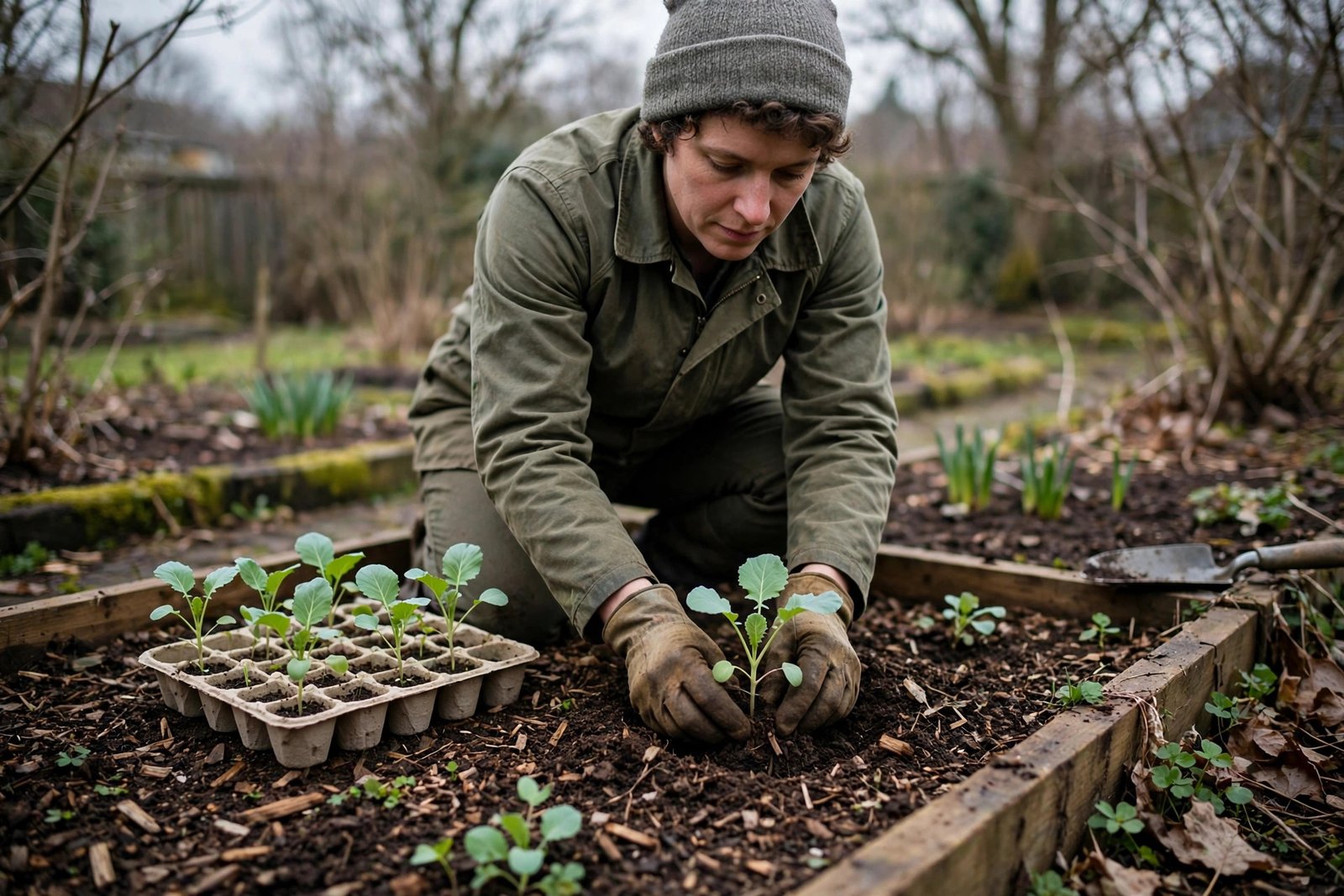
Second, buttoning — tiny premature heads on broccoli or cauliflower. This is stress, most often plants started indoors and held too long before transplanting. Sow on schedule, move plants out on schedule, and read our Zone 4 brassica timing guide before you start anything indoors. A plant that goes out on time will outgrow one that sat in a cell for two extra weeks.
Replant with varieties that forgive you
If pests or timing took out your first planting, replant with something that matures fast or tolerates the conditions. Purple Vienna Kohlrabi is ready in 50 to 69 days, so a midsummer replant still finishes. Georgia Southern Collards tolerates both frost and heat and keeps producing outer leaves for months, so a ragged start does not doom the planting.
Purple Vienna Kohlrabi Seeds
Ready in 50–69 days, so a replant after pest damage still finishes in time.
Georgia Southern Collards Seeds
Frost- and heat-tolerant, picking outer leaves for months — the forgiving replant.
And if you are starting from scratch rather than replanting, our best brassicas for short seasons roundup picks the varieties by job — fastest, most forgiving, best for fall — so the next planting starts with the odds in your favor.
Bottom line
Identify before you spray. Velvety green caterpillar: cabbageworm. Smooth inchworm: looper. Small tapered wriggler: diamondback. Shot holes in seedlings: flea beetles. Wilting from the roots: cabbage maggot, and prevention next time, not a spray now. And if the plant looks healthy but never heads, check your spacing, your nitrogen, and your watering before you blame a bug. Most brassica problems are fixable — and the ones that are not are preventable next planting with row cover and rotation.